
News
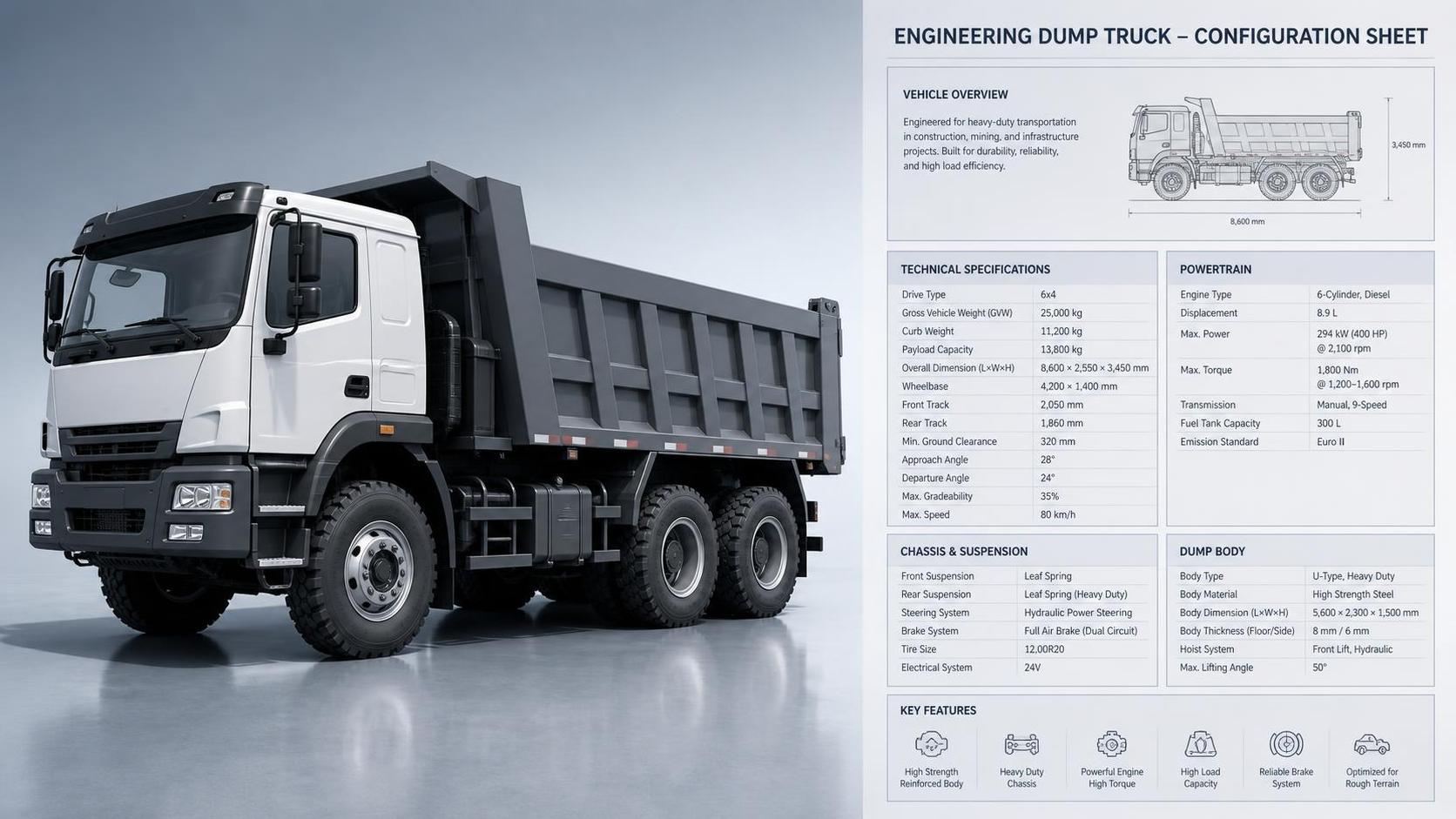
Reading the Cangshan Vehicle Configuration List starts with the assumption that every line item matters. A truck that looks suitable on the surface can still miss the job if one specification is overlooked, especially when axle rating, wheelbase, body structure, tire size, or powertrain details do not match the operating route. The safest way to read the sheet is to treat it as a technical record, not a sales summary.
The first items to verify are the vehicle identity and the base build. Model name, drive form, cab type, axle arrangement, and declared gross vehicle weight should be read together, because each one changes what the vehicle can legally carry and how it behaves under load. A 4x2, 6x4, or 8x4 chassis may look similar in photos, but the axle count and drive layout determine traction, turning radius, tire wear, and fuel use in real work conditions. Wheelbase also deserves close attention; a longer wheelbase may improve body length and load distribution, while a shorter one may be easier to turn in confined sites.
Engine data should never be reduced to horsepower alone. A serious reading of the Cangshan Vehicle Configuration List looks at rated power, peak torque, torque speed range, displacement, and emission level if shown. Power output tells part of the story, but torque curve and low-speed response often matter more when the vehicle starts on slopes, moves through mud, or carries dense material. If the sheet lists a power band, compare it with the intended route. Long highway hauling and stop-and-go construction transport place very different demands on the engine.
Transmission information needs the same discipline. The number of forward and reverse gears, gear ratio spread, clutch type, and whether an auxiliary retarder is specified can change the vehicle’s working feel more than many people expect. A wide ratio box may suit mixed roads, while a tighter spread may be better for stable cruising. If the configuration list names a manual gearbox, pay attention to the shifting logic and the match between first gear and axle ratio. If the vehicle will repeatedly start fully loaded, weak launch gearing can show up as clutch heat and unnecessary wear.
Axles, suspension, and frame details are where many omissions happen. Front axle and rear axle ratings should be read as structural limits, not marketing numbers. If the vehicle will carry concentrated loads, bridge beams, steel coils, tank bodies, or special upper structures, the frame section and reinforcement pattern become important. Leaf spring count, suspension type, and whether the rear suspension is reinforced can indicate how the chassis will tolerate impact and repeated loading. For rough roads, a configuration with stronger suspension may protect the body and reduce fatigue damage over time.
Tire specification is another place where a rushed reading creates trouble. Tire size, ply rating, and whether single or dual rear tires are used affect ground pressure, heat buildup, and replacement planning. A tire pattern suited to paved roads may not cope well with quarry access roads or wet construction sites. If the configuration list includes spare tire equipment or rim material, read that too. Steel rims, for example, can be more practical in harsh service, while aluminum may appear in some road-focused builds if weight control is a concern.
Cabin configuration also has practical value, even on work-oriented trucks. Seat layout, sleeper width, air conditioning, power windows, mirror heating, and steering adjustment influence daily operation and driver fatigue. These features are often treated as secondary, yet they matter when the vehicle spends long hours moving between sites or on intercity routes. A configuration list may also mention safety equipment such as ABS, exhaust brake, or lane-support features if fitted. The exact wording matters; optional inclusion is not the same as standard equipment.
When the list includes the upper body or special-purpose equipment, read the installation-related items line by line. Tank material, cargo box thickness, dump cylinder type, lifting angle, insulation layer, or compaction structure should be matched to the application. For a dump body, steel grade, floor thickness, side wall thickness, and hinge placement affect wear resistance and discharge behavior. For a cargo box, the listed dimensions should be checked against the wheelbase and axle load distribution, not just total length. If a special body is supplied separately, confirm whether chassis mounting points and PTO interface are already prepared.
One common mistake is to assume that a larger number is always better. A higher engine rating does not automatically mean better efficiency, and a heavier suspension package does not always improve the vehicle if the actual payload is moderate. The correct reading is comparative: ask whether each specification fits the job condition, road surface, legal loading limit, and maintenance environment. A specification that looks strong on paper may become a burden if it increases curb weight, fuel consumption, or service complexity without a real operating need.
Another point that is easy to miss is the difference between standard, optional, and reference data. Some configuration lists mix factory-standard items with optional equipment or region-specific choices. If a feature appears in the sheet, confirm whether it is included in the exact vehicle being evaluated or only available on request. This matters for elements such as retarder systems, differential locks, cold-weather packages, upgraded lighting, and corrosion protection. In export work, even a small wording difference can change what is delivered and what must be installed later.
For transport and delivery planning, dimensions and weight figures should be checked against the route and port conditions. Overall length, width, height, curb weight, and wheelbase affect loading onto trailers, ship deck placement, and clearance during inland transfer. If the vehicle is equipped with taller tires, a raised body, or roof-mounted accessories, the shipping height may change enough to affect logistics planning. That is why the configuration list should be read together with the physical arrangement of the vehicle, not as isolated numbers.
Maintenance-related items are worth reading before the vehicle is put into service. Oil grade requirements, filter access, brake system layout, and the presence of centralized lubrication points can affect service intervals and workshop procedures. A vehicle that is simple to maintain in one market may become inconvenient if the parts layout is tight or the service openings are limited. If the configuration mentions diagnostic interfaces, electrical architecture, or battery capacity, those details may be relevant for troubleshooting and accessory installation as well.
In actual comparison work, the most reliable method is to move from mission profile to configuration line by line. Start with load, route, and duty cycle, then match axle rating, engine output, gearbox, frame strength, suspension, tire size, and upper structure. If any one of those elements is missing or vague, treat it as a point that needs confirmation before the vehicle is accepted. A Cangshan Vehicle Configuration List is most useful when every item is read as part of one working system, because the wrong match usually appears later on the road, at the worksite, or during maintenance, not on the day the sheet is first reviewed.
Search Starts Here