
News
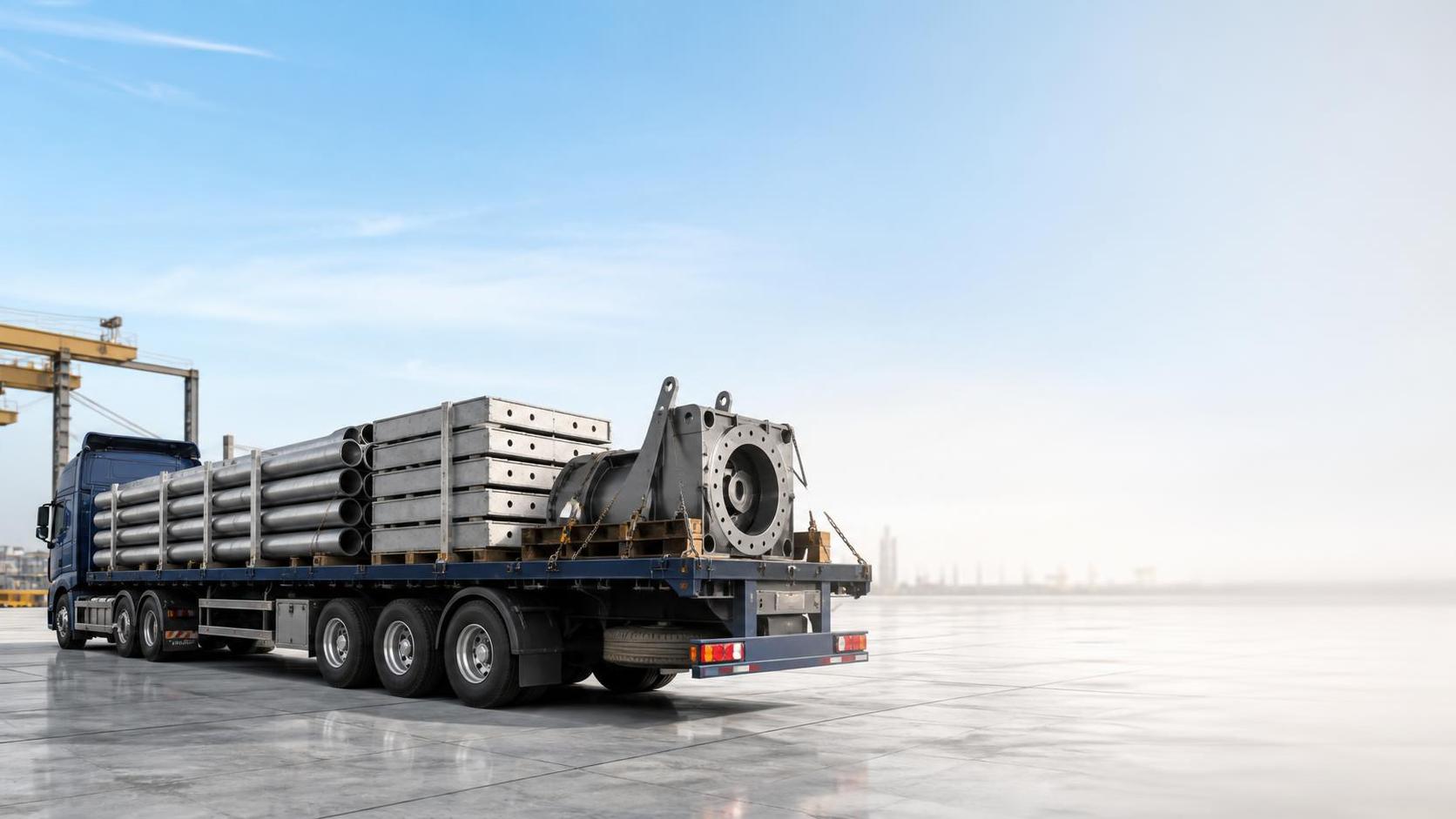
Choosing between a flatbed semi-trailer and a skeleton trailer is rarely about which one is “better” in the abstract. In practice, the right choice depends on what you move, how you load it, and how often your operation changes from one cargo type to another. For many buyers in engineering transport, construction logistics, and project cargo handling, the decision becomes clear only after they compare loading speed, cargo stability, and day-to-day flexibility.
A Flatbed Semi-Trailer makes more sense when your cargo is not container-only, when loading from the side or top is common, or when you need a platform that can carry mixed loads without constant adapter changes. A skeleton trailer, by contrast, is built around container transport. If your work is mostly 20-foot or 40-foot containers moving between ports, yards, and terminals, the skeleton design is efficient and purpose-built. But once cargo becomes less standardized, the flatbed often starts to look like the more practical option.
Where the difference becomes obvious
The biggest distinction is simple: a skeleton trailer is a container carrier, while a flatbed semi-trailer is a more general transport platform. That difference affects everything from loading method to cargo protection strategy.
Skeleton trailers are excellent when the cargo already has its own structural frame, such as ISO containers. The trailer matches the container’s corners, locks in place quickly, and keeps the overall weight low. This makes them a smart choice for high-frequency container logistics where turnaround time matters more than cargo variety.
Flatbed semi-trailers, however, open the door to a much wider range of freight. Steel pipes, prefabricated building materials, construction machinery, large equipment, timber, and oddly shaped engineering components can all be loaded directly onto the deck. For projects that involve non-standard cargo, that flexibility often saves time and reduces handling complexity.
If your team often faces “How do we move this?” instead of “Which container is this going into?”, the flatbed is probably the more natural answer.
When a flatbed semi-trailer is the better fit
There are several transport situations where a Flatbed Semi-Trailer clearly makes more sense than a skeleton trailer.
1. Cargo is oversized or irregularly shaped. Engineering equipment, machine parts, and structural steel rarely fit neatly into a container workflow. A flatbed gives you open access from the top, sides, and often the rear, which makes positioning easier and reduces unnecessary lifting.
2. Loading efficiency matters more than container compatibility. If the load comes from a crane, forklift, or reach stacker, a flatbed can shorten preparation time. You are not waiting for container availability or adjusting the cargo to fit a box.
3. The cargo changes from job to job. Some fleets do not move one product category all year. They handle steel coils one week, construction pipes the next, and packaged machinery after that. A flatbed semi-trailer is easier to repurpose for mixed engineering transport than a skeleton trailer.
4. You need better visual inspection and tie-down access. With open deck transport, operators can inspect the load more easily during securing and before departure. That can matter a lot when freight is valuable, tall, or sensitive to shifting.
5. The cargo does not justify a container. Not every shipment needs the structure and enclosed logic of a container-based system. For many construction and industrial materials, the container itself becomes an unnecessary extra step.
Where a skeleton trailer still wins
It would be a mistake to assume the flatbed is always the smarter choice. Skeleton trailers have a strong advantage in container-heavy logistics because they are lighter and more specialized. Lower tare weight can support better payload efficiency, and the handling process is straightforward when the cargo standard is fixed.
In port logistics, intermodal transport, and container yard operations, skeleton trailers usually reduce friction. They are easier to schedule, easier to load in a repetitive workflow, and often more cost-effective when the same container format moves day after day.
So if your operation is built around predictable container circulation, the skeleton trailer remains hard to beat. The key is knowing when your freight has already outgrown that container-centered model.
Questions to ask before choosing
Before deciding on a trailer type, it helps to step back and ask a few practical questions rather than focusing only on price or appearance.
What kind of cargo do you handle most often? If the answer is containers, a skeleton trailer is likely the efficient choice. If the answer includes machinery, steel structures, or mixed project cargo, a flatbed semi-trailer will usually be more adaptable.
How is the cargo loaded? Cranes and forklifts often pair better with flatbeds, especially when speed and access matter. If loading is strictly container-based, the skeleton trailer aligns better with the process.
How often does cargo type change? Fleets that serve one industry may benefit from specialized trailers. Fleets that serve multiple industries tend to need flexibility, and that is where the flatbed becomes valuable.
What matters more in your operation: payload optimization or loading versatility? A skeleton trailer can be leaner for container transport, but a flatbed may reduce hidden costs caused by repacking, rehandling, or workflow delays.
Operational details that often get overlooked
Trailer selection is not only about what sits on the deck. It also affects safety, scheduling, and maintenance patterns.
Flatbed transport usually demands careful attention to lashing points, load distribution, and weather exposure. Because the cargo is open, protection may require tarps, corner guards, or additional securing materials. That does not make flatbeds inconvenient, but it does mean the transport team needs a disciplined loading routine.
Skeleton trailers, on the other hand, reduce the need for general-purpose securing methods because the container itself acts as the cargo body. This simplifies the process, but only when the freight is already containerized.
From a maintenance perspective, the equipment environment matters too. Heavy engineering transport often exposes trailers to rough yards, uneven roads, and repeated loading cycles. The best trailer is the one that not only fits the cargo but also matches the operational conditions it will face every week.
A practical rule of thumb
If your transport job starts with a container number, skeleton trailer. If it starts with dimensions, lifting points, or a drawing from an engineering team, Flatbed Semi-Trailer.
That is not a perfect rule, but it is a useful one. Containerized freight rewards specialization. Non-standard freight rewards adaptability. In real operations, adaptability often brings more value when the shipment mix is broad or project-driven.
This is why many engineering vehicle buyers lean toward flatbeds when they are building a more versatile transport fleet. They want a trailer that can handle a wider range of scenarios without forcing the cargo to fit a single format.
How to evaluate the right trailer for your operation
If you are sourcing for a fleet, it helps to think beyond the first shipment and consider the next twelve months of work. Look at freight type, loading equipment, route conditions, and how frequently your cargo profile changes. A trailer that seems slightly less specialized on paper may actually perform better once it starts serving mixed jobs in the field.
For companies expanding into international vehicle and equipment transport, this decision becomes even more important. Export projects, construction shipments, and industrial deliveries often require vehicles that can work across different cargo categories and border procedures. In those cases, choosing the right trailer is not just a technical call; it affects delivery speed and overall logistics control.
Shandong Livol Truck International Trade Co., Ltd. supports customers with commercial vehicle selection, customization, documentation, customs clearance, and logistics coordination. For buyers comparing transport solutions across different engineering applications, this kind of end-to-end support can make the selection process easier and more reliable.
The real question is not whether a flatbed semi-trailer or a skeleton trailer is universally superior. It is which one removes more friction from your specific transport operation. When cargo is diverse, oversized, or project-based, the flatbed usually makes more sense. When freight is consistently containerized, the skeleton trailer stays the practical choice. Matching the trailer to the job is what keeps logistics efficient, safe, and manageable over time.
Search Starts Here