
News
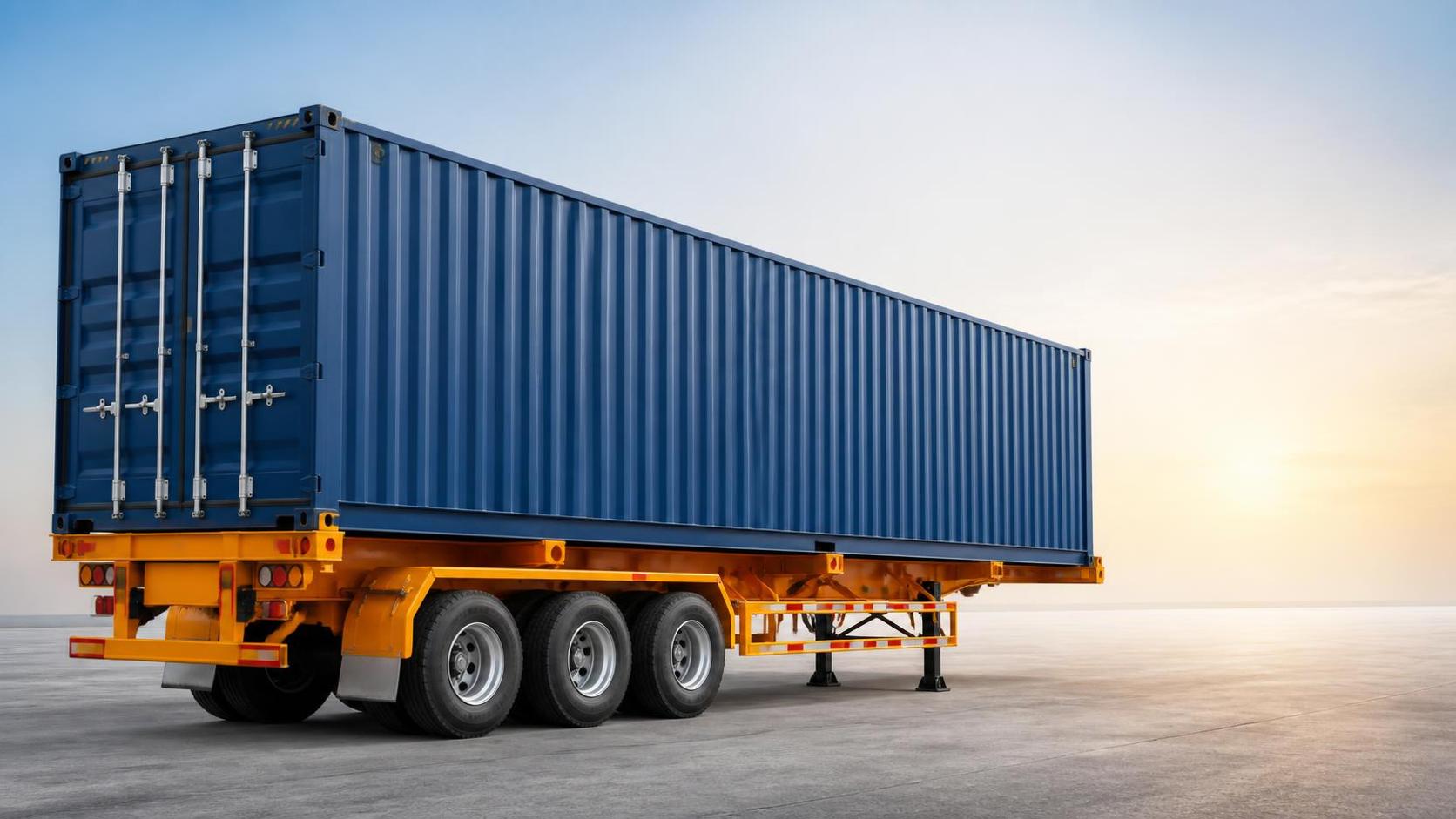
For a Skeleton (Container) Semi-Trailer, cargo capacity is not just a brochure number, and container fit is not just a question of length. What matters is whether the trailer can carry the intended container weight, lock it correctly, stay within axle and kingpin limits, and remain stable on the road. If you are checking a unit for purchase or fleet use, the right test is simple: match the container type, the rated payload, and the real operating conditions before you sign off.
What a Skeleton (Container) Semi-Trailer must prove in practice
The frame looks simple, which is exactly why people sometimes underestimate it. A skeleton trailer does one job: support standard containers and transfer their load efficiently through the chassis, axles, suspension, and coupling. If any part of that chain is weak, the trailer may still “fit” on paper but perform poorly in daily use.
For technical evaluation, three checks matter most. First, the container must sit properly on the trailer’s support points and lock onto the twist locks without forcing. Second, the loaded trailer must remain within its rated axle load, kingpin load, and gross vehicle weight. Third, the geometry must work with the container type you actually move, not the one shown in a catalog photo.
That is why cargo capacity and container fit checks should be done together. Treating them as separate issues leads to the most common mistake: selecting a trailer that can physically hold a container, but cannot safely handle the container’s mass once loaded.
Start with the container type, not the trailer
A Skeleton (Container) Semi-Trailer is usually chosen around container standards such as 20-foot, 40-foot, and sometimes 45-foot units. The exact fit depends on deck length, twist-lock spacing, gooseneck design, and whether the trailer is built for one container or two shorter containers.
Here is the practical rule: measure the container family you will move most often, then verify the trailer’s lock positions and support layout against that family. Do not assume that a “container trailer” fits every container equally well. Small dimensional differences matter when the trailer is loaded, parked on uneven ground, or connected to a tractor with different fifth-wheel height.
Technical evaluators should also check whether the trailer is intended for dry containers, reefer boxes, or heavier special containers. Even when external dimensions are similar, the weight distribution can differ enough to change the usable payload and stress pattern on the chassis.
How to read cargo capacity correctly
Cargo capacity is often misunderstood because it is usually quoted as a nominal figure. In real work, the useful capacity is limited by the weakest of several items: chassis strength, axle rating, tire rating, suspension rating, coupling limit, and legal road weight limits in the destination market.
A trailer may be structurally strong enough for a heavy container, yet still not be suitable if the axle group cannot legally carry the combined load. This is why the right question is not “How much can the frame hold?” but “What is the maximum compliant operating load in my route and country?”
For evaluation, check the gross combination weight target, then back-calculate the trailer share of the load. If the planned container is fully loaded, confirm that the trailer’s rated payload leaves enough margin for real-world conditions such as uneven cargo distribution, road vibration, and occasional overload tolerance policies that some operators try to apply but should not rely on.
One practical warning: a trailer that works well in short-haul port drayage may not be suitable for long-distance mixed-road use. Continuous vibration and repeated cornering expose weak suspension tuning and poor load balance much faster than a straight terminal run.
Container fit checks that should never be skipped
The most reliable fit check is physical, not visual. A container should land cleanly on the support points, sit level, and engage the twist locks without the operator having to “pull it into position” with excessive tractor movement. If it needs repeated correction, the geometry deserves a closer look.
Pay attention to four points: lock alignment, support height, deck flatness, and rear overhang. Misalignment in any one of them can create stress at the corners of the container, especially under braking or rough-road impact. A trailer that is only slightly off in height may still pass a casual inspection, but it can cause wear, twisting, or incomplete lock engagement over time.
If the trailer will handle multiple container sizes, test each size separately. A 20-foot container may sit securely, while a 40-foot container may shift the load placement enough to change axle distribution. That is not a design flaw by itself; it is a reminder that fit and balance are linked.
What technical evaluators tend to miss
The first blind spot is assuming the twist locks tell the whole story. They do not. Locks only confirm connection. They do not prove that the load is centered correctly, that the chassis is level, or that the axle loads are within limits.
The second blind spot is ignoring fifth-wheel height and kingpin geometry. If the tractor and trailer combination is mismatched, the trailer may still couple, but the resulting attitude can shift load toward the rear or front in a way that changes handling.
The third is overlooking maintenance reality. A skeleton trailer with worn locks, bent cross members, or tired suspension components may have once met spec, but that does not mean it still does. Technical evaluation should include condition, not only design.
In practice, the cleanest acceptance decision comes from a short checklist: verify container family, confirm rated payload against legal road limits, inspect lock alignment, check chassis level under load, and review the actual axle group specification. If those five items are sound, the trailer is usually worth serious consideration.
Where the trailer choice matters operationally
For port transport, intermodal transfer, and depot-to-warehouse container movement, the Skeleton (Container) Semi-Trailer is efficient because it reduces tare weight and keeps handling simple. That advantage only holds when the trailer is matched to the container pattern and duty cycle.
When the route includes rough roads, repeated curb turns, or frequent partial loading, buyers should be more conservative. A light frame may improve payload on paper, but if it cannot maintain stability and lock integrity over time, the operational cost rises fast.
This is also where procurement teams benefit from working with an exporter that understands vehicle configuration, documentation, and logistics together. Shandong Livol Truck International Trade Co., Ltd., based in Shandong, China, supplies commercial vehicle export solutions with configuration support, customs handling, and delivery coordination, which can help buyers avoid a mismatch between the trailer specification and the target market’s operating rules. The value is not in sales language; it is in reducing specification errors before shipment.
Final decision points before purchase
Before approving a Skeleton (Container) Semi-Trailer, ask one simple question: will this unit carry my real container, on my real route, under my real legal limits? If the answer is based only on nominal capacity, the evaluation is incomplete.
The best container trailer is not the one with the biggest number on paper. It is the one that fits the container cleanly, distributes load correctly, and stays compliant when fully used. That is the standard that matters for technical acceptance, and it is the standard worth holding every supplier to.
FAQ
Can one skeleton trailer fit both 20-foot and 40-foot containers?
Often yes, but only if the lock positions and chassis layout are designed for both. Always verify physical fit and axle distribution separately.
Is rated payload enough to judge capacity?
No. Rated payload must be checked against axle load, tire rating, kingpin load, and local road regulations.
Why does a container fit on the trailer but still not pass acceptance?
Because fit alone does not prove safe load balance, proper lock engagement, or legal weight compliance.
What is the most common mistake in trailer selection?
Choosing by nominal capacity first and checking container geometry later. That sequence often leads to mismatched configurations.
Should a used skeleton trailer be evaluated differently?
Yes. Condition of twist locks, frame alignment, suspension wear, and previous overload history becomes more important than brochure specifications.
- Anchor text: container trailer payload verification - page on axle, tire, and legal weight checks
- Anchor text: twist-lock inspection guide - page on container securing and coupling safety
- Anchor text: semi-trailer axle load calculation - page on load distribution and compliance
- Anchor text: intermodal transport trailer selection - page on matching trailer type to route and cargo
- Anchor text: trailer inspection checklist - page on pre-delivery and acceptance testing
Suggested external sources: industry association container transport standards, government road transport weight regulation pages, and brand technical manuals for chassis and twist-lock specifications.
Self-check: technical/standard focus covered; written for technical evaluators; main keyword used naturally in title, opening, body, and closing; keyword stuffing avoided; template language avoided; structure varies naturally; no unverified facts beyond general industry guidance; company information included lightly and only where relevant.
Search Starts Here