
News
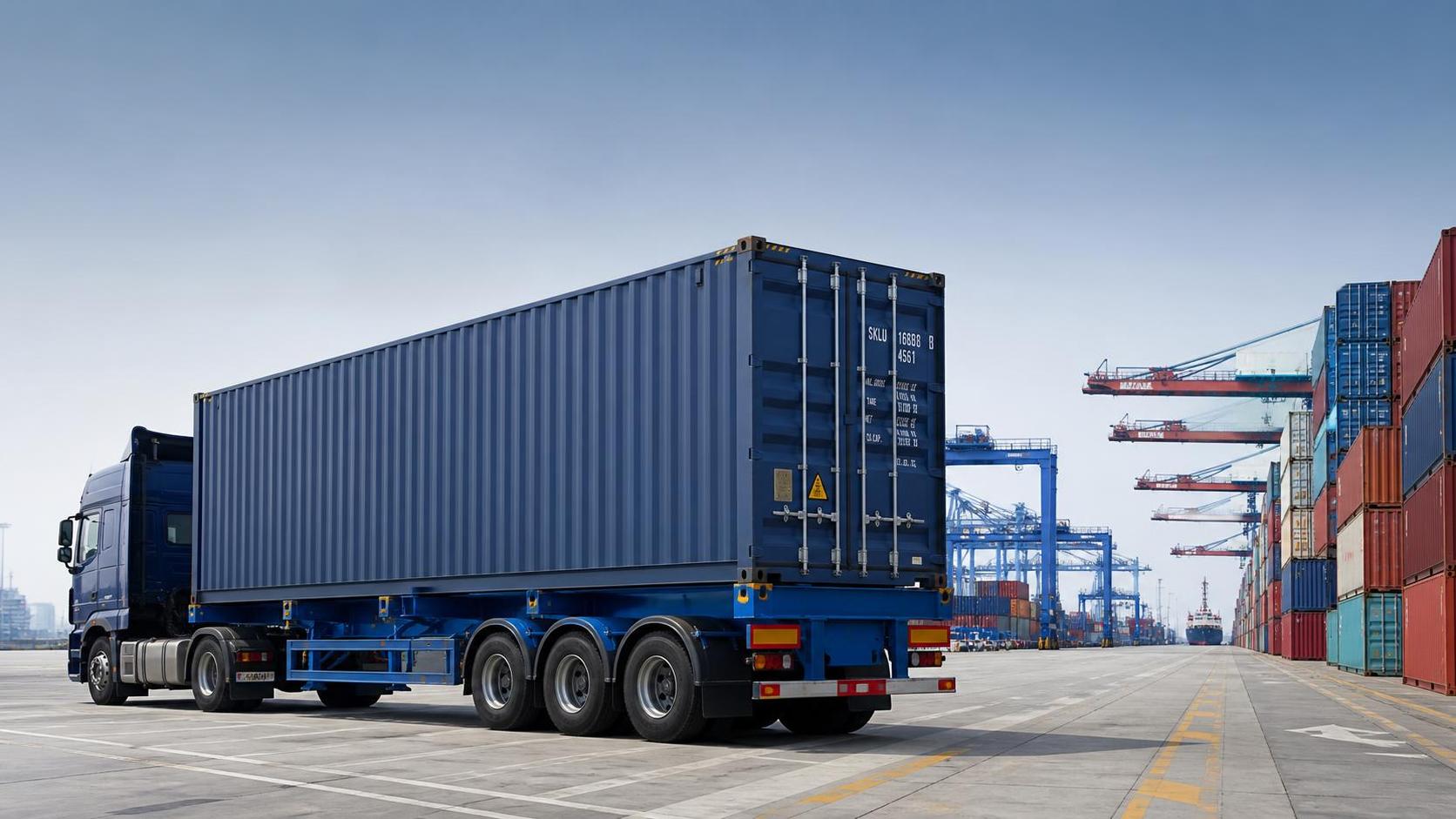
At a busy port, the real cost of container movement is rarely limited to fuel or driver wages. Delays at the gate, missed loading windows, unsuitable equipment, damaged container corners, and unnecessary loading steps can all interrupt the rhythm of an engineering project. For project managers responsible for moving containerized materials, machinery parts, temporary facilities, or export cargo, the transport unit must fit the route as closely as possible.
A Skeleton (Container) Semi-Trailer is often the right choice when the job is primarily about moving ISO shipping containers between a port, inland terminal, warehouse, construction site, or logistics yard. Its open chassis structure is purpose-built for containers rather than loose freight. That distinction matters: when containers are already the transport packaging, there is usually little value in adding the weight, loading time, and handling complexity of an enclosed trailer or flatbed solution.
Still, a skeleton trailer is not automatically the best answer for every port haulage assignment. The right decision depends on container size, road conditions, terminal procedures, cargo weight, site access, and the operating pattern of the fleet. A well-matched trailer can simplify the whole chain. A poorly specified one can create repeated operational friction on every trip.
Recognizing the operating pattern that favors a Skeleton (Container) Semi-Trailer
The strongest use case is a repetitive container flow. For example, a contractor may receive steel components, electrical systems, prefabricated modules, tools, or project consumables through a seaport. The containers need to leave the terminal promptly, travel to a staging area or construction site, and return empty containers within the shipping line’s permitted time window.
In this situation, the trailer does not need a conventional cargo deck. The container itself is the load unit. A skeleton chassis allows the tractor and trailer combination to collect, secure, transport, and release that unit efficiently. Terminal lifting equipment places the container directly onto the trailer, and the twist locks secure the corner castings. At the destination, a reach stacker, forklift arrangement, sideloader, or unloading system can remove the container according to the site’s capabilities.
This arrangement is especially practical when the project faces three pressures at once:
- Containers must be turned around quickly to avoid storage, detention, or schedule disruption.
- Several container sizes may arrive during different stages of the project.
- Transport needs are predictable enough to justify dedicated container-haulage equipment.
For a port-to-warehouse route with regular container volumes, a Skeleton (Container) Semi-Trailer generally offers a cleaner operating model than repeatedly adapting general-purpose trailers. The work becomes more standardized for drivers, dispatchers, terminal staff, and site teams.
Where it delivers the most practical value
Port haulage is not a single activity. It is a chain of handovers, each with its own constraints. The skeleton trailer earns its place when it reduces complications at those handover points.
Port to inland depot or bonded warehouse
This is the classic container transport route. The container is discharged at the port, collected by tractor-trailer, and delivered to a depot, warehouse, or customs-controlled location. Since the cargo remains sealed inside the container, the priority is safe chassis compatibility, legal road operation, dependable locking, and timely arrival. The open frame design avoids unnecessary vehicle mass while giving terminal lifting equipment clear access to the container.
Port to construction or infrastructure project site
Major projects often rely on imported equipment and material packages. A remote power project, mining development, industrial plant, road project, or temporary camp may receive a stream of 20-foot and 40-foot containers over several months. In these conditions, container transport is more than a delivery task; it is a schedule-control function.
A skeleton semi-trailer is suitable when site roads can safely accept tractor-trailer traffic and when the receiving team has a realistic plan for unloading or placing containers. Some projects use containers as temporary storage units on site, while others unload them immediately. Both approaches can work, but the trailer selection should account for turning space, ground bearing conditions, overhead obstacles, and the availability of handling equipment.
Inter-terminal and short-distance shuttle operations
Not every move involves long-distance road haulage. Ports, logistics parks, rail yards, and industrial zones may require containers to be transferred between terminals or from a port gate to a nearby storage location. For these high-frequency movements, turnaround time becomes the central measure of performance.
Here, fleet availability and configuration consistency are often more important than elaborate trailer features. A trailer that matches the common container format and terminal workflow can keep vehicles moving rather than waiting for special handling arrangements.
The container mix should determine the trailer configuration
One of the most common planning mistakes is to purchase a trailer based only on its general description: “container chassis” or “skeleton trailer.” Project managers should instead begin with the actual container profile expected on the route.
Will the project mainly use 20-foot containers because the cargo is dense and heavy? Will shipments arrive in 40-foot standard or high-cube containers? Is there a possibility of 45-foot equipment containers, special containers, or mixed lengths? The answers shape the most appropriate chassis design.
A fixed-length trailer can be a sensible choice where operations are stable and one container size dominates. It is straightforward, durable, and easy for drivers and workshop teams to manage. An extendable Skeleton (Container) Semi-Trailer may be more suitable for projects that receive a changing mix of container lengths. The added flexibility can reduce the need to assign different trailers to different loads, although extendable structures also require careful inspection and disciplined operation.
Container dimensions are only one part of the decision. Cargo mass matters just as much. A container may look ordinary from the outside while carrying dense machinery parts, cable drums, metal products, or project equipment that place substantial demand on the chassis, axles, tires, suspension, and tractor unit. The combined gross weight must be evaluated against local regulations, road restrictions, bridge limits, and port rules—not assumed from container size alone.
Twist locks are small components with major consequences
The container is secured to a skeleton chassis through twist locks that engage with the container’s corner castings. This is a familiar system, yet it should never be treated as a minor detail. A missed lock, a damaged locking mechanism, or poor alignment during loading can turn a routine trip into a serious safety risk.
Before each departure, the driver or assigned operator should confirm that all relevant locks are fully engaged and that the container sits correctly on the trailer supports. The inspection should also include container condition: damaged lower corner castings, distorted frames, leaking cargo, or visibly uneven loading should be reported before the truck enters public roads.
For project managers, the important point is procedural. A safe container-haulage plan is not created simply by buying suitable equipment. It requires a repeatable loading, locking, checking, dispatch, and receiving process. The more often containers move through the same route, the more valuable that discipline becomes.
Road and site conditions can change the answer
A skeleton trailer performs best on routes that allow normal container road transport. Paved roads, adequate turning radii, properly designed loading zones, and competent terminal handling make the operation relatively direct. But some project sites are far less forgiving.
Consider a construction location with soft ground, steep approaches, narrow internal roads, unfinished drainage, or sharp turns around temporary structures. The challenge is not whether the trailer can carry a container; it is whether the complete tractor-trailer combination can enter, maneuver, stop, and exit safely while loaded.
Before mobilizing a container-haulage fleet, carry out a route assessment from the terminal gate to the final unloading point. Review overhead clearance, bridge capacity, road width, parking and waiting areas, slopes, and the condition of the site entrance after rain. If containers will be dropped on site, identify a level, stable placement area that is accessible to the unloading equipment.
For rougher routes, suspension selection, tire suitability, ground clearance, frame strength, and axle arrangement deserve closer attention. The objective is not to overspecify every vehicle, but to prevent a trailer designed for smooth terminal work from being pushed into a demanding site environment without the necessary preparation.
When another trailer type may be the better choice
A Skeleton (Container) Semi-Trailer is optimized for containerized transport. That focus is its advantage, but it also defines its limits. If the cargo will usually be loaded loose, bundled, oversized, or irregularly shaped, a flatbed, lowbed, sidewall trailer, or specialized equipment transporter may provide better flexibility.
Likewise, if containers must be unloaded by tipping or if the operation involves bulk commodities rather than sealed container units, a container chassis is not the natural solution. In remote locations without cranes, reach stackers, sideloaders, or reliable unloading arrangements, the project team should consider whether a self-loading option or an alternative transport method is required.
The right question is not “Can a skeleton trailer move this container?” It almost always can. The more useful question is “Does this trailer allow the full route—from terminal collection to final unloading—to operate with the fewest avoidable handovers, delays, and safety compromises?”
A practical specification checklist for project managers
Before requesting quotations or assigning equipment, prepare a short operating brief. This improves communication with suppliers and avoids comparing trailers that are not truly equivalent.
- Container range: List the expected container lengths, including any high-cube or special units.
- Maximum loaded container weight: Base this on the heaviest planned cargo, not the average shipment.
- Route profile: Include highway distance, port access rules, gradients, unpaved sections, and site limitations.
- Local compliance requirements: Confirm applicable axle-load, overall-length, lighting, braking, and marking requirements.
- Tractor compatibility: Match fifth-wheel height, power requirements, coupling arrangement, electrical connection, and air system with the selected trailer.
- Handling method at both ends: Clarify whether containers will be lifted, placed, stored on chassis, or unloaded at the destination.
- Maintenance environment: Consider the availability of tires, brake components, suspension parts, and trained technicians in the operating country.
This brief should be shared with the vehicle supplier early. It is much easier to select a suitable configuration before shipment than to modify equipment after it reaches the project location.
Building a dependable container-haulage package
The trailer should not be chosen in isolation. It works as part of a transport package that includes the tractor head, drivers, dispatch plan, service support, documentation, and route permissions. A capable trailer behind an unsuitable tractor—or a well-matched combination without spare-part planning—can still create downtime when the project schedule is tight.
For international buyers, supplier coordination is particularly important. Shandong Livol Truck International Trade Co., Ltd. supports commercial vehicle export projects with access to authorized FOTON, SHACMAN, and SINOTRUK vehicle resources, along with trailer selection, vehicle customization coordination, export documentation, customs procedures, and logistics support. For a buyer planning port-to-project transport, this can make it easier to align the tractor unit and Skeleton (Container) Semi-Trailer around the same operating requirement rather than sourcing each element separately without technical coordination.
The goal is not simply to send a vehicle overseas. It is to ensure that the equipment arriving at the destination is appropriate for the containers, roads, regulations, and workload it will face.
Choose for the operation you will repeat, not the shipment you see today
Port haulage decisions are often made under time pressure, especially when project materials are already on the water. Yet the best trailer choice comes from looking beyond the next container delivery. Consider the container mix expected over the project life, the likely changes in site conditions, the available handling equipment, and the need to redeploy vehicles after one phase is complete.
A Skeleton (Container) Semi-Trailer is the right choice when container transport is a recurring, structured part of the operation and when the route is designed around efficient collection, secure locking, legal road movement, and practical unloading. In that role, it turns a complicated series of port handovers into a more controlled transport routine—one that gives project managers better visibility over time, equipment use, and delivery risk.
Search Starts Here