
News
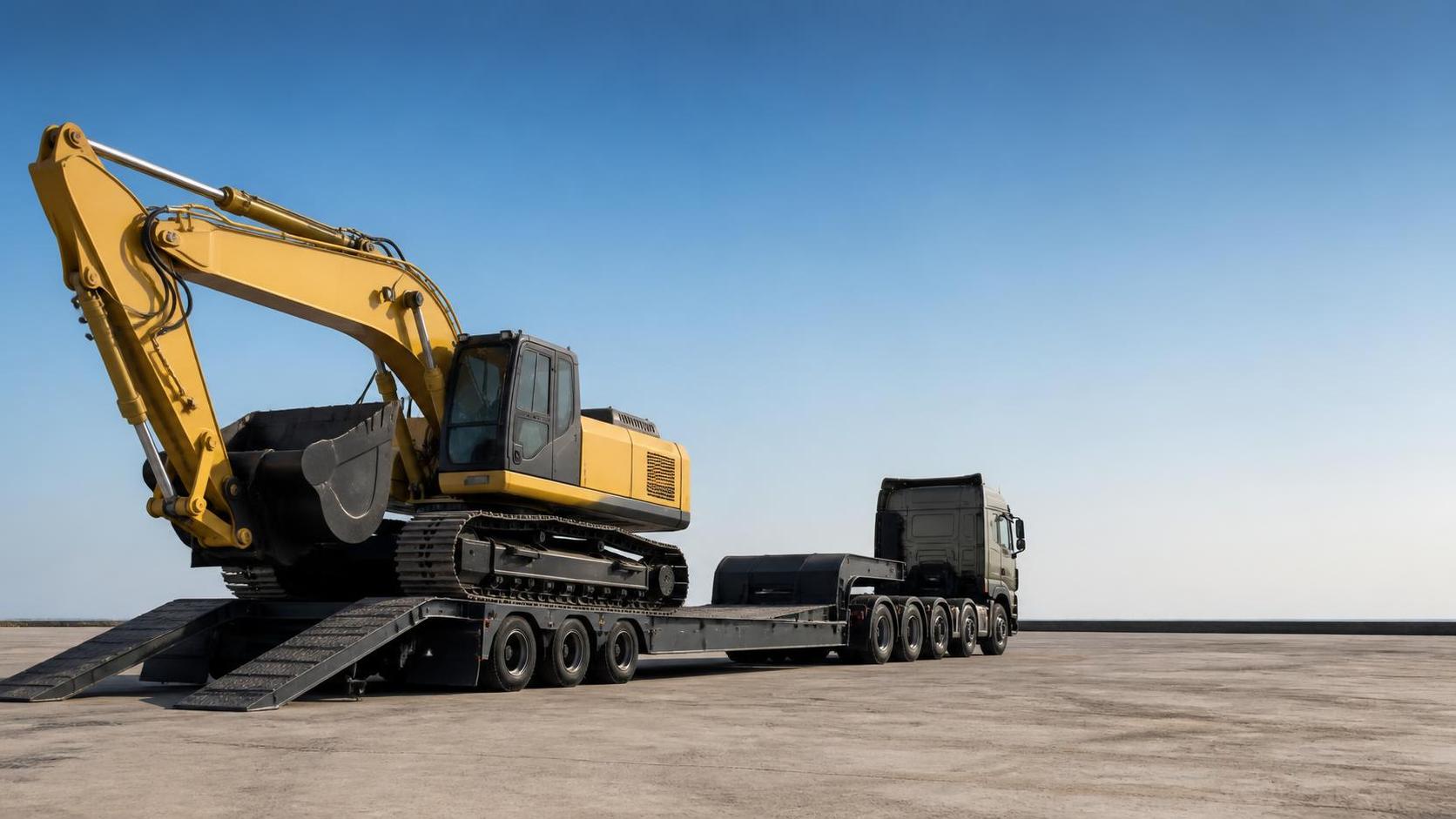
It often starts at the loading area rather than on the road. A machine arrives with its boom folded, attachments removed where possible, and fuel level adjusted for transport. The trailer is rated for the load, the tractor has enough pulling power, and the route appears acceptable. Yet when the equipment begins climbing the ramps, the operator notices the first problem: the ramp angle feels too steep, the tracks approach a breakover point, or a low-mounted component comes dangerously close to the trailer deck.
For oversized excavators, drilling rigs, wheel loaders, cranes, and other construction equipment, deck height is not a minor trailer specification. It affects the complete loading process: ramp approach, ground clearance, machine stability, total transport height, axle loading, and clearance under bridges or site obstacles. A Low Plate trailer is often selected because its lower deck can reduce several of these risks at once. However, lower is not automatically better unless the trailer geometry, equipment dimensions, route conditions, and loading procedure are evaluated together.
The practical problem behind a high deck
A conventional trailer deck places the machine farther above the road surface. That increases the elevation the equipment must climb during loading and raises the final transport height after the machine is secured. For a compact machine with generous ground clearance, this may be manageable. With larger or lower-clearance equipment, the same deck height can create a chain of operational difficulties.
The first difficulty is ramp angle. A higher deck generally requires longer ramps to keep the slope gradual. If ramp length is limited by trailer design, storage constraints, or loading-area space, the incline becomes steeper. Tracked equipment may still climb it, but the transition from ground to ramp and from ramp to deck can create contact points beneath the machine. Wheeled machines can face traction loss, abrupt weight transfer, or reduced steering control on loose ground.
The second difficulty appears after loading. Every extra millimeter of deck height contributes to overall loaded height. This matters when equipment has a tall cab, raised boom support, exhaust stack, protective structure, or upper frame that cannot be lowered further. A route that looks open on a map can include overhead signs, bridge members, utility lines, trees, site gates, and temporary structures. The transport plan needs the actual loaded height, not an estimate based only on the machine brochure.
A third issue is center of gravity. Raising a heavy machine above the road increases the height of its mass. This does not make transport impossible, but it can reduce the margin for uneven surfaces, roundabouts, crosswinds, cambers, and sudden steering corrections. Operators often focus on whether the machine fits on the deck lengthwise. The more important question is whether it sits low, centered, and stable once the trailer moves.
Deck height changes more than the final transport height
It is tempting to compare trailers by looking only at the deck measurement from ground to loading surface. That comparison is useful, but it does not tell the full story. The effective loading geometry depends on several linked dimensions:
- Deck height when the trailer is coupled to the intended tractor.
- Ramp length, ramp shape, surface grip, and hinge position.
- Ground clearance at the equipment’s lowest points.
- Approach and departure angles of the equipment.
- Breakover clearance between axles, tracks, or structural members.
- Equipment length, width, transport height, and center of gravity.
- Suspension movement and ground unevenness at the loading location.
A trailer can have a low deck but still be difficult to load if its ramps are too short or if the ramp-to-deck transition is sharp. Conversely, a slightly higher deck with long, well-designed ramps may be suitable for equipment with adequate clearance. The purpose of a Low Plate configuration is therefore not simply to create the lowest possible platform. It is to create a workable loading path and lower the loaded profile without introducing new contact or distribution problems.
One useful way to think about this is to separate three measurements: travel height, climbing angle, and transition clearance. Travel height determines whether the loaded vehicle can pass beneath overhead restrictions. Climbing angle affects traction and control while ascending or descending. Transition clearance determines whether the machine scrapes where the ground meets the ramp or where the ramp reaches the deck. All three need to work together.
A common misconception: low deck means any oversized machine will load easily
Lowering the deck usually improves the situation, but it does not remove the need for preparation. Some machines have a long wheelbase, a low belly pan, stabilizers, counterweights, long rear overhangs, or attachments that extend beyond the normal profile. Their most vulnerable point may not be obvious from the side.
For example, a machine may clear the ramps at the beginning of the climb but bottom out when its front axle reaches the deck and the rear axle is still on the ramp. Tracked equipment can have a similar issue when the central undercarriage passes over the ramp hinge. This is a breakover issue, not necessarily a ramp-angle issue. A lower deck reduces the height difference, but the transition still requires checking.
Another mistake is to judge clearance on level concrete and assume the same result on a jobsite. A slight rut beneath one ramp, a sloped shoulder, soft soil, or a trailer parked across uneven ground changes the angle immediately. The machine may approach at a diagonal, which can place uneven load on the ramps and shift the equipment off the intended centerline. When handling heavy equipment, the loading surface is part of the trailer system.
Start with the machine in transport condition
Before selecting a trailer or beginning a load, identify the machine’s actual transport configuration. This is not always the same as its working configuration. Fold, retract, lower, or remove components only in accordance with the equipment manufacturer’s instructions and site rules. If an attachment remains fitted, include its weight and its effect on load distribution.
Record the dimensions that matter operationally: overall width, overall length, maximum height in secured transport position, and the lowest points likely to contact ramps or deck transitions. Also note where the major mass sits. An excavator with the boom positioned incorrectly can concentrate too much weight toward one end of the deck. A loader may require a different placement than a tracked excavator because its axle arrangement and articulation change how weight is shared.
Do not rely on an unloaded trailer height quoted in isolation. Confirm the coupled deck height at the fifth-wheel setting intended for transport. Trailer suspension condition, tractor coupling height, tire specification, and load-induced movement can all influence the working height. The value needed for route planning is the loaded height from road surface to the highest secured point of the machine.
Use a simple loading-path review before committing
A practical review can prevent most avoidable loading surprises. It does not require complex calculations, but it does require looking at the whole path rather than one dimension.
- Inspect the loading ground. Choose firm, reasonably level ground with enough straight approach distance. Remove loose material, standing water, and obstacles that can change ramp support.
- Set the trailer for loading. Park straight, apply the required braking measures, stabilize the trailer as specified by its design, and make sure ramps are fully deployed and supported.
- Assess each transition. Look at ground-to-ramp, ramp-to-deck, and deck-to-gooseneck or raised sections. These are the places where clearance problems occur.
- Compare the machine’s underside. Identify the lowest point, then consider where it will be when the machine is halfway up the ramps rather than only when it is parked on level ground.
- Plan the final parking position. The equipment must be positioned for correct axle distribution and securement, not merely placed where it first fits.
- Recheck loaded height. Measure the final transport profile only after the machine, boom, attachment, supports, and other components are fully secured.
When the approach is marginal, do not improvise with unstable blocks, loose fill, or unsupported ramp extensions. A minor height difference can create a major loss of control if the support material shifts under a moving machine. If the trailer and equipment combination has known clearance sensitivity, use the loading aids and procedures approved for that equipment and trailer design.
Where a lower platform is most useful
The advantages of a Low Plate trailer are most visible when one or more dimensions are close to practical limits. Tall equipment benefits because reducing deck height directly lowers the complete transport profile. Equipment with modest ground clearance benefits because a lower deck can reduce ramp steepness and soften the deck transition. Machines with a relatively high center of gravity may also benefit from being carried closer to the road surface.
Low-deck layouts can be particularly helpful when transport involves variable jobsite access. Construction entrances may have uneven approaches, temporary ramps, narrow turning areas, or overhead restrictions that are not present on major roads. Lowering the machine helps, but route planning still has to consider the trailer’s low points. A low deck may have less underbody clearance than a higher platform, so steep driveway crowns, ferry ramps, rough access roads, and sudden elevation changes deserve attention.
This trade-off is important. A trailer that makes loading easier on level ground may require more careful route assessment on uneven terrain. The correct choice depends on where the equipment will be loaded, where it will travel, and how often the configuration changes.
Load position matters as much as deck height
Once the machine reaches the deck, the work is not finished. A lower deck does not compensate for poor placement. The machine should be positioned according to the trailer’s load-distribution guidance, tractor-trailer combination limits, and the equipment’s mass layout. Parking too far forward or too far rearward can affect axle loading and handling. Placing the machine slightly off-center can create side-to-side imbalance even if the total weight is acceptable.
Operators should also consider how folding or turning the upper structure changes the center of gravity. On some equipment, rotating the body or changing boom position may reduce height but move weight away from the preferred longitudinal position. The lowest transport height is not automatically the safest configuration if it produces an unsuitable load distribution. The final position must satisfy both clearance and stability requirements.
Securement should be selected and applied according to the machine’s designated tie-down points and the applicable transport requirements. Check that chains, binders, straps, wheel restraints, or other approved devices do not contact sharp edges, hydraulic hoses, moving components, or surfaces that can shift during travel. Reinspect after the machine settles on the deck and again during the journey as required by operating procedures.
Route planning should begin after the machine is measured
Many loading problems are really planning problems discovered late. A transporter may choose a lower deck because the machine is tall, then assume that all overhead concerns are resolved. The safer approach is to work from the finished loaded configuration: trailer deck height plus machine height in transport position, with any permitted allowances considered through the relevant local requirements.
Review the route for overhead structures, width restrictions, sharp turns, steep grades, crossfalls, roadworks, and access roads at both ends. If the movement is oversized, permits, escorts, timing restrictions, and route approvals may be required depending on the jurisdiction. Those requirements vary, so they should be verified before dispatch rather than inferred from a previous job.
It is also worth checking the unloading environment. A low trailer can reduce the descent angle, but unloading into soft ground, across a side slope, or beside an excavation remains hazardous. The same disciplined review used for loading should be repeated at the destination.
Signs that the current trailer setup needs reassessment
Repeated scraping at ramp transitions, the need to approach ramps at an angle, unusually steep loading, or difficulty keeping the machine within a workable transport height are not issues to normalize. They indicate that the trailer, ramp arrangement, or loading process may not match the equipment.
Other warning signs include ramps that visibly deflect beyond their intended condition, insufficient room for a straight approach, attachment interference, uncertainty about final axle distribution, and a route that depends on “probably clearing” a structure. In these situations, pause the operation and obtain a competent review of the equipment dimensions, trailer configuration, and transport plan. A different ramp arrangement, a lower platform, altered machine configuration, or a revised route may be necessary.
Making the lower deck work in real operations
The value of a Low Plate trailer comes from reducing avoidable compromises. It can lower the loaded profile, make ramp loading more controlled, and improve the stability margin for oversized equipment. But those benefits only appear when the trailer is matched to the machine rather than selected by deck height alone.
Measure the machine in its real transport state. Examine all loading transitions, not just the ramp slope. Confirm where the load must sit for proper distribution. Then calculate or verify the final height before the route is fixed. This approach turns deck height from a simple catalog number into a useful operating decision—one that helps loading crews work with fewer surprises at the ramp, on the road, and at the next jobsite.
Search Starts Here