
News
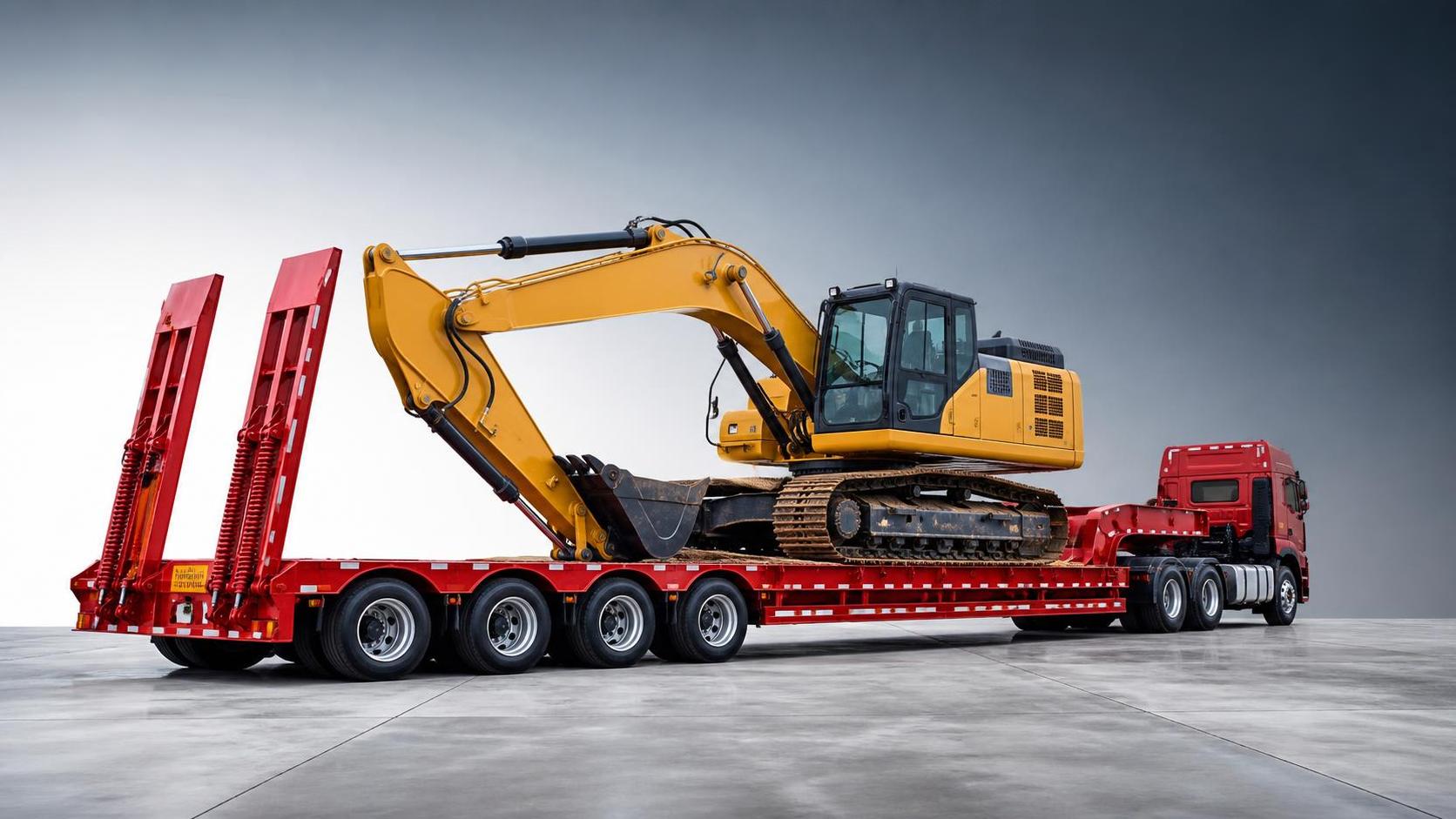
When choosing a Low Plate for heavy equipment transport, the first checks should center on whether the trailer can safely carry the real machine weight, maintain a practical loading height, distribute force correctly across its axles, and withstand long-term structural stress. For technical evaluators, these are not secondary details. They are the baseline factors that determine transport safety, route feasibility, regulatory compliance, and total operating cost.
A low plate trailer that looks suitable on paper can still perform poorly in actual work if its deck structure, suspension, gooseneck design, or loading dimensions do not match the equipment being moved. This is why early-stage evaluation should focus less on broad marketing claims and more on measurable transport conditions. The right selection reduces risk to both machinery and operator while improving delivery efficiency and fleet reliability.
Start with the actual transport task, not the trailer brochure
Technical evaluation should begin with the machine, not with the trailer model list. A Low Plate must be matched to the equipment’s real operating weight, overall dimensions, center of gravity, ground clearance, and loading method.
In heavy equipment transport, nominal machine weight is often not enough for a sound decision. Evaluators should confirm whether the transport condition includes attachments, buckets, booms, counterweights, extra fuel, auxiliary tools, or removable components. These details directly change axle load distribution and deck stress.
The first practical question is simple: what exactly will be transported most often, and under what route and site conditions? A low plate selected for occasional oversized transport differs from one intended for daily hauling of excavators, road rollers, or loaders across mixed road surfaces.
Without this operating definition, even a well-built trailer may become an inefficient asset. It may be too heavy for regular use, too high for route restrictions, or too lightly configured for repeated concentrated loads. A technical review must therefore start from the transport mission profile.
Confirm real load capacity under working conditions
Load capacity is usually the first specification buyers check, but technical evaluators need to go deeper than the rated number. The key issue is whether the Low Plate can support the real payload consistently under braking, cornering, uneven surfaces, and repeated loading cycles.
Rated capacity should be verified against gross vehicle weight, tare weight, axle grouping, and legal transport limits in the destination market. A trailer advertised as suitable for heavy equipment may still become operationally restricted if the full combination exceeds local road regulations.
It is also important to distinguish between evenly distributed load and concentrated point load. Heavy equipment rarely applies force evenly across the deck. Steel tracks, wheel groups, and support legs create localized stress zones. That means deck reinforcement and beam design matter as much as the nominal tonnage rating.
Evaluators should ask where the machine’s main weight sits during transport. If the center of gravity falls too far forward or rearward, the result may be unstable towing behavior, overloaded axles, or poor traction at the tractor head. Capacity must be reviewed as a load-distribution problem, not just a gross weight figure.
For this reason, suppliers should be able to provide structural details, not only sales specifications. Main beam dimensions, steel grade, crossmember spacing, deck plate thickness, and reinforcement around loading zones all help indicate whether the trailer is engineered for real heavy-duty use.
Check deck height early because it affects route access and loading safety
Deck height is one of the most practical selection criteria for a Low Plate, especially when transporting tall machinery. A lower deck improves total transport height, reduces clearance risk, and often makes loading easier for equipment with limited climbing angle tolerance.
For technical evaluators, the correct question is not simply how low the trailer is. The better question is whether the loaded combination remains within legal or operational height limits on the target routes. Bridges, tunnels, overhead cables, plant gates, and construction site entries can all become constraints.
A lower deck can also improve overall stability by reducing the load center height. This matters when the equipment is top-heavy, such as tracked excavators with attachments or machines with elevated structures. Lowering the transport position reduces sway and improves road behavior at speed.
However, deck height should not be considered in isolation. If the trailer sits too low without proper ground clearance or approach geometry, it may scrape on ramps, rough roads, port yards, or site entrances. The best technical decision balances low loading height with workable underbody clearance.
This is particularly relevant in export markets where transport routes may combine paved highways, logistics yards, and undeveloped access roads. A low plate that performs well only on ideal surfaces may create avoidable operational limitations later.
Review axle configuration as a safety and compliance decision
Axle configuration has a direct effect on payload distribution, regulatory compliance, turning behavior, maintenance cost, and tire life. For a Low Plate, this is not a background specification. It is one of the main engineering choices that determines whether the trailer will perform reliably in real conditions.
More axles usually improve load sharing and reduce pressure per axle, but they also add weight, complexity, and maintenance demand. Fewer axles may lower cost and simplify service, yet they can limit payload legality or accelerate wear when moving dense machinery frequently.
Technical evaluators should match axle layout to both machine weight and road conditions. Transporting high-density equipment over long distances generally calls for stronger load sharing and more stable braking performance. A poorly matched axle layout can lead to uneven tire wear, suspension stress, and compliance problems.
Suspension type also deserves close review. Mechanical suspension may offer simplicity and durability, while air suspension can improve ride quality for some applications. The right choice depends on machine sensitivity, route quality, maintenance support, and operator preferences in the target market.
In many cases, the safest approach is to calculate expected axle loading in several realistic loading positions. This reveals whether the design remains acceptable when machines vary slightly in size or are positioned differently during busy operations.
Look closely at frame strength and structural fatigue resistance
For heavy equipment transport, structural strength is not only about surviving maximum load once. The real issue is fatigue resistance over repeated cycles. A Low Plate used in demanding operations must absorb dynamic stress from loading impact, road vibration, uneven terrain, and braking force over time.
Main beams deserve special attention because they carry the core bending load. Evaluators should review beam height, flange thickness, web construction, and reinforcement design. Strong materials alone do not guarantee durability if the load path is poorly designed.
Weld quality is equally important. Stress concentration often appears around gooseneck transitions, axle mounts, suspension brackets, ramp hinges, and crossmember joints. If these areas are not properly engineered and manufactured, cracks may develop long before the trailer reaches its expected service life.
Another useful check is whether the structure has been designed around the actual equipment category. Transporting excavators, pavers, bulldozers, and mining-support equipment places different force patterns on the deck. A general-purpose platform may not be ideal for repeated heavy point-loading applications.
When suppliers can explain design logic clearly and provide production quality controls, technical evaluators gain more confidence in long-term performance. This matters especially for buyers managing fleet uptime and lifecycle cost rather than only purchase price.
Evaluate loading method, ramp design, and usability on site
Many transport problems begin during loading rather than on the road. A Low Plate should be checked for how equipment actually gets on and off the deck, especially when machines have low ground clearance, steel tracks, uneven weight balance, or limited maneuvering space.
Ramp angle is a critical factor. If the angle is too steep, some machines may bottom out, lose traction, or load unsafely. This is common with equipment that has long wheelbases, front attachments, or vulnerable undercarriage components.
Ramp strength and hinge quality also need review. Repeated loading of heavy tracked machines can create high impact loads at the ramp transition point. Weak ramp assemblies quickly become a service issue and may compromise operator safety.
Deck surface design matters as well. Anti-slip treatment, timber or steel contact areas, side protection, and tie-down point arrangement all affect whether loading can be completed quickly and consistently. A technically sound trailer should support predictable loading, not require field improvisation.
For evaluators, usability is part of engineering quality. A trailer that meets load specs but slows site operations or creates frequent loading adjustments can still be the wrong choice for a professional fleet.
Check dimensions, tie-down layout, and equipment fit
One common evaluation mistake is focusing on payload while underestimating dimensional compatibility. A Low Plate must fit the machine’s width, track or tire contact area, loading length, and tie-down requirements without forcing unstable positioning.
Deck width should support the most common equipment types without excessive lateral overhang or awkward wheel placement. If outriggers or extensions are used, their structural integrity and locking reliability should be reviewed carefully.
Loading length should also reflect real operating flexibility. A trailer selected for a single machine size may become limiting when the fleet evolves or attachments vary by project. Technical evaluators should consider both current transport demand and likely near-term equipment changes.
Tie-down points need enough quantity, strength, and positioning to secure different machine shapes effectively. Poorly placed lashing points increase loading time and may prevent correct restraint angles. That creates unnecessary operational risk even when the trailer itself is structurally strong.
Good equipment fit reduces movement, improves balance, and makes securement easier to standardize across operators. That is a real value factor, not just a convenience feature.
Do not overlook regulatory and regional operating requirements
For global buyers and cross-border transport operators, regulatory fit is as important as mechanical fit. A Low Plate must align with axle-load rules, lighting requirements, braking regulations, marking standards, and local dimensional limits in the destination country.
Technical evaluators should confirm whether the supplier understands export compliance rather than only domestic manufacturing standards. Documentation quality, VIN and certification handling, and configuration accuracy are all part of successful delivery and deployment.
This is where working with an experienced commercial vehicle exporter adds practical value. A supplier with established export processes can help align trailer specification with local use conditions, reducing the chance of delays, modification costs, or acceptance issues after arrival.
For equipment transport fleets, compliance mistakes are rarely minor. They can interrupt operations, increase permit dependency, or create liability exposure. Early specification review is therefore far less costly than post-delivery correction.
Assess support, parts availability, and lifecycle cost before purchase
Technical selection should not stop at structural and dimensional checks. A Low Plate is a long-use asset, so parts support, maintenance access, and after-sales responsiveness should be part of the first-round assessment.
Axles, suspension parts, brake components, landing gear, electrical systems, and ramp mechanisms all require service during the trailer’s life. If replacement parts are difficult to source in the destination market, downtime can quickly outweigh any initial price advantage.
Lifecycle cost should include not only purchase price, but also tire wear, maintenance frequency, structural durability, and suitability for repeated use. In technical terms, the lowest procurement price is not always the lowest operating cost.
For companies handling heavy equipment transport professionally, a dependable supplier relationship often matters as much as the product itself. Stable inventory, technical communication, export experience, and coordinated logistics support can materially improve fleet planning and deployment speed.
A practical checklist for technical evaluators
Before approving a Low Plate, technical evaluators should confirm several points in order. First, verify the actual transported machine weight and dimensions under real working conditions. Second, check deck height against route restrictions and loading needs.
Third, calculate axle loading and confirm suspension suitability. Fourth, inspect structural details including main beams, reinforcement areas, and weld quality. Fifth, review ramp geometry, deck usability, and tie-down arrangement for daily operating efficiency.
Sixth, confirm regulatory compatibility for the target country or region. Seventh, evaluate after-sales support, parts access, and expected lifecycle cost. These checks provide a more reliable technical basis than relying on tonnage claims alone.
For buyers sourcing through established commercial vehicle exporters, it is also worth assessing whether the supplier can support customization, documentation, inspection, and logistics in an integrated way. That reduces coordination gaps and helps ensure the delivered configuration matches the approved specification.
Conclusion
The first things to check when choosing a Low Plate for heavy equipment transport are load capacity under real conditions, deck height, axle configuration, and structural strength. These are the factors that most directly affect safety, compliance, loading practicality, and long-term operating reliability.
For technical evaluators, the right decision comes from matching trailer design to actual machine characteristics, route conditions, and service demands. A well-selected low plate does more than move equipment. It protects asset value, reduces transport risk, and supports efficient heavy-duty operations over time.
Search Starts Here