
News
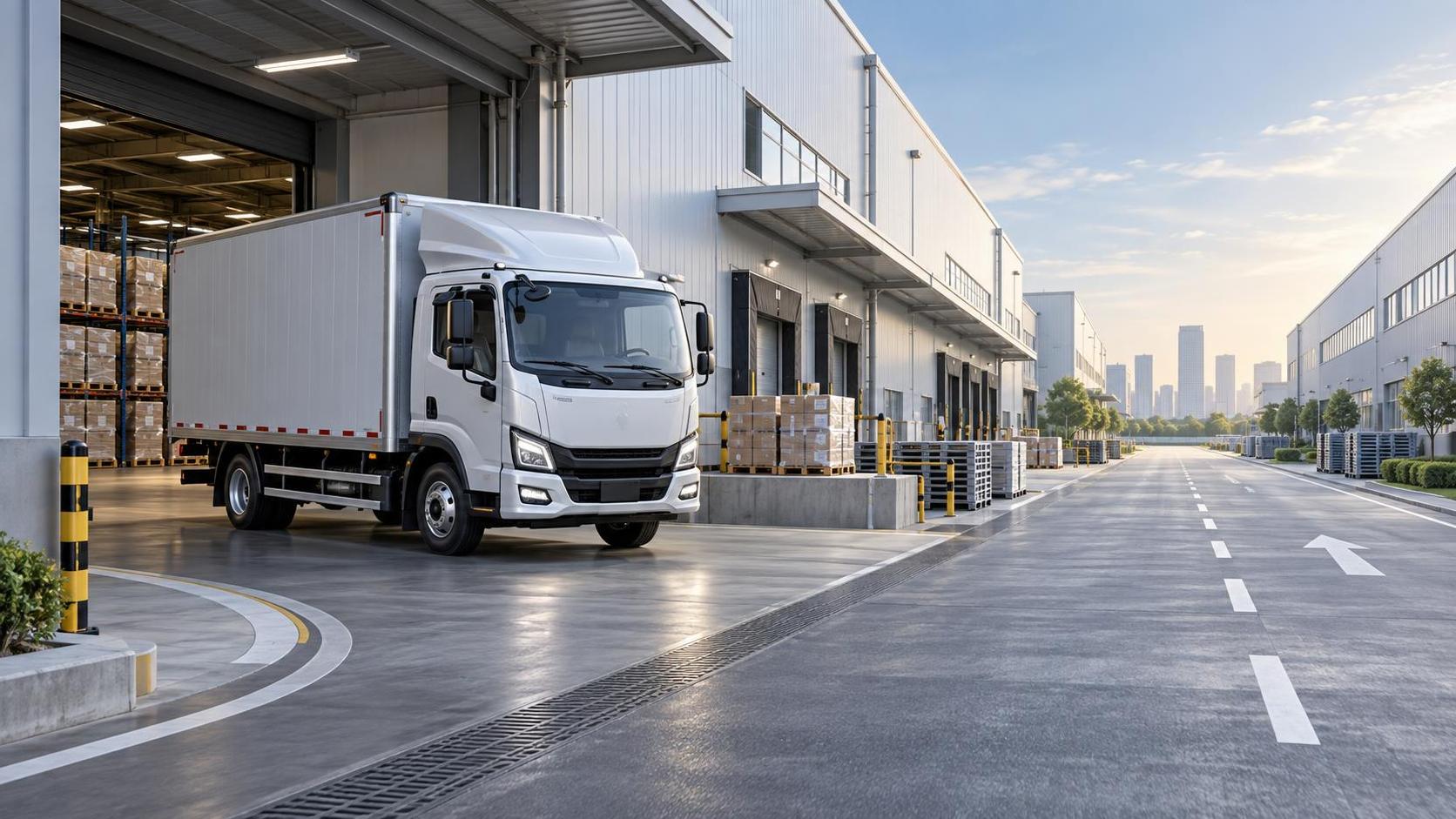
A 4x2 cargo truck makes more sense than a larger truck when the transport task is constrained by access, trip frequency, cubic volume, and total operating cost rather than by maximum payload alone. The right comparison begins with the work actually being performed: load weight by route, loading-dock conditions, daily distance, stop density, body configuration, and the frequency of partially loaded return journeys.
A larger truck can appear to offer better value because it has more payload reserve and a larger body. That reserve becomes expensive when it is seldom used. A vehicle that carries only a fraction of its rated capacity still consumes fuel, occupies road space, requires larger turning areas, and may bring higher tire, maintenance, and financing costs. Where loads are consistently moderate and routes include urban streets, industrial estates, construction support locations, or small distribution points, a lighter two-axle configuration can better match the duty cycle.
Start with the real payload pattern
The most common selection error is to compare nominal payload ratings without reviewing the actual dispatch record. A truck should be sized around the upper range of normal, repeatable loads, with an appropriate margin for variation, rather than around a rare peak load. If the heavier load occurs only occasionally, assigning a larger vehicle to every trip can lock unnecessary capacity into the fleet.
Payload must also be calculated after the body and equipment are specified. The chassis kerb weight alone does not show the operating weight. A dry van body, dropside body, insulated box, tail lift, toolbox, spare-wheel carrier, loading ramps, crane, refrigeration unit, and fuel all reduce the payload available for goods. A 4x2 cargo chassis with a carefully selected body can still carry a substantial commercial load, but the calculation needs to use the completed vehicle weight rather than a catalogue assumption.
Volume deserves equal attention. Many freight movements reach the body’s cubic limit before reaching the axle-weight limit. Packaged consumer goods, furniture, light construction materials, empty containers, plastic products, and palletized low-density cargo can fill a larger truck without making full use of its gross vehicle capacity. In that situation, body dimensions, internal height, door opening, pallet arrangement, and load-securing rails matter more than choosing an additional axle.
Route geometry can outweigh body size
A truck’s productive capacity is reduced whenever it cannot reach the delivery point directly. Tight gates, narrow service lanes, low canopies, crowded loading yards, sharp turns around stored materials, and limited space for reversing can force an oversized vehicle to wait, transfer cargo, or use an alternative unloading point. Those delays are often treated as operational inconvenience, yet they affect labor time, scheduling reliability, and the number of completed trips.
The useful dimensions are not limited to overall length. Wheelbase, front and rear overhang, body width, cab height, ground clearance, approach angle, and steering angle all influence access. A long wheelbase may create a stable platform for a longer body, but it also enlarges the swept path in turns. A short wheelbase improves maneuverability, although rear overhang still needs attention because it can swing into adjacent obstacles during tight turns.
For vehicle-mounted equipment, the body arrangement should be reviewed alongside access. A tail lift needs clearance behind the truck during delivery. Side loading requires usable space beside the body. A curtain-sided body improves access to long loads, but the cargo still needs secure restraint through straps, rails, or suitable anchor points. A truck that reaches the site but cannot unload safely or efficiently is not a good fit.
The fuel question is broader than engine displacement
Fuel economy is a strong reason to favor a smaller truck, but it should not be reduced to engine size. Vehicle mass, axle configuration, tire specification, transmission matching, aerodynamic body shape, idling time, stop-start traffic, and average payload all influence consumption. The relevant measure is fuel used to move the actual goods over the actual route, not fuel used per kilometer on an unloaded road test.
Where cargo weight is moderate, a 4x2 truck avoids carrying the structural mass of an additional driven or non-driven axle on every journey. Reduced rolling resistance and lower unladen weight can improve efficiency, especially on routes with frequent acceleration, braking, and short delivery intervals. The benefit can narrow on steep terrain, unpaved access roads, or routes where the smaller vehicle must make extra trips because its payload or body volume is inadequate.
Engine and drivetrain selection should therefore follow the duty cycle. A distribution truck that spends much of the day in congested traffic benefits from drivability at low and medium speeds, appropriately spaced transmission ratios, and a cooling system suited to stop-start operation. Long intercity work places greater emphasis on cruising efficiency, gradeability, and sustained load performance. Choosing a larger truck merely for a higher-rated engine can create a poor match when the route is mostly low-speed local delivery.
Fleet utilization reveals whether capacity is being paid for twice
Purchase price is visible at the start of the decision, while underutilization is less obvious because it accumulates trip by trip. A larger truck can carry more, but it may carry fewer useful loads per day if it turns slowly at constrained sites, waits for access, or cannot be assigned to smaller routes. A properly specified two-axle vehicle may complete more productive cycles when dispatch needs flexibility rather than maximum single-trip tonnage.
Consider the difference between peak capacity and usable capacity. Peak capacity is the theoretical load a vehicle can legally and mechanically carry under favorable conditions. Usable capacity is what remains after body weight, route restrictions, loading equipment, cargo density, and delivery access are considered. For mixed routes, usable capacity often provides a clearer basis for selection.
A fleet also benefits when one vehicle type can cover several recurring assignments without excessive compromise. A 4x2 Cargo Truck is often well suited to work that alternates between warehouse distribution, dealer replenishment, packaged materials delivery, and service support. The configuration becomes less attractive when the same truck is expected to handle dense bulk cargo one day, oversized machinery the next, and remote rough-road work afterward. Those demands can exceed the sensible operating envelope of a lighter road-oriented chassis.
Body specification determines whether the chassis remains efficient
The cargo body should be designed around loading method and cargo behavior, not selected as a generic add-on. A box body protects freight from weather and suits parcelized goods, but poor internal layout can waste volume. A dropside body offers flexible loading from several sides and can suit materials that are handled by forklift or crane. A flatbed can accommodate awkward lengths, yet it demands robust lashing practice and may expose sensitive cargo to weather. Insulated or refrigerated bodies add weight and alter the payload calculation, so they need particular care.
Wheelbase and body length must be coordinated. Extending body length beyond what the chassis is intended to support can shift weight distribution and place too much load on the rear axle. A body that looks spacious can still be unsuitable if pallet placement causes front-axle unloading or rear-axle overload. The loading plan matters: dense goods positioned at the rear have a very different axle effect from the same weight centered over the body.
Ask for the expected axle loads in loaded condition, not only the gross vehicle figure. This is especially important where the cargo is concentrated, where a tail lift creates rear overhang weight, or where a crane, compressor, generator, or auxiliary tank is mounted. Suspension selection, frame reinforcement, and tire load rating should correspond to the finished truck and its load distribution.
When a larger truck remains the stronger choice
A larger vehicle is justified when the normal work pattern consistently uses the added capacity. This includes dense freight that approaches the available payload on most trips, long-distance lanes where avoiding an extra journey has clear value, high-volume loads that cannot be consolidated efficiently, and operations requiring a body length or specialized equipment beyond a two-axle chassis’s practical layout.
Road conditions also matter. Repeated travel on uneven work sites, loose surfaces, steep approaches, or routes with sustained high axle loads can call for a more robust configuration. The issue is not simply traction. Frame stress, suspension travel, tire durability, brake performance under load, and resistance to frequent impact all affect suitability. A truck that is efficient on paved distribution routes can face accelerated wear when it is treated as a heavy site-haul vehicle.
Do not assume a larger truck is automatically safer because it is heavier. Safety depends on correct load distribution, braking condition, tire selection, body integrity, restraint equipment, visibility, and stable driving behavior. Conversely, selecting a smaller truck beyond its intended payload or body capability creates its own safety and reliability problems. The sound choice is the smallest configuration that performs the normal work without operating near a limit on every trip.
Use dispatch evidence before finalizing the specification
A useful assessment draws on a representative group of completed movements rather than a single busy week. Review shipment weight, pallet count or cargo volume, route distance, delivery addresses, time spent waiting, return-load frequency, and any occasions when a vehicle could not access the site. Separate exceptional loads from recurring loads. If exceptions are rare, they may be served by a different vehicle assignment rather than forcing the whole fleet into a larger class.
- Plot the actual loaded weight against the number of trips. This shows whether high-payload work is routine or simply memorable.
- Record where delays occur: at warehouse docks, city streets, customer yards, construction entrances, or unloading points. Each source of delay points to a different vehicle characteristic.
- Confirm the completed body weight and its equipment before approving payload assumptions.
- Review maintenance records for brake wear, tire damage, suspension issues, and fuel use by route type. These signals are more useful when linked to loads and terrain rather than viewed in isolation.
The best outcome is rarely the truck with the largest specification on paper. It is the configuration that carries the recurring load efficiently, reaches the delivery point without avoidable friction, and leaves enough margin for normal operating variation. Where the workload is distribution-led, access-sensitive, and only moderately weight-intensive, a well-matched 4x2 chassis can be the more disciplined commercial choice.
Search Starts Here