
News
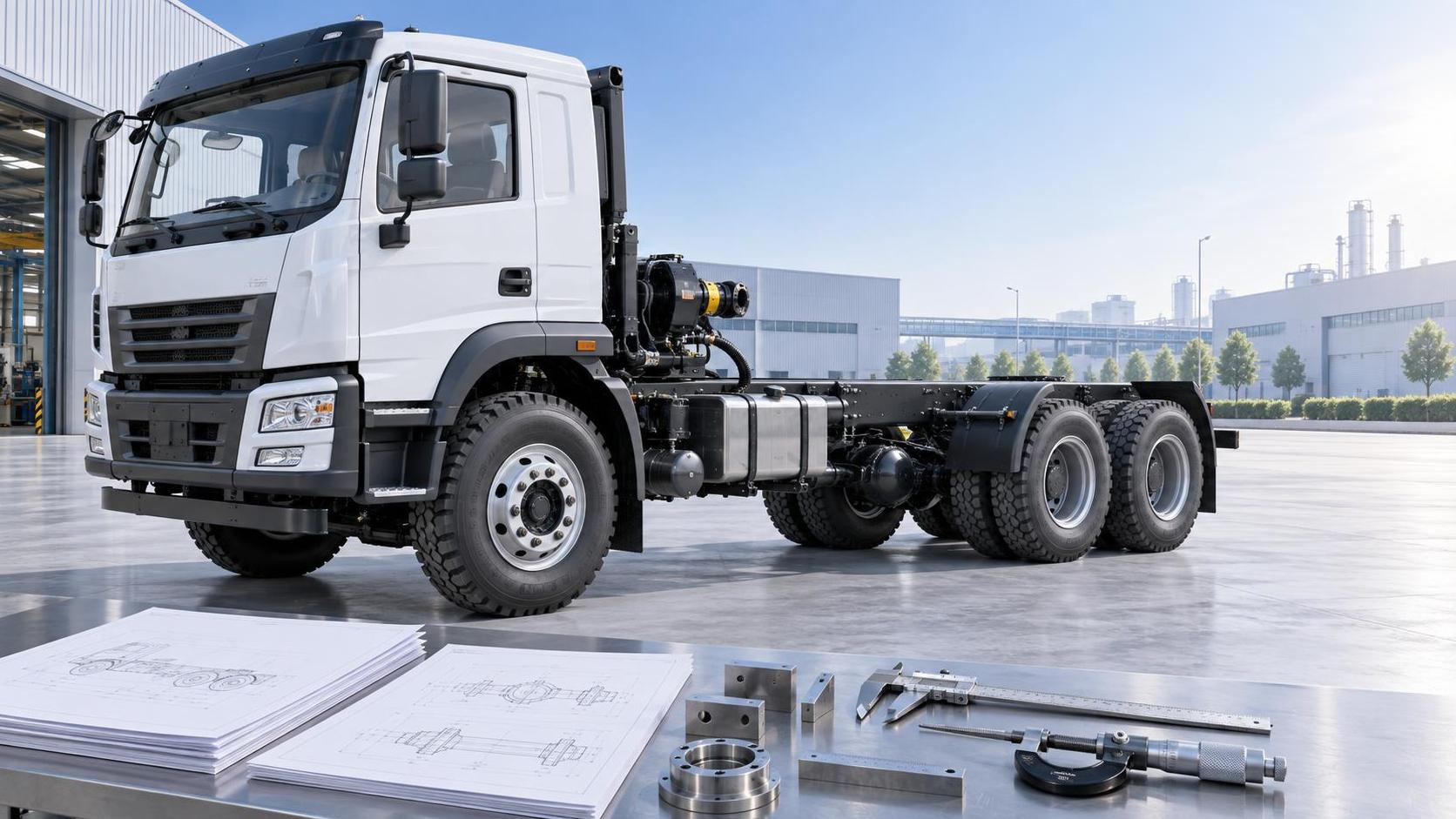
A vehicle configuration list is not a brochure. It is the working document that determines what will actually be built, supplied, shipped, and accepted. Before ordering an engineering vehicle, a buyer may see a model code that appears correct while the engine, axle ratio, cab, tyre specification, body interface, or compliance equipment differs from what the operation requires. Those differences can affect payload, fuel use, site access, maintenance planning, registration, and delivery timing.
The practical way to read a Cangshan Vehicle Configuration List is to review it as a controlled specification: first confirm the exact base vehicle, then trace how each component supports the intended duty cycle, and finally separate standard equipment from options, exclusions, and items still awaiting confirmation. Do not approve the list because the headline model name looks familiar. Approve it only when the configuration can be matched to the operating requirement and the purchase order.
Start with the vehicle identity, not the option list
The first lines of a configuration list normally establish the vehicle family, model designation, chassis number format, drive arrangement, wheelbase, and cab type. This section is easy to skim, but it controls much of the rest of the specification. A similar-looking vehicle can be supplied in different wheelbases, axle layouts, or gross weight versions, each with different body mounting limits and legal operating boundaries.
Check whether the listed model is a complete vehicle, a chassis cab, or a chassis intended for later body installation. For dump trucks, mixers, cranes, tankers, and other engineering applications, the chassis may be ordered separately from the working body. A list that only describes the truck chassis does not automatically confirm the body dimensions, hydraulic system, power take-off arrangement, subframe, or body controls.
- Model code: Confirm that it identifies the exact sales and production version, not only a general series name.
- Drive formula: Verify whether the vehicle is 4×2, 6×4, 6×6, 8×4, or another layout required by road and site conditions.
- Wheelbase and frame length: These affect turning radius, body length, axle loading, and installation space.
- Cab arrangement: Check day cab, sleeper cab, roof height, seating capacity, and steering position where relevant.
- Weight rating: Distinguish between curb weight, gross vehicle weight rating, gross combination weight rating, and the practical payload after body installation.
When the list contains multiple codes for the same item, ask the supplier to explain which code is the ordering code and which is an internal reference. A procurement document should not rely on assumptions made from abbreviated codes alone.
Read the configuration against the actual operating route
The correct specification depends less on the vehicle’s appearance than on its daily work. A truck moving aggregate on rough haul roads needs a different balance of axle capacity, tyres, suspension, and driveline protection than a truck operating mainly on paved urban routes. Likewise, a long-distance tractor must be assessed differently from a short-haul construction vehicle that idles frequently and makes repeated low-speed starts.
Before reviewing individual items, write down the conditions the vehicle must handle: expected payload, typical road surface, grades, distances, ambient temperature, fuel availability, operating hours, body type, and local registration requirements. This reference prevents the discussion from being driven solely by a list of available upgrades.
A vehicle can have a high engine output and still be poorly matched to the task. The transmission and axle ratio determine how that power is delivered. In the same way, a larger fuel tank may be useful for long routes but can reduce available installation space or affect weight distribution. Review each choice in relation to the work rather than treating higher specification as automatically better.
Check the powertrain as one matched system
The engine section should identify the engine model, rated power, torque, emission version, fuel type, intake arrangement, and sometimes the governing or calibration setting. Confirm the power rating unit and determine whether the listed figure is a gross or net value if the document makes that distinction. More importantly, check that the engine is paired with the intended transmission and axle reduction ratio.
Transmission details should include manual, automated manual, or automatic type; number of forward and reverse speeds; and, where stated, a transmission model. For severe-duty work, buyers should ask whether the clutch, gearbox, and power take-off provision are suitable for the body equipment. A hydraulic tipper body, concrete mixer, or crane installation may require a specific PTO type, location, torque capacity, or control method. If a PTO is shown as “prepared” or “available,” that does not necessarily mean it is installed.
The rear axle specification deserves equal attention. It may state axle capacity, housing type, final drive ratio, inter-axle differential, and differential lock arrangement. A low numerical ratio can suit higher road speeds, while a higher numerical ratio may support stronger low-speed pulling ability. Neither is universally correct. The selected ratio should be checked against tyre size, transmission gearing, expected loads, and route profile.
Questions that prevent powertrain ambiguity
- Is the quoted engine exactly the engine installed on the listed chassis version?
- Does the gearbox include the required PTO opening, and is the PTO itself included?
- What axle ratio is specified, and is it appropriate for the planned payload and road speed?
- Are differential locks fitted, and which axles do they serve?
- Does the configuration include the cooling, filtration, and fuel-water separation equipment needed for local conditions?
These questions are especially important when a list combines standard chassis content with optional equipment in the same table. A statement such as “PTO available” or “differential lock optional” should be converted into a clear order status before contract approval.
Do not treat axle, suspension, and tyre lines as minor details
Engineering vehicle downtime often begins with a mismatch between the running gear and the operating surface. The configuration list should show front and rear axle ratings, suspension type, wheel and tyre dimensions, and sometimes the number of leaves in a spring pack or the air-suspension arrangement. These specifications influence carrying capacity, ride behavior, ground contact, body stability, and maintenance exposure.
Tyres should be reviewed by size, construction, load and speed category where supplied, tread type, quantity, and spare wheel inclusion. A tyre size alone does not tell the full story. Road-oriented tread, mixed-service tread, and construction-site tread can behave very differently on wet soil, loose gravel, or paved routes. Confirm whether the tyre brand, pattern, and ply or load specification are fixed, selectable, or subject to supply availability.
Suspension selection also affects body applications. Mechanical suspension can be preferred for certain harsh-duty uses because of its straightforward structure, while air suspension may be selected where ride quality, load management, or certain transport needs take priority. The right choice depends on the vehicle’s duty, body design, and local service capability. The list should identify the actual suspension fitted rather than using a broad term such as “heavy-duty suspension” without further detail.
Separate cab comfort items from operational equipment
Cab entries often contain a long series of features: seats, air conditioning, heater, radio, storage, bunk, electric windows, mirrors, sun visor, steering wheel adjustment, and exterior trim. These are relevant, but they should not distract from equipment that affects safe and effective operation.
Read safety and operating items individually. Look for brake configuration, auxiliary braking equipment where applicable, anti-lock braking provisions, lighting layout, reverse alarm, reflective markings, fire extinguisher provision, emergency tools, mirror type, camera systems, and warning devices. Some features may be compulsory in the destination market or required by the site operator; others may be selected to suit the buyer’s internal policy.
Also verify steering position, instrument units, language of labels, and display configuration. These details may appear small during quotation review but can become difficult to correct after production. Where local rules require particular lamps, guards, conspicuity materials, or warning equipment, place them in the contractual configuration rather than leaving them in an informal comment.
Understand standard, optional, and excluded items
A frequent source of ordering mistakes is the assumption that every item appearing in a list is included. Configuration documents may use different formats: check marks, codes, notes, separate option columns, or symbols that are explained in a legend. Read the legend before comparing vehicles. An item can be standard on one wheelbase and optional on another, or standard for domestic supply but unavailable in an export version.
Create a short approval record with three categories:
- Required and included: Equipment that must be present and is clearly marked as part of the offered configuration.
- Required but not yet confirmed: Items shown as optional, prepared, selectable, or subject to technical confirmation.
- Not required or deliberately excluded: Features that should not affect the price comparison or production schedule.
This approach is useful when comparing quotations from more than one source. A lower vehicle price may reflect missing equipment rather than a more competitive equivalent offer. Compare the complete delivered specification, including chassis preparation, safety equipment, body interface parts, spare wheel arrangement, documentation language, and any requested tools.
Check body compatibility before approving a chassis
For an engineering vehicle, the working body is often the reason the chassis is being purchased. Yet body-related details may be missing from a standard vehicle list. A chassis may be technically capable of accepting a body while still requiring a specific wheelbase, frame reinforcement, PTO, hydraulic tank arrangement, exhaust routing, battery placement, or rear overhang limitation.
Ask for confirmation of the intended body application in writing. The confirmation should address the mounting space, chassis frame condition, allowable body dimensions and mass, PTO and hydraulic requirements, electrical connections, and any changes needed before installation. Avoid relying on a general statement that the chassis is “suitable” for a body type unless the actual body parameters have been reviewed.
Where a body is supplied by another party, ensure both sides are working from the same chassis drawing and configuration revision. Changes such as relocating an air tank or fitting a different fuel tank can affect the body builder’s mounting plan.
Review compliance and export documentation as part of the configuration
Vehicle compliance is not always fully visible from exterior specifications. The list may identify an emission version, speed limitation setting, seat belts, lighting, tyre markings, or other equipment related to destination requirements. These entries should be checked against the intended country of registration and use before the order is released.
Do not assume that a vehicle configured for one market can be registered in another without changes. Ask which technical documents can be provided for the selected version, how the vehicle identification information will appear, and whether the listed configuration matches the export documents. If the destination requires special inspections, body certification, or locally mandated equipment, determine whether those requirements apply to the chassis, the completed vehicle, or both.
The key is consistency. The configuration list, quotation, purchase order, proforma invoice, production confirmation, and shipping documentation should describe the same vehicle version. Differences in engine model, axle ratio, cab type, or emissions specification should be resolved before production, not after the unit has been dispatched.
Turn the list into an approval document
Before signing off, mark every line that changes the vehicle’s operating capability, compliance status, or body compatibility. Request clarification for broad descriptions such as “standard,” “heavy-duty,” “export version,” or “as per factory standard” when they are not tied to a defined item. These phrases can be acceptable only when the underlying specification is documented.
A reliable final review compares four things side by side: the operational requirement, the Cangshan Vehicle Configuration List, the commercial quotation, and the order confirmation. When all four agree on the chassis, powertrain, running gear, cab equipment, options, and body provisions, the buyer has a practical basis for releasing the order. When they do not agree, the unresolved line should be treated as a purchase risk rather than a detail to settle later.
Search Starts Here