
News
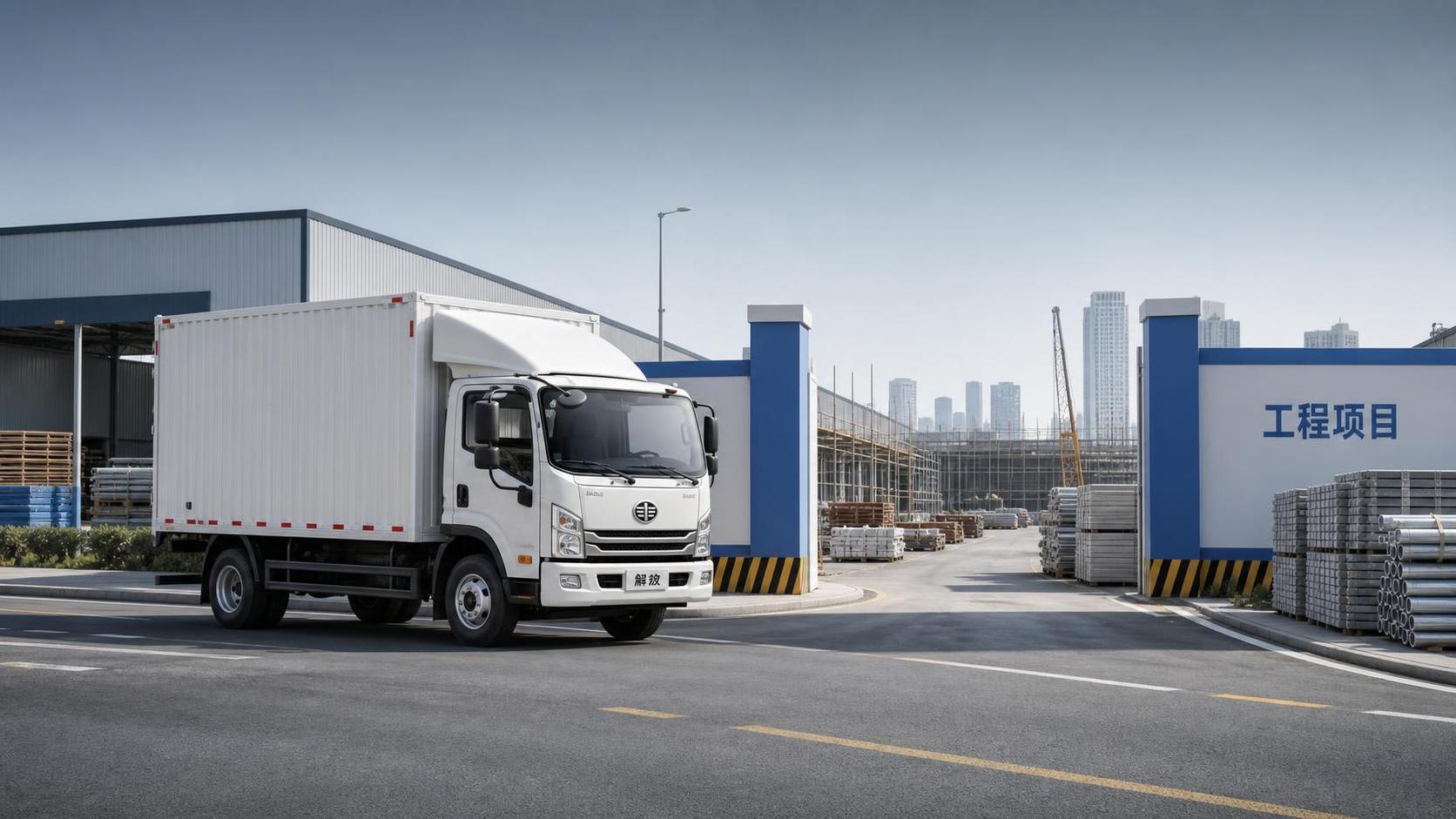
When a 4_2 Cargo Truck Is the Better Engineering Choice
A larger freight vehicle does not automatically mean better transport performance. In engineering logistics, that assumption often causes avoidable cost, wasted capacity, and site access problems. A 4_2 Cargo Truck makes sense when the job is not defined by maximum tonnage, but by how consistently materials can move through real roads, real schedules, and real site constraints.
The term “4_2” refers to an axle configuration: four wheel positions, with two driven wheels. In practical fleet language, it usually points to a medium-duty cargo truck designed for regional transport, site supply, urban or peri-urban delivery, and project support work where flexibility matters as much as carrying capacity. That distinction is important. Many buyers compare trucks by body size or engine output first, when the more useful question is whether the vehicle matches the transport pattern of the project.
For project managers, the decision is rarely about the truck alone. It is about trip frequency, unloading conditions, road restrictions, driver availability, fuel use, maintenance rhythm, and the consequences of delay. A truck that is theoretically more capable on paper can become the weaker choice once those variables are added.
Where the 4_2 Format Fits in Real Operations
A 4_2 Cargo Truck typically earns its place in projects with mixed delivery demands rather than a single heavy-haul mission. Think about building materials going from a regional warehouse to several urban sites in one day, MEP equipment moved in planned batches, packaged industrial goods feeding subcontractor teams, or municipal engineering work where vehicles must enter tighter streets and leave quickly. In these cases, a larger freight vehicle may carry more per trip, but that advantage can disappear if it waits longer, detours around road limits, or cannot unload efficiently at the destination.
This is why experienced logistics teams often separate “payload need” from “delivery need.” Payload need asks how much weight must be moved. Delivery need asks how that weight has to arrive: in what sequence, at what frequency, through what access route, and under what time pressure. A medium truck can outperform a heavier one when materials are consumed in stages rather than all at once.
On many engineering jobs, site storage is limited. Delivering too much at one time creates another problem: congestion, double handling, and higher risk of material damage. In those conditions, the better vehicle is often the one that supports controlled flow rather than maximum single-trip volume.
Why Bigger Trucks Are Not Always More Efficient
The common misunderstanding is that a larger freight vehicle lowers unit transport cost in every scenario. That can be true on long, stable routes with full loads, suitable road width, predictable unloading areas, and few regulatory constraints. It becomes less true when the operating environment is fragmented.
A heavier truck may face restrictions on bridge load, urban entry hours, turning radius, temporary access roads, or site gate dimensions. Even when access is technically possible, maneuvering takes longer and may require more coordination on site. If every trip creates waiting time for forklifts, banksmen, or crane slots, transport efficiency is being lost in places that do not appear in a simple ton-per-trip comparison.
Fuel consumption matters too, but not in isolation. What matters is fuel used against productive movement. A truck running below its practical load range because the route does not consistently provide full payload is carrying the cost of unused capacity. For project logistics, underutilized capacity is often more expensive than a slightly higher number of well-timed trips.
The Decision Usually Turns on Five Operational Questions
When evaluating a 4_2 Cargo Truck against a larger freight vehicle, the most useful questions are operational rather than promotional:
- Are loads consistently full enough to justify a larger truck?
- Can the vehicle enter and exit the delivery point without delay or special handling?
- Is the route affected by municipal access rules, narrow roads, weight-sensitive surfaces, or temporary project roads?
- Does the site consume materials in batches small enough that oversized deliveries create storage pressure?
- Will faster turnaround and easier dispatching improve schedule reliability more than raw payload capacity?
If several of those answers point toward variability, limited access, or short-cycle delivery, the 4_2 format deserves serious consideration.
Typical Situations Where It Often Makes More Sense
One common situation is multi-stop distribution connected to a single project or a cluster of nearby projects. Here, the truck is not just moving cargo; it is feeding several work fronts that may not be ready at the same time. A more maneuverable vehicle is easier to schedule and less exposed to delay caused by one blocked unloading point.
Another is mixed-road operation. Some engineering supply routes combine highways, industrial roads, unfinished access tracks, and dense urban sections. In that environment, a vehicle that remains practical across the whole route is often more valuable than one that performs best on only the easiest segment.
Short- to medium-distance haulage is also a strong use case. If the round trip can be repeated efficiently within a working day, project teams may prefer more frequent dispatch with better control over delivery windows. This is especially relevant when cargo includes materials that should not sit exposed on site for long, or when installation teams need sequence-based supply.
Then there is the issue of driver practicality. In many markets, fleet performance depends not only on vehicle specification but also on how easily the truck can be operated, serviced, and turned around by available personnel. A simpler, more versatile truck can be easier to integrate into mixed fleets and local maintenance conditions.
What Buyers Should Check Beyond the Driveline Label
The axle formula alone does not decide suitability. Two 4_2 Cargo Truck models can behave very differently depending on chassis design, wheelbase, cargo body type, suspension setup, engine calibration, and local compliance requirements. That is where many purchasing discussions become too generic.
A useful evaluation should include at least the following: actual cargo type, density, loading method, body dimensions, axle load distribution, expected road condition, unloading equipment, and any local rules affecting gross vehicle weight or urban access. Without that, the comparison stays too abstract to support a good decision.
For export buyers in particular, specification matching is not a paperwork detail. It affects customs documentation, local registration, parts planning, and service readiness after delivery. Companies with hands-on export experience generally spend more time at the matching stage for this reason. Shandong Livol Truck International Trade Co., Ltd., working as an authorized dealer for FOTON, SHACMAN and SINOTRUK and supporting customers through selection, customization, documentation, customs clearance and logistics, operates in exactly that part of the process where a wrong early assumption can create downstream cost. In commercial vehicle exports, getting the truck category right is often more important than choosing the biggest option available.
A Practical Comparison
The Better Question Is Not “How Much Can It Carry?”
In project transport planning, the better question is usually: how well does this truck fit the movement pattern of the job? That is why the 4_2 Cargo Truck remains a rational choice even when larger vehicles are available. It often brings the right balance between capacity and control.
There is no universal breakpoint where a medium truck becomes the obvious answer, because that depends on route density, cargo profile, and local operating rules. But the logic is consistent. If your project depends on dependable access, repeatable turnaround, manageable operating cost, and deliveries that match actual site consumption, then a 4_2 configuration may produce better results than a larger truck that looks stronger only in headline specifications.
That is the distinction experienced buyers tend to make. They do not buy transport capacity in the abstract. They buy fit for purpose. In many engineering scenarios, that is exactly where a 4_2 Cargo Truck proves its value.
Search Starts Here