
News
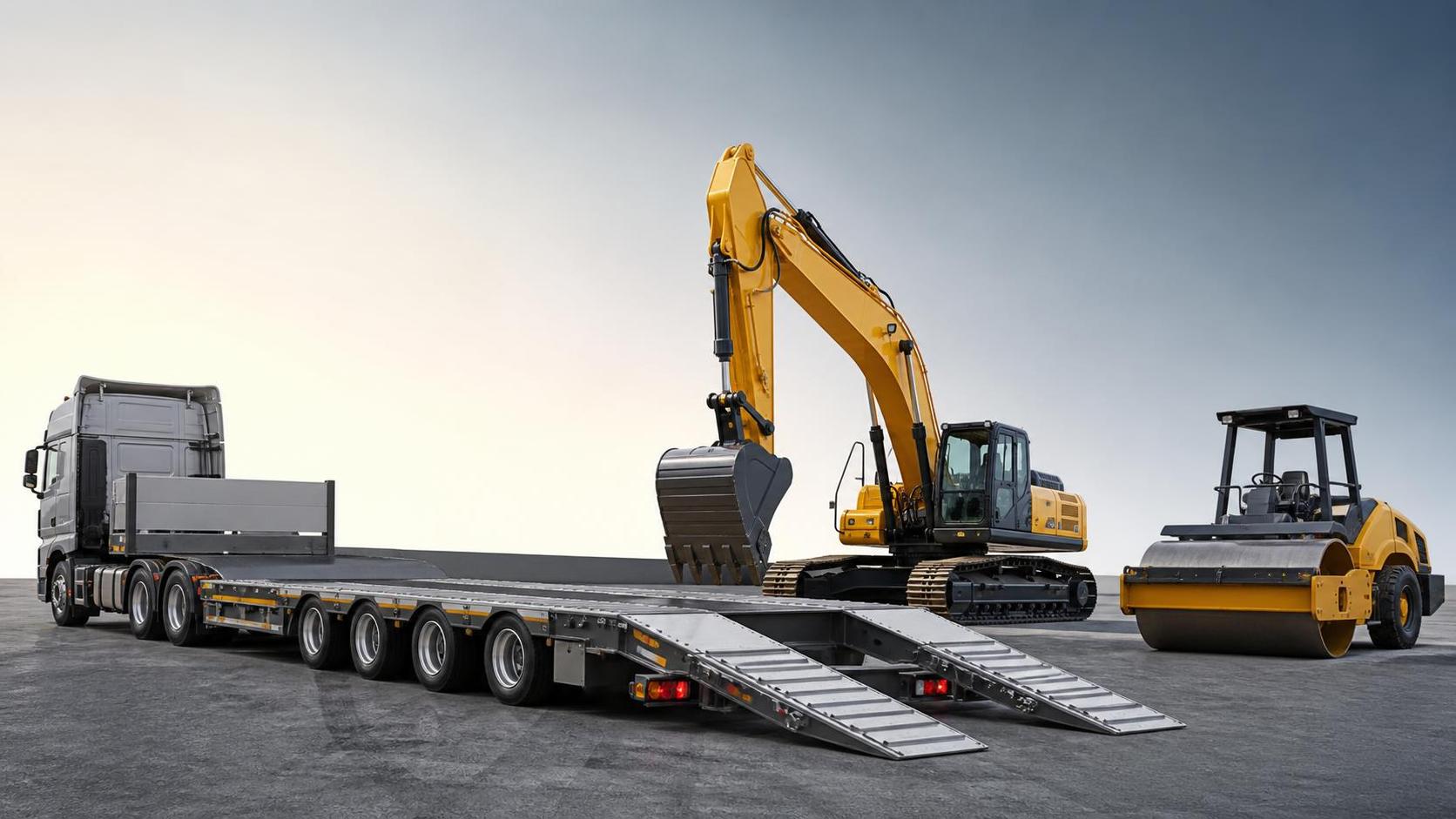
Low Plate Trailer Ground Clearance: How It Impacts Equipment Loading Risk
When a machine scrapes the trailer deck before its center of gravity is fully on board, the problem is rarely operator error alone. In most cases, the real issue starts lower: ground clearance, deck height, ramp transition, and how those dimensions interact with the machine being loaded. With a Low Plate trailer, that interaction decides whether loading is smooth, slow, or one bad angle away from underbody damage.
People often focus on payload first, which is understandable. But in field use, loading risk is usually shaped earlier by geometry. A low deck is valuable because it improves transport stability, helps with height-restricted routes, and makes it easier to carry excavators, rollers, loaders, and other heavy equipment without pushing overall vehicle height too far. The trade-off is that a lower deck can create a sharper breakover point between ground, ramp, and platform. That is exactly where risk shows up.
The term Low Plate may sound simple, but operators know that not all low-bed or low-deck configurations behave the same way at the jobsite. Two trailers can both be considered low plate units and still perform very differently when loading a tracked excavator on compacted gravel, a wheeled paver on wet concrete, or a tall machine with vulnerable hydraulic lines routed beneath the chassis. Ground clearance is part of the trailer design, but loading safety depends on the clearance relationship between trailer and cargo, not on one number in isolation.
Where clearance becomes a real loading problem
The most common mistake is assuming that a lower trailer always makes loading easier. It often helps, but only up to a point. If the rear transition is too abrupt, a machine with long wheelbase, low belly clearance, or rear overhang can bottom out at the hinge area or deck entry. This happens with road rollers, asphalt equipment, some telehandlers, and certain construction machines fitted with low-mounted stabilizers or attachments. A trailer that works well for crawler excavators may create a completely different risk profile for wheeled equipment.
Tracked machines tend to tolerate uneven contact better because the track distributes load and maintains traction over the ramp. Even then, the issue does not disappear. A long-boom excavator with a belly guard, travel motor protection, or add-on piping can still strike the deck edge if the approach angle is wrong. Operators sometimes compensate by increasing speed slightly to “carry” the machine over the transition. On paper that sounds like a practical trick. On site it raises impact load, increases slip risk, and reduces the driver’s ability to correct alignment.
Wheeled equipment is less forgiving. Pneumatic tires compress, which can help on a mild ramp, but on a steep or broken transition they also change weight transfer quickly. The front axle climbs, the center shifts, and then the rear section can drag before the machine is settled. That is where deck edge damage, tire spin, or ramp kick-out can begin.
Ramp angle is only part of the story
Loading discussions often reduce everything to ramp angle. In practice, three angles matter: the ramp incline, the breakover angle at deck entry, and the departure angle at the rear contact point. Ground clearance affects all three because the lower the trailer sits, the more sensitive the transition becomes if the ramp length and neck geometry are not matched properly.
A longer ramp usually softens the approach, but it does not automatically solve belly contact. If the trailer deck is very low and the hinge point sits high relative to the ramp foot, the machine can still hang up at mid-transition. This is why experienced operators inspect the whole loading path rather than judging by deck height alone. They look at ramp length, ramp support, ground firmness, suspension behavior, and whether the trailer remains level while the machine starts climbing.
On uneven ground, the numbers change again. A slight slope, a rut at the ramp base, or soft fill beneath one landing point can alter the effective angle enough to create contact where none was expected. Many loading incidents happen in temporary work zones, quarry edges, equipment yards, or roadside staging areas where the trailer is not parked on ideal pavement. That site condition matters more than sales literature ever suggests.
Why machine type changes the clearance requirement
A low deck that suits one fleet may be a poor fit for another, even at the same payload class. Excavators are often loaded with the boom position adjusted to manage balance, and their tracks can bridge minor irregularities. Soil compactors and milling machines behave differently. They may carry more of their vulnerability underneath, with less tolerance for abrupt deck entry. Agricultural and special-purpose equipment can be even trickier because access ladders, toolboxes, drawbars, or low-hanging components are not always obvious from a distance.
This is one reason customers in export markets often ask not only for trailer capacity, but also for practical compatibility with the machines they already run. In commercial vehicle export work, especially across mixed fleets and mixed road conditions, the discussion around trailer selection usually becomes very specific very quickly: What equipment will be loaded most often? On prepared yards or on project sites? Is the equipment self-propelled, winched, or assisted? Are loading ramps used every day, or only occasionally? These questions reveal loading risk faster than a generic brochure comparison.
Low clearance helps on the road, but can complicate the loading zone
The operational value of a low plate trailer is clear when route height is tight or when heavier equipment needs a lower center of gravity during transport. That lower stance can improve perceived stability during travel and reduce the headache of transporting tall machines. Yet the same low profile can reduce margin at the rear structure, cross members, and approach transition. This becomes especially relevant in regions where loading areas are rarely standardized.
For transport companies moving between urban construction sites, mining support yards, and infrastructure projects, the trailer does not meet the same surface every day. A unit that loads perfectly at a depot may struggle when the machine has to board from a drainage edge, a temporary steel plate, or ground hardened unevenly after rain. Under those conditions, low ground clearance is not a flaw by itself. It simply leaves less room for poor setup.
That is why experienced crews treat loading as a site operation, not just a transport step. They check approach path, not just trailer condition. They watch whether the trailer suspension squats as the machine climbs. They account for mud packed into tracks and attachments that change the machine’s effective shape. And they know that a machine clearing the ramp by a few centimeters in the yard may not clear it at all after the loading point has shifted into soft ground.
Questions that matter more than the nominal deck height
When buyers compare low plate trailers, deck height is usually one of the first figures they ask about. It is relevant, but it does not answer the whole loading risk question. A better starting point is a short practical review:
- What is the lowest exposed point on the equipment during loading, not just during transport?
- How long is the machine wheelbase or track contact length relative to the ramp transition?
- Will loading happen mainly on level paved surfaces or on temporary site ground?
- Does the machine climb under its own power, or is winching part of the normal process?
- Is there enough room to straighten the approach, or must the machine board with slight steering input?
These are field questions, not catalog questions. They are also the questions most likely to prevent damage to undercarriage guards, hydraulic lines, mudguards, ramps, and deck edges.
Selection and support matter when fleets operate across different markets
For companies sourcing transport equipment internationally, the challenge is often broader than one machine and one trailer. Fleet operators may need compatibility across several equipment categories while also considering spare parts support, delivery timing, and practical configuration advice. That is where an experienced commercial vehicle supplier becomes useful, especially when the conversation goes beyond unit price.
Shandong Livol Truck International Trade Co., Ltd., based in Shandong, China, works in this environment as a commercial vehicle exporter with authorized access to FOTON, SHACMAN and SINOTRUK resources, supported by domestic and overseas dealer channels, 4S store networks, and vehicle inventory for stable supply. In projects where customers are choosing transport solutions for mixed heavy equipment use, that kind of supply and export coordination can matter because trailer selection, customization, documentation, customs handling, and logistics are often tied together. A trailer that suits the load profile but arrives with the wrong practical configuration still creates cost on the ground.
The more varied the operating conditions, the more valuable it is to discuss actual equipment dimensions, loading surfaces, and regional use habits before finalizing a low plate setup. This is less about selling complexity and more about avoiding the familiar problem of a trailer that is technically correct on paper but awkward in daily loading work.
A useful way to judge risk before the first load
If the main concern is loading safety, ground clearance should be reviewed as part of a loading geometry check, not as a standalone specification. Look at the machine’s lowest points, the rear transition of the trailer, the expected ground condition, and the actual loading method. A low plate trailer can be an excellent match for heavy equipment transport, but only when the low deck is supported by sensible ramp design and realistic site assumptions.
The simplest field rule is this: if the loading setup depends on speed, repeated repositioning, or “it usually clears,” the margin is already too small. Better decisions come from checking the approach angle, the breakover risk, and the site surface before the machine starts climbing. That is where loading delays, underbody strikes, and avoidable repair costs are usually decided.
Search Starts Here