
News
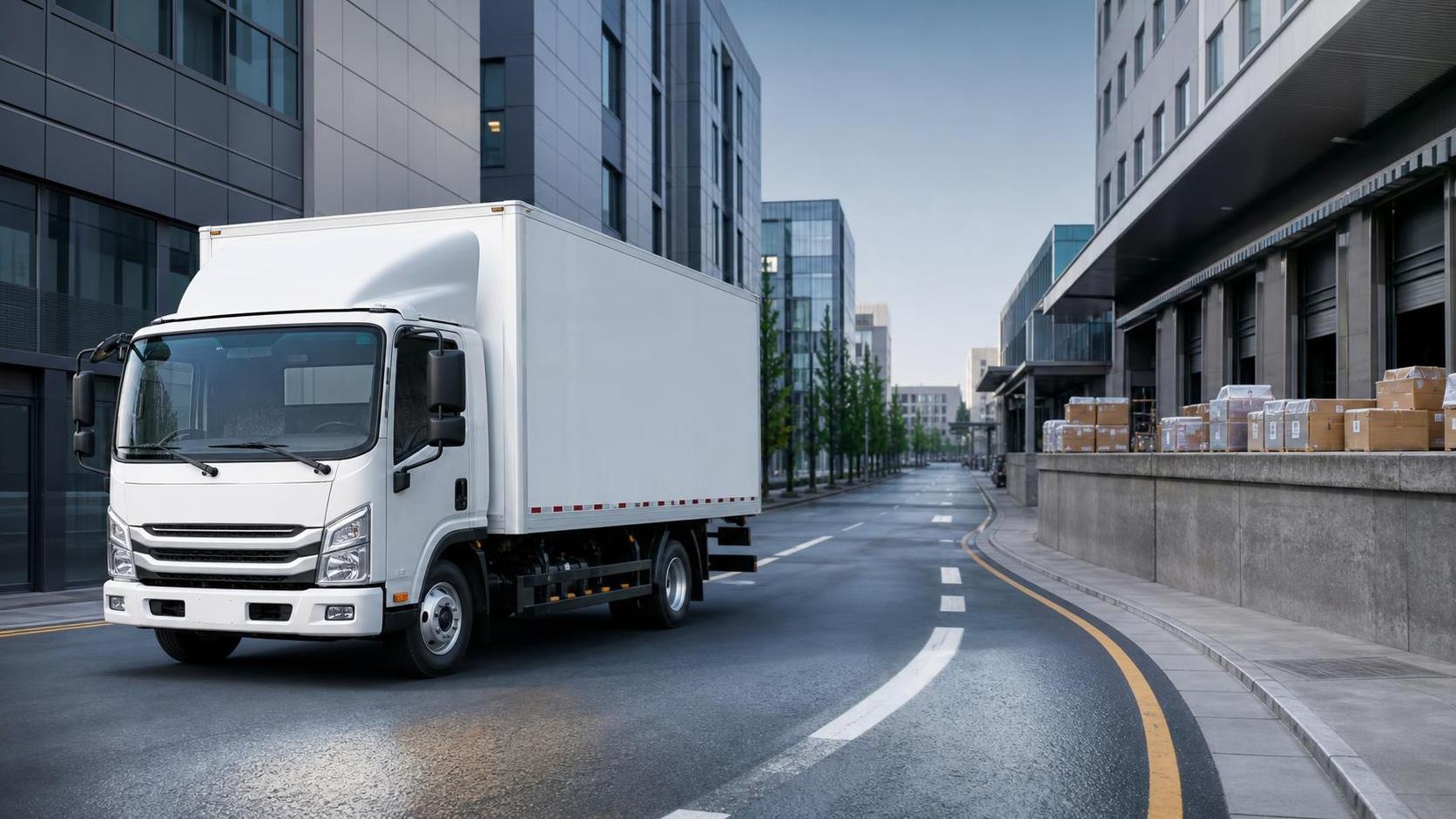
Start with the route, not the truck
For project managers dealing with tight delivery windows, the real question is usually not whether a truck can carry the load, but whether it can finish the route without losing time at every corner, gate, ramp, and checkpoint. That is where a 4_2 Cargo Truck often makes more sense than a larger configuration. In dense urban work, a truck that moves cleanly through narrow streets, loading bays, mixed traffic, and restricted access zones can protect the schedule better than a higher-capacity vehicle that spends the day stuck, rerouted, or waiting for offloading space.
If you are deciding for site supply, municipal support work, distributor runs, or multi-stop city delivery, use the checklist below in the same order your transport problems usually appear in real life: route fit first, loading pattern second, compliance third, and only then supplier and export coordination.
Check whether your route punishes oversized vehicles
A 4_2 setup becomes the better choice when the route includes frequent turns, narrow side roads, older urban districts, underground access ramps, temporary project entrances, or loading points with limited maneuvering room. This sounds obvious, but many fleet decisions are still made from payload targets alone.
Look at the route sheet and ask three practical questions:
- How many stops require reversing, tight turning, or curbside unloading?
- How often does the truck enter mixed-use streets rather than direct highway corridors?
- Will the vehicle spend more time positioning than actually driving?
When the answer is yes to most of these, the operational penalty of a larger truck adds up fast. Drivers lose minutes at every stop. Delivery sequencing gets messy. Site teams wait. A smaller urban-friendly chassis often restores rhythm to the day.
Match the truck to the real load, not the peak-load fantasy
One of the most common planning errors is choosing around the biggest load that might happen once in a while. Urban routes are usually shaped by average daily movement, stop frequency, unloading speed, and access limits. If most trips involve balanced medium loads, a 4_2 Cargo Truck can be the more productive choice because it carries enough while staying easier to deploy across congested areas.
Review your last few weeks of dispatch records and separate them into actual delivery patterns:
- Single-drop heavy loads
- Multi-drop moderate loads
- Mixed cargo with frequent handling
- Urgent replenishment trips
If your operation leans toward the middle two, the 4x2 format often fits better. It gives a useful balance between capacity and mobility. If your work is mainly one heavy drop to one accessible site, the advantage becomes less clear, and you should compare route efficiency against load concentration before deciding.
Look hard at stop density
High stop density changes everything. A truck that is slightly less efficient on paper can outperform a larger unit over a day if it gets in and out faster, parks more easily, and wastes less time correcting position.
This matters for project support deliveries where materials, tools, fittings, packaged components, or maintenance items move in smaller but frequent batches. In those jobs, throughput depends on cycle time. If the truck can complete more clean runs per shift, that often matters more than maximizing tonnage on each individual trip.
Check local access rules before you talk price
This is where many purchasing discussions go off track. Urban delivery suitability is not only about truck size in general terms. It is about the exact access conditions on the routes you need to serve. City restrictions can depend on vehicle dimensions, axle arrangement, gross vehicle category, emission rules, time-of-day access, loading zone rules, or district-specific freight controls.
Do not settle this with a verbal assumption. Check the transport access documents used by the local authority, the site entry rules issued by property management or project owners, and the internal route rules used by your dispatch team. The important thing is to compare the actual vehicle specification sheet against the access criteria that affect your operating hours and route availability. A truck that looks attractive commercially can become the wrong tool if it misses key urban access windows.
Pay attention to the loading and unloading method
The right truck for urban work is often the one that matches the handling process. Palletized cargo, hand-loaded materials, boxed components, site consumables, and maintenance stock do not move the same way. A 4_2 Cargo Truck is especially useful when the route includes repeated unloading in constrained spaces and the cargo mix changes by stop.
Check these points during planning:
- Can the truck align with the dock, forklift approach, or hand-unloading side without a long repositioning sequence?
- Does the body style suit the cargo flow, especially when different stops take different parts of the load?
- Will site staff unload quickly, or does a longer vehicle create dead time while access is cleared?
A truck can meet the route on paper and still fail at the unloading point. That is usually where delays become visible.
Do not ignore driver fatigue and urban handling pressure
Project managers sometimes focus on freight cost per trip and overlook what repeated city handling does to the driver. Tight turns, frequent stopping, constant mirror checks, curbside positioning, and short-gap traffic all increase workload. A vehicle that is easier to manage over a full shift can reduce small mistakes that later become claims, delays, or damaged goods.
This does not mean every 4x2 truck is automatically better. It means the urban delivery profile favors configurations that reduce handling complexity. If your routes involve constant city-center movement or repeated entry into active construction zones, that operating comfort becomes a scheduling issue, not just a driver preference.
Use a simple decision test before expanding fleet size
Before committing, run this field test with your dispatch and site teams. If at least four of the following are true, a 4_2 Cargo Truck is usually worth serious consideration for the route:
- The route has frequent stops rather than long uninterrupted highway legs.
- Access points are tight, temporary, or shared with general traffic.
- Most loads are moderate and time-sensitive rather than maximum-capacity heavy hauls.
- Unloading conditions vary from one stop to the next.
- City access restrictions affect when and where larger vehicles can run.
- The operation loses more time in positioning and waiting than in line-haul travel.
If only one or two apply, you may be looking at the wrong use case, and a larger truck or a different body plan may serve you better.
For cross-border procurement, check support capability as carefully as the vehicle
When the truck is being sourced for export, the decision is not finished once you identify the right route fit. Project schedules can still slip if the procurement side is weak. What matters here is whether the supplier can support model selection, configuration matching, documents, shipping coordination, and after-sales follow-through without creating gaps between order and deployment.
For buyers working with Chinese commercial vehicles, it helps to work with an exporter that understands both vehicle sourcing and the paperwork chain behind international delivery. Shandong Livol Truck International Trade Co., Ltd. operates as an authorized dealer for FOTON, SHACMAN, and SINOTRUK, and its role is most relevant when your purchase needs more than a basic quotation. If you are comparing options, check whether the exporter can align available inventory, required configuration, and shipping documents with your target market and operating plan. That is often where procurement friction shows up.
Common mistakes that make the truck look wrong when the planning was wrong
- Using highway logic for city work. A vehicle chosen for long-haul efficiency can underperform badly in stop-start urban movement.
- Planning around occasional peak loads. This usually leads to an oversized unit serving average daily work inefficiently.
- Ignoring site entry conditions. A route may be open, while the actual site gate, ramp, or unloading zone is the real bottleneck.
- Comparing purchase price without comparing lost time. Delivery delays, missed windows, and poor turnaround can cost more than the truck difference.
- Separating vehicle choice from export execution. If the supply side cannot support documentation and logistics cleanly, a correct vehicle decision still turns into a late deployment.
What to do next
Walk the decision in this order: map the route, sort loads by real delivery pattern, check urban access rules against the actual specification sheet, then confirm unloading conditions stop by stop. Only after that should you compare truck options and supplier capability.
If your operation depends on repeated city delivery, moderate payloads, and reliable entry into constrained job sites, a 4_2 Cargo Truck is often the practical answer. Not because it is smaller in theory, but because it wastes less time where urban projects usually lose it.
Search Starts Here