
News
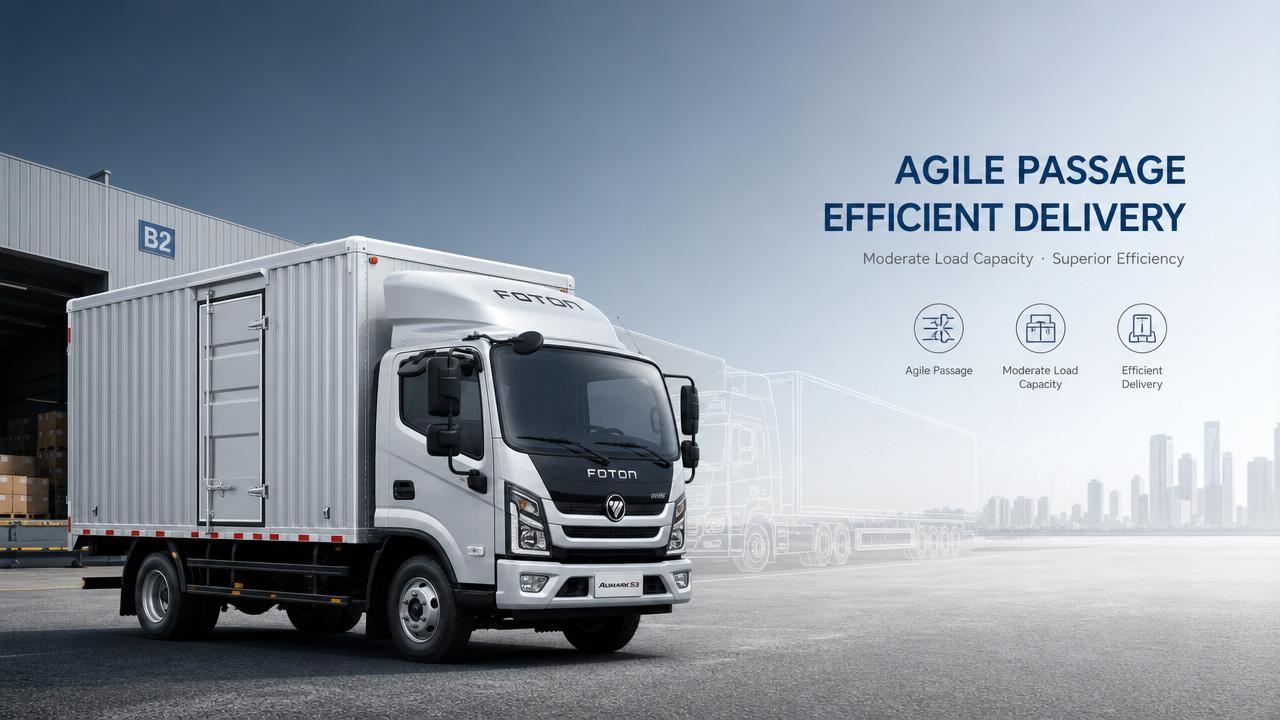
Choosing the right truck can significantly affect delivery efficiency, operating costs, and business flexibility. In many transport scenarios, a 4_2 Cargo Truck offers a smarter balance than a larger freight vehicle, especially for urban logistics, regional deliveries, and businesses seeking lower fuel use with dependable payload capacity. Understanding when this truck type is the better option helps buyers make practical and cost-effective decisions.
Why the market is shifting toward right-sized freight capacity
Across the commercial vehicle industry, one clear change is reshaping buying decisions: more transport users are no longer choosing the biggest truck they can afford. Instead, they are choosing the truck that matches route density, road access, loading frequency, and fuel economics. This shift is particularly visible in city distribution, short-to-medium regional transport, construction support logistics, retail replenishment, agricultural delivery, and industrial spare-parts movement. In these scenarios, a 4_2 Cargo Truck is increasingly seen as a strategic tool rather than a compromise.
The reason is simple. Freight demand is becoming more segmented. Many end users now operate in tighter delivery windows, face rising fuel costs, and need vehicles that can enter mixed road conditions without wasting payload potential. Larger freight vehicles still have a vital role in long-haul, bulk transport, and high-volume corridor movement. However, where shipment sizes are moderate and trip frequency is high, a 4_2 Cargo Truck often delivers stronger overall efficiency.
This is not only a product trend. It reflects broader operational change. Fleet owners, distributors, contractors, and owner-operators are under pressure to improve asset utilization, reduce idle capacity, and maintain service reliability. In that environment, the question is no longer “How large can the vehicle be?” but “How well does the vehicle fit the real transport task?”
The main signals showing when a 4_2 Cargo Truck becomes the better choice
Several market signals point to situations where a 4_2 Cargo Truck is a better investment than a larger freight vehicle. These signals are practical, measurable, and directly connected to operating results.
For end consumers and business buyers, these signals matter because they reveal a hidden cost issue: oversized vehicles can create efficiency loss when actual transport needs do not justify their scale. The larger truck may look stronger on paper, but if its routes are underfilled, delayed by access restrictions, or burdened by higher running costs, the ownership case becomes weaker over time.
What is driving this change in truck selection
The rising appeal of the 4_2 Cargo Truck is being driven by a combination of economic, operational, and infrastructure-related factors. Buyers should understand these drivers because they help explain why this preference is more than a short-term reaction.
1. Delivery networks are becoming more decentralized
Distribution is moving closer to end users. Warehouses, local depots, temporary construction storage points, and regional transfer centers are spreading transport demand across shorter distances. This reduces the need for maximum freight size on every route and increases the value of flexible vehicle deployment.
2. Access conditions are becoming more complex
Many delivery environments now include urban streets, industrial parks, residential edges, narrow approach roads, and mixed pavement conditions. A larger freight vehicle may struggle with turning radius, parking, unloading access, or local route restrictions. A 4_2 Cargo Truck often navigates these conditions with fewer disruptions.
3. Buyers are focusing more on total operating value
The purchasing mindset is changing from initial vehicle size to life-cycle logic. End users increasingly compare fuel use, maintenance burden, downtime exposure, tire wear, loading efficiency, and driver comfort. In many moderate-load applications, a 4_2 Cargo Truck offers a better balance between carrying ability and daily operating economy.
4. Vehicle technology has improved the capability of medium-duty platforms
Modern engineering has helped medium-duty commercial vehicles become more durable, efficient, and application-specific. Better drivetrains, improved cab comfort, stronger chassis design, and more refined body configurations mean today’s 4_2 Cargo Truck can support a broader range of transport jobs than older models could.
Where a larger freight vehicle still wins, and where it no longer does
Trend-based decision-making does not mean larger freight vehicles are outdated. It means their advantages are becoming more route-specific. The smartest buyers compare the vehicle with the job, not with assumptions about size.
A larger freight vehicle remains the better choice when freight volume is consistently high, route distance is long, road access is open, and loading efficiency depends on maximizing tonnage per trip. Bulk commodity transport, intercity trunk logistics, and heavy industrial distribution are obvious examples.
But that advantage fades when routes involve frequent stops, smaller delivery batches, difficult loading points, or changing cargo types. In those cases, a 4_2 Cargo Truck can outperform by enabling more practical scheduling, easier loading and unloading, lower consumption, and more consistent use rates. The market change is not about replacing all heavy freight vehicles. It is about reducing overcapacity in operations where smaller but capable trucks create stronger daily returns.
Industries and users feeling the biggest impact
Not every buyer feels this shift in the same way. Some sectors benefit more directly from the flexibility of a 4_2 Cargo Truck, especially where operational variety is high.
For these users, vehicle choice is increasingly tied to business continuity. A truck that arrives where it needs to go, on time and without unnecessary cost, has more value than one that only offers bigger theoretical capacity.
What buyers should watch before choosing a 4_2 Cargo Truck
Even though the trend is clear, not every 4_2 Cargo Truck is right for every operation. Buyers should evaluate the decision through real operating signals rather than through brochure comparison alone.
Match body configuration to cargo reality
The right cargo body, sidewall design, or specialized setup can have as much impact as the chassis itself. If the truck handles packaged goods, building materials, machinery parts, farm products, or mixed industrial loads, the body design must support loading method, protection needs, and unloading speed.
Evaluate route patterns, not just maximum load
If most trips run below the payload threshold of a larger vehicle, then a 4_2 Cargo Truck may generate stronger efficiency. Buyers should review average trip distance, average load factor, stop frequency, and idle time. These are often more useful than focusing only on top-end capacity.
Look at service support and parts availability
A good truck decision is also a support decision. Reliable supply, fast delivery, documentation accuracy, customization capability, and after-sales response all affect long-term value. This is especially important in export markets, where professional dealer backing can reduce delays and protect fleet uptime.
How the next phase of demand may evolve
Looking ahead, demand for the 4_2 Cargo Truck is likely to stay connected to three continuing directions. First, transport users will keep optimizing around route efficiency rather than vehicle size alone. Second, urban and regional distribution will continue rewarding trucks that balance payload with mobility. Third, buyers will place greater weight on supplier reliability, customization, and full-process export service.
This is where experienced commercial vehicle exporters create additional value. Companies such as Shandong Livol Truck International Trade Co., Ltd. help buyers move beyond simple product selection by supporting model choice, customization, documentation, customs clearance, logistics coordination, and after-sales communication. For end consumers in overseas markets, that integrated support can reduce procurement risk while improving fit between vehicle and application.
Practical judgment questions before making a final decision
If you are deciding whether a 4_2 Cargo Truck is better than a larger freight vehicle, focus on a few practical questions:
- Are your loads consistently large enough to justify a bigger truck, or are you often paying to move unused capacity?
- Do your routes involve city access, narrower roads, site delivery, or frequent stop-and-go operations?
- Is fuel economy and daily operating cost becoming a bigger concern for your business?
- Do you need one truck to cover multiple transport tasks across changing business conditions?
- Can your supplier provide stable inventory, customization, export documentation, and after-sales support?
If the answer to several of these questions is yes, the current market direction suggests that a 4_2 Cargo Truck may be the more resilient and cost-effective choice. The broader industry change is clear: buyers are rewarding fit, flexibility, and real operating value. If you want to judge how this trend affects your own business, the next step is to confirm your route structure, cargo profile, loading habits, and support requirements before selecting the final vehicle specification.
Search Starts Here