
News
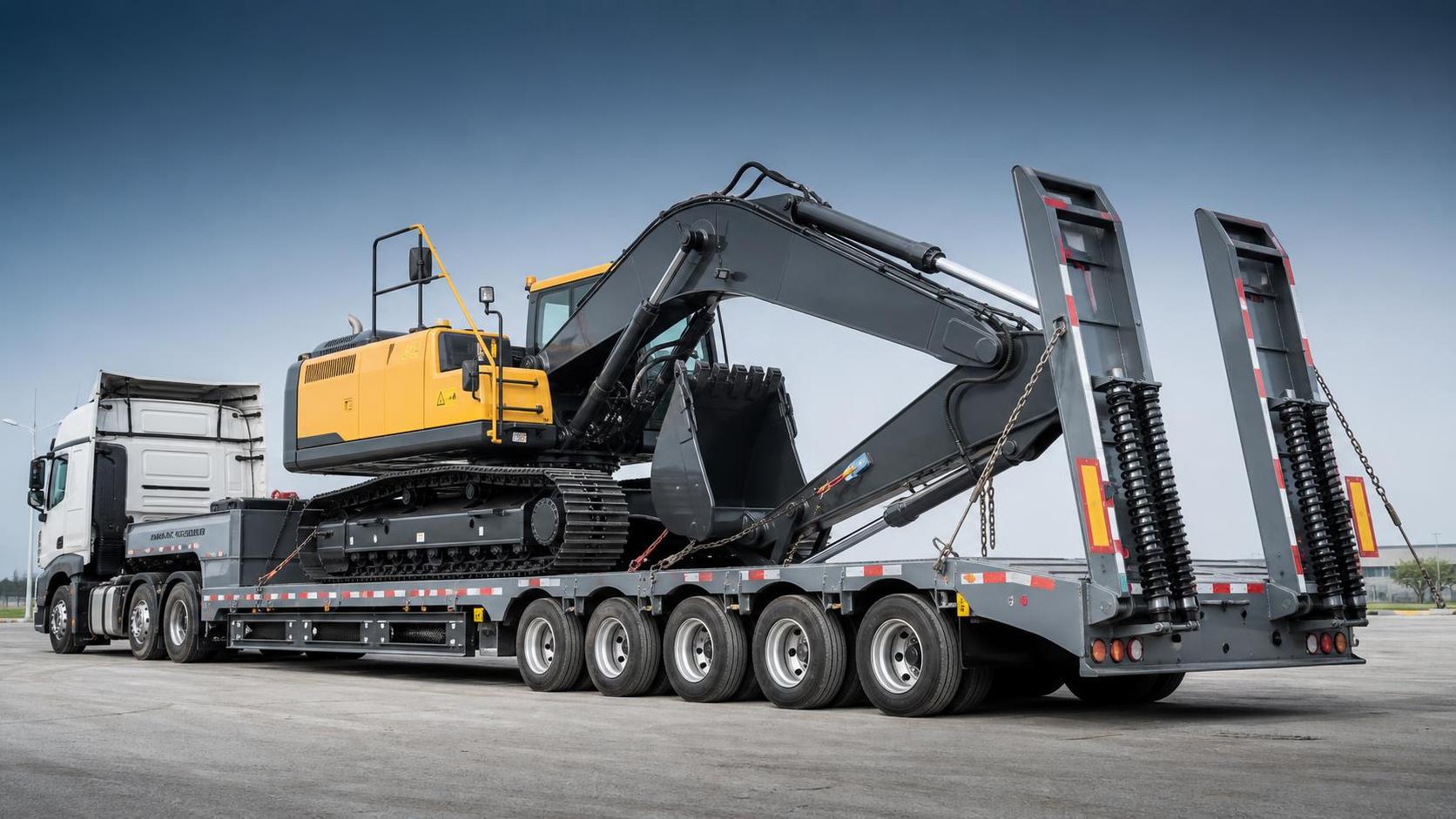
What to check before buying a low plate trailer for heavy equipment transport
Before buying a Low Plate trailer for heavy equipment transport, the real question is not simply whether it can carry the machine on paper. The better question is whether it can do the job repeatedly, legally, and at a cost structure that still makes sense after a few years of use. For business evaluators, that distinction matters. A trailer that looks competitive at quotation stage can become expensive once route restrictions, axle wear, loading difficulty, spare parts availability, or permit issues start showing up in daily operation.
Low plate trailers are commonly considered for excavators, rollers, loaders, bulldozers, graders, and other heavy equipment that needs a lower center of gravity and easier loading angle than a standard flatbed can offer. But “low plate” is not one universal configuration. Deck height, gooseneck design, ramp type, axle count, suspension layout, steel thickness, and local transport rules can change the purchasing logic quite a bit. If the trailer is intended for export or cross-border use, documentation, parts support, and customization also move from “nice to have” to “must check.”
That is why experienced vehicle exporters and engineering transport buyers tend to spend more time on fit-for-use details than on brochure specifications alone. Companies with practical supply chain and export handling experience, such as Shandong Livol Truck International Trade Co., Ltd., often see this first-hand when helping customers compare transport equipment across different markets: the cheapest unit is rarely the lowest-cost solution once compliance, delivery timing, and after-sales response are included.
Start with the actual equipment, not the trailer catalog
A common procurement mistake is selecting the trailer by nominal payload only. Heavy equipment transport is more sensitive than that. You need the operating weight of the machine, but also its transport weight with attachments, fuel condition, counterweight configuration, bucket or blade position, and any removable components. An excavator with a standard bucket may fit one way; the same machine with quick coupler, hammer line kit, or wider tracks may shift axle load distribution enough to require another layout.
Width and ground clearance matter too. A low deck helps reduce overall transport height, but if the trailer has cross-member positions or side beam geometry that interferes with track shoes or low-hanging machine parts, loading becomes slow and risky. For wheeled equipment, approach angle and ramp grip are just as important as rated capacity. For tracked equipment, the contact area and deck reinforcement need close review.
In practice, buyers should build the trailer requirement from the machinery list and route conditions, then compare supplier proposals against that requirement. Doing it the other way around often leads to compromise that shows up later as underused payload, permit trouble, or loading inefficiency.
Payload rating is only one part of load safety
Suppliers may present a trailer as 40-ton, 60-ton, or higher capacity, but the number alone does not tell you enough. Ask how that rating is defined. Is it the design payload, legal payload under a certain axle configuration, or a theoretical structural capacity under controlled conditions? Those are not the same thing.
What matters for heavy equipment transport is how the trailer behaves under concentrated loads. An excavator does not load the deck evenly like pallet cargo. Track pressure is concentrated over limited contact points, and machine positioning may shift a large portion of weight toward the neck or axle group. So it is worth checking:
- main beam section and reinforcement design,
- deck plate thickness and cross-member spacing,
- kingpin load compatibility with the tractor head,
- how the expected machine position affects axle loading.
If the towing unit is not matched correctly, the trailer may be structurally capable while the tractor is overloaded at the fifth wheel or underpowered for gradients and low-speed maneuvering. That becomes an operating cost issue, not just a technical one.
Deck height influences more than loading convenience
Buyers usually like a lower deck because it reduces total transport height and improves stability. That is true, but it should be checked against road conditions, breakover clearance, ramp transition, and the type of equipment being moved. An extremely low deck can be helpful for tall machinery, yet it may scrape on uneven site entrances, ferry ramps, or temporary access roads if the chassis geometry is not suitable.
For projects involving mixed routes, a slightly higher but better-protected deck can be the smarter choice. This is especially relevant where equipment is loaded at quarry entrances, road construction sites, or remote infrastructure areas rather than on paved logistics yards. The practical question is not “How low can the trailer be?” but “How low can it be without creating route and maintenance penalties?”
Axle configuration affects compliance, tire cost, and fleet flexibility
The number of axles and their spacing are central to both legal road use and operating economics. More axles can spread load better and may help meet local road weight regulations, but they also add tire cost, brake components, suspension wear points, and turning complexity. Too few axles can limit legal payload or force permit dependence on routes where regular work is expected.
This is one of the areas where local market knowledge matters. Different countries, and sometimes different provinces or states, may have distinct rules for gross vehicle weight, axle group loading, width, height, escort requirements, and permit procedures. There is no safe shortcut here. A trailer that works well in one market may need a different axle layout, lighting arrangement, brake standard, or documentation package in another.
When an exporter has handled multiple destination markets, the discussion tends to become more practical: not just what can be built, but what can be registered, cleared, serviced, and used without avoidable delays. That full-process perspective is often more valuable than a low initial factory quote.
Ramps, loading method, and tie-down points deserve more attention than they usually get
A low plate trailer may spend much of its life loading and unloading, not cruising at highway speed. If loading takes too long, needs improvised timber support, or causes repeated impact on the rear structure, the trailer starts losing money in labor, downtime, and repair. Ramp strength, ramp angle, hydraulic or spring assistance, anti-slip surface, and hinge robustness all matter.
Tie-down arrangement is another point buyers often leave too vague. Check whether lashing rings, stake pockets, or other securing points are positioned for the kinds of machinery you actually move. Heavy equipment is not secured the same way as general cargo. If the tie-down points are poorly placed, operators may create unsafe chain angles or spend too much time repositioning machines just to secure them properly.
Material quality and welding quality are procurement issues, not just engineering issues
In heavy transport, material choice affects fatigue life, not merely static strength. Buyers should ask what steel grade is used in the main structure, how critical weld areas are reinforced, and what inspection process the manufacturer follows before delivery. You do not need to turn the purchase into a metallurgical audit, but you should understand whether the trailer is built for repetitive heavy-duty use or mainly optimized for an attractive selling price.
This is also where supplier discipline matters. A manufacturer or exporter with established inspection routines, inventory control, and after-sales coordination is usually better positioned to support long-term fleet use than a trader who only forwards quotations. Shandong Livol Truck International Trade Co., Ltd., for example, operates with authorized commercial vehicle resources, nationwide 4S network support, and export coordination capability. For a buyer, that matters less as a brand statement and more as a sign that technical selection, customization, logistics documentation, and service follow-up can be handled together rather than in fragments.
Do not separate purchase price from life-cycle cost
A trailer purchase usually goes wrong on cost when the evaluation focuses too narrowly on unit price. The useful comparison is total ownership exposure across a realistic operating period. That includes:
- tire consumption under expected axle loads,
- brake and suspension maintenance,
- replacement part lead time,
- downtime if the trailer specification is poorly matched to machinery,
- permit or route restriction costs,
- shipping, customs, and local compliance adjustment costs for imported units.
Sometimes a stronger trailer with a better-matched axle layout and easier parts support costs more upfront but reduces route limitations and workshop time. In project transport, that difference can outweigh the initial price gap fairly quickly. A low-cost trailer that spends too much time waiting for repair parts or permit work is not cheap in operational terms.
Check the export and delivery side before you sign
For international buyers, trailer specification is only half the procurement job. Confirm what documents are included, what customization is possible before shipment, how delivery timing is affected by stock versus production build, and who coordinates customs and logistics. If the trailer needs market-specific lighting, braking, reflectors, dimensions, or connection standards, it is usually better to address that before dispatch than after arrival.
This is one reason many buyers prefer working with exporters that combine vehicle access, inventory management, and overseas business experience. Stable supply and faster coordination can reduce project uncertainty, especially where transport equipment is tied to machinery mobilization schedules. Delays in trailer readiness can hold back revenue-generating equipment on site.
A practical shortlist before committing
If you are evaluating several low plate trailer options, the most useful shortlist is usually a simple one. Confirm whether the trailer matches your heaviest and most awkward machine, whether it stays within local transport limits or manageable permit conditions, whether the deck and ramp arrangement suit real loading environments, whether the axle layout makes sense for both compliance and maintenance cost, and whether the supplier can support documentation, spare parts, and configuration changes without friction.
A Low Plate trailer should not be bought as a generic heavy-duty asset. It should be bought as a route-specific, equipment-specific transport tool. When buyers keep that in mind, they usually avoid the two most expensive mistakes: under-specifying the trailer for the work, or over-specifying it in a way that raises cost without improving actual utilization.
Before placing an order, it is worth asking the supplier to review your machinery list, target market requirements, expected routes, towing head specification, and delivery timeline together. That final cross-check often reveals more than a price comparison ever will.
Search Starts Here