
News
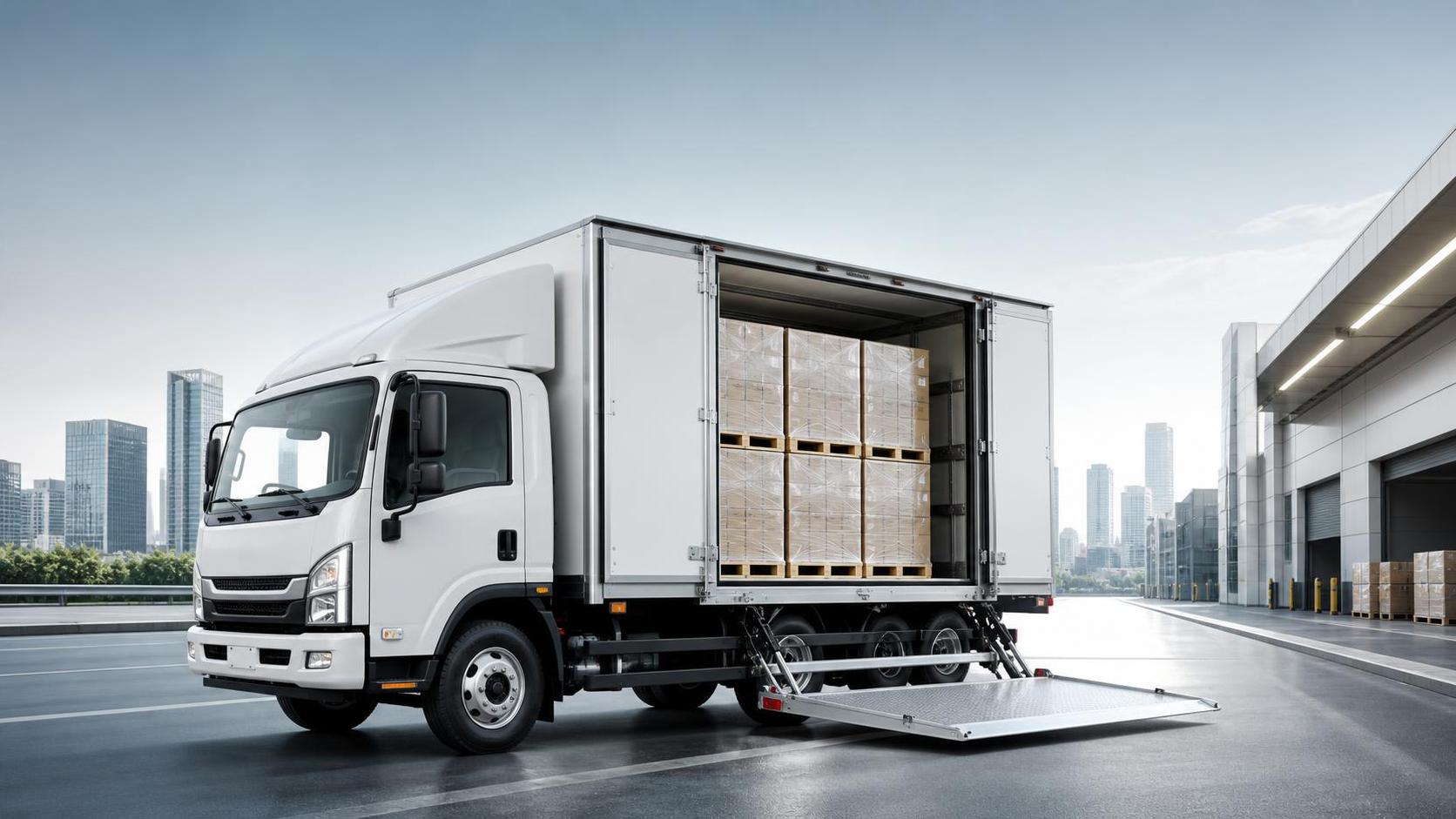
It usually starts with a practical problem, not a technical one. A delivery plan looks fine on paper, the route is short, the number of drops seems manageable, and the truck appears large enough. Then the day becomes difficult: loading takes longer than expected, the vehicle feels heavy before the route is half done, a city restriction suddenly matters, or the team realizes too late that “truck size” and “usable payload” are not the same thing.
That confusion is common with urban distribution fleets, especially when someone is trying to judge the carrying ability of a 4_2 Cargo Truck for mixed city work. In urban delivery, payload is not just a number from a brochure. It is shaped by body configuration, axle limits, local road conditions, cargo type, route density, and the practical need to load safely without creating handling problems. If you are selecting trucks for daily city operations, it helps to treat payload as an operating decision rather than a simple specification.
Why the payload question is harder than it looks
Many people first ask, “How much can a 4x2 truck carry?” The trouble is that the answer changes depending on what “carry” means in your operation. Some people mean the legal payload. Others mean the realistic payload the truck can handle repeatedly on congested streets without stressing the vehicle, delaying unloading, or creating unnecessary fuel use.
A 4x2 layout usually refers to a two-axle truck with one driven axle. In city logistics, this format is popular because it balances maneuverability and carrying capacity better than larger configurations on tighter roads. But urban routes are demanding in their own way. Frequent stops, uneven loading during multi-drop delivery, restricted access roads, curbside unloading, and narrow turns all change the practical payload picture.
That is why one fleet can be satisfied with a certain truck body and another can feel constantly overloaded, even when the nominal vehicle class looks similar. The real question is less about a universal payload figure and more about this: what payload remains safe, efficient, and compliant on your delivery pattern?
The first mistake: using gross vehicle size as a payload estimate
A common misunderstanding is to look at a truck’s overall dimensions or model category and assume the remaining capacity will naturally fit the cargo plan. In reality, payload is what remains after the truck’s own weight is accounted for. That own weight is not fixed across all versions of the same class.
Body type makes a major difference. A box body, stake body, refrigerated body, and reinforced platform do not leave the same payload margin. Add tail lifts, interior partitions, shelving, insulation, tool storage, or special cargo securing equipment, and the available payload drops further. If the route requires those features, they should be counted as operational necessities, not optional extras.
This is one reason urban delivery teams sometimes feel surprised after procurement. The truck chosen for “sufficient capacity” may be technically correct at chassis level, yet less suitable once the body and route requirements are added.
Urban routes reduce usable payload before the cargo even moves
On highway freight, a vehicle may run fully loaded for long stretches with relatively stable conditions. Urban delivery is different. Stops are frequent, and that changes the value of every kilogram loaded. A route with repeated braking, acceleration, and lane positioning makes weight distribution more important. A truck that is loaded close to its maximum allowance may still be legal, but it can become less practical if the load shifts the balance of the vehicle or slows each delivery cycle.
Another point often missed is route access. Some city areas have road width limits, bridge controls, neighborhood restrictions, loading time windows, or site-entry conditions that make the effective truck choice narrower than expected. A truck may have enough rated payload, but if it struggles to access customer sites efficiently, the route cost increases anyway. In those situations, teams often learn that a slightly smaller usable payload with better circulation can outperform a “larger” setup that keeps losing time.
For this reason, a 4_2 Cargo Truck should be judged within the route environment, not in isolation. Payload that works on warehouse-to-hub movement may not be ideal for dense, multi-stop neighborhood distribution.
A more reliable way to judge carrying ability
When the payload question becomes operationally important, it helps to work backward from the route instead of forward from the catalog.
Start with the cargo profile
Not all loads stress a truck in the same way. Dense packaged goods, light but bulky cartons, palletized materials, secured equipment, and temperature-sensitive products all create different loading patterns. Some fill volume before weight. Others reach axle or body stress concerns before the cargo space looks full.
If your cargo is compact and heavy, the truck can hit practical weight limits faster than expected. If your cargo is bulky but light, internal dimensions and loading access may matter more than rated payload. This is why a payload question should always be paired with a volume question.
Then map the loading pattern
City delivery rarely unloads evenly. The truck may start balanced at dispatch, then become front-heavy or rear-heavy after several drops if the cargo was not positioned with route sequence in mind. A route that includes mixed parcel sizes or partial pallets makes this even more noticeable. The result is not just inconvenience. It affects stability, unloading effort, and wear.
So when assessing payload, ask whether the truck can carry the load and maintain good balance throughout the route. For frequent stop work, that is often more valuable than chasing the highest possible theoretical carrying number.
Account for body and equipment weight early
This step is often delayed until late in procurement discussions, but it should be one of the first. If the operation needs side openings, reinforced floors, refrigeration, hydraulic tail lifts, or cargo restraint systems, the remaining payload changes immediately. It is better to estimate with the final operating configuration than to begin with a bare chassis assumption that later proves misleading.
Where operators often misjudge a 4x2 truck in city work
One frequent issue is assuming that if the route distance is short, loading closer to maximum capacity is always acceptable. But short city routes can be tougher than longer intercity ones because the vehicle is constantly stopping, turning, reversing, waiting, and maneuvering around obstacles. In those conditions, the “comfortable payload” for daily operations may be lower than the official upper limit.
Another misjudgment is treating all cargo days as average days. Urban fleets often have irregular peaks. If the truck is selected only for typical volume, teams may end up with chronic overloading pressure on high-demand days. On the other hand, selecting a truck only for the rarest peak can produce unnecessary operating cost on normal days. A better approach is to define the route pattern honestly: regular load, busy-day load, and exceptional load. That makes truck selection less reactive.
There is also the issue of loading method. Forklift-loaded operations, hand-loaded routes, dock-loaded runs, and street-side unloading all influence what “usable” payload feels like in practice. A truck that accepts the weight but slows loading and unloading too much may not be the right urban tool.
Practical signs that your current payload assumption is wrong
If you are not sure whether the present truck choice is properly matched to route demand, small operational signs often appear before major problems do.
For example, loading teams may repeatedly reshuffle cargo to “make it fit right.” Drivers may prefer to split loads informally rather than take a full assigned quantity. Deliveries may run late on routes that appear reasonable in distance terms. Fuel use may feel higher than expected in stop-and-go work. Suspension behavior, tire wear patterns, or braking feel may become recurring discussion points even when maintenance records do not show a dramatic single fault.
None of those signs alone proves overloading. But together they often indicate that the assumed payload, body design, or route plan is not well aligned.
How to make a better selection before ordering
When choosing a truck for urban logistics, it helps to request information in a way that reflects operations, not just model names. Instead of asking only for a payload figure, ask for the vehicle in the exact body form you intend to use, with equipment included, and discuss the route context clearly.
This is where working with an experienced commercial vehicle exporter can be useful, especially when different chassis brands and body configurations are under consideration. A supplier with access to multiple mainstream truck platforms, stable inventory, and familiarity with export documentation can make the comparison process more practical. The important part is not sales language; it is the ability to align chassis choice, body type, and delivery requirements without leaving key weight-affecting details until the final stage.
For buyers comparing options from FOTON, SHACMAN, or SINOTRUK platforms, a professional export team can help organize the selection process around intended use: cargo density, body type, route restrictions, loading method, and shipping requirements. That does not replace internal fleet judgment, but it can reduce avoidable mismatches during specification and procurement.
A simple route-based evaluation method
If you are trying to decide whether a 4_2 Cargo Truck is appropriate for your urban routes, a useful method is to evaluate five things together rather than separately.
First, define the heaviest normal cargo mix, not the most optimistic one. Second, write down the body and add-on equipment that the operation actually needs. Third, note whether the route is volume-limited or weight-limited in practice. Fourth, consider access conditions at the tightest loading and unloading points, not just the warehouse gate. Fifth, think about whether the vehicle will stay operationally balanced after several deliveries, not just at departure.
This kind of review is less dramatic than talking about “maximum payload,” but it is usually more accurate. In city work, the best truck is often the one that protects flow and predictability, not the one that looks strongest on paper.
When a 4x2 configuration is usually a sensible fit
In many urban and near-urban operations, a two-axle cargo truck remains a practical middle ground. It can support regular distribution tasks while keeping maneuverability acceptable for dense streets and site access. It is often suitable when delivery points are numerous, route length is moderate, and the operation needs more capacity than a light truck can offer but does not benefit from a larger multi-axle platform.
Still, “sensible fit” depends on discipline in specification. If the body becomes too heavy, if the cargo is unusually dense, or if road restrictions are stricter than expected, the margin narrows quickly. That is why the payload discussion should happen alongside body planning and route planning, not after them.
Final thought
Asking how much payload a 4x2 truck can handle on urban delivery routes is the right question, but it needs the right frame. The useful answer is rarely a single number. It is a judgment built from truck weight, body specification, cargo density, access conditions, and the rhythm of city deliveries.
If you are evaluating a 4_2 Cargo Truck for fleet use, focus less on the biggest claimed carrying figure and more on the payload that your route can support day after day without creating handling issues, delays, or compliance risk. That is usually where better truck decisions begin.
Search Starts Here