
News
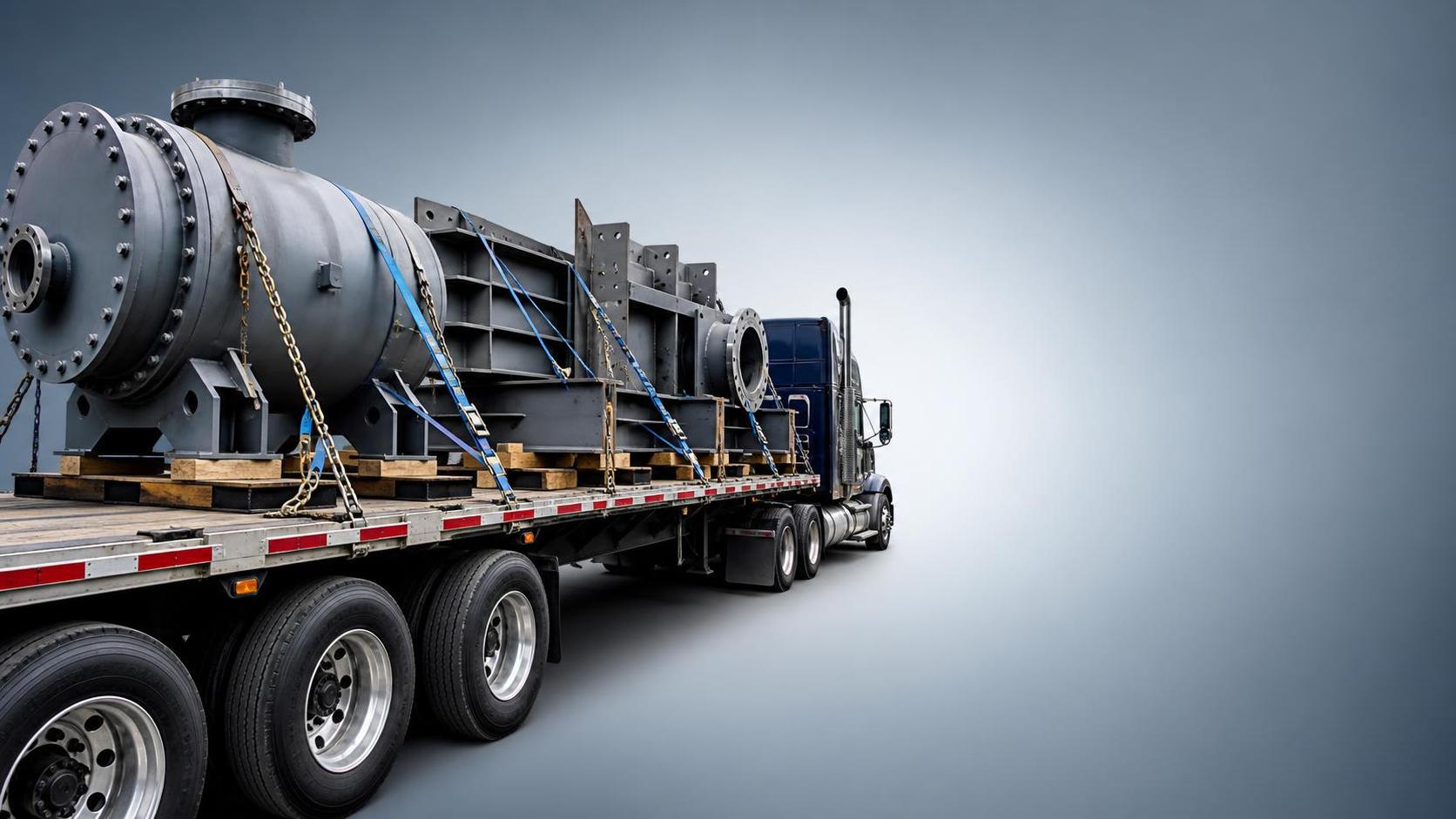
It usually starts with a loading argument, not a transport accident. Someone on site says the cargo can go on a box trailer because the route is short. Someone else points out that the load is too wide to clear the side walls, or too awkward to secure once it is inside an enclosed body. The pressure to move quickly makes that discussion more difficult than it should be. In many yards, the real problem is not lack of equipment, but lack of a clear rule for when a different trailer type becomes the safer choice.
This becomes especially serious when the load is irregular, top-heavy, over-width, or difficult to inspect after securing. If the trailer choice is wrong, the risks show up early: unstable positioning during loading, poor tie-down angles, hidden contact points, limited access for rechecking, and a greater chance of movement during braking or cornering. In those situations, a Flatbed Semi-Trailer is often selected not because it is simpler, but because it gives the load and the securing method enough space to work safely.
When the trailer body itself starts creating the risk
A common mistake is to focus only on whether the cargo physically fits. Safe transport depends on more than fit. It depends on whether the load can be placed with a stable center of gravity, whether the restraint method can be applied at the correct angle, and whether the crew can inspect the arrangement before departure and during stops.
Enclosed trailers, side-wall trailers, and other body types can be suitable for many cargoes, but some load conditions make those structures a limitation rather than protection. Side panels can block direct access to tie-down points. Fixed roof height can force awkward loading positions. Internal space can make it harder to spread weight properly across the deck. Once the cargo has to be forced around the trailer body instead of being naturally supported by it, the trailer is no longer helping safety.
That is usually the point where a flatbed becomes the more sensible option. Not for every shipment, and not automatically, but for loads that need open access from the side, rear, or top, the safety advantage becomes practical very quickly.
Load conditions that often point to a flatbed
One of the clearest situations is oversized or irregular cargo. Machinery with projecting parts, fabricated steel structures, long pipes, precast components, bundled timber, and equipment mounted on skids often do not behave like standard palletized freight. They may have a narrow load-bearing base, uneven dimensions, or lifting points that dictate how they can be set down. A flat platform allows the team to align the load based on stability first, rather than forcing it into the limits of side walls or roof clearance.
Another condition is difficult weight distribution. Some cargoes are heavy but compact, while others are long and only partially supported along their length. In either case, trailer selection affects axle loading, deck stress, and handling. If the load needs precise fore-aft positioning or support blocking at specific points, open deck access matters. A flatbed gives more freedom to place dunnage, cribbing, mats, and restraints exactly where needed.
Loading method is also a major factor. If a crane must lower the cargo from above, an enclosed structure may turn a straightforward lift into a difficult maneuver. If forklifts need side approach, fixed body panels can force poor entry angles or repeated repositioning. The more complicated the loading motion becomes, the more chances there are for impact damage, unstable placement, or crew miscommunication. For crane-loaded freight in particular, the open deck of a flatbed often reduces handling risk before the vehicle even leaves the site.
Then there is the issue of post-loading visibility. Some loads are technically secured, but not easily verifiable once inside a constrained trailer body. If straps disappear behind panels, edge protectors cannot be seen clearly, or the contact between the cargo and support materials is hidden, inspections become guesswork. Open visibility is not a convenience. It is part of risk control. With a flatbed, the crew can walk around the load and confirm whether the restraints still sit where they should.
Cases where “more enclosed” does not mean “safer”
It is understandable why some teams assume that a trailer with walls or a covered body must be safer. For weather-sensitive goods, contamination-sensitive materials, or cargo at high theft risk, enclosure can indeed be valuable. But enclosure does not replace load restraint. If the cargo has enough mass to slide, tip, roll, or shift, the trailer body should not be treated as the primary securing system unless it was specifically designed and rated for that purpose.
This misunderstanding shows up with steel coils, metal frames, construction equipment attachments, stone products, and other dense freight. People may think that because the cargo is boxed in, movement risk is reduced. In reality, if the securing points are poorly placed or inaccessible, the load may be less controlled than it would be on an open deck with properly applied chains, straps, blocking, and friction materials.
A Flatbed Semi-Trailer becomes the safer choice when the restraint plan depends on direct access and inspection, not when the cargo simply lacks packaging. The point is not openness for its own sake. The point is whether the open platform supports a more secure and verifiable setup.
Questions worth asking before assigning the trailer
In practice, the decision gets easier when a few site questions are asked early.
First, can the cargo sit on the deck with full support at the intended bearing points, without improvised positioning? If the answer is no, the trailer may be wrong or the support plan incomplete.
Second, can the securing equipment reach the load at effective angles? A strap or chain that clears the cargo only by twisting around obstacles is already a warning sign. The trailer should allow restraint, not fight it.
Third, will the crew be able to inspect critical contact points after loading and again during transit checks? If important parts of the securement disappear from view, the arrangement becomes harder to trust.
Fourth, does the loading equipment need open top or side access? This matters more than many planners expect. A safe loading method is part of a safe transport method.
Finally, does the cargo shape increase rollover or shift risk if it cannot be centered exactly as intended? Tall, narrow, or asymmetrical loads demand better control of deck placement than standard freight.
These are not abstract planning questions. They often separate a manageable movement from one that becomes stressful at every handover point.
Where flatbeds are usually easier to control
Flatbeds tend to work better when the cargo requires custom restraint rather than routine securing. That includes loads with non-standard footprints, loads that must be blocked against forward movement, and loads that need a combination of direct lashings and top-over lashings. It also includes freight that cannot tolerate side pressure from body panels or must be loaded in a set orientation.
They are also useful when route conditions may amplify instability. Repeated braking, uneven roads, tight site turns, and multiple unloading stages all increase the value of a restraint setup that can be seen and adjusted. With an open deck, it is easier to notice a loosening strap, a crushed edge protector, a shifted timber block, or a settling point under the cargo.
That does not mean flatbeds remove risk. An exposed load still requires weather consideration, correct friction management, protective packing where needed, and disciplined tie-down practice. But from a control perspective, many safety-sensitive loads are easier to assess on a platform where nothing important is hidden.
Practical ways to confirm the choice before dispatch
If you are reviewing a load plan and are unsure whether a flatbed is justified, avoid debating trailer types in general terms. Instead, work backward from the actual restraint method. Identify the required number and type of tie-downs, the likely anchor locations, the need for blocking or chocking, and whether the loading crew can place those items without compromise.
Then look at the cargo geometry. Long loads may need support spacing that does not match an enclosed body layout. Tall components may create clearance issues before securement is even applied. Wide loads may still be movable legally or by permit, but only if they sit correctly and can be restrained from both sides without obstruction.
It also helps to review the loading sequence, not just the final position. Some cargoes are secure only if they are placed correctly on the first attempt. If the trailer type forces repeated adjustments with cranes or forklifts, the handling risk rises. In many yards, that is the moment people realize the open deck would have been the safer starting point.
For teams arranging export movements or mixed commercial vehicle shipments, coordination matters as much as equipment choice. When trailer selection, customization needs, documentation, and logistics are handled in one process, there is less chance of a mismatch between cargo condition and transport method. That does not eliminate the need for site judgment, but it reduces preventable planning errors.
Signals that the current plan should be reconsidered
Sometimes the safest decision is simply to stop and re-evaluate. If the load needs unofficial modifications to “make it fit,” if the securement points are partly blocked, if the crew cannot explain how they will recheck the restraints later, or if loading equipment operators are already struggling for access, those are not minor inconveniences. They are signs that the trailer choice may be creating risk.
The same applies when the cargo has multiple movement modes at once: sliding, rocking, rolling, or tipping. These loads need a clear restraint strategy, and that strategy often becomes easier to execute on a flat, open platform. When the load can be reached from all sides, the securement plan is usually more transparent and easier to verify.
Making the decision less subjective
The safest organizations do not choose a flatbed only because “that is how this kind of load usually moves.” They choose it because the load condition, loading method, and inspection requirement support that decision. That approach is more repeatable and less dependent on who happens to be supervising that day.
In daily operations, a Flatbed Semi-Trailer is often the safer choice when the cargo is irregular, heavy at concentrated points, loaded from above or from the side, difficult to inspect in an enclosed space, or dependent on precise tie-down geometry. If those factors are present, open deck access is not just convenient. It directly supports safer placement, clearer inspection, and more reliable restraint.
When people ask whether a flatbed is “better,” the more useful question is narrower: does this load become easier to place, secure, see, and recheck on an open platform? If the answer is yes, the safer choice is usually already in front of you.
Search Starts Here