
News
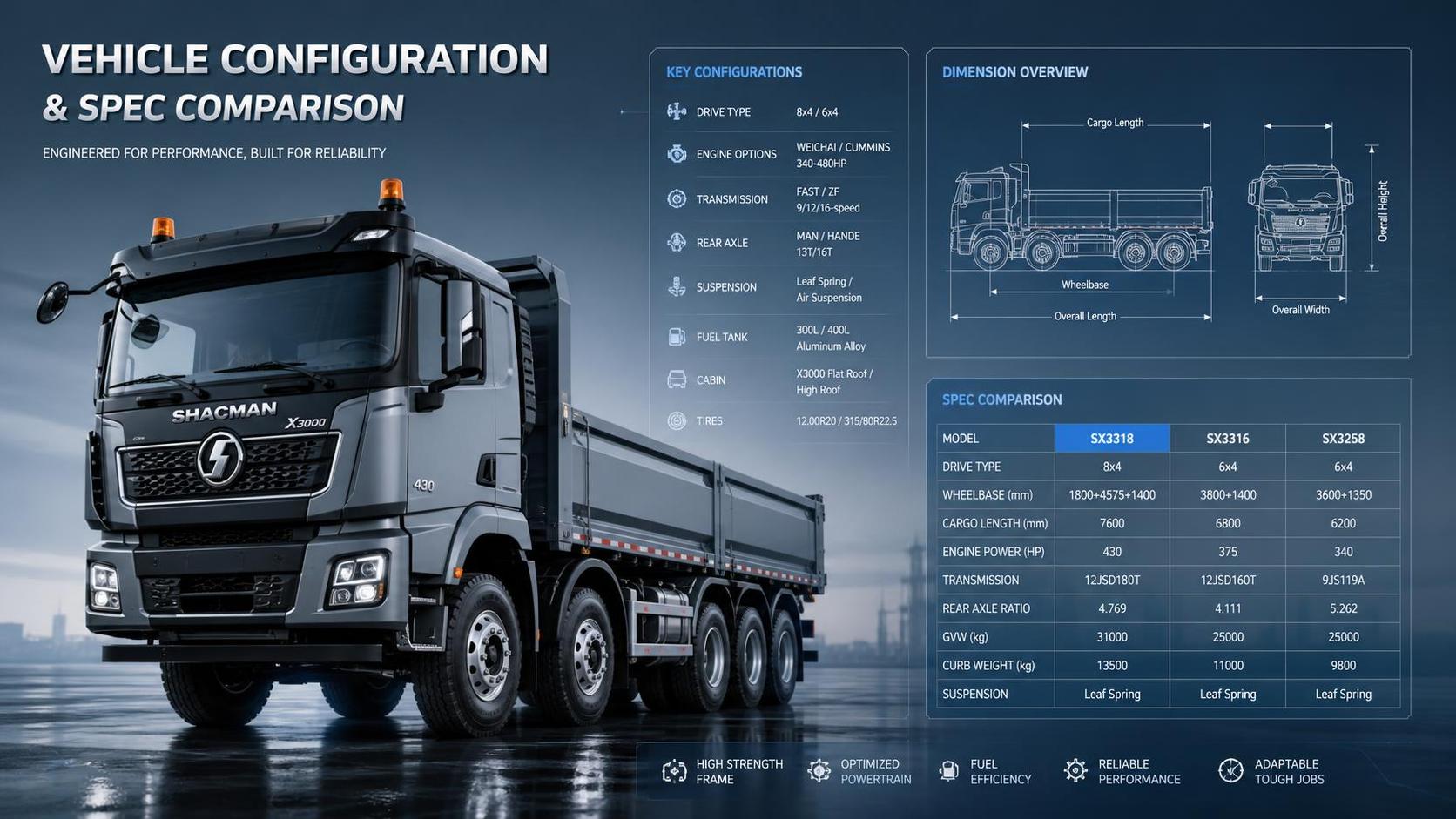
It usually starts with a familiar situation: several vehicle models look acceptable on paper, the purchase timeline is tight, and the internal discussion keeps circling around the same questions. One person focuses on engine power, another on payload, someone else on axle ratio, and finance wants to know which option creates the least mismatch between price and actual operating need. In that moment, the model brochure is rarely enough. Brochures are designed to introduce, not to separate small but important differences that affect daily use.
When the comparison is rushed or based on incomplete reading, the mistake is often not dramatic at first. The wrong cargo body length might only appear problematic after route planning begins. A wheelbase that seemed acceptable can later affect turning efficiency at job sites. A transmission choice may look equivalent until operators face frequent grade changes or varying load conditions. This is why many people turn to the Cangshan Vehicle Configuration List: not because it makes the decision automatic, but because it gives a more structured basis for comparing models that seem similar at first glance.
Why similar models become hard to separate
A common misunderstanding is to compare vehicles by headline specifications only. People often line up horsepower, gross vehicle weight, and cargo dimensions, then assume the model with the bigger numbers is the stronger choice. In commercial vehicle evaluation, that approach often causes confusion rather than clarity.
The difficulty comes from the fact that a vehicle is a working system. Engine output matters, but so do gearbox matching, rear axle ratio, suspension type, tire specification, frame strength, and cabin configuration. Two models may share the same engine family while being built for very different operating conditions. One may be more suitable for mixed road conditions and repeated stop-start work. Another may be better aligned with longer-distance transport under stable loads. If the list is not read in connection, people compare isolated numbers and miss the operating logic behind them.
The useful way to read a configuration list is to stop asking, “Which one is better?” and start asking, “Better for which route, load pattern, road condition, and service expectation?” That shift changes the comparison from product browsing into technical screening.
Start with the job, not the vehicle code
Before opening any model list, define the operating requirement in plain working language. This sounds obvious, but it is the step most often skipped. If the use case is not written down first, evaluators tend to be pulled toward whichever model appears more complete or more familiar.
A practical starting point is to describe the work in a few operational dimensions:
- Typical cargo type and whether it is volume-limited or weight-limited
- Road environment, such as city delivery, regional roads, construction access roads, or mixed terrain
- Frequency of loading and unloading
- Daily distance range and expected duty cycle
- Space restrictions, including turning radius, height limits, and dock conditions
- Maintenance preference, especially whether simple standard configurations are preferred over more specialized setups
Once these conditions are clear, the Cangshan Vehicle Configuration List becomes much easier to use. Instead of scanning the full table in order, you can immediately eliminate models that are structurally outside the operational need.
Read the configuration list in layers
One reason configuration documents feel dense is that all information appears equally important on the page. In reality, not every field should carry the same decision weight. A more reliable method is to read in layers, moving from structural fit to performance fit and then to practicality.
First layer: platform compatibility
Begin with the vehicle category, drive type, wheelbase, overall dimensions, and rated load range. These items define whether the vehicle can physically fit the task. If this layer does not match, there is little value in debating the rest.
For example, wheelbase is often underestimated. People see body length and payload first, but wheelbase affects body arrangement, stability, turning behavior, and how the truck behaves in constrained loading spaces. In some cases, a slightly smaller body on a better-matched wheelbase produces smoother real operation than a larger body that complicates access and maneuvering.
Second layer: powertrain matching
After physical suitability, move to engine, transmission, and axle ratio as one group. They should not be judged separately. An engine with higher output is not always the better choice if the transmission steps or final drive are less suitable for the actual route profile.
For frequent urban starts, grade changes, or load fluctuation, gearing behavior can matter as much as peak output. For longer steady transport, fuel-use expectations and driveline matching often deserve more attention than raw performance figures. The list should be read with that relationship in mind: not “big engine versus small engine,” but “powertrain calibration versus duty pattern.”
Third layer: chassis and working tolerance
This is where many close decisions are made. Suspension structure, frame section, tire specification, braking arrangement, and axle capacity help indicate how the vehicle is intended to work over time. In heavy or uneven working conditions, these details may be more important than cabin options or cosmetic differences.
If the comparison involves routes with rough access points, frequent loading impacts, or changing road surfaces, it is worth slowing down on chassis details. A model that looks only slightly different in the list may be built with a more appropriate tolerance for that environment.
Fourth layer: operational convenience
Cabin configuration, seat layout, air conditioning, visibility-related features, and body arrangement should be considered after the structural and technical fit is confirmed. These items do matter, especially where operator retention, shift comfort, or route repetition is part of the operating pattern. But they should not outweigh core suitability.
In many evaluations, convenience items create noise because they are easier to discuss than axle matching or wheelbase impact. Keeping them in the fourth layer helps preserve decision discipline.
Where people often misread the document
One common error is comparing entries line by line without checking whether the models belong to the same intended usage class. A light-duty optimized configuration and a heavy-duty biased configuration may share overlapping dimensions, but their deeper design assumptions can be different. If the evaluator treats every listed model as a direct substitute, the comparison becomes misleading from the start.
Another issue is overvaluing “maximum” figures. Maximum speed, maximum output, or upper-end payload references can distract from the normal working range. In practice, the best model is often the one whose standard operating zone most closely matches the actual duty cycle. Choosing around edge-case capability can create unnecessary complexity.
There is also a tendency to ignore body and application compatibility. Even if the chassis data looks suitable, the final use may depend on how well it integrates with the intended body type, loading method, or regional compliance process. A configuration list is a technical foundation, not the full deployment answer.
A practical comparison method that saves time
When several models need to be reviewed, it helps to create a short internal comparison sheet from the configuration list rather than passing around the full document alone. This is not about simplifying the data too much; it is about making the evaluation readable.
A workable method is to group each candidate under a few decision headings written in plain language:
- Fit for route and cargo pattern
- Powertrain suitability for load and terrain
- Chassis strength and expected working tolerance
- Space efficiency and maneuverability
- Maintenance familiarity and parts commonality
- Optional items that are useful but not decisive
Then, instead of scoring everything equally, mark which items are mandatory, which are preferred, and which are neutral. This prevents minor comfort features from distorting a fundamentally technical decision.
If you are working with supply-side teams or exporters during evaluation, it is often useful to ask for clarification in these exact categories rather than requesting “the best model.” A professional team can usually explain differences in configuration logic more clearly when the question is tied to route, load, and body application. That kind of communication is far more productive than asking for a generic recommendation.
When two models still look almost the same
This is where many evaluations stall. After filtering the obvious mismatches, there may still be two or three candidates with close specifications. At that point, the answer usually comes from looking at service assumptions rather than catalog appearance.
Ask which model is easier to standardize within an existing fleet mix. Ask whether the transmission and axle combination aligns with driver familiarity. Ask whether the body dimensions reduce wasted space or create loading inefficiency. Ask which configuration is more likely to stay stable in future maintenance planning.
These are not secondary questions. In real fleet use, consistency often matters as much as individual model capability. A technically strong configuration can still become the weaker choice if it complicates operations, spare planning, or driver adaptation.
The Cangshan Vehicle Configuration List is most valuable at this stage because it allows you to stop arguing from impressions. Instead of saying one model “seems stronger,” you can point to wheelbase, axle ratio, suspension form, or body compatibility and discuss the actual trade-off.
Using the list together with purchasing and export review
Technical comparison does not happen in isolation. In cross-border vehicle purchasing, documentation, customization feasibility, and delivery coordination can affect which configuration is practical to select. That does not change the technical reading of the list, but it does influence final feasibility.
Where a sourcing partner supports vehicle selection, customization, paperwork, customs handling, and logistics coordination, that support can help reduce decision friction after the technical shortlist is formed. The key is to use such support at the right stage. First confirm operational suitability from the configuration list. Then verify whether the chosen specification can be supplied and prepared in a way that matches the project timeline and application need.
This distinction matters. Technical fit should guide the shortlist; process support should help confirm implementation. Mixing those two stages too early often leads to choosing what is easiest to arrange rather than what is best matched to the work.
Small details that deserve a second look
Several items are easy to overlook during comparison because they do not stand out visually in the list. Tire size and type can influence road behavior and replacement planning. Cab form can affect crew arrangement and local operating practicality. Fuel tank size may not change the basic model classification, but it can alter route flexibility. Even a minor dimensional difference can matter if the vehicle enters restricted loading areas.
It is also worth checking whether optional configurations are being compared against standard ones. Sometimes confusion comes not from the model itself but from comparing one version with extra items to another in base form. If the list includes optional notes, those notes should be read carefully before concluding that two entries are directly equivalent.
Getting to a confident decision
The real value of a configuration list is not that it gives a final answer by itself. Its value is that it reduces vague discussion and forces the comparison back to operating reality. If a model cannot satisfy route conditions, loading patterns, chassis tolerance, or maintenance expectations, no amount of visual preference will fix that. If a model matches those factors well, even a less eye-catching option may turn out to be the more dependable choice.
So when using the Cangshan Vehicle Configuration List, read it as a decision tool rather than a catalog page. Begin with the task, narrow by structure, compare powertrain as a system, check chassis intent, and only then review convenience details. That approach usually makes the difference between a slow, repetitive discussion and a comparison that leads somewhere useful.
For anyone handling model selection under time pressure, that method is often enough to turn a crowded list of specifications into a smaller set of realistic options. And once the options are realistic, the final choice becomes much easier to defend internally.
Search Starts Here