
News
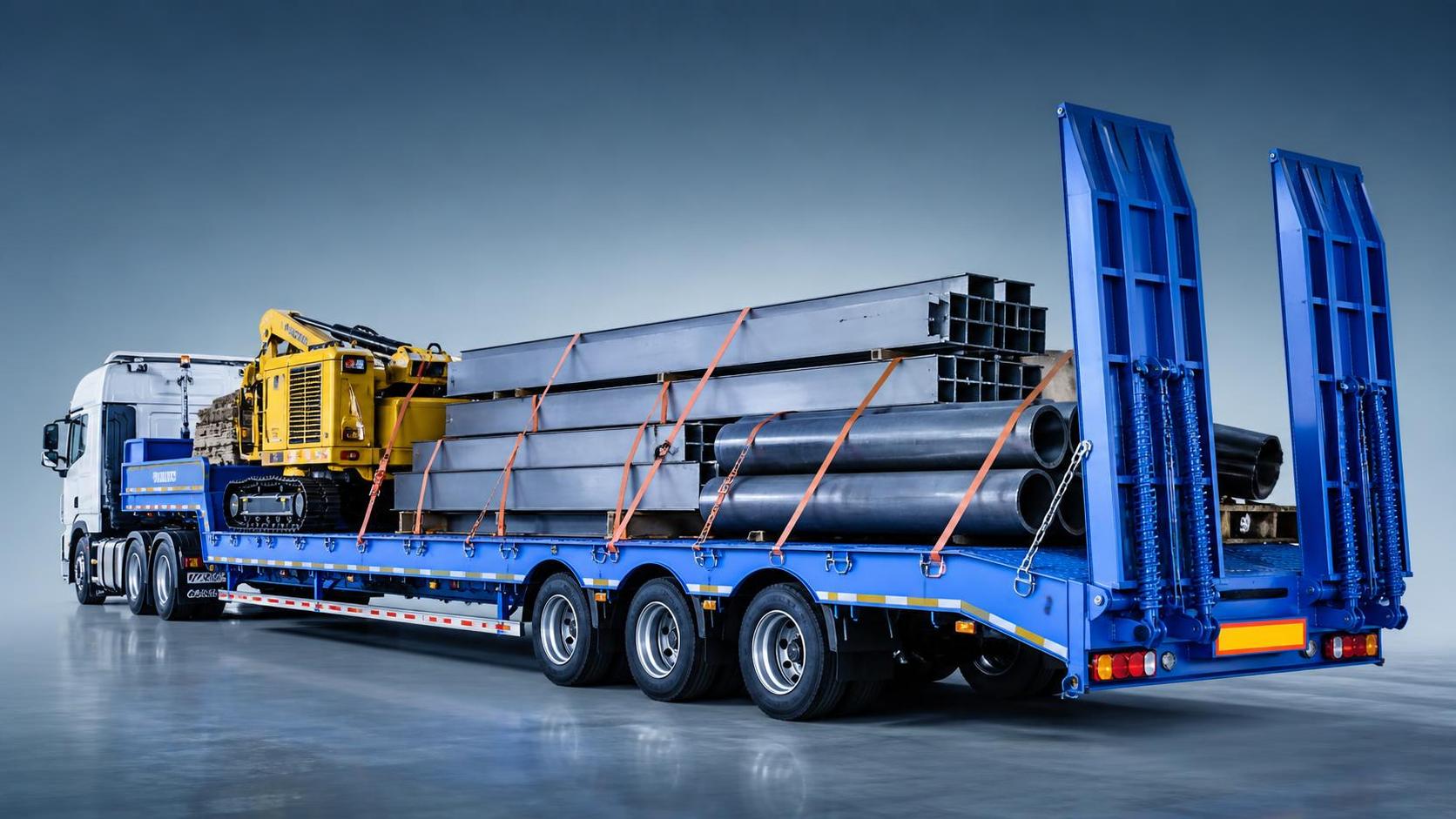
What Payload, Deck Length, and Axle Setup Matter Most in a Flatbed Semi-Trailer?
Choosing a Flatbed Semi-Trailer sounds straightforward until the first wrong specification starts costing money. In procurement, that usually shows up in three places: the trailer cannot legally carry the intended load, it wastes deck space on common shipments, or it creates maintenance and tire costs that were not obvious at the quotation stage.
For engineering vehicles, steel structures, machinery, pipes, precast components, or mixed project cargo, payload rating, deck length, and axle configuration are the three specifications that shape almost everything else. They affect route approval, loading method, tractor matching, fuel use, unloading efficiency, and even how often a trailer sits idle because it is too specialized for the next job.
The practical question is not which one matters in isolation. It is which one should drive the decision for your transport profile. In many real buying situations, people start with payload and then discover that deck length or axle layout is what actually determines whether the trailer works in service.
Payload is the starting point, but not the whole answer
Payload is usually the first number buyers ask for, and for good reason. If the gross combination weight and local axle load limits do not support your cargo plan, the rest of the trailer specification becomes irrelevant. But payload should not be treated as a catalog figure only. It has to be understood in relation to tare weight, road regulations, cargo density, and the way the load sits on the deck.
A common mistake is to focus on maximum theoretical carrying capacity while ignoring the actual freight mix. If most loads are bulky but not exceptionally heavy, an ultra-heavy trailer with a high tare weight can reduce usable payload in practice. On the other hand, if the work regularly involves compact machinery, stone blocks, coils, or dense fabricated steel, then structural reserve matters far more than a headline about fuel efficiency.
This is where experienced buyers usually ask a better question: what is the heaviest load we expect repeatedly, not just occasionally? That repeated load should shape the trailer frame, suspension strength, floor thickness, and axle choice. Rare one-off heavy jobs are often better handled through a dedicated heavy-haul solution rather than overspecifying the entire fleet.
Another issue is load concentration. Two cargos can weigh the same and produce very different stress on the trailer. A uniformly distributed palletized load is one thing. A tracked machine with high point loads under the contact areas is another. Procurement teams that only compare rated tonnage can miss this difference. For engineering transport, concentrated load distribution is often the more useful discussion than total weight alone.
Deck length decides how useful the trailer is day to day
Deck length often gets less attention than it deserves because it feels easier to visualize than payload. In reality, it is one of the fastest ways to make a trailer either flexible or frustrating. A deck that is too short forces awkward loading plans, overhang issues, and partial trips. A deck that is too long can create turning difficulties, dead space, and unnecessary weight.
For project cargo, the right deck length depends on the shape and loading pattern of the cargo much more than the average weight. Steel bars, structural beams, pipes, and modular equipment frames each occupy space differently. If the business frequently combines mixed freight on one trip, usable deck layout matters as much as nominal length. Stake pocket position, lashing point arrangement, gooseneck design, and deck height can all affect whether the extra length is actually usable.
Longer is not automatically safer for procurement. In some markets, route restrictions, yard space, site access, and turning radius become the real limit. This is especially true where construction sites are temporary, roads are uneven, or unloading areas are tight. A trailer that looks ideal on paper may slow operations every time it enters a site gate or tries to reverse near a crane zone.
There is also a commercial angle. If your loads vary by season, a moderate deck length may generate better utilization across more cargo types. A very long flatbed can be excellent for specific contracts and underused for general transport. That trade-off deserves honest discussion before ordering a batch of trailers.
Axle setup is where compliance, durability, and operating cost meet
Axle configuration is often treated as a technical detail left to the manufacturer. That is risky. The number of axles, their spacing, suspension type, and load-sharing behavior can determine legal road access, tire life, brake performance, and how forgiving the trailer is under repeated heavy-duty use.
In broad terms, adding axles can help distribute weight and improve compliance under local axle load rules. But more axles also mean more tires, more brake components, more bushings, and more maintenance points. They can also increase scrub on tight turns if the setup is not well matched to route conditions. For fleets working on rough roads, overloaded jobsite entrances, or mixed pavement quality, durability of the suspension and alignment stability matter at least as much as nominal axle count.
This is one reason specification work should not stop at “2 axle versus 3 axle.” Buyers should review the expected tractor pairing, kingpin load, cargo center of gravity, and legal limits in the destination market. In cross-border business, local registration and road rules can vary enough that a trailer accepted in one country may need a different axle spacing or braking setup elsewhere. These points usually need confirmation against current local standards rather than assumption.
For export projects, the axle discussion also affects supportability. Access to replacement parts, service familiarity, and lead time for wear items can be more important than chasing a highly customized design. This is where working with an exporter that understands both vehicle specification and shipment execution becomes useful. Companies such as Shandong Livol Truck International Trade, which handles commercial vehicle selection, customization, export documentation, customs clearance, and logistics, are typically involved in these practical alignment issues rather than only supplying a unit price.
Which matters most depends on the load profile
If the cargo is dense and close to the legal limit on most trips, payload and axle setup usually come first. If the cargo is irregular, oversized in length, or often mixed, deck length may become the controlling factor. For many engineering applications, the real answer is the interaction among the three.
That is why a sound procurement process starts with actual shipment history if available: cargo dimensions, typical weight range, route class, loading equipment, tractor fleet, and destination-country rules. Without that, trailer selection tends to drift into vague “heavy-duty” language that means very little in operation.
A few specification traps worth avoiding
One trap is buying for the exception. If one unusually large contract defines the whole trailer design, the fleet may spend the next few years carrying ordinary cargo inefficiently.
Another is comparing trailers without checking tare weight, frame design, suspension type, and floor structure together. Two flatbeds can look similar in dimensions but behave very differently under repeated high-load cycles.
A third is separating the trailer decision from the tractor decision. In practice, matching matters. Buyers working with brands like FOTON, SHACMAN, and SINOTRUK often review the tractor and trailer as a transport unit, not as separate purchases, because driveline suitability, fifth-wheel compatibility, and combined weight compliance affect performance and operating cost.
And then there is delivery reality. Even the right specification can become a problem if documentation, parts planning, homologation details, or shipment timing are not handled properly. Export experience helps here, especially when the supplier has stable inventory, authorized channels, and enough familiarity with destination-market paperwork to avoid preventable delays.
How to make the final decision with fewer surprises
A practical approach is to rank your top three cargo patterns, not your top three desired features. Once that is clear, test each trailer option against four questions:
- Can it legally carry the weight on the intended routes?
- Does the deck actually fit the common load mix without wasted trips or awkward securing?
- Will the axle setup hold up under your road and loading conditions without excessive tire and suspension wear?
- Can the trailer be supported easily in the markets where it will operate?
If one specification improves a single contract but hurts the other three answers, it is probably the wrong fleet choice.
In a Flatbed Semi-Trailer purchase, payload is usually the headline number, deck length is the productivity lever, and axle setup is the long-term control point for compliance and cost. The best decision rarely comes from maximizing one of them. It comes from matching all three to the cargo you really move, the roads you really use, and the support network you will actually have after delivery.
If those basics are verified carefully before ordering, the trailer is much more likely to stay productive instead of becoming an expensive compromise parked in the yard.
Search Starts Here