
News
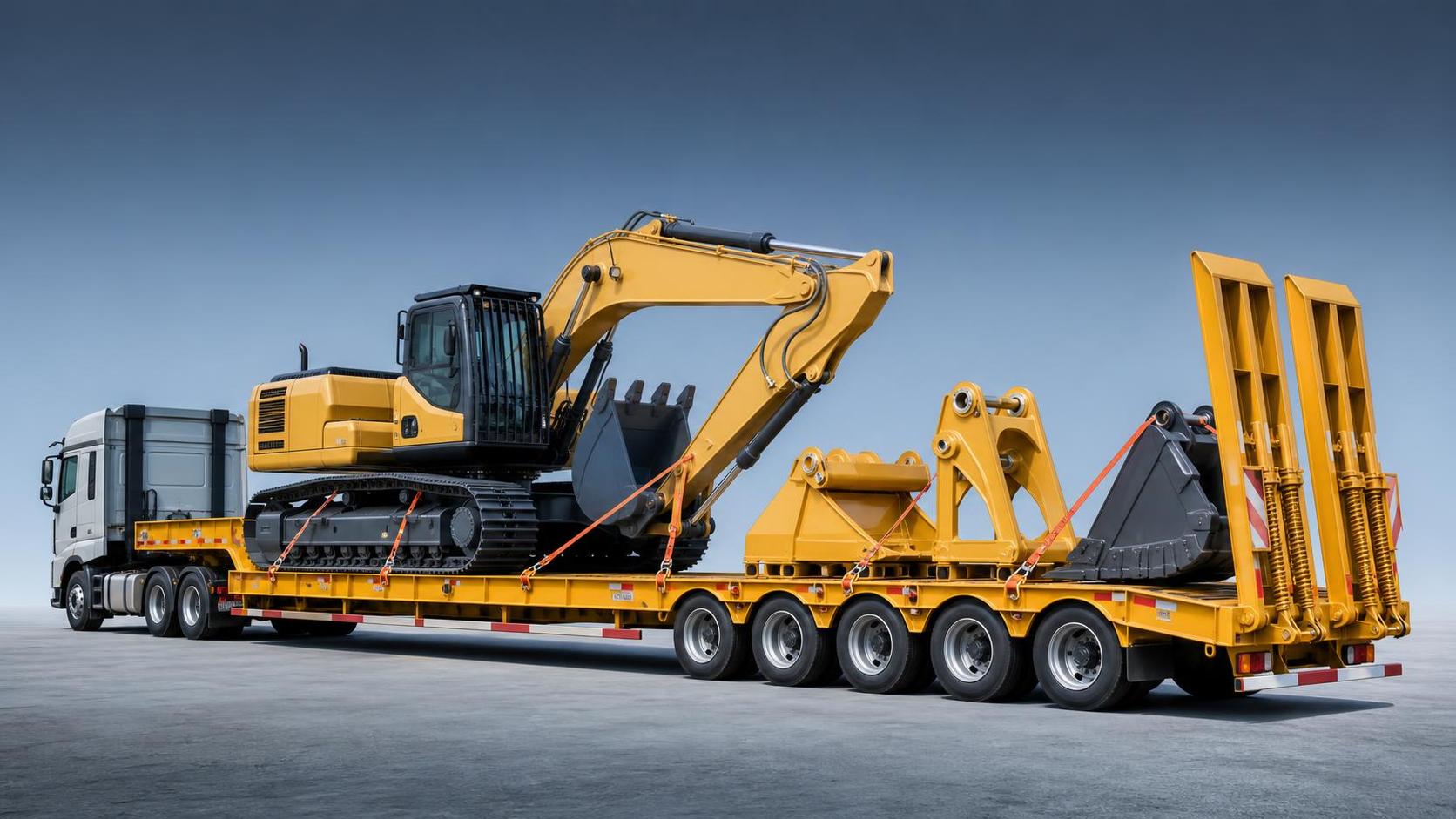
What Load Conditions Make a Flatbed Semi-Trailer the Better Choice for Machinery Transport?
When an excavator, wheel loader, crane component, or road machine has to move between sites, the trailer decision is rarely about trailer type in the abstract. It is about how the machine actually sits on the deck, how it will be loaded, what route restrictions apply, and how much tolerance the project has for delay. Under the right load conditions, a Flatbed Semi-Trailer is simply easier to work with because it accepts awkward shapes, supports fast handling, and avoids some of the bottlenecks that appear when machinery does not fit neatly into more enclosed or height-limited transport options.
The most common case is not the heaviest machine, but the machine with the most inconvenient geometry. Many engineering vehicles have uneven weight distribution, protruding booms, counterweights, bucket arms, stabilizers, or attachments that do not stack cleanly within fixed sidewalls or boxed structures. A flat deck gives the operator freedom to place the equipment where axle load balance is workable and tie-down points can be used properly. That sounds basic, but on real jobs it matters more than brochure payload numbers. A trailer can be technically capable on paper and still be inefficient if the machine must be repositioned several times just to clear an edge, a side rail, or a roof limit.
Height is often the deciding factor. Contractors sometimes focus first on gross weight because that is the obvious transport constraint, yet transport teams know that overall loaded height causes more route problems than expected. A machine with a cab, boom foot, or mounted tool can quickly consume vertical clearance. In those situations, a flatbed is often chosen because the deck arrangement can accommodate equipment that would be difficult to place in a more restrictive trailer body. This does not remove the need to check bridge clearances, local permits, or road rules. It means the load planner has more room to optimize orientation and securement before the transport becomes a compliance issue.
Side-loading is another condition that makes the difference clear. At quarry yards, temporary infrastructure projects, port handling areas, and remote civil works, there is not always a straight, ramp-friendly approach for rear loading. Sometimes another crane is already on site and can lower the machine or attachment from above or from the side. A Flatbed Semi-Trailer works well here because there is no enclosing structure interrupting the lift path. For machines shipped with detachable implements, steel structures, pipe handling accessories, or mixed cargo related to one project phase, that open deck becomes practical in a way that is hard to replace.
Where irregular machinery changes the decision
Excavators are a good example because they are common, but they are not all transported the same way. A compact unit with the arm tucked in is straightforward. A larger unit with a wide track base, protective guarding, and a bucket that cannot be conveniently removed creates a very different loading problem. The issue is not only footprint. It is where the center of gravity lands once the boom is lowered and whether the attachment interferes with safe tie-down angles. A flatbed allows the team to load with more flexibility, especially when the machine needs blocking, timber support, or custom restraint positioning.
The same applies to wheel loaders and graders that may carry oversized tires or front equipment extending beyond what standard enclosed geometry can tolerate. In practical transport planning, “irregular” does not just mean oversize by regulation. It also means cargo that wastes space, creates awkward securement lines, or slows loading enough to affect dispatch timing. On projects with frequent machine transfers between nearby sites, every extra hour spent adjusting a poor trailer match becomes visible in equipment utilization.
Crane transport adds another layer. Entire cranes are rarely discussed as one load condition because they usually move in components: boom sections, counterweights, outrigger mats, hooks, and support items. Flatbeds are commonly favored when those parts need to be combined into one efficient outbound sequence rather than separated into highly specialized trailer types for every item. The benefit is operational flexibility, provided each component is still within the trailer’s structural and legal limits. The risk is assuming that “open deck” means “easy load.” It does not. Crane-related cargo often introduces high point loads and securement challenges that require disciplined weight placement.
Site conditions usually matter more than catalog categories
Machinery transport decisions are made at the intersection of the machine and the site. A muddy access road, a partially graded temporary yard, or a site with no fixed loading dock changes what is practical. Rear ramp loading may be ideal in a controlled depot, but not on a road job where approach space is limited and the ground is uneven. A flatbed becomes attractive when site handling has to stay simple: fewer assumptions about infrastructure, easier access from multiple sides, and less dependence on perfect loading alignment.
That is one reason machinery exporters and transport coordinators often look beyond the unit itself and ask about the destination environment early. Shandong Livol Truck International Trade Co., Ltd., working as an authorized dealer for FOTON, SHACMAN and SINOTRUK and supporting customers through vehicle selection, customization, documentation, customs clearance and logistics, operates in the part of the business where trailer suitability is shaped by export reality, not only by domestic yard conditions. For overseas delivery, transport planning may have to account for port handling, inland transfer, final-site unloading capability, and the availability of local lifting equipment. A trailer choice that seems efficient at origin can become awkward if the receiving site cannot unload the cargo in the same controlled way.
This is also why buyers frequently ask whether one trailer can cover several equipment categories. Sometimes it can, especially when fleets move loaders, rollers, attachments, and support equipment on changing schedules. But versatility has limits. If a fleet regularly handles very heavy concentrated loads, machines with extreme height concerns, or equipment needing a specialized low deck position, then a flatbed may be only part of the answer rather than the universal answer.
A quick field check before choosing the trailer
The table is useful because many mistakes come from choosing by machine category alone. “Excavator” or “loader” is too broad to make the transport call. The right question is narrower: how will this exact machine sit on this exact trailer, on this route, under this loading method?
Another recurring issue is assuming that faster loading always means lower total risk. Open-deck transport can reduce handling time, but only if the securement plan is equally mature. Machinery with steel tracks, articulated frames, or detachable tools may need additional blocking, chain angles that remain effective after suspension movement, and attention to how weather affects friction and restraint. Flatbeds make access easier; they do not excuse weak load control. On cross-border or long-distance export movements, that distinction becomes more important because a small loading compromise at origin can turn into a service interruption much later in the route.
When a flatbed is the practical answer, not the default answer
There is a tendency in equipment transport discussions to look for one trailer type that solves everything. Field operations rarely work that cleanly. A Flatbed Semi-Trailer is often the better choice when machinery is dimensionally awkward, when the site requires side or top access, when mixed project cargo has to move together, or when dispatch speed matters across changing job conditions. It is less compelling when the main challenge is not shape or loading access but extreme weight concentration, unusually low clearance requirements, or a need for a more specialized deck profile.
For transport managers, the most useful checkpoint is to stop describing the load in generic equipment terms and start describing the real movement: loaded orientation, securement points, route limits, loading equipment available at both ends, and the consequence of a delay if reloading becomes necessary. Once those conditions are clear, the trailer decision usually becomes much less theoretical. In many machinery jobs, that is exactly where the flatbed earns its place.
Search Starts Here