
News
How to Read a Cangshan Vehicle Configuration List Without Missing Key Specs
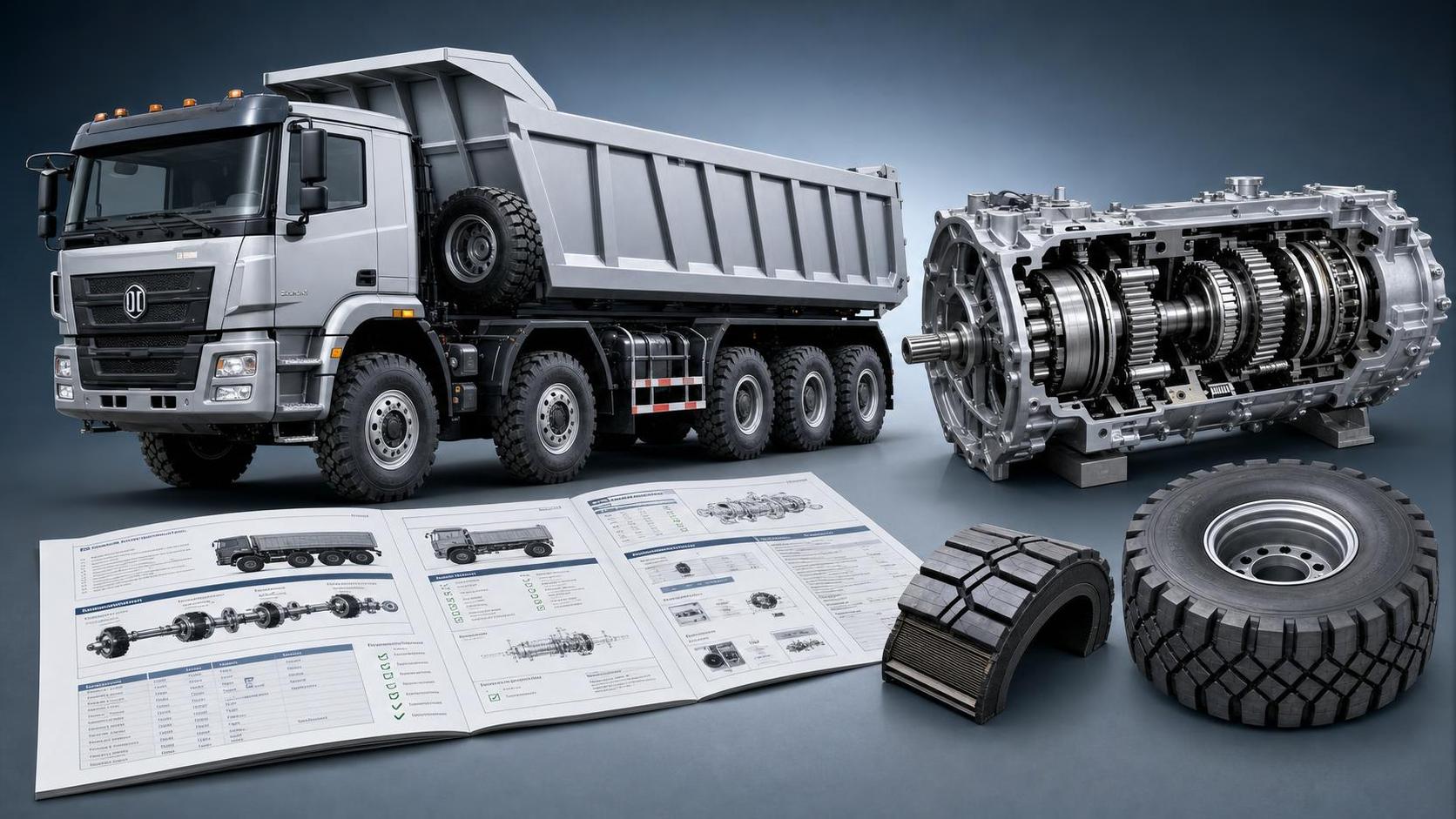
A Cangshan Vehicle Configuration List is not just a model sheet. For anyone sourcing commercial vehicles, it is the document that tells you whether two trucks that look similar on a quotation are actually built for the same job. The problem is that many buyers read it like a brochure, scanning for horsepower, payload, and price, while the real operational differences are often buried in axle ratio, suspension type, tank capacity, cab equipment, emissions setup, or even tire specification.
That is where procurement mistakes usually start. One vehicle may be fine for urban distribution but unsuitable for long-haul or rough-road duty. Another may appear cheaper until you notice it uses a lighter frame, a different gearbox, or a brake setup that does not match your operating environment. Reading the list properly means understanding which items define the truck’s working capability, which ones affect lifecycle cost, and which ones are easy to customize before shipment.
In practice, a configuration list for engineering or commercial vehicles is a structured summary of the truck’s build: brand platform, drive form, dimensions, engine, transmission, axle layout, suspension, braking system, tires, cabin, electrical features, and sometimes body or upper-structure details. It may also include compliance-related information depending on destination market requirements. The document is technical by nature, but it is written for commercial decisions as much as engineering ones.
Start with the operating scenario, not the spec sheet
The fastest way to misread a Cangshan Vehicle Configuration List is to treat every parameter as equally important. They are not. The relevance of each item depends on what the vehicle will actually do. A mixer truck, dump truck, cargo truck, and tractor head may all be sold through the same channel, but the configuration logic behind each is different.
Before comparing models, fix the working conditions: road quality, climate, average load, overload risk, altitude, trip distance, fuel quality, maintenance support, and legal road limits in the target country. Without that context, even accurate specifications can lead to the wrong purchase decision. A higher engine output, for example, is not automatically better if the rear axle ratio, gearbox matching, and fuel consumption profile do not suit the route. Likewise, a long wheelbase may improve body capacity while making maneuvering harder in confined work sites.
Experienced exporters and dealers usually read the list backward from application. They ask what the truck needs to survive operationally, then confirm whether the listed components support that use. This matters especially when comparing authorized brands such as FOTON, SHACMAN, and SINOTRUK, where the naming format may differ but the procurement logic remains the same.
The specs that decide whether a truck can do the job
Some lines on the configuration list deserve more attention than others because they define the vehicle’s basic working envelope.
The first is the drive configuration: 4x2, 6x4, 8x4 and similar formats. Buyers sometimes treat this as a simple category label, but it immediately changes traction, legal axle loading distribution, curb weight, turning behavior, and body suitability. A 6x4 dump truck and an 8x4 dump truck may both be marketed for construction transport, yet their economics and site performance can differ significantly depending on load pattern and road condition.
Next comes the wheelbase and overall dimensions. These are not cosmetic numbers. They affect body length, turning radius, stability, approach angle, and in some markets whether the truck fits local transport regulations. A buyer focused only on cargo volume may overlook the operational penalty of a longer chassis in urban or mining access roads.
Then there is the engine section. Output figures such as horsepower and torque matter, but they should be read together with displacement, emissions system, and engine family. A truck with adequate power on paper may become harder to maintain if the destination market has inconsistent diesel quality or limited support for a specific aftertreatment system. This is not a universal rule; it depends on the local service network and regulation framework. But it is exactly the kind of issue a configuration list can flag early if you know where to look.
Transmission data is another area where buyers often stop too soon. Manual versus automated transmission is only the surface. Gear count, gear ratio spread, and matching with axle ratio affect gradeability, startability under load, highway cruising speed, and fuel use. If the engine is the source of power, the gearbox and axle are what determine how usable that power is in the field.
Why axle ratio, suspension, and tires deserve a closer read
In many procurement discussions, these items are treated as secondary details. They are not. In engineering vehicles especially, they often explain the difference between a truck that performs well for five years and one that becomes expensive much earlier.
Axle ratio tells you how the truck balances pulling power against road speed. A numerically higher ratio usually favors heavy-load traction and climbing ability, while a lower ratio tends to support higher cruising speed and lower engine speed at road pace. Neither is inherently better. The right choice depends on terrain, load factor, and trip profile. If your route includes steep grades, rough haul roads, or frequent starts with heavy loads, axle ratio becomes a commercial decision, not a technical footnote.
Suspension type also reveals intended use. Multi-leaf spring setups are common in heavy-duty applications because they favor durability and load handling. Other configurations may improve ride comfort or reduce weight but are not always ideal for severe working conditions. A configuration list that shows front and rear suspension details gives you a strong clue about whether the truck is tuned for road freight, site work, or mixed duty.
Tires are another frequent blind spot. Size, ply rating or load index, tread pattern, and brand availability all matter. A truck priced attractively with a tire setup that is difficult to replace locally may cost more in downtime later. Tire specification also interacts with ride height, payload legality, and traction in mud, gravel, or paved-road service. Buyers comparing only the truck body and engine can miss that entirely.
What the cabin and auxiliary systems really tell you
Cab features are sometimes dismissed as comfort options, but in cross-border procurement they can be operationally relevant. Air conditioning capacity, sleeper configuration, seat layout, visibility equipment, and electrical interfaces affect driver acceptance, route suitability, and even safety management. A long-distance tractor without the right cab setup may still be roadworthy, yet it may not be commercially sensible for the fleet that operates it.
Fuel tank capacity is another line that looks simple and is often underestimated. It influences route planning, refueling frequency, and usable range in markets where station coverage is uneven. Battery specification, alternator capacity, and lighting configuration also deserve attention when the vehicle will operate with additional body equipment or in difficult environments.
For engineering vehicles, look carefully at any mention of PTO, hydraulic preparation, cargo body dimensions, or upper-structure compatibility. In many export transactions, the base chassis and the body system are sourced, built, or finalized through different parties. If the configuration list does not align with the intended body design, the mismatch may only become obvious during assembly or delivery inspection.
Common misunderstandings that lead to bad comparisons
One common mistake is assuming that same horsepower means same performance. It does not. Performance in loaded commercial use comes from the powertrain combination, axle setup, curb weight, and task profile working together.
Another is comparing gross vehicle size instead of rated configuration logic. Two vehicles may have similar external dimensions while using different frame strength, axle ratings, or suspension packages. That difference may not be obvious unless the buyer reads beyond the headline model description.
A third is treating optional items as minor. On export orders, optional details can change lead time, homologation readiness, serviceability, and total landed cost. If a buyer assumes those items can always be adjusted later, the procurement plan becomes more fragile than it looks.
There is also a paperwork issue. Some buyers review the commercial quotation and the configuration sheet separately without checking consistency line by line. That is risky. The quotation may summarize the order in commercial language, while the configuration list defines what will actually be built and supplied. Any mismatch between the two should be resolved before production or shipment.
A practical way to read the list during sourcing
For procurement work, it helps to read the document in layers.
This approach is useful because it stops the review from becoming a random scan of technical terms. Instead, it turns the configuration list into a sourcing control tool.
Where experienced exporters add value
For international buyers, the challenge is rarely just reading the list. It is interpreting what matters for the destination market. An exporter with deep brand access and configuration experience can usually identify whether the listed truck is a standard production build, a special market version, or a unit that needs pre-shipment customization to meet local operating conditions.
That is especially relevant when working with mainstream Chinese commercial vehicle platforms from FOTON, SHACMAN, and SINOTRUK. Availability, factory options, body matching, document handling, and delivery timing often depend on configuration accuracy at the order stage. Companies that maintain authorized dealership channels, inventory access, and export coordination capability are generally better positioned to bridge the gap between factory specification language and overseas procurement decisions.
Shandong Livol Truck International Trade Co., Ltd. operates in exactly this part of the process: translating vehicle selection into workable export supply, with support covering customization, documentation, customs clearance, logistics, and after-sales coordination. That does not replace the buyer’s technical review, but it does reduce the risk of ordering a truck that looks correct on the front page and proves unsuitable in the operational details.
What to take from the configuration list before you approve an order
A good reading of a Cangshan Vehicle Configuration List should leave you with answers to a few hard questions. Is this truck genuinely matched to the load, terrain, and route? Are the engine, transmission, and axle settings working together, or just sounding impressive separately? Are the suspension, tire, and brake choices appropriate for the duty cycle? Are there optional items that affect serviceability, compliance, or delivery? And is the commercial offer fully consistent with the technical specification?
If those questions are still unclear, the document has not been fully read yet. In procurement, the value of the configuration list is not that it contains a lot of data. It is that, read properly, it exposes the difference between a truck that can be purchased and a truck that can actually be operated with confidence.
Search Starts Here