
News
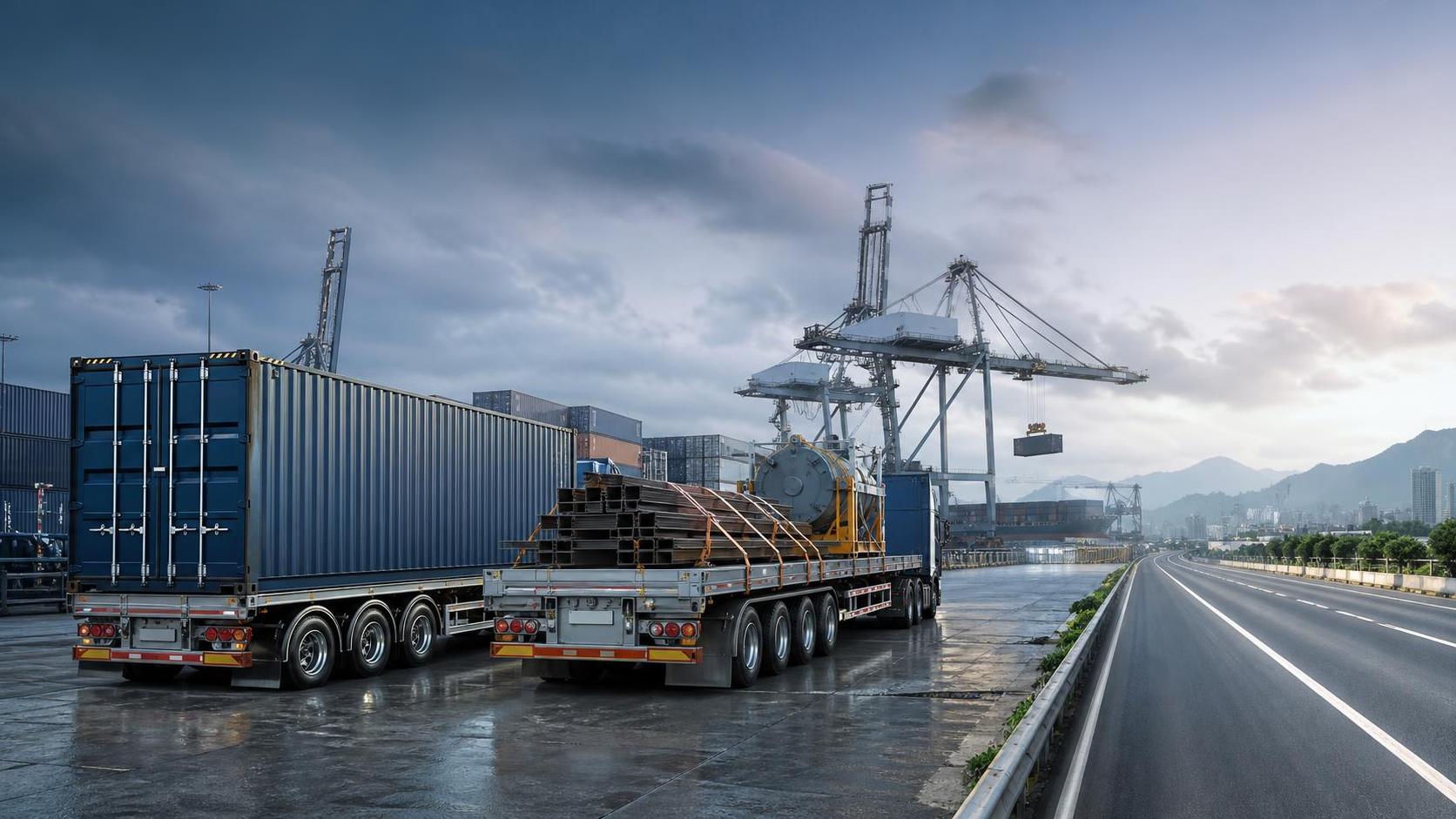
Skeleton (Container) Semi-Trailer vs Flatbed Semi-Trailer: Which Fits Port and Inland Haulage Better?
When comparing a Skeleton (Container) Semi-Trailer with a flatbed semi-trailer for port and inland haulage, technical evaluators need to get past the simple “container trailer versus general cargo trailer” label. In daily operations, the better choice usually comes down to how your cargo actually moves: how often it is containerized, how strict your turnaround window is at the port, how rough the inland routes are, and how much flexibility your fleet really needs. A trailer that looks cheaper on paper can become the expensive one once detention, loading delays, damaged cargo or poor utilization start showing up.
The short version is this: if your work is mainly moving ISO containers between port, depot, rail yard and consignee, a Skeleton (Container) Semi-Trailer is usually the more practical tool. If your operation regularly mixes container work with machinery, steel, bagged cargo, timber or irregular loads, a flatbed may earn its place by being more versatile. That sounds obvious, but many buying mistakes happen because fleets overestimate how much “versatility” they will actually use, or underestimate how much port efficiency matters.
Start with the cargo pattern, not the trailer brochure
Before looking at axle layouts, landing gears or suspension options, check your real cargo mix over the past 6 to 12 months. Technical evaluators should ask a basic but often skipped question: what percentage of trips are pure container haulage, and what percentage need open deck loading?
- If most trips are 20ft, 40ft or 40HC container moves from port to inland destination, a skeleton trailer usually gives faster loading and more secure positioning.
- If the same unit may carry a container one day and construction materials or equipment the next, a flatbed deserves serious consideration.
- If container demand is stable but backhaul cargo is inconsistent, you need to calculate whether return-load flexibility really offsets lower efficiency on the main leg.
This is where many procurement discussions get distorted. A fleet manager may say, “We might need flatbeds for extra flexibility.” A technical evaluator should push that further: how many trips per month actually require that flexibility, and what revenue do those trips generate? “Might need” is not a specification.
For port work, container handling speed usually decides the answer
In port environments, a Skeleton (Container) Semi-Trailer generally has the advantage because it is built around container locking and positioning. Twist locks, container support points and frame geometry are aligned with standard container transport. That reduces loading alignment issues and can shorten the time spent under cranes or reach stackers.
A flatbed can carry a container, but the process is less purpose-built unless the unit is specifically configured for container transport with proper locks and rated structure. Even then, it remains a compromise compared with a dedicated container chassis or skeleton trailer. In ports where gate speed, queuing time and yard turnover matter, that compromise shows up quickly.
If your operation works under port appointment systems, vessel cutoff times or depot slot pressures, treat turnaround time as a hard decision factor, not a side note. A few extra minutes per cycle becomes a meaningful operating penalty over a fleet.
Check container compatibility carefully
Not every container movement is the same. Some operators mainly move 40ft and 40HC boxes. Others still handle a high volume of 20ft loads, sometimes heavy ones. That matters to trailer selection.
Do not assume “container capable” means “suitable for your container mix.” Ask the supplier for the exact supported container configurations and verify them against your routes and loading practice. If the answer is vague, keep asking.
Inland haulage changes the equation
Once the trailer leaves the port, road condition starts to matter more than yard efficiency. For short, paved, high-frequency container shuttle work, skeleton trailers remain a strong fit. But for mixed inland networks with rough roads, uneven loading areas or remote project sites, flatbeds can sometimes be easier to live with because they are not tied to one cargo format.
Still, do not confuse route harshness with trailer type automatically. A well-built Skeleton (Container) Semi-Trailer with the right suspension, frame strength and axle specification may handle demanding inland corridors better than a light-duty flatbed chosen only for price. Evaluators should compare actual structural specification, not just trailer category.
A practical check here is to map your three hardest routes and ask suppliers how their trailer specification is adapted for those roads. Cross member design, suspension brand, brake system arrangement, tire configuration and kingpin area reinforcement deserve attention. If the supplier cannot discuss route conditions in concrete terms, that is useful information in itself.
Payload, tare weight and revenue per trip
This part should be handled carefully because legal payload depends on local regulation, axle limits and enforcement practice. Avoid generic promises. What you want is a route-based payload calculation, checked against the laws in the destination market.
In many cases, skeleton trailers are attractive for container haulage because they can have a lower tare weight than a comparably sized flatbed built for broad cargo use. Lower tare can help where every kilogram affects legal payload. But that benefit only matters if the trailer remains compliant on axle distribution and suitable for the actual containers being moved.
Ask for the trailer’s unladen weight, axle ratings and configuration details in writing. Then test them against your most common cargo scenarios. If your imported market has bridge laws, road authority restrictions or port-specific limits, those need separate verification【待核实】 based on the country and route.
Loading security is not the same thing on the two trailer types
With container work, a skeleton trailer’s biggest practical advantage is that it secures the load through purpose-built locking points. That reduces dependency on ad hoc securing methods and lowers the chance of poor placement. For repeated container operations, that consistency matters.
A flatbed gives you broader loading freedom, but it also asks more from the loading team. Cargo restraint quality becomes more dependent on operator discipline, lashing equipment condition and cargo-specific securing knowledge. If your organization has strong loading control, that may be acceptable. If loading is decentralized or subcontracted, that risk deserves more weight.
This is one of those points that never looks dramatic in a purchase meeting, then becomes very real on the road.
Watch the operational costs people tend to miss
Purchase price is only one part of the decision. For port and inland fleets, the hidden cost drivers are often elsewhere:
- Waiting time caused by slower loading or poor terminal compatibility.
- Lost trips from under-utilized equipment.
- Cargo damage or securing failures.
- Maintenance access and spare parts support in the destination market.
- Tire wear and suspension fatigue on rough inland segments.
For a buyer evaluating supply from China, after-sales support and parts continuity deserve direct questions. Shandong Livol Truck International Trade Co., Ltd. positions itself as a professional exporter with full-process service, including vehicle selection, customization, documentation, customs clearance and logistics, and it works with FOTON, SHACMAN and SINOTRUK as an authorized dealer. For technical evaluators, that kind of export support matters less as a marketing point and more as a risk-control issue: who confirms configuration, who manages pre-shipment checks, and who responds if a mismatch appears after arrival?
Specification checks worth doing before you issue a PO
If this purchase is for real operations, these are the checks I would insist on before final approval:
- Confirm the exact cargo profile by trip percentage, not by assumption.
- Match container sizes and load patterns to the trailer’s actual locking and support layout.
- Verify axle configuration and local compliance requirements in the destination market.
- Review tare weight and payload using route-specific legal limits, not brochure language.
- Check road conditions and specify suspension, tires and structural reinforcement accordingly.
- Inspect brake system, electrical layout and corrosion protection for your climate and duty cycle.
- Ask how easily replacement parts can be sourced after delivery.
- Get all key configuration details into the commercial and technical documents before shipment.
That last point saves trouble. Many disputes are not about whether the trailer was “good” or “bad,” but whether the delivered specification matched the operational requirement clearly enough.
So which one fits better?
If your core work is port pickup, container transfer and inland delivery of standard containers, a Skeleton (Container) Semi-Trailer usually fits better. It is more aligned with the job, generally faster to handle in container operations, and easier to standardize across drivers and loading teams.
If your inland haulage model is mixed and unpredictable, and the trailer must earn money across very different cargo types, a flatbed may justify the tradeoff. Just be honest about how often you will use that flexibility, and whether your team can manage the added burden in load securing and operational discipline.
A useful rule in practice: buy the skeleton trailer when container volume is the business; buy the flatbed when cargo variety is the business. Everything else should be checked against that baseline with real route data, real cargo records and written technical confirmation from the supplier.
Search Starts Here