
News
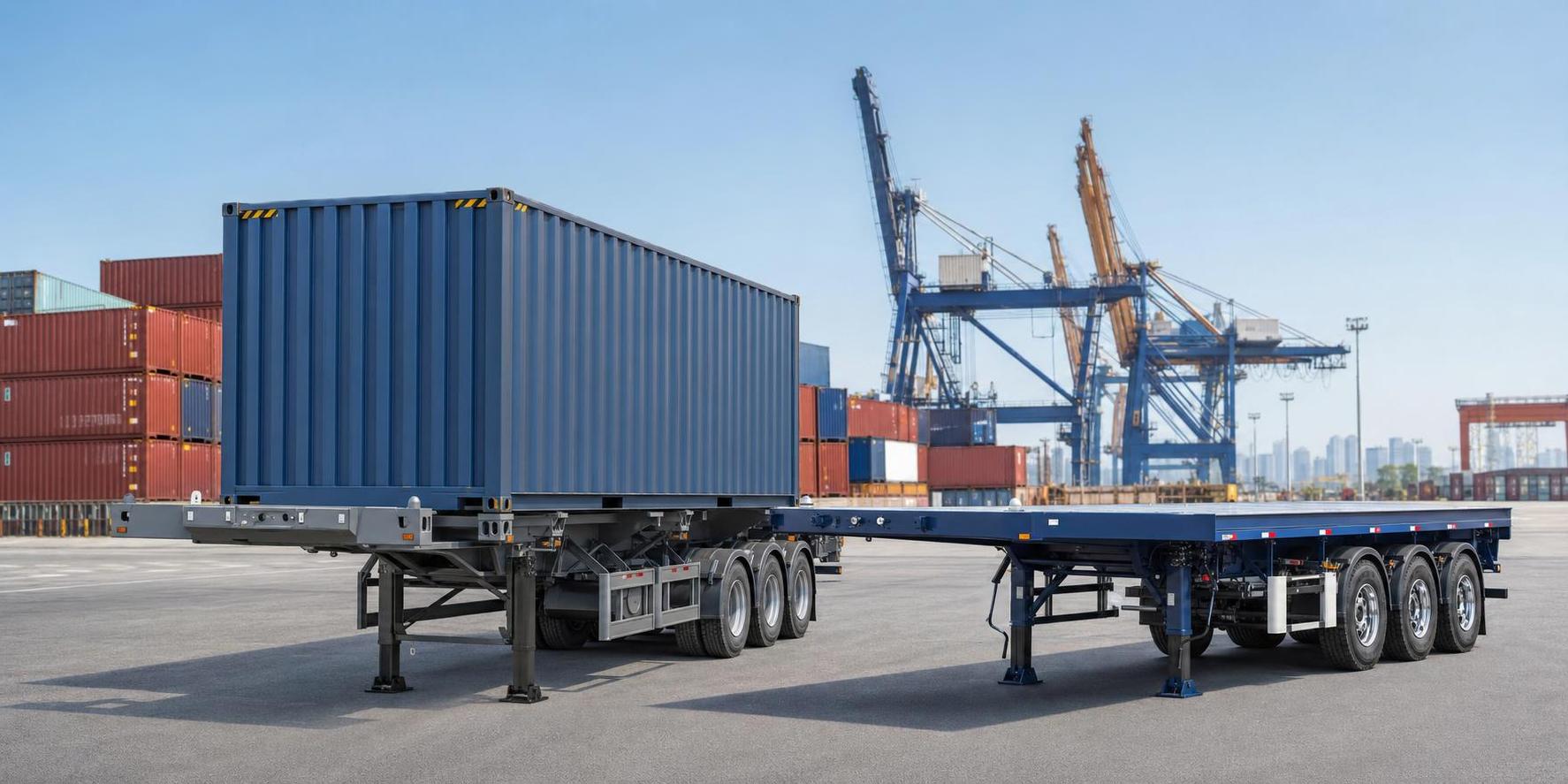
Skeleton Semi-Trailer vs Flatbed: Which Cuts Container Transport Costs?
When container transport budgets tighten, trailer choice quickly becomes a cost issue, not just an equipment issue.
A flatbed looks flexible at first. A Skeleton (Container) Semi-Trailer looks specialized. The cheaper option depends on what costs matter most over time.
For container-focused operations, the real comparison goes beyond purchase price. It includes loading speed, compliance exposure, damage risk, maintenance, and asset utilization.
That is why this decision often affects ROI more than expected. One trailer may save money upfront, while the other reduces operating cost month after month.
In most dedicated container routes, a Skeleton (Container) Semi-Trailer delivers better cost control. Still, there are cases where a flatbed remains the smarter asset.
Start with the real cost question
The wrong comparison is simple purchase price. The right comparison is total delivered cost per container move.
A flatbed may cost less in some markets. It may also serve multiple cargo types. That flexibility has value when container demand is irregular.
But container transport is a specific task. When a fleet moves standard 20ft, 40ft, or 45ft units every day, specialization usually reduces waste.
A Skeleton (Container) Semi-Trailer is built around container locks, frame layout, and weight distribution. That design cuts time, error, and unnecessary handling.
What should be measured
- Acquisition cost and expected resale value
- Average loading and unloading time
- Container securing labor and error rate
- Fuel impact from tare weight and balance
- Maintenance cost on frame, deck, and locking parts
- Compliance risk in port, highway, and customs operations
- Utilization across routes and seasons
Why a Skeleton (Container) Semi-Trailer often wins on operating cost
The biggest advantage is fit for purpose. A Skeleton (Container) Semi-Trailer carries containers without a full deck, which eliminates unnecessary structure and weight.
Lower tare weight can improve payload efficiency. Over hundreds of trips, that can support lower fuel cost or better legal loading margins.
The second advantage is speed. Twist locks and container-specific positioning reduce loading mistakes and shorten yard turnaround.
This matters more than many buyers assume. Delays at ports, depots, or customer sites create hidden labor and scheduling costs.
A dedicated Skeleton (Container) Semi-Trailer also reduces the chance of poor container placement, unstable securing, or deck-related interference during loading.
Where savings usually appear
- Faster port and warehouse handling
- Lower labor input for securing containers
- Reduced wear on deck surfaces
- Better suitability for repeat container lanes
- Lower damage risk from improper loading setup
Where flatbeds still make financial sense
A flatbed is not automatically the wrong choice. In mixed-cargo fleets, flexibility can protect utilization better than specialization.
If containers represent only part of monthly volume, a flatbed may prevent idle assets. That matters when freight demand changes by season or by project cycle.
A flatbed can also carry machinery, steel, palletized goods, and oversized loads. That wider use case may support stronger yearly revenue per trailer.
So the question is not whether flatbeds are cheaper. The question is whether flexibility offsets higher container handling cost.
Flatbed works best when
- Container volumes are inconsistent
- Routes include non-container backhaul cargo
- The business needs one trailer for several freight categories
- Port operations are limited, and road delivery dominates
The hidden costs that often change the decision
Recent buying patterns show a clearer signal. Buyers are paying more attention to hidden operating losses, not just headline trailer pricing.
One hidden cost is loading inconsistency. A flatbed may require more manual judgment when placing and securing a container.
That increases the chance of delays, rework, or claims. Even a small error rate becomes expensive across large shipment volumes.
Another hidden cost is compliance. Container transport often involves stricter expectations around securement, dimensions, axle loading, and yard compatibility.
A Skeleton (Container) Semi-Trailer is generally easier to standardize for these tasks. Standardization supports audit readiness and more predictable operations.
Maintenance also matters. Flatbeds have deck surfaces that suffer from impact, abrasion, and weather exposure. A skeleton frame avoids much of that deck-related wear.
Cost risks to review before approval
- Extra labor minutes per loading cycle
- Container damage claims or cargo instability
- Fines or disruption from non-compliant loading
- Higher downtime from deck repairs
- Lower trailer turns per day
A practical cost comparison for procurement decisions
In practical business terms, the best choice depends on route pattern, cargo mix, and payback period.
Use a simple scorecard instead of relying on one quote. This keeps the decision tied to measurable operating outcomes.
A simple approval rule
Choose a Skeleton (Container) Semi-Trailer when container transport is the core task for most trips and turnaround speed affects revenue.
Choose a flatbed when revenue depends on cargo flexibility more than container handling efficiency.
How supplier strength affects long-term trailer cost
Trailer cost is not only about design. Supplier capability has a direct impact on delivery timing, configuration accuracy, parts support, and after-sales response.
In actual procurement, these factors shape total ownership cost just as much as unit price does.
Shandong Livol Truck International Trade Co., Ltd. supports commercial vehicle buyers with full-process export services, from selection to logistics coordination.
As an authorized dealer for FOTON, SHACMAN, and SINOTRUK, the company combines stable supply, strong domestic network coverage, and professional export execution.
That matters when buyers need a Skeleton (Container) Semi-Trailer matched to route conditions, local regulations, and fleet strategy.
Reliable documentation, customization support, and after-sales coordination help reduce delays, mismatch costs, and operational surprises after delivery.
Final verdict: which trailer cuts container transport costs?
For regular container operations, the Skeleton (Container) Semi-Trailer usually cuts costs better than a flatbed.
The reason is straightforward. It improves loading efficiency, reduces avoidable handling loss, supports compliance, and fits container transport with less waste.
A flatbed remains valuable where freight mix changes often. Yet for dedicated container lanes, its flexibility may not outweigh higher operating friction.
The most practical next step is to compare both trailer types using your own trip frequency, loading time, labor cost, and backhaul profile.
If the business is container-heavy, a well-specified Skeleton (Container) Semi-Trailer is usually the stronger long-term asset.
A decision grounded in total cost, not sticker price, is far more likely to protect margins and improve fleet performance over time.
Search Starts Here