
News
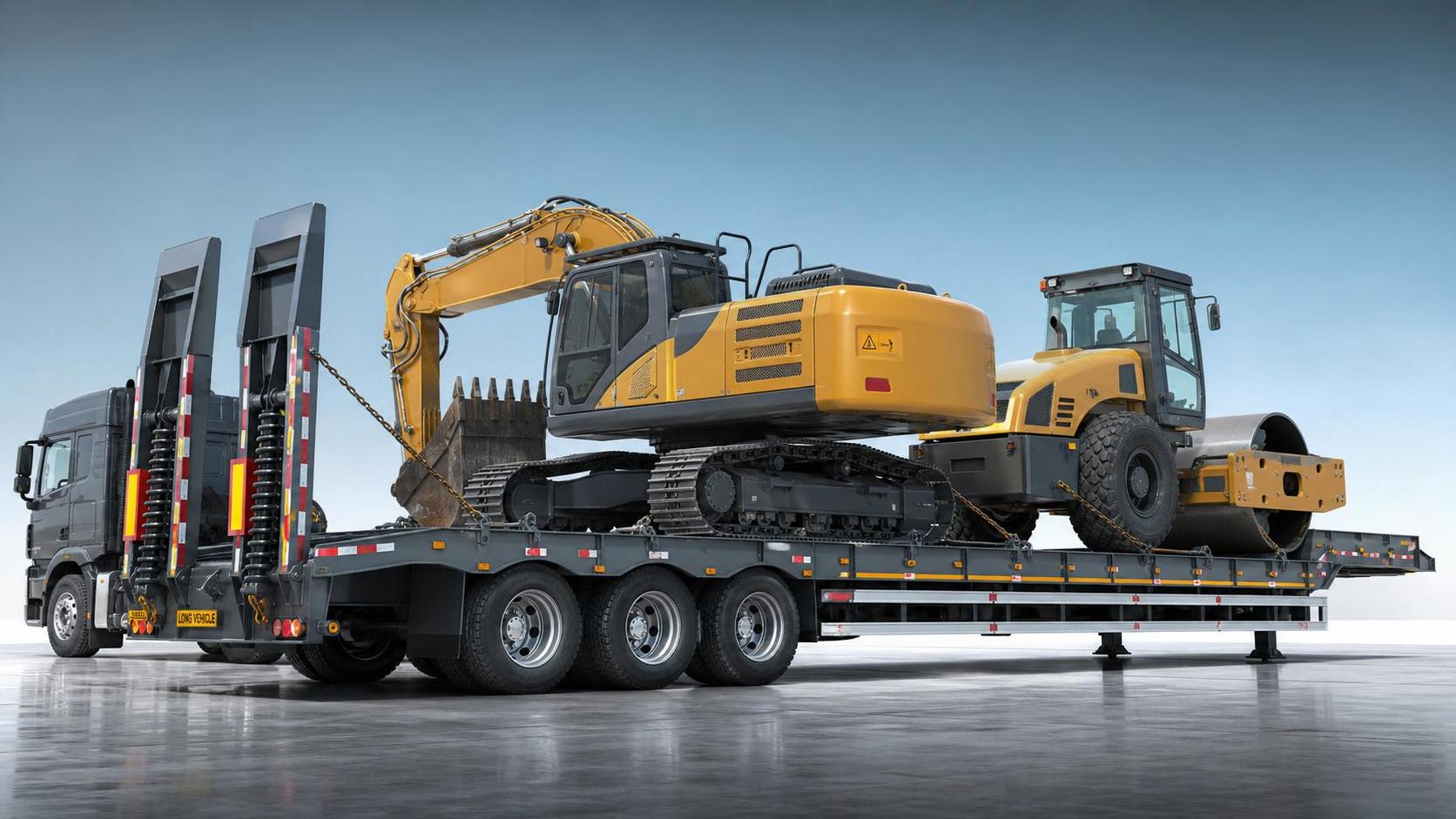
How to Choose a Flatbed Semi-Trailer for Heavy Equipment Loads
Choosing the right Flatbed Semi-Trailer for heavy equipment loads is not a small purchasing decision. It directly affects safety, loading efficiency, route flexibility and long-term ownership cost.
For engineering vehicle transport, the wrong trailer can create daily problems. Common issues include unstable loading, overweight penalties, tire wear, slower turnaround and higher maintenance expenses.
A well-matched Flatbed Semi-Trailer does more than carry weight. It supports smoother loading, better axle balance, safer road handling and stronger fleet utilization across different job sites.
This guide explains how to compare trailer specifications in a practical way, so the final choice fits the load, the route and the business model.
Start with the Equipment Profile
The first step is simple. Define exactly what the Flatbed Semi-Trailer will carry most often, not just what it may carry occasionally.
Heavy equipment loads vary widely. Excavators, wheel loaders, rollers, cranes and agricultural machinery all place weight differently across the deck.
In real operations, cargo shape matters as much as total mass. A compact machine with high point loading creates different stress than a long machine with distributed weight.
- Operating weight of each machine
- Overall length, width and height
- Track or wheel spacing
- Center of gravity position
- Loading method and ramp angle needs
- Frequency of mixed-load transport
This information becomes the base for choosing deck length, deck strength, axle layout and suspension type. Without it, trailer selection usually turns into guesswork.
Match Payload Capacity to Real Working Conditions
Payload capacity is often the first number buyers compare. It is important, but it should never be read in isolation.
A Flatbed Semi-Trailer must support not only rated load, but also dynamic stress during braking, cornering, uneven roads and repeated loading cycles.
A practical rule is to avoid selecting a trailer that operates near its limit every day. That usually shortens service life and increases tire, suspension and frame fatigue.
From a cost perspective, extra reserve capacity often pays back. It reduces risk when equipment weight changes because of attachments, fuel level or added accessories.
- Check gross vehicle weight limits by market
- Confirm legal axle load requirements
- Allow a safety margin for real use
- Review bridge and road restrictions on main routes
The best Flatbed Semi-Trailer is not the highest-capacity model. It is the trailer whose legal and structural capacity matches the actual transport pattern.
Evaluate Deck Dimensions and Loading Space
Deck dimensions strongly influence day-to-day usability. A trailer can meet payload requirements and still fail operationally if the deck layout is wrong.
Length should fit the equipment with enough room for safe positioning. Width should support stable wheel or track placement without unsafe overhang.
Deck height also matters. A lower deck helps with machine loading and overall transport height, especially when passing under bridges or entering restricted sites.
For some fleets, a standard flat deck works well. For others, a lowbed or drop-deck solution may be more suitable for taller heavy equipment loads.
When comparing Flatbed Semi-Trailer options, look closely at these details:
- Usable deck length, not just total trailer length
- Main beam strength and deck plate thickness
- Ramp design and loading angle
- Lashing points and tie-down distribution
- Clearance for loading over rough ground
A trailer that loads quickly and securely can improve dispatch efficiency more than many buyers expect.
Choose the Right Axle Configuration
Axle configuration is one of the most important decisions in Flatbed Semi-Trailer selection. It affects legal compliance, load distribution, turning behavior and tire costs.
Two-axle, three-axle and multi-axle designs each serve different transport needs. The correct choice depends on equipment weight, route quality and local regulations.
If loads are consistently heavy, more axles may improve distribution and reduce per-axle stress. However, they can also increase maintenance complexity and purchase cost.
A balanced decision usually considers:
- Typical cargo weight range
- Road class and terrain conditions
- Local axle load law enforcement
- Turning radius needed on job sites
- Expected annual mileage and tire budget
In many engineering vehicle applications, the cheapest axle setup is not the most economical one over time.
Do Not Overlook Suspension, Tires and Braking
Buyers often focus on frame size first. Yet suspension, tire quality and braking performance have a direct impact on stability and lifecycle cost.
Mechanical suspension is widely used because it is durable and cost-effective. Air suspension can improve ride quality and cargo protection on better roads.
For heavy equipment loads, braking reliability is non-negotiable. Brake response must remain consistent under full load, long distance travel and frequent stops.
- Match suspension to route conditions
- Use tire specifications suited to heavy duty use
- Confirm brake system compatibility with the tractor
- Check spare parts availability in target markets
- Ask about service intervals and common wear items
These details may seem secondary during quotation review, but they often determine whether a Flatbed Semi-Trailer stays productive or becomes a service burden.
Check Material Quality and Manufacturing Standards
A Flatbed Semi-Trailer for demanding loads needs more than attractive specifications on paper. Steel grade, welding quality and production consistency all matter.
Look for a manufacturer or exporter that can clearly explain frame materials, beam structure, anti-corrosion treatment and inspection procedures.
Better material quality usually reduces cracks, deformation and repainting needs. That is especially valuable in markets with rough roads, humid weather or long transport distances.
A useful supplier review checklist includes:
- Frame design for concentrated load stress
- Welding process and inspection records
- Surface treatment and paint durability
- Component brand traceability
- Factory quality control workflow
When heavy equipment transport is frequent, structural durability is not a premium feature. It is a purchasing necessity.
Review Compliance, Documentation and Export Support
A technically suitable Flatbed Semi-Trailer can still create delays if compliance and paperwork are not handled correctly. This is especially true in cross-border procurement.
Regulatory requirements may involve dimensions, axle limits, lighting, braking standards and certification documents. Missing one item can slow registration or delivery.
This is where supplier capability becomes a real decision factor. Strong export support can reduce risk long before the trailer reaches its destination.
Shandong Livol Truck International Trade Co., Ltd. brings clear value here. Based in Shandong, China, the company offers reliable export service backed by strong industry resources.
As the official authorized domestic and overseas dealer for FOTON, SHACMAN and SINOTRUK, Livol supports stable supply through extensive authorized 4S store networks and ready inventory.
Its professional export team handles vehicle selection, customization, documents, customs clearance and logistics. That full-process support helps buyers move faster and with fewer surprises.
For projects involving engineering vehicles and related transport solutions, that combination of supply strength and execution experience can significantly reduce procurement friction.
Compare Total Cost, Not Just Purchase Price
A lower quote can look attractive in the short term. However, Flatbed Semi-Trailer selection should always be based on total cost of ownership.
In practical business terms, operating cost usually matters more than factory price after the first few months of use.
Key cost factors include:
- Fuel efficiency impact from trailer weight
- Tire replacement frequency
- Brake and suspension maintenance costs
- Downtime caused by failures or poor parts supply
- Resale value after several years
A dependable Flatbed Semi-Trailer usually delivers better financial performance through uptime, compliance and reduced repair frequency.
A Simple Decision Framework
To make trailer comparison more efficient, use a practical sequence instead of reviewing specifications randomly.
- List the top three equipment loads by weight and size
- Define route limits, road quality and legal rules
- Shortlist Flatbed Semi-Trailer models by capacity and deck size
- Compare axle, suspension and braking systems
- Verify manufacturing quality and export support
- Calculate total cost over the expected service period
This approach keeps the decision grounded in actual operating needs. It also helps avoid buying a trailer that looks right on paper but performs poorly in the field.
The most suitable Flatbed Semi-Trailer is the one that balances payload, durability, legal compliance and service support without creating unnecessary cost.
If the goal is safe and efficient heavy equipment transport, careful comparison now will save time, money and operational risk later. A trusted supplier with strong product resources and export capability can make that choice much easier.
Search Starts Here