
News
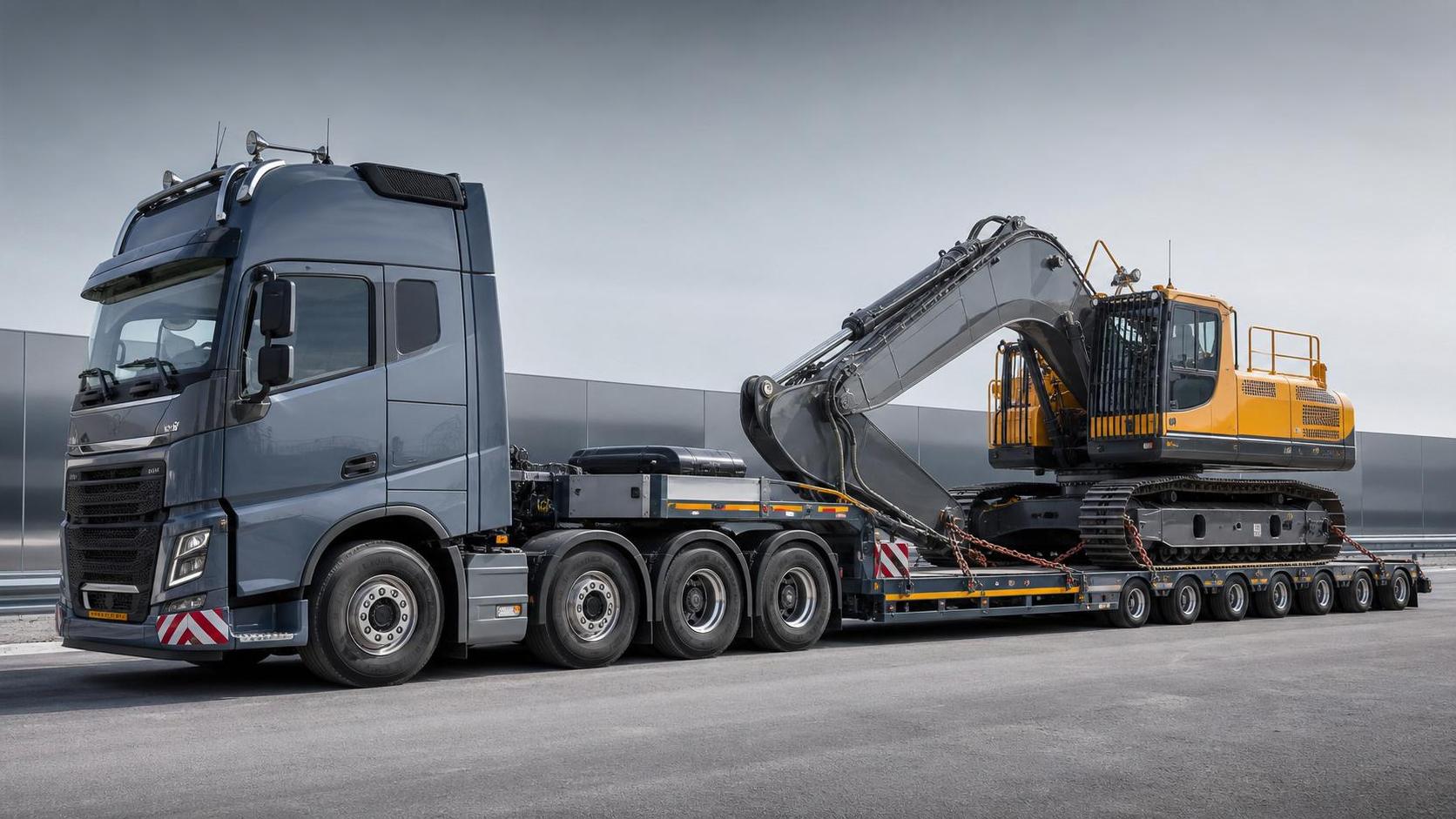
Low Plate Trailer Safety Risks in Oversized Equipment Transport
When transporting oversized equipment, a Low Plate trailer often looks like the practical choice.
It lowers loading height, improves access, and supports heavy machinery with less setup time.
Still, lower deck height does not automatically mean lower transport risk.
In real operations, Low Plate use can expose weak points in stability, braking, route fit, and equipment protection.
That is why safety review must start before loading, not after departure.
The goal is simple: move oversized equipment safely, legally, and without costly surprises.
Why a Low Plate Trailer Changes the Risk Profile
A Low Plate trailer is designed to carry tall or heavy cargo closer to the ground.
That helps control total transport height and can improve loading for excavators, rollers, and industrial modules.
However, the same design creates a different balance of hazards.
Ground clearance becomes tighter.
Turning behavior changes under concentrated weight.
Brake response may feel slower when cargo distribution is not well controlled.
More importantly, minor loading errors on a Low Plate can become major safety issues on uneven roads.
This also means inspection standards should be stricter than for standard flatbed work.
The Most Common Low Plate Safety Risks
1. Unstable Load Distribution
Oversized equipment rarely has a simple center of gravity.
A crane base, drilling rig, or tracked machine may carry hidden side weight.
If that weight sits off-center on a Low Plate, rollover risk increases during turns or lane corrections.
The danger grows on ramps, rural roads, and temporary site access lanes.
- Check axle load balance before dispatch.
- Confirm center-of-gravity drawings from the equipment supplier.
- Use measured positioning marks on the Low Plate deck.
- Recheck after the first short-distance movement.
2. Reduced Ground Clearance
One clear benefit of a Low Plate is low deck height.
One clear risk is bottoming out.
Speed bumps, bridge joints, steep entrances, ferry ramps, and rough site roads can strike the underside.
That impact may damage the trailer frame, cargo supports, hydraulic lines, or the equipment itself.
In practice, many incidents happen at low speed during access, not on highways.
- Survey route elevations in advance.
- Review plant gates, depot entrances, and unloading areas.
- Set approach angles for critical ramps.
- Add spotters at ground-clearance risk points.
3. Braking and Stopping Distance Issues
Heavy-haul transport is never just about carrying capacity.
Stopping safely matters even more.
A loaded Low Plate can place major stress on tractor braking systems, trailer brakes, tires, and suspension.
If brake synchronization is poor, the trailer may push the tractor under emergency braking.
Wet roads make that risk more obvious.
- Test brake response before long-haul departure.
- Inspect air lines, brake chambers, and ABS connections.
- Match the tractor unit to the Low Plate load class.
- Set speed limits based on total mass, not schedule pressure.
4. Securing Failures During Long-Distance Transport
Oversized equipment can shift even when it appears locked in place.
Vibration, road camber, repeated braking, and weather all affect tie-down performance.
On a Low Plate, any small movement can quickly change axle load and steering stability.
This is especially risky with wheeled machines, steel components, and modular assemblies.
- Use chains, binders, stoppers, and friction pads together.
- Follow equipment-specific lashing points only.
- Inspect tie-down tension after the first 50 kilometers.
- Increase checks in rain, heat, or rough terrain.
Route Planning Risks That Are Often Missed
A Low Plate movement can fail even when the vehicle and load are technically suitable.
The reason is often poor route planning.
Recent project changes make this more common.
Urban restrictions, temporary roadworks, weak bridges, and weather disruptions can change the safest route overnight.
For Low Plate transport, route planning should include more than distance and travel time.
- Check bridge load limits and pavement conditions.
- Confirm turning radius at toll stations and intersections.
- Review overhead clearance together with deck height and cargo height.
- Identify emergency stopping areas for heavy-haul vehicles.
- Verify permit conditions and escort requirements.
A useful route plan is not static.
It should be updated before dispatch and again before entering high-risk sections.
How to Build a Practical Low Plate Risk Control Process
The best control method is a repeatable checklist tied to real operating conditions.
That keeps Low Plate decisions consistent across teams, routes, and equipment categories.
Pre-Loading Controls
- Verify equipment dimensions, weight, and center-of-gravity data.
- Confirm the Low Plate specification matches load and route requirements.
- Inspect deck condition, tires, suspension, and braking components.
- Review permits, escort rules, and route restrictions.
Loading Controls
- Use a level loading area whenever possible.
- Position the load with measured axle targets.
- Apply blocking and tie-downs in a documented sequence.
- Sign off only after a final walk-around inspection.
In-Transit Controls
- Monitor tire heat, brake response, and tie-down tension.
- Reduce speed before curves, ramps, and uneven surfaces.
- Stop immediately if abnormal sway, noise, or dragging appears.
- Keep communication open between driver, escort, and site contact.
Choosing Reliable Equipment and Export Support
Safe transport does not depend on procedure alone.
Vehicle quality, configuration accuracy, and supply reliability also shape Low Plate performance.
For buyers managing cross-border fleet projects, that support matters early in the process.
Shandong Livol Truck International Trade Co., Ltd. provides commercial vehicle export solutions with practical industry experience.
As an authorized dealer for FOTON, SHACMAN, and SINOTRUK, the company supports stable supply and model matching.
Its nationwide authorized 4S network and available inventory help reduce delivery uncertainty.
Just as important, its export team handles customization, documentation, customs clearance, logistics, and after-sales coordination.
For heavy-haul operations, this kind of support helps align tractor selection, compliance needs, and delivery timing.
Final Takeaway for Safer Low Plate Operations
A Low Plate trailer can be the right tool for oversized equipment transport.
But it only works safely when every detail is managed with discipline.
Load balance, ground clearance, braking condition, cargo securing, and route review all need equal attention.
The stronger signal in today’s market is clear.
Heavy-haul safety is moving from experience-based judgment to process-based control.
If Low Plate risk checks become part of everyday transport planning, accident exposure drops and equipment protection improves.
The most effective next step is simple: review the next oversized shipment before loading and challenge every Low Plate assumption with real route and load data.
Search Starts Here