
News
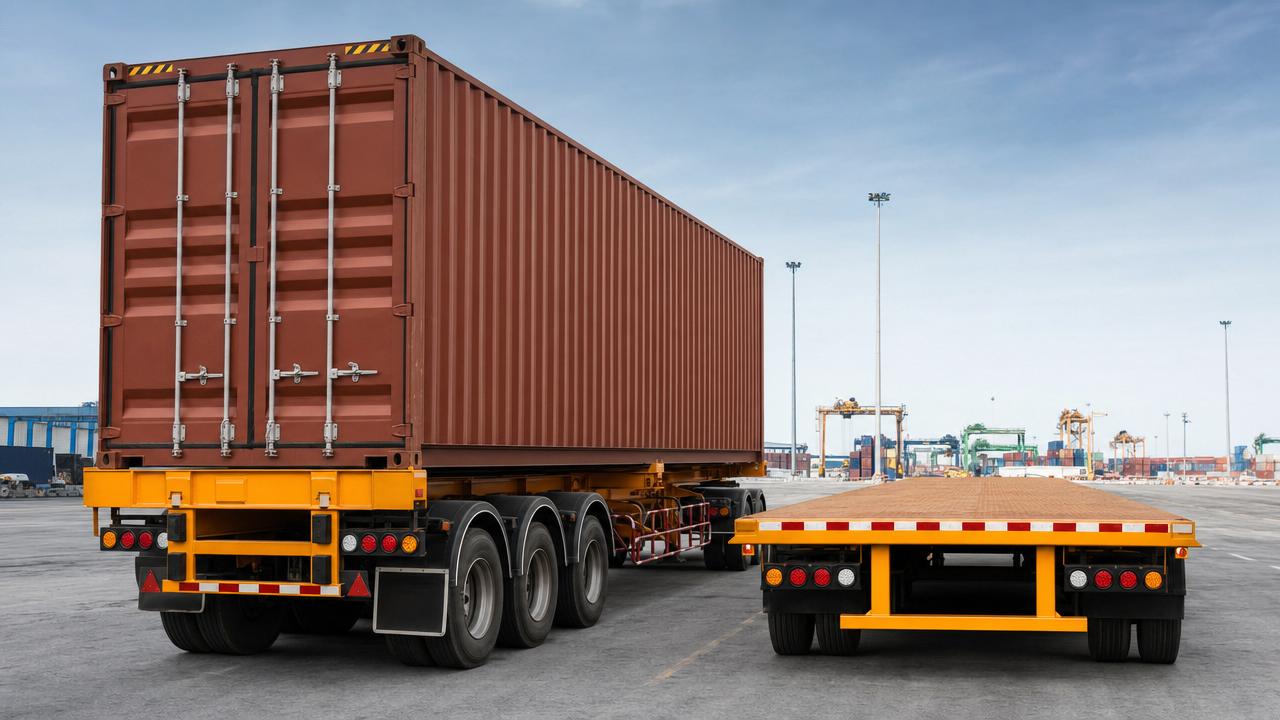
When comparing container transport options, choosing between a flatbed and a Skeleton (Container) Semi-Trailer can directly affect loading efficiency, operating costs, and delivery flexibility. For procurement professionals, understanding which trailer type offers better long-term value is essential. This article breaks down the key cost factors, performance differences, and buying considerations to help you make a smarter investment decision.
In engineering vehicle and commercial transport operations, the trailer is not just a support asset. It influences turnaround time, labor input, axle loading, route compliance, and the practical cost of every container moved over 100 km, 500 km, or cross-border corridors.
For buyers sourcing equipment for ports, depots, logistics contractors, construction supply chains, and inland container haulage, the debate often comes down to one question: does a flatbed offer enough versatility to offset its limitations, or does a Skeleton (Container) Semi-Trailer deliver lower cost per trip over the long run?
Understanding the Core Difference in Container Haul Operations
A flatbed trailer is a general-purpose platform with an open deck. It can move steel, machinery, pallet cargo, construction materials, and containers. A Skeleton (Container) Semi-Trailer, by contrast, is purpose-built for ISO container transport, usually in 20 ft, 40 ft, or mixed 20/40 ft configurations.
This design difference matters immediately. A flatbed usually requires additional securing work, more manual checks, and sometimes extra blocking or container locking adaptation. A Skeleton (Container) Semi-Trailer is engineered with container twist locks, optimized frame spacing, and lower tare weight for container-specific duty cycles.
Why the trailer structure changes your cost model
In container transport, cost is rarely just the purchase price. Procurement teams should review at least 4 operating layers: initial acquisition, payload efficiency, handling speed, and maintenance frequency. A trailer that saves 10 to 20 minutes per loading cycle can create major annual gains when operating 4 to 8 trips per day.
A Skeleton (Container) Semi-Trailer often has a simpler cargo interface because the container itself is the load unit. There is no need for a full deck surface, reducing steel usage and dead weight. In many practical configurations, that lower tare weight can improve legal payload margin compared with a comparable flatbed setup.
Typical operational comparison points
- Container locking method and speed
- Trailer tare weight and payload utilization
- Loading compatibility with port and yard equipment
- Maintenance points on deck, frame, and fittings
- Use frequency for non-container cargo
The table below outlines where each trailer type typically performs better in daily engineering and logistics use.
For buyers with container utilization above 70% of total trips, the Skeleton (Container) Semi-Trailer usually offers a more efficient asset profile. If mixed cargo transport represents 30% to 50% of monthly usage, flatbeds may still justify their broader role despite a weaker container-specific cost structure.
Where a Skeleton Semi-Trailer Usually Cuts More Cost
The strongest cost advantage of a Skeleton (Container) Semi-Trailer appears when operations are repetitive, route-based, and container-centered. In these cases, lower handling time and lower self-weight can reduce total transport cost per unit over 12 to 36 months.
1. Faster loading and unloading cycles
A flatbed often involves extra alignment checks and manual securing before departure. A Skeleton (Container) Semi-Trailer uses dedicated locking points that match container corner castings. In practical yard operations, this may save 10 to 25 minutes per container move, depending on crane coordination and labor availability.
If a fleet handles 5 trips per day and saves even 15 minutes per cycle, that creates 75 minutes of usable operating time daily per trailer. Across 20 working days, that becomes 25 hours per month, which can improve scheduling and reduce waiting-related labor cost.
2. Better payload utilization
Because there is no full cargo deck, a Skeleton (Container) Semi-Trailer typically carries less structural weight. The exact difference depends on axle layout, frame design, and local regulation, but even a moderate tare reduction can help operators stay within legal gross vehicle limits while maximizing cargo value inside the container.
For procurement teams, this matters on high-frequency lanes carrying dense materials, machinery parts, construction components, or export commodities. A small increase in usable payload over hundreds of annual trips can change the cost per delivered ton significantly.
3. Reduced unnecessary structure to maintain
Flatbeds have a larger exposed deck surface, more wear area, and higher likelihood of deck damage from forklifts, steel contact, and mixed cargo loading. A Skeleton (Container) Semi-Trailer focuses wear points around frame members, locking mechanisms, suspension, braking system, and landing gear.
That does not mean maintenance is always lower in every case, but it is often more predictable when the trailer performs one task repeatedly. Predictable maintenance intervals every 10,000 km to 20,000 km are easier to budget than irregular deck repairs caused by varied loading practices.
4. Lower labor dependency in container yards
Operations serving ports, dry ports, rail transfer points, and depot yards benefit from standardized handling. Since yard teams are already familiar with container workflows, a Skeleton (Container) Semi-Trailer fits established procedures more naturally. That can reduce supervision time, loading disputes, and dispatch delays.
The following table highlights the most common cost drivers procurement teams should compare before purchase.
This comparison shows the main trade-off clearly. The Skeleton (Container) Semi-Trailer often wins in unit economics for regular container work, while the flatbed protects utilization in mixed transport fleets. The better choice depends on cargo consistency, not only on purchase budget.
When a Flatbed Still Makes Financial Sense
A flatbed should not be dismissed too quickly. For engineering vehicle buyers serving construction projects, equipment rental networks, and regional material distribution, flexibility can sometimes outweigh container-specific efficiency. If one trailer must support 3 or 4 cargo categories in a single week, a flatbed may protect overall fleet utilization.
Mixed cargo utilization can offset lower container efficiency
Consider a buyer operating 12 trailers across inland routes. If containers account for only 40% of monthly freight tasks, and the remaining 60% includes pipes, equipment, bagged materials, or steel sections, a flatbed can avoid the need for separate dedicated assets.
In that case, the cost of lower container handling speed may be less important than keeping the trailer active 26 days per month. Idle trailers are expensive, especially when financing cost, driver scheduling, insurance, and yard space are included.
Remote area loading conditions may favor flatbeds
Not every delivery point has standardized container cranes, reach stackers, or properly prepared yard surfaces. On project sites or remote industrial locations, flatbeds sometimes offer easier loading adaptation using forklifts, side loading support, or crane-assisted positioning of cargo other than full containers.
Use a flatbed if your operation includes these conditions
- Container loads below 50% of total trailer usage
- Frequent non-standard cargo dimensions
- Jobsite-based deliveries with changing cargo profiles
- Low availability of dedicated container handling equipment
For these fleets, the cost question is broader than “Which trailer is cheaper?” The real question is “Which trailer reduces idle time while matching our freight mix over the next 24 months?”
Key Buying Factors Procurement Teams Should Evaluate
A smart purchase decision should combine technical review, route analysis, and supplier capability. In practice, buyers should assess at least 6 points before selecting a flatbed or Skeleton (Container) Semi-Trailer.
1. Container type and frequency
Check whether your daily loads are mainly 20 ft, mainly 40 ft, or mixed. Some buyers also need compatibility with one 40 ft container or two 20 ft containers. This affects frame design, locking position, and axle load distribution.
2. Road regulations and axle configuration
The same trailer may perform differently under different national gross vehicle weight limits. Procurement teams should confirm axle count, suspension type, king pin compatibility, braking system, and legal route restrictions before comparing cost on paper.
3. Frame durability under actual road conditions
For rough roads, port ramps, and overloaded yard conditions, frame reinforcement and welding quality matter more than nominal purchase savings. A trailer expected to run 80,000 km to 120,000 km annually should be specified for realistic duty rather than ideal showroom conditions.
4. Maintenance access and spare parts supply
Ask the supplier about service parts lead time, brake and suspension component availability, and after-sales response process. A lower purchase price loses value if a trailer remains parked 7 to 15 days waiting for replacement parts.
5. Delivery schedule and documentation support
For international buyers, trailer sourcing includes more than factory output. Documentation, customs preparation, inspection coordination, and shipping arrangements can influence total project timing by 2 to 4 weeks. Procurement leaders should evaluate exporter execution strength, not just product quotation.
6. Supplier reliability and customization capability
In many engineering transport projects, standard trailer design is only the baseline. Buyers may need axle adjustments, locking arrangement changes, landing gear selection, tire specification planning, or anti-corrosion treatments depending on climate and route intensity.
The table below can be used as a practical procurement checklist during supplier evaluation.
A procurement process built around these 4 checkpoints usually produces fewer hidden costs after delivery. The trailer that looks cheaper at quotation stage may become more expensive once downtime, route mismatch, and loading delays are included.
How to Match Trailer Choice to Your Transport Scenario
The most effective buying decision comes from matching the trailer to the operating model, not from copying another fleet’s preference. Procurement teams can divide demand into 3 practical scenarios.
Scenario A: Port-to-yard or depot-to-depot container shuttles
If more than 70% of trips involve standardized containers on repeat routes, the Skeleton (Container) Semi-Trailer is usually the stronger choice. It improves loading rhythm, supports repeatability, and tends to reduce unnecessary structure in the cost chain.
Scenario B: Regional logistics with mixed freight demand
If the same fleet shifts between containers, building materials, machine parts, and project cargo, a flatbed may deliver better annual utilization. It sacrifices some efficiency in container jobs but supports broader dispatch flexibility.
Scenario C: Growing fleet with uncertain future cargo mix
If your business is expanding and monthly cargo data is not yet stable, a blended purchase strategy can be safer. For example, buyers may assign 60% of budget to Skeleton (Container) Semi-Trailers and 40% to flatbeds, then adjust future procurement after 6 to 12 months of route performance review.
A simple decision framework
- Choose Skeleton (Container) Semi-Trailer for high-frequency container lanes
- Choose flatbed for multi-cargo dispatch flexibility
- Use mixed fleet planning when demand is still developing
For many international buyers, supplier execution is just as important as trailer design. Shandong Livol Truck International Trade Co., Ltd., based in Shandong, China, supports global customers with vehicle selection, customization, documentation, customs clearance, and logistics coordination. As an authorized dealer for FOTON, SHACMAN, and SINOTRUK, with authorized 4S store resources and sufficient inventory, the company helps buyers shorten sourcing cycles and reduce export process friction.
That matters when procurement decisions involve not only equipment choice, but also delivery stability, spare parts planning, and after-sales communication. For fleet buyers working across multiple regions, an exporter with professional trade handling can reduce risk well beyond the trailer invoice itself.
Final Buying Advice for Cost-Focused Procurement Teams
If your operation is centered on standard container haulage, a Skeleton (Container) Semi-Trailer will often cut cost through faster loading, more efficient payload use, and better alignment with port and depot workflows. If your transport tasks are diverse and container volume is inconsistent, a flatbed may still deliver the stronger total return by keeping utilization high.
The right answer depends on route frequency, cargo mix, maintenance planning, and supplier reliability over the next 12 to 36 months. Buyers who evaluate total operating impact instead of purchase price alone usually make the stronger long-term decision.
If you are comparing trailer solutions for container transport, engineering logistics, or fleet expansion, contact Shandong Livol Truck International Trade Co., Ltd. to get a tailored recommendation, discuss configuration details, and explore a practical export-ready solution for your market.
Search Starts Here