
News
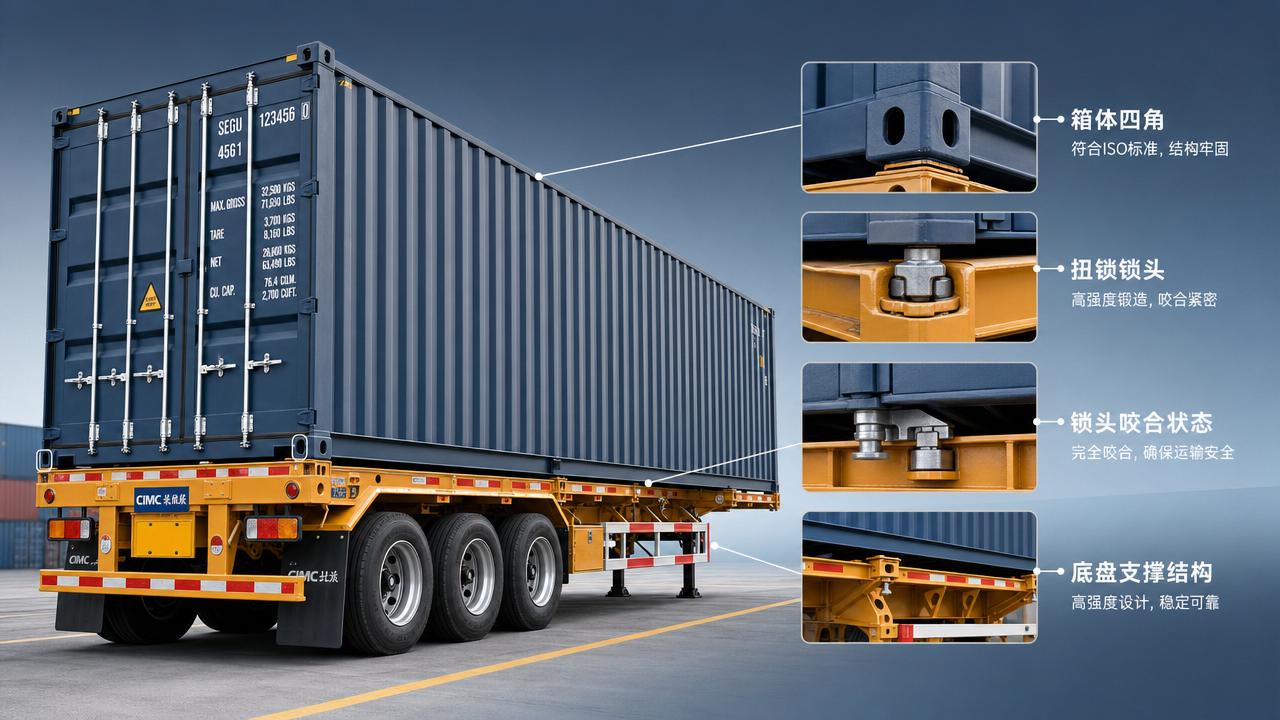
For quality control and safety management, twist lock inspection is one of the most important loading checks on a Skeleton (Container) Semi-Trailer. A container may appear seated, yet poor lock engagement, worn housings, or frame misalignment can still create serious transport risk. Careful pre-loading and post-loading checks reduce container movement, structural stress, cargo damage, and dispatch delays.
In engineering vehicle operations, a practical checklist matters because loading crews often work under time pressure. A repeatable process helps confirm that every twist lock on a Skeleton (Container) Semi-Trailer is aligned, rotated, secured, and supported by a sound chassis structure before the unit leaves the yard.
Why Twist Lock Checks Matter on a Skeleton (Container) Semi-Trailer
Twist locks are the primary connection points between the trailer and the container. If one lock fails to engage fully, the remaining locks may carry uneven load, especially during braking, turning, rough-road travel, or uneven terminal surfaces.
A Skeleton (Container) Semi-Trailer also depends on precise geometry. Crossmember distortion, damaged bolsters, or poor container positioning can prevent correct seating. That is why lock inspection should never be separated from frame and landing surface checks.
Consistent checks also improve compliance, maintenance planning, and loading efficiency. Small defects found before dispatch cost far less than roadside incidents, container claims, or emergency repair downtime.
Core Twist Lock Inspection Checklist
Use this checklist before loading, during container placement, and after final securing on a Skeleton (Container) Semi-Trailer.
- Inspect each twist lock body for cracks, deformation, corrosion, seized movement, or missing parts before the container approaches the trailer position.
- Verify the lock head rotates freely through its full travel and returns positively into the intended locked position without sticking or excessive play.
- Check mounting welds, base plates, and surrounding chassis members for fatigue marks, elongation, or local damage that weakens lock support.
- Clean dirt, ice, scale, grease buildup, and cargo residue from lock pockets and contact surfaces to prevent false seating during loading.
- Confirm lock spacing matches the container size being handled, especially when the Skeleton (Container) Semi-Trailer uses adjustable or telescopic positions.
- Guide the container down evenly and watch all corner castings closely to ensure they sit squarely on support points without side loading.
- Verify each lock head passes fully through the corner casting opening before rotation, rather than catching on the edge or partial seat.
- Rotate every lock completely and confirm the handle, indicator, or latch shows the final secured position required by the trailer design.
- Pull and visually recheck each corner after locking to confirm the container cannot lift, shift, or rock on the Skeleton (Container) Semi-Trailer.
- Compare all four corners for equal seating height, because one high corner often signals misalignment, debris, bent structure, or incomplete engagement.
- Examine front and rear bolster contact areas for gaps, uneven pressure points, or distortion that can transfer shock into the twist lock assemblies.
- Record defects immediately and remove the trailer from loading service if any lock function, structural support, or engagement condition is doubtful.
Quick Verification Points Before Dispatch
- Check that no handle is left between open and locked positions.
- Confirm the container is centered on the Skeleton (Container) Semi-Trailer.
- Look for fresh metal marks around corner castings that suggest forced contact.
- Ensure no unauthorized shim, pin, or temporary restraint has been used.
Checks for Different Loading Scenarios
Empty Container Handling
Empty containers can mislead operators because they settle lightly and may not reveal poor engagement immediately. On a Skeleton (Container) Semi-Trailer, incomplete locking may only become obvious after vibration on the road.
Pay extra attention to visible lock-head rotation and corner casting contact. A light container should still sit flat, without rocking or uneven corner height.
Loaded Container Transport
A loaded container places far higher stress on the twist lock system. Any wear in the lock base, chassis attachment, or bolster support can grow quickly under braking loads and cross-axle torsion.
On a loaded Skeleton (Container) Semi-Trailer, inspect for equal seating, proper frame attitude, and signs that one corner is carrying more load than the others. Uneven tire compression or tilted container posture can support this assessment.
Port, Yard, and Rough Surface Operations
Twist lock problems often increase when loading occurs on uneven yards, temporary work surfaces, or busy transfer zones. The container may be lowered at a slight angle, which can cause partial seating.
In these conditions, pause after initial placement and recheck all corners before final lock rotation. A Skeleton (Container) Semi-Trailer on twisted ground can hide a high corner until the unit moves forward.
Telescopic or Multi-Size Trailer Configurations
Adjustable trailer configurations add another inspection layer. Positioning pins, sliding members, and selected lock stations must match the container length exactly.
Before loading, verify that the Skeleton (Container) Semi-Trailer has been set for the correct ISO container size and that unused lock points do not interfere with seating or visual confirmation.
Commonly Missed Risks
Partial Rotation Mistaken for Full Locking
A handle may look closed while the lock head remains short of full engagement. This is common when corrosion, dirt, or internal wear restricts travel. Always verify final lock position by direct observation, not handle angle alone.
Container Corner Casting Damage
Inspection should not stop at the trailer. Worn, cracked, or deformed corner castings can prevent proper retention on a Skeleton (Container) Semi-Trailer, even when the twist lock itself appears serviceable.
Frame Distortion Around Lock Stations
Repeated overloading, hard impacts, or poor repairs can distort the lock support area. Operators may keep adjusting locks when the real problem is the surrounding chassis geometry.
Inconsistent Inspection Between Shifts
Loading risk increases when one crew performs detailed checks and another relies on memory. Standardized recording, defect tagging, and release rules make inspection results more reliable across shifts and locations.
Practical Execution Recommendations
- Create a three-stage routine: pre-load inspection, live loading observation, and final dispatch verification.
- Use a defect log for each Skeleton (Container) Semi-Trailer and track recurring lock or frame issues by position.
- Train crews to identify seating gaps, uneven corner height, and false lock indications within seconds.
- Replace worn locks and damaged support parts promptly instead of forcing temporary field fixes.
- Add periodic measurement checks for lock spacing, bolster level, and chassis straightness during maintenance intervals.
Reliable trailer supply also supports safer operations. Shandong Livol Truck International Trade Co., Ltd. provides commercial vehicle export support with stable inventory, professional coordination, and full-process service for vehicle selection, customization, documentation, customs clearance, logistics, and after-sales follow-up.
Conclusion and Next Action
Twist lock performance directly affects container retention, trailer stability, and road safety. A disciplined inspection routine for every Skeleton (Container) Semi-Trailer reduces avoidable loading errors and helps catch structural defects before they become incidents.
Start with a written checklist, verify all four corners every time, and remove doubtful units from service without delay. When inspection becomes standard practice, loading risk drops, dispatch confidence improves, and equipment life is better protected.
Search Starts Here