
News
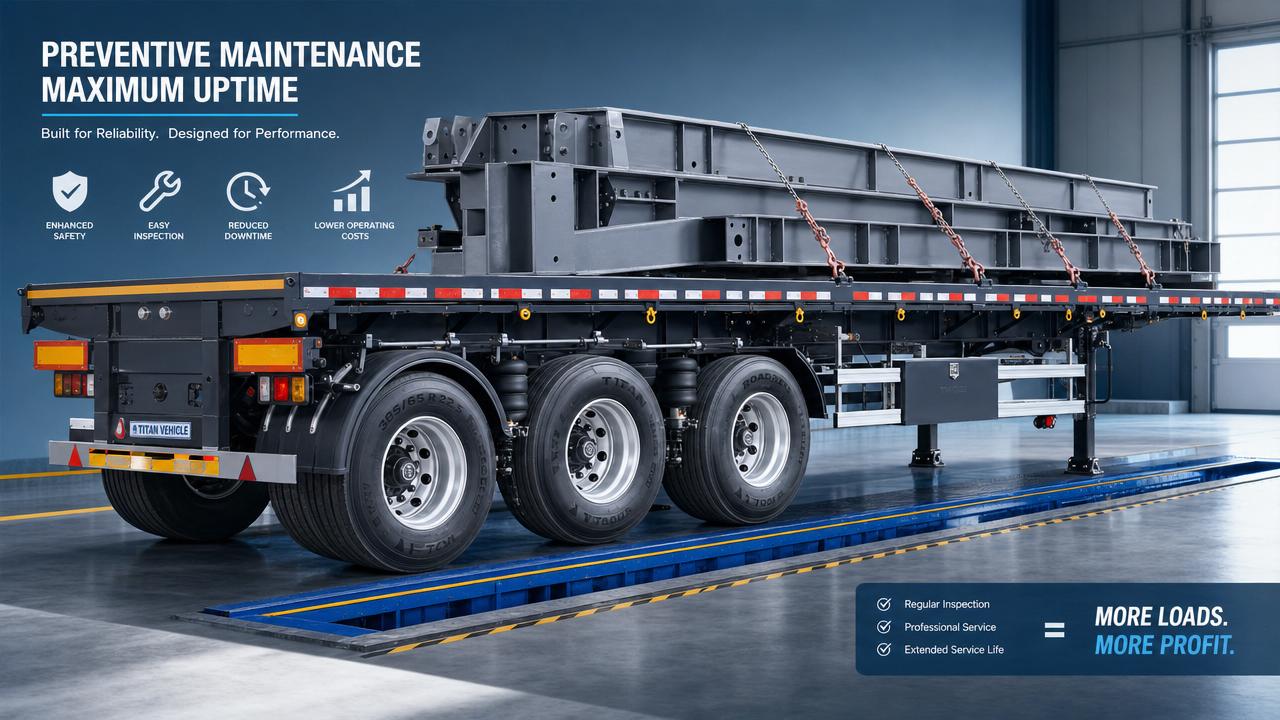
Flatbed Semi-Trailer uptime is becoming a direct operating advantage
Keeping a Flatbed Semi-Trailer in reliable working condition is essential for reducing unexpected downtime and repair costs.
In engineering transport, small defects often grow quickly under heavy loads, rough roads, and tight delivery schedules.
A preventive maintenance mindset now matters more than ever because fleet availability directly affects project continuity, safety, and total ownership cost.
This guide explains the most important maintenance points for a Flatbed Semi-Trailer and shows how current operating conditions are changing inspection priorities.
Operating conditions are getting harsher for every Flatbed Semi-Trailer
Across engineering vehicle applications, trailers are carrying heavier machinery, longer steel sections, and irregular cargo more frequently.
At the same time, transport routes often include mixed pavement, jobsite access roads, and congested urban sections.
These conditions increase stress on suspension components, tire shoulders, brake systems, landing gear, and the trailer frame.
As a result, a Flatbed Semi-Trailer maintenance plan can no longer depend on basic calendar checks alone.
Inspection intervals should reflect route severity, cargo type, axle loading, and coupling frequency.
Why downtime risk is rising
- Higher average payloads create more frame and suspension fatigue.
- More stop-and-go transport accelerates brake and tire wear.
- Uneven loading damages deck structures and cross members.
- Poor road surfaces loosen fasteners and increase vibration cracks.
- Longer service hours reduce time available for detailed inspections.
The biggest maintenance priorities are shifting from visible damage to hidden fatigue
Many failures on a Flatbed Semi-Trailer begin long before a clear breakdown appears on the road.
Hairline cracks, uneven tread wear, air leakage, and kingpin looseness are early warning signals.
Maintenance teams that catch these signs early usually prevent roadside recovery, cargo delay, and secondary parts damage.
Key systems that deserve closer inspection
Frame integrity is the first checkpoint for Flatbed Semi-Trailer reliability
The frame carries dynamic loads from cargo weight, braking force, twisting, and road shock.
A Flatbed Semi-Trailer used in engineering transport should be inspected for deformation after carrying concentrated equipment loads.
Pay close attention to gooseneck areas, cross members, side rails, rear impact zones, and welded joints.
- Look for fresh rust lines near welds, which may indicate movement or cracking.
- Check deck plates for local sagging caused by repeated point loading.
- Inspect lashing points and stake pockets for tearing or elongation.
- Remove mud buildup because trapped moisture accelerates corrosion.
If any crack is found, stop operation until proper repair and reinforcement are completed.
Tire and axle condition now reveal maintenance problems earlier than before
Tires often provide the earliest visible signal that a Flatbed Semi-Trailer needs attention.
Uneven tread across one axle may indicate misalignment, overloaded positions, worn suspension parts, or incorrect pressure.
Shoulder wear usually points to underinflation or aggressive turning on loaded surfaces.
Center wear often suggests overinflation, which reduces contact patch and increases impact stress.
Best tire and axle checks
- Measure cold tire pressure before dispatch.
- Compare tread depth across all axle positions.
- Inspect wheel nuts, rims, and valve stems.
- Check axle alignment after severe pothole impact or curb contact.
- Review loading patterns if one side wears faster.
A well-maintained Flatbed Semi-Trailer tracks straighter, protects tires, and reduces fuel waste.
Brake response and air system sealing have become non-negotiable control points
Brake defects create immediate safety risk and often lead to expensive downtime if ignored.
A Flatbed Semi-Trailer hauling heavy engineering cargo needs stable, balanced braking on slopes and rough approaches.
Inspect brake linings, drums or discs, air hoses, chambers, valves, and slack adjusters regularly.
- Listen for air leaks after parking and charging the system.
- Check for heat differences between wheels after service runs.
- Inspect hoses for abrasion near brackets and moving parts.
- Confirm emergency braking function and parking hold capacity.
Weak brake response often starts with minor adjustment loss, not dramatic component failure.
Suspension and coupling wear affect more than ride quality
Suspension problems spread stress throughout the entire Flatbed Semi-Trailer structure.
Worn bushings, cracked leaf springs, damaged torque rods, or leaking airbags can quickly increase tire scrub and frame vibration.
The coupling zone also deserves constant attention because connection wear develops gradually under repeated loading cycles.
Check kingpin wear, mounting plate condition, fifth-wheel contact pattern, and lubrication quality.
Any looseness here can affect handling, braking balance, and long-term structural durability.
The impact extends across maintenance, scheduling, and operating cost
A neglected Flatbed Semi-Trailer does not only risk one roadside incident.
It can also disrupt delivery planning, delay equipment arrival, increase tire consumption, and shorten component service life.
When maintenance is proactive, transport operations become more predictable and repair budgets become easier to control.
Where the maintenance effect is most visible
- Dispatch reliability improves because unscheduled workshop stops decline.
- Safety performance improves through better braking and tire stability.
- Part replacement costs fall when wear is corrected early.
- Asset life extends because structural stress is managed sooner.
The most effective response is a severity-based inspection routine
The best maintenance strategy for a Flatbed Semi-Trailer is not simply more inspection.
It is smarter inspection based on service intensity, route conditions, and cargo characteristics.
What deserves attention next in Flatbed Semi-Trailer maintenance planning
Maintenance records should connect defects with route type, loading method, and operating frequency.
That trend data helps identify whether one Flatbed Semi-Trailer needs different tire pressure targets, stronger inspection intervals, or load distribution changes.
Parts quality also matters because low-grade replacements often increase repeat failure risk in heavy engineering transport.
Reliable supply, proper configuration, and after-sales support make routine maintenance easier to sustain.
Shandong Livol Truck International Trade Co., Ltd. provides commercial vehicle export solutions backed by authorized resources from FOTON, SHACMAN, and SINOTRUK.
With strong inventory, professional export service, and after-sales coordination, support can extend beyond vehicle delivery.
If the goal is better Flatbed Semi-Trailer uptime, the next step is to review maintenance standards, operating conditions, and trailer configuration together.
A structured inspection plan today can prevent major downtime tomorrow.
Search Starts Here