
News
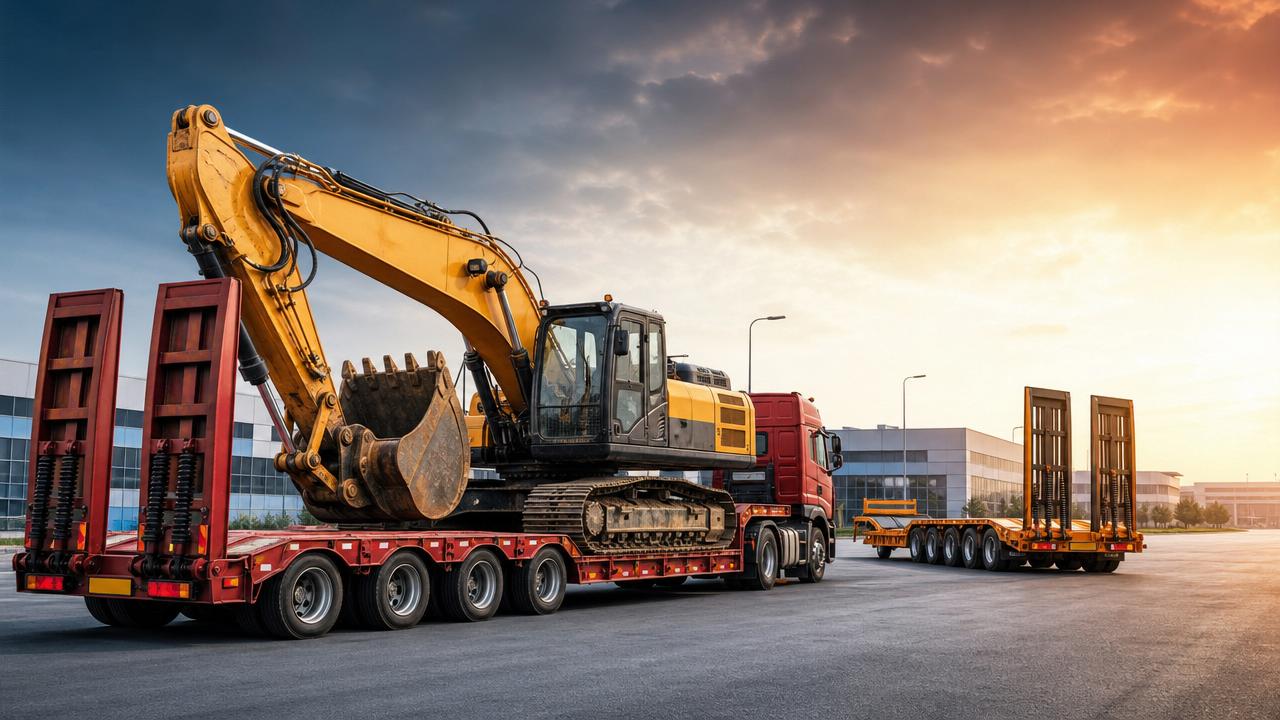
When transporting oversized equipment, choosing between a Low Plate and a flatbed semi-trailer affects safety, loading speed, route compliance, and total project cost.
In engineering vehicle logistics, cargo size is changing fast. Machines are getting taller, heavier, and more specialized, while transport rules are becoming tighter across many export destinations.
That shift makes the Low Plate more relevant in many oversize transport scenarios. Still, flatbed semi-trailers remain practical for certain loads, routes, and budget targets.
The better choice depends on height, center of gravity, loading method, road restrictions, and delivery efficiency. A wrong trailer type can increase permits, escort needs, and unloading risks.
Oversize cargo transport is shifting toward lower decks and tighter compliance
Across engineering vehicle transport, one clear trend stands out: lower loading platforms are gaining preference for heavy and high-profile machinery.
Excavators, rollers, drilling rigs, and modular industrial equipment often challenge legal height limits when carried on a standard flatbed.
A Low Plate reduces deck height, which helps keep overall vehicle height within legal limits or closer to permit thresholds.
That single structural advantage can influence route availability, bridge clearance, tunnel access, and cross-border approval time.
At the same time, flatbed semi-trailers still serve well when cargo is not excessively tall, when forklift loading is needed, or when versatile general transport matters more.
The main reason the Low Plate is gaining attention
The rise of the Low Plate is not only about carrying more. It is about matching modern oversize cargo with practical road realities.
These changes do not eliminate flatbeds. They simply make selection more technical than before.
Low Plate vs flatbed semi-trailer: the structural difference that changes everything
A flatbed semi-trailer uses a relatively higher, straight deck. It is simple, widely available, and suitable for many standard cargo types.
A Low Plate has a lower deck height, often with a gooseneck or drop-deck structure designed for oversized and heavy engineering equipment.
Key structural differences
- Lower platform height on the Low Plate
- Better center-of-gravity control for tall machinery
- Improved loading angle for self-propelled equipment
- Greater specialization compared with general-purpose flatbeds
- Often stronger suitability for concentrated axle loads
For bulldozers, pavers, cranes, and tracked machines, deck height can matter more than deck length. That is where a Low Plate often shows clear practical value.
Where each trailer performs better in real engineering vehicle scenarios
The best choice becomes clearer when cargo type is matched with loading conditions and route limits.
In short, the Low Plate fits oversize cargo better when height, weight concentration, and machine mobility create transport risk.
The flatbed remains useful when cargo is simpler, lower, and less sensitive to deck height.
The business impact goes beyond loading alone
Trailer choice affects more than cargo fit. It can change the whole delivery chain for engineering vehicle exports.
A Low Plate may reduce permit complications by lowering total transport height. That can improve route certainty and reduce costly last-minute changes.
It can also support safer loading for self-propelled machines, cutting dependence on extra lifting equipment in some field conditions.
Flatbeds may offer lower acquisition cost and broader day-to-day utility. For operations with varied standard cargo, that flexibility still has strong value.
The real issue is utilization. A specialized Low Plate creates better returns when oversize machinery is a frequent transport category, not an occasional exception.
What deserves closer attention before making a final decision
The market trend supports lower-deck transport for more engineering equipment, but selection should remain data-based.
Focus on these checkpoints
- Maximum cargo height after loading
- Total weight and axle load distribution
- Machine type, especially wheeled or tracked
- Ramp angle and loading site conditions
- Domestic and overseas road regulations
- Need for escorts, permits, or route surveys
- Frequency of oversize transport missions
- Maintenance access and long-term operating cost
If most answers point toward tall, heavy, self-moving equipment, the Low Plate usually becomes the stronger technical solution.
A practical way to judge the better fit in the next stage
Instead of comparing trailers only by price, compare them by transport result. That means evaluating risk, compliance, and project continuity together.
The direction is clear: match trailer structure to cargo reality
For oversized engineering cargo, the Low Plate often fits better because it improves height control, transport stability, and loading practicality.
A flatbed semi-trailer remains a smart choice for standard or mixed cargo, especially when versatility is more important than low deck height.
The strongest decision comes from actual machine dimensions, destination rules, and route constraints rather than trailer habit or headline price.
Shandong Livol Truck International Trade Co., Ltd. supplies commercial vehicle export solutions backed by authorized resources from FOTON, SHACMAN, and SINOTRUK.
With strong inventory, customization support, export documentation experience, and reliable logistics coordination, the company helps align equipment transport needs with practical trailer solutions.
If the next shipment includes tall or heavy engineering equipment, review cargo dimensions and route rules first, then compare whether a Low Plate or flatbed delivers the safer outcome.
A well-matched trailer lowers transport risk, protects equipment value, and supports smoother international project delivery.
Search Starts Here