
News
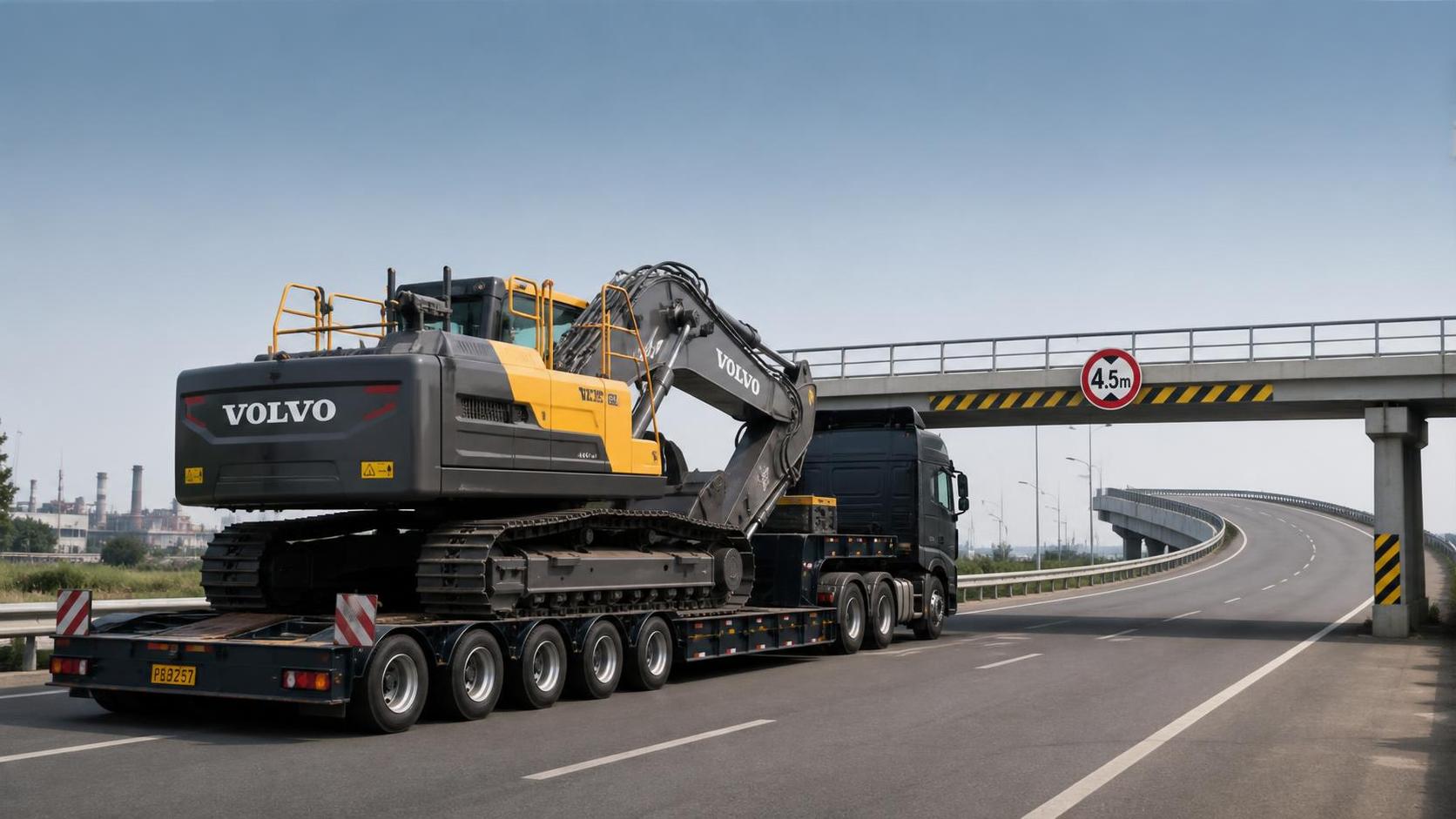
Low Plate Trailers: Clearance, Load Height, and Road Access Limits Explained
If you are researching a Low Plate trailer, the first thing to understand is this: payload is only one part of the decision. In real transport work, the job can fail because the loaded machine sits too high, the trailer scrapes on ramps, the route includes a restricted bridge, or local roads do not allow the combination length or axle load. Many first-time buyers focus on tonnage and deck size, then run into clearance and access problems later. A low plate trailer works best when load height, road conditions, and permit requirements are checked together, not separately.
That is why buyers in the engineering vehicle field usually ask the wrong first question. They ask, “How many tons can it carry?” A better starting point is, “What exactly am I moving, where will it travel, and what road limits will it face?” Once you answer that, trailer selection becomes much more practical.
What a Low Plate trailer is really for
In everyday industry language, a low plate trailer is chosen when the cargo is heavy, tall, self-propelled, or awkward to load onto a standard flatbed. Excavators, wheel loaders, road rollers, pavers, drilling rigs, and some oversized industrial equipment are typical examples. The lower deck helps reduce total loaded height, which matters when passing under bridges, overhead lines, plant gates, or tunnel sections.
It also improves loading for tracked and wheeled machinery. A lower approach angle makes it easier for equipment to climb on and off, especially when the machine has limited ground clearance of its own. That sounds simple, but it has real consequences on safety. A machine that bottoms out while boarding is not just inconvenient; it can damage the trailer, the ramps, or the equipment undercarriage.
So the value of a low plate trailer is not “lower is always better.” The value is that it creates a workable balance between carrying capacity, stable loading, and road compliance.
Clearance is where many buying mistakes begin
When people hear “clearance,” they often think only about bridge height. In practice, there are two different clearance questions.
One is vertical clearance: the total height of the trailer plus the cargo. This affects underpasses, overhead structures, site entrances, and legal road height limits.
The other is ground clearance: how much space exists between the trailer’s low points and the road surface. This affects whether the trailer can pass over uneven roads, speed humps, ferry ramps, construction entrances, or steep transitions without scraping.
A low deck helps with the first problem, but it can make the second one worse. That is the trade-off people often miss.
For example, a fleet may choose an extra-low deck to move tall machinery legally without needing a more complex route. That works well on stable highways and prepared access roads. But if the destination includes rough jobsite entrances, temporary steel plates, drainage humps, or broken pavement, a very low trailer may become frustrating in daily use. The “best” trailer on paper can become the wrong trailer on site.
This is why experienced buyers do not look only at brochure dimensions. They ask about loaded operating conditions.
Load height matters more than advertised deck height
Deck height is easy to compare between models, so it gets a lot of attention. But deck height alone does not tell you whether your load will travel legally or safely.
What matters is total loaded height:
trailer deck height + machine standing height + any added accessories or raised points.
That last part is easy to underestimate. A cab roof, beacon, folded boom section, exhaust stack, guard rail, or removable attachment can decide whether a route is routine or restricted. The difference may be small in numbers but large in consequence.
Here is the practical rule: never evaluate a low plate trailer using machine catalog height alone. Check the transport configuration. A machine may have one height in working mode and another in shipping mode. Some parts can be lowered or removed. Others cannot. If you skip that check, your route planning starts with the wrong assumption.
In many markets, maximum legal vehicle height depends on national or regional regulations, and those limits vary. Because of that, any final judgment should be verified against the local transport authority or permit office. There is no responsible one-number answer that fits every country.
A short answer for most researchers: a low plate trailer is usually chosen to control total transport height, but the real limit is set by the route and local regulations, not by the trailer name.
Road access limits are not just about law. They affect cost and daily usability.
Road access limits usually show up in four forms: overall height, axle load, total gross weight, and physical access restrictions such as turning radius, lane width, village roads, toll stations, or bridge classes. In some cases, there are also time-of-day restrictions for oversized transport.
This is where theory and operations separate.
Two trailers may both be able to carry the same machine. One may be cheaper to buy. The other may be easier to route legally and consistently. Over time, the second trailer may save more money because it reduces detours, escort requirements, permit complexity, or loading delays.
Buyers who are still at the research stage should pay attention to this point: a trailer that looks “more capable” because it has more axles or a lower deck is not automatically more efficient for your work. More capacity can also mean more dead weight, more tire wear, more maintenance points, and tighter operating conditions on secondary roads.
If your fleet mainly runs between paved sites, ports, and large contractor yards, a purpose-built low plate setup can be very efficient. If your work often includes rural roads, temporary access routes, or short-distance local transfers, the ideal configuration may be different.
Common misunderstandings about Low Plate trailers
One common mistake is assuming that lower deck height always means better transport performance. It does help with tall cargo, but it can reduce breakover clearance and create issues on uneven ground.
Another is assuming that if the machine fits physically on the trailer, the combination is road-legal. That is not how transport compliance works. Legal movement depends on route restrictions, axle distribution, dimensions, permits, and local enforcement standards.
A third misunderstanding is focusing only on the trailer and ignoring the tractor unit. The tractor matters because fifth-wheel height, wheelbase, power, suspension setup, and braking configuration all affect how the full combination performs. A properly selected low plate trailer paired with the wrong tractor can still give poor loading angle, bad weight distribution, or weak hill performance.
This is one reason many international buyers prefer working with suppliers who understand the vehicle combination rather than selling a trailer in isolation. Companies such as Shandong Livol Truck International Trade Co., Ltd. support customers with commercial vehicle selection, customization, export documentation, customs clearance, and logistics, which is useful when the tractor-trailer match is part of the real decision, not just the trailer body itself.
How experienced buyers evaluate a trailer before asking for price
When someone has bought these trailers before, the conversation usually sounds different. They want to confirm:
- What exact machine or cargo will be transported most often
- Whether the load is tall, heavy, tracked, wheeled, or unevenly distributed
- Typical road class and site entrance conditions
- Whether transport is local, cross-border, port-related, or project-based
- What regulations apply to height, width, axle load, and permits in the destination market
That is a much better approach than starting with “send me your best low plate trailer.” In real procurement, “best” only makes sense after the transport scenario is clear.
If you are still early in research, try writing down three things before talking to a supplier: the machine model, the loaded dimensions, and the usual route conditions. That alone filters out a lot of bad options.
When a Low Plate trailer is the right choice, and when it is not
A low plate trailer is usually a strong choice when you regularly move equipment with meaningful height constraints, when loading angle matters, or when you need a more stable transport platform for construction machinery.
It may be less suitable when the work involves frequent travel over rough access points that can cause scraping, when the transported units are not especially tall, or when a standard flatbed or another specialized trailer can handle the job with fewer operating restrictions.
Some buyers also assume they need a low plate trailer because the cargo is heavy. Weight alone does not settle it. A very heavy but relatively low industrial unit may be better served by a different trailer configuration depending on axle arrangement, route permits, and loading method.
So the decision is not “heavy cargo equals low plate.” It is closer to “heavy or tall cargo plus route constraints plus loading practicality.”
The part that should be checked before purchase approval
Before moving from inquiry to order, confirm these points with the supplier and with local regulatory guidance where necessary:
- Loaded total height in actual transport condition
- Axle layout and expected load distribution
- Ground clearance at the trailer’s lowest points
- Ramp angle and loading method for your equipment type
- Compatibility with the intended tractor unit
- Route restrictions in the countries or regions where the trailer will operate
This is where a reliable exporter can add value. If the purchase involves not only the trailer but also the tractor head, cross-border shipping, and documentation, a supplier with inventory access, vehicle brand authorization, and export handling experience can reduce coordination risk. That matters more than many first-time overseas buyers expect.
The main point is simple. A Low Plate trailer should be selected around the transport task, not around the keyword. If the combination can load safely, stay within route limits, and move efficiently on the roads you actually use, then you are looking at the right solution. If not, a lower deck or bigger payload figure will not rescue a poor match.
FAQ
Is a low plate trailer the same as a lowbed trailer?
In many markets, people use those terms interchangeably. Actual design details can vary by manufacturer and region, so check the technical configuration rather than relying only on the name.
Does a lower deck always mean better road access?
No. It helps reduce loaded height, but it can also reduce underbody clearance on uneven roads, ramps, or site entrances.
Can I choose a trailer based only on machine weight?
That is risky. You also need the machine’s transport height, width, load distribution, loading method, and route limits.
Do I need permits for a low plate trailer?
Maybe. That depends on the loaded dimensions, axle loads, gross weight, and local regulations. Permit requirements should be checked in the operating region.
What should I send a supplier before asking for a recommendation?
At minimum: machine model, loaded dimensions, operating weight, route type, and whether you already have a tractor unit in service.
Internal Link Anchor Text Suggestions
- How to choose a tractor head for heavy haul transport: tractor unit selection guide
- Lowbed trailer vs flatbed trailer: product comparison page or blog article
- Construction equipment transport planning checklist: logistics or fleet planning resource
- SHACMAN and SINOTRUK heavy-duty truck options: brand category page
- Commercial vehicle export process from China: service page
External Authority Source Suggestions
- Government transport authority pages covering vehicle dimension and axle load regulations
- Brand official technical documents for trailers, tractor units, and construction equipment transport dimensions
- Industry association guidance on heavy haul, abnormal load, or oversized transport compliance
Search Starts Here