
News
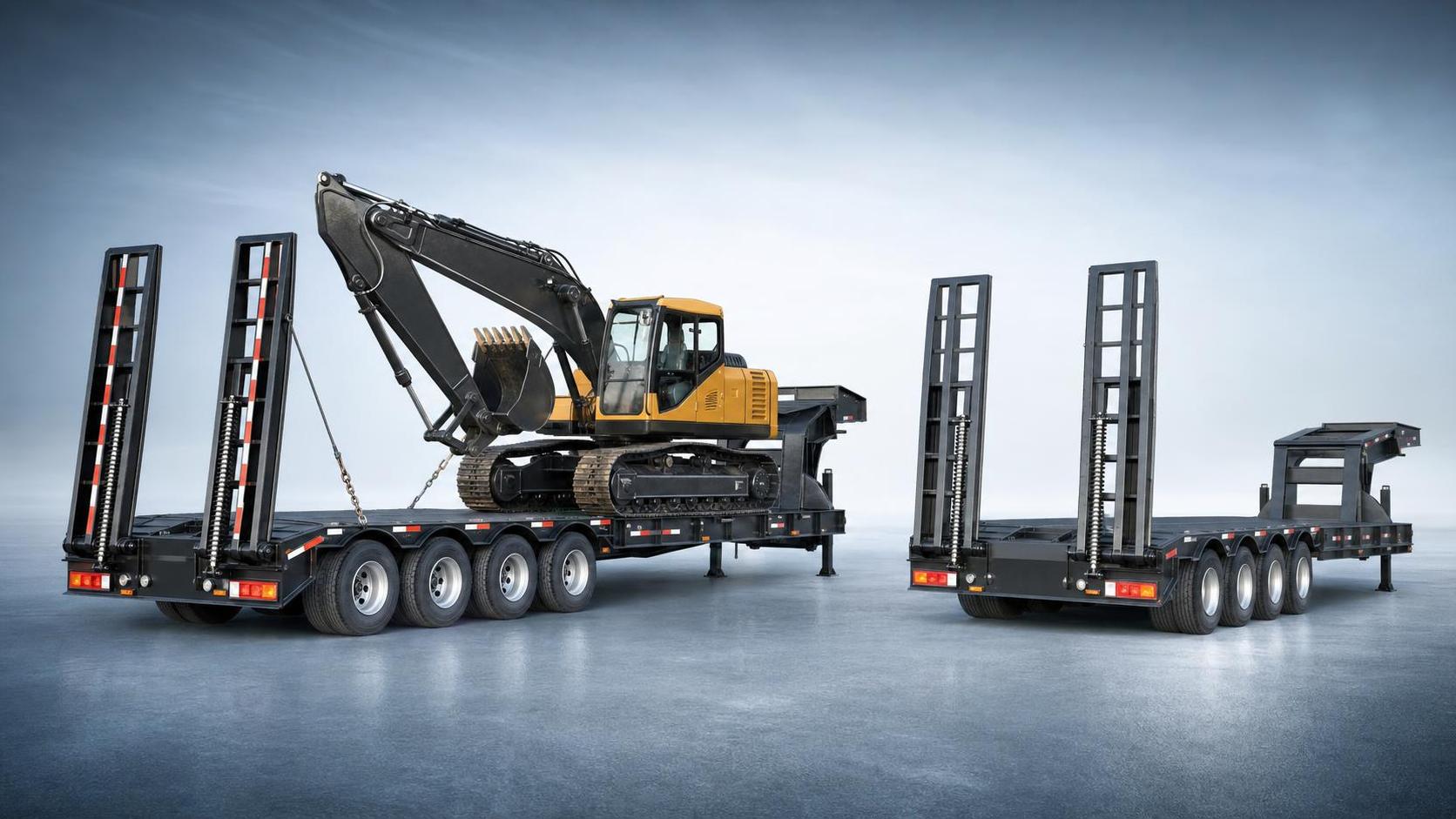
When you are moving excavators, loaders, rollers, or other heavy machines, the trailer choice changes more than transport price. It affects whether the unit can be loaded without extra ramps, whether route height becomes a problem, how much time the driver spends securing the cargo, and how much risk you carry if the machine shifts or suffers underbody damage. For most buyers comparing a Low Plate trailer with a flatbed, the right answer depends less on preference and more on the machine profile, the road conditions, and how often you repeat the same transport task.
A simple way to think about it: a Low Plate trailer is usually the better tool when cargo height, loading angle, and stability are the main constraints. A flatbed is usually the better tool when the machines are not too tall, access to loading equipment is easier, and you need a more general-purpose trailer that can switch between equipment and other freight. That sounds straightforward, but in practice buyers make the wrong decision because they compare purchase price before they compare operating conditions.
Start with the machine, not the trailer brochure
Before discussing axle layout or deck design, list the machines you actually move. Not the broad category. The real units. Transport planning changes fast between a compact excavator, a wheel loader, and a crawler machine with long track contact length.
- Overall transport height after loading
- Operating weight and whether attachments travel installed
- Ground clearance and breakover angle
- Track or tire type, and contact pressure on the deck
- Width with bucket, blade, or outriggers in transport position
This is where Low Plate trailers often win. If your machines are tall once loaded, lowering deck height gives you more room against bridge limits, overhead lines, and gate clearances. If the machine has low ground clearance or a long wheelbase, the lower approach angle also matters. A flatbed can work, but loading may become slower and riskier because the machine climbs a steeper angle.
Check whether transport height will decide the answer for you
In many heavy equipment moves, the real decision is made by loaded height. Once the machine is on the trailer, total height determines route options, escort requirements in some markets, and whether the load can move through ordinary jobsite access points.
A Low Plate trailer helps because the deck sits lower. That sounds obvious, but the business impact is easy to miss: lower height can reduce route restrictions, avoid unnecessary detours, and simplify dispatch planning. If your team often ships machines between ports, yards, and construction sites with mixed infrastructure quality, this matters more than a small difference in trailer acquisition cost.
The common mistake here is relying on machine brochure height only. Measure the machine in real transport configuration, including cab guards, beacons, attachments, and tire or track condition. Then add the actual loaded deck height of the trailer under expected weight. That gives you the number your routing team needs.
Look hard at loading angle and underbody risk
If the machine scrapes during loading, the trailer is wrong for the task or the loading method is wrong. This is one of the most expensive “small” errors in heavy equipment transport because it creates repeat damage: ramps, rear frames, attachment mounts, and underbody components take the hit.
Low Plate trailers are often preferred for machines with limited climbing geometry because the lower deck reduces the loading angle. That makes self-loading easier and reduces dependence on special ramp setups. Flatbeds are more workable when the machine has enough clearance and traction, or when loading is done with cranes or yard equipment rather than driving the unit onto the deck.
If your operation regularly loads in muddy yards, uneven project sites, or temporary staging areas, be stricter here. A trailer that looks acceptable on a paved yard can become a problem on rough ground.
Compare stability during transport, not just static capacity
Decision-makers often focus on whether the trailer can carry the machine weight. The more useful question is whether it carries that machine with stable weight distribution and predictable behavior on real roads.
A lower center of gravity can improve transport stability for heavy machinery. That does not replace correct load positioning, axle matching, or securement, but it helps. If the same route includes rough pavement, sharp turning, or frequent stop-and-go traffic, the lower deck profile of a Low Plate trailer becomes a practical advantage, not just a specification detail.
Review how often the trailer must do other jobs
Some fleets do not buy a trailer for one machine category. They buy for utilization. That changes the recommendation.
If the trailer will spend most of its life moving excavators, loaders, road equipment, or other heavy machines, a Low Plate setup often pays back through easier loading and fewer operational compromises. If the same trailer must frequently switch to palletized goods, steel, containers, or mixed project cargo, a flatbed may be easier to keep busy. This is one of the few areas where the flatbed has a clear commercial advantage: versatility.
Buyers sometimes overvalue flexibility, then discover the trailer is mediocre at the work that actually generates revenue. Check dispatch history, not assumptions. If 70 to 80 percent of runs are equipment moves, optimize for equipment.
Do not skip the securement layout review
Tie-down planning is where a trailer can look acceptable in sales material and then become frustrating in daily use. What matters is whether the deck layout supports the machines you move, with sensible tie-down points and enough room to position chains or straps without awkward angles.
Ask your team to review these points before purchase:
- Can the machine be positioned to keep axle loads balanced?
- Are tie-down points placed where tracked and wheeled machines can both be secured effectively?
- Will ramps, toolboxes, or side structures interfere with chains or binders?
- Is deck surface suitable for the machine’s track or tire contact?
This is not a minor detail. Slow securement adds labor time every trip, and poor securement geometry increases risk even when the rated components are technically sufficient.
Match the trailer to your route environment
The same machine may be better on a Low Plate trailer in one market and acceptable on a flatbed in another, simply because the route environment is different. Look at actual operating conditions:
- Urban access with tight turns and overhead restrictions favors a lower loaded profile.
- Remote jobsite access with uneven loading ground favors easier approach angles.
- Highway-heavy routes with standard equipment sizes may allow more flatbed use.
- Cross-border or port-related moves require closer attention to documentation fields for dimensions, axle configuration, and cargo description.
That last point deserves emphasis. If your business exports or operates across multiple jurisdictions, do not treat compliance as a final paperwork step. The transport team should compare the loaded dimensions and axle arrangement against the route permit process and the shipping documents used in your target market. The exact review path depends on where the trailer will run, but the right place to start is always the machine transport drawing, the trailer specification sheet, and the documents your forwarder or local transport authority uses to assess over-dimension or heavy loads.
Calculate operating cost where the difference really shows up
Purchase price gets attention because it is visible. Operating penalties are less visible, so they are often ignored. That is where wrong trailer selection becomes expensive.
For a fair comparison, look beyond the trailer invoice and review:
- Loading time per trip
- Need for extra ramps, lifting support, or yard assistance
- Route limitations caused by loaded height
- Damage risk during loading and unloading
- Trailer utilization when machinery demand is low
A flatbed can look cheaper at procurement stage and still cost more over time if your crews keep fighting loading angles and route restrictions. A Low Plate trailer can look specialized and still produce better economics if it cuts cycle time and reduces handling risk on every machine movement.
Use this quick decision rule before you buy
Choose a Low Plate trailer when most of the following are true: your equipment is tall when loaded, loading angles are a recurring problem, the fleet moves tracked or low-clearance machines often, and route height management affects dispatch efficiency.
Choose a flatbed when most of the following are true: your machines are moderate in height, loading access is controlled and predictable, the trailer must handle a wide range of non-equipment cargo, and you are optimizing for broad fleet utilization rather than specialized machinery transport.
If the decision is still close, do one practical exercise before issuing a purchase order: take the top three machines you move most often, map their loaded height, loading angle sensitivity, and securement needs, then compare those results against the trailer’s actual deck configuration. That single review usually makes the answer clear.
For heavy equipment transport, there is no universal winner. There is a trailer that fits your machines, your routes, and your operating pattern with fewer compromises. In many engineering vehicle applications, that ends up being a Low Plate solution. When the job mix is broader and height is less of a constraint, a flatbed remains a useful and efficient choice. Make the decision in that order: machine, height, loading method, route, then utilization.
Search Starts Here