
News
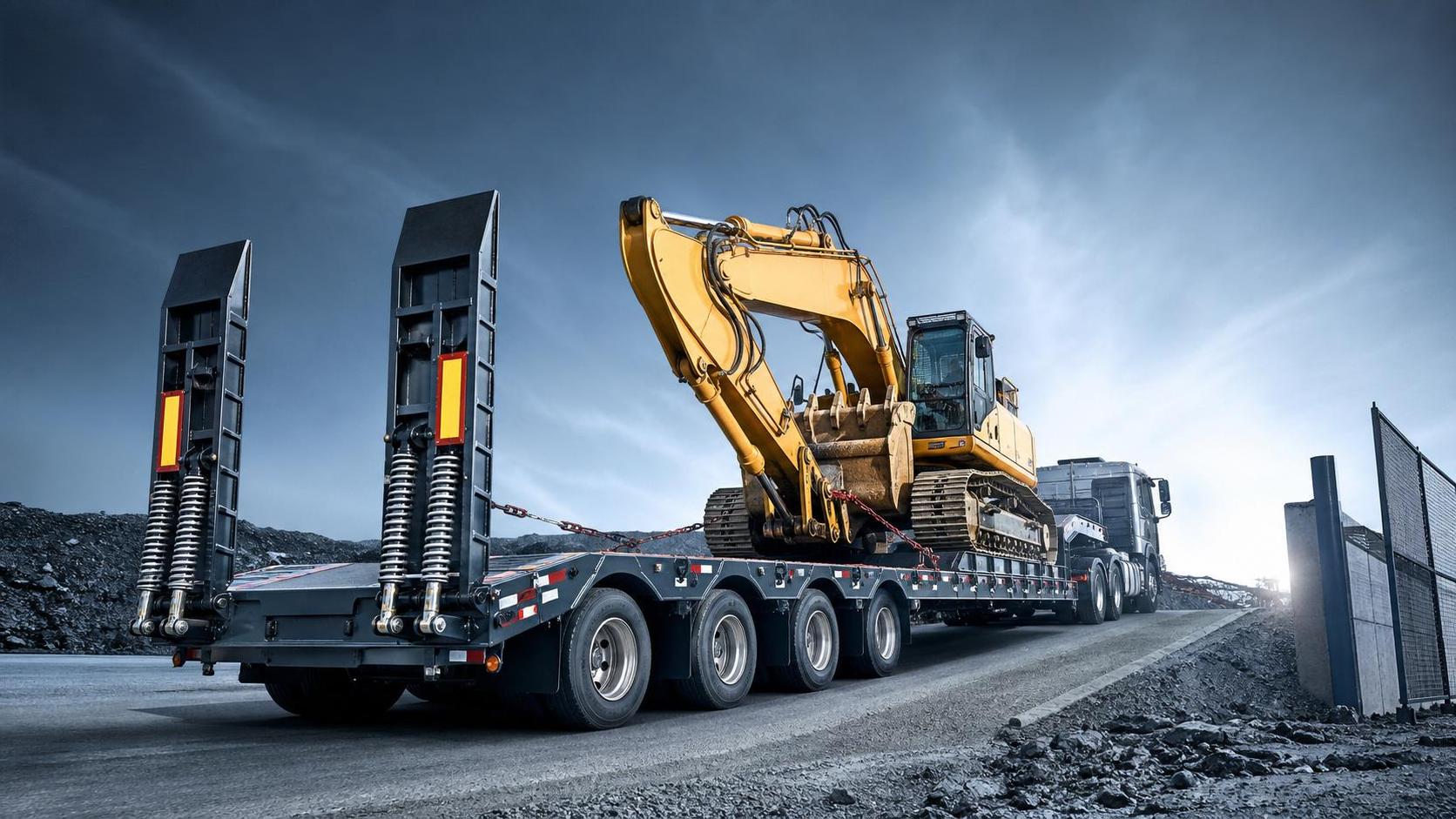
Low Plate Trailer Selection: Ground Clearance, Payload, and Road Access
Choosing the right Low Plate trailer affects far more than transport capacity alone.
For engineering transport, clearance, payload balance, and road access shape efficiency, compliance, and total operating cost.
A poor match can delay permits, limit route options, and increase tire, suspension, and deck damage.
A well-matched Low Plate setup improves delivery predictability and supports safer heavy equipment movement.
This guide explains how to evaluate a Low Plate trailer for real project conditions, not just catalog figures.
Why Low Plate Selection Matters in Engineering Transport
A Low Plate trailer is usually chosen for oversized, high-weight, or high-center-of-gravity cargo.
That includes excavators, loaders, rollers, transformers, steel modules, and site machinery.
The core advantage is lower loading height.
Lower height can improve bridge clearance, vehicle stability, and permit feasibility on restricted routes.
Still, one Low Plate design does not fit every transport job.
Deck height, axle layout, suspension type, and ramp geometry all change how the trailer performs.
In practical business terms, the selection process should start from route reality and cargo behavior.
That is where many buying mistakes become visible.
Start with Ground Clearance, Not Just Deck Height
Ground clearance is often misunderstood during Low Plate evaluation.
Buyers focus on how low the deck sits, but ignore how the trailer passes ramps, slopes, and uneven access roads.
A very low deck helps height control.
However, if the breakover angle is poor, the trailer can bottom out at site entrances or toll transitions.
This also means repair costs rise faster than expected.
When checking a Low Plate, review these points:
- Loaded ground clearance at the lowest structural point
- Approach and departure angles on ramps
- Breakover angle across raised road sections
- Suspension compression under full payload
- Ramp contact risk during loading and unloading
If routes include mining roads, temporary access lanes, or port yards, clearance tolerance becomes even more important.
A Low Plate that works on highways may fail in the last two kilometers to site.
When Lower Is Better, and When It Is Not
Lower deck height is valuable when cargo height is the main compliance constraint.
It also helps with tall machines that cannot be partially disassembled.
But lower is not always better.
If cargo must enter rough job sites, extra clearance may protect the deck and maintain road access flexibility.
The better decision is usually a balanced Low Plate configuration, not the lowest possible one.
Payload Is More Than a Rated Number
Many buyers compare trailers by advertised payload capacity alone.
That number matters, but it never tells the full operating picture.
A Low Plate must carry the load legally, distribute weight properly, and remain stable under braking and turning.
In recent projects, mixed cargo profiles have made this issue more visible.
One trailer may handle a tracked excavator well, but perform poorly with concentrated steel structures.
Key payload questions should include:
- What is the actual loaded weight, including attachments, fuel, and accessories?
- Is the cargo weight evenly spread or heavily concentrated?
- Where will the center of gravity sit on the Low Plate deck?
- How much kingpin load will transfer to the tractor?
- Do local axle load rules reduce usable payload below the catalog rating?
These answers directly affect axle count, beam strength, deck length, and suspension selection.
This is why Low Plate buying should always include operating weight calculations, not just brochure review.
Watch for Payload Imbalance Risks
Payload imbalance creates more problems than simple overload.
It can overload one axle group, reduce steering control, and increase braking distance.
For a Low Plate carrying heavy machinery, machine orientation also matters.
A reversed loading direction may improve axle balance and reduce ramp angle stress.
Road Access Determines Real Use Value
Road access is often the deciding factor after capacity and price.
A Low Plate may be technically capable, yet commercially inefficient if it cannot move freely across target routes.
More clearly, route restrictions define how often the trailer can actually earn revenue.
Road access should be checked from three angles:
- Physical access, including turning radius, narrow roads, bridge ramps, and site gates
- Regulatory access, including permit thresholds, escort requirements, and axle load limits
- Seasonal access, including rain damage, soft shoulders, and temporary detours
For regional fleets, road access can differ sharply across neighboring countries or provinces.
That is why Low Plate selection should reflect the toughest route, not the easiest one.
Typical Access Constraints to Check Early
How to Match Low Plate Configuration to Cargo Type
The best Low Plate choice depends heavily on what you move most often.
Frequent cargo patterns usually point to a repeatable trailer configuration.
For example, tracked machinery needs strong deck durability and reliable ramp support.
Long structural loads may need extended platform length and stable axle spacing.
Tall industrial modules usually prioritize low deck height and route permit compatibility.
A practical evaluation checklist includes:
- Cargo dimensions across standard and peak loads
- Loading method, including ramp drive-on or crane placement
- Tie-down points and securing requirements
- Expected route surface quality
- Need for multi-country or cross-region compliance
This helps define whether a standard Low Plate is enough or a customized solution is justified.
Cost Control Means Looking Beyond Purchase Price
A lower purchase price can be misleading during Low Plate selection.
If the trailer causes route restrictions, extra permits, or frequent underbody repairs, the savings disappear quickly.
The more useful signal is lifecycle cost.
That includes maintenance, downtime, tire wear, permit exposure, and loading efficiency.
In actual operations, the right Low Plate often reduces hidden costs through better route access and faster turnaround.
Questions Worth Asking a Supplier
- What is the loaded clearance under typical engineering cargo?
- How is payload distributed across axle groups?
- What route conditions was this Low Plate designed for?
- Can the trailer be customized for deck length, ramps, and suspension?
- What spare parts and after-sales support are available internationally?
These questions move the discussion from price comparison to operating suitability.
Working with an Export Partner That Understands the Full Selection Process
For overseas procurement, trailer selection is only one part of the decision.
Specification accuracy, documentation, logistics coordination, and after-sales response also affect project outcomes.
Shandong Livol Truck International Trade Co., Ltd. supports customers with this broader process.
Based in Shandong, China, the company is a professional and reliable commercial vehicle exporter.
It is the official authorized domestic and overseas dealer for FOTON, SHACMAN, and SINOTRUK.
With authorized 4S stores across China and stable inventory, supply and delivery remain more predictable.
Its export team provides support on vehicle selection, customization, documentation, customs clearance, and logistics.
That matters when a Low Plate order must align with both transport needs and cross-border execution.
Final Decision Framework for Low Plate Buyers
A strong Low Plate decision usually follows a simple order.
First, confirm cargo dimensions and actual operating weight.
Second, review road access limits across all intended routes.
Third, compare ground clearance, axle layout, and deck design under loaded conditions.
Fourth, calculate payload balance and compliance risk, not only rated capacity.
Finally, assess supplier support for customization, delivery, and after-sales response.
That process makes Low Plate selection more disciplined and far more practical.
The right trailer should not only carry the load.
It should fit the route, protect uptime, and support long-term engineering transport performance.
Search Starts Here