
News
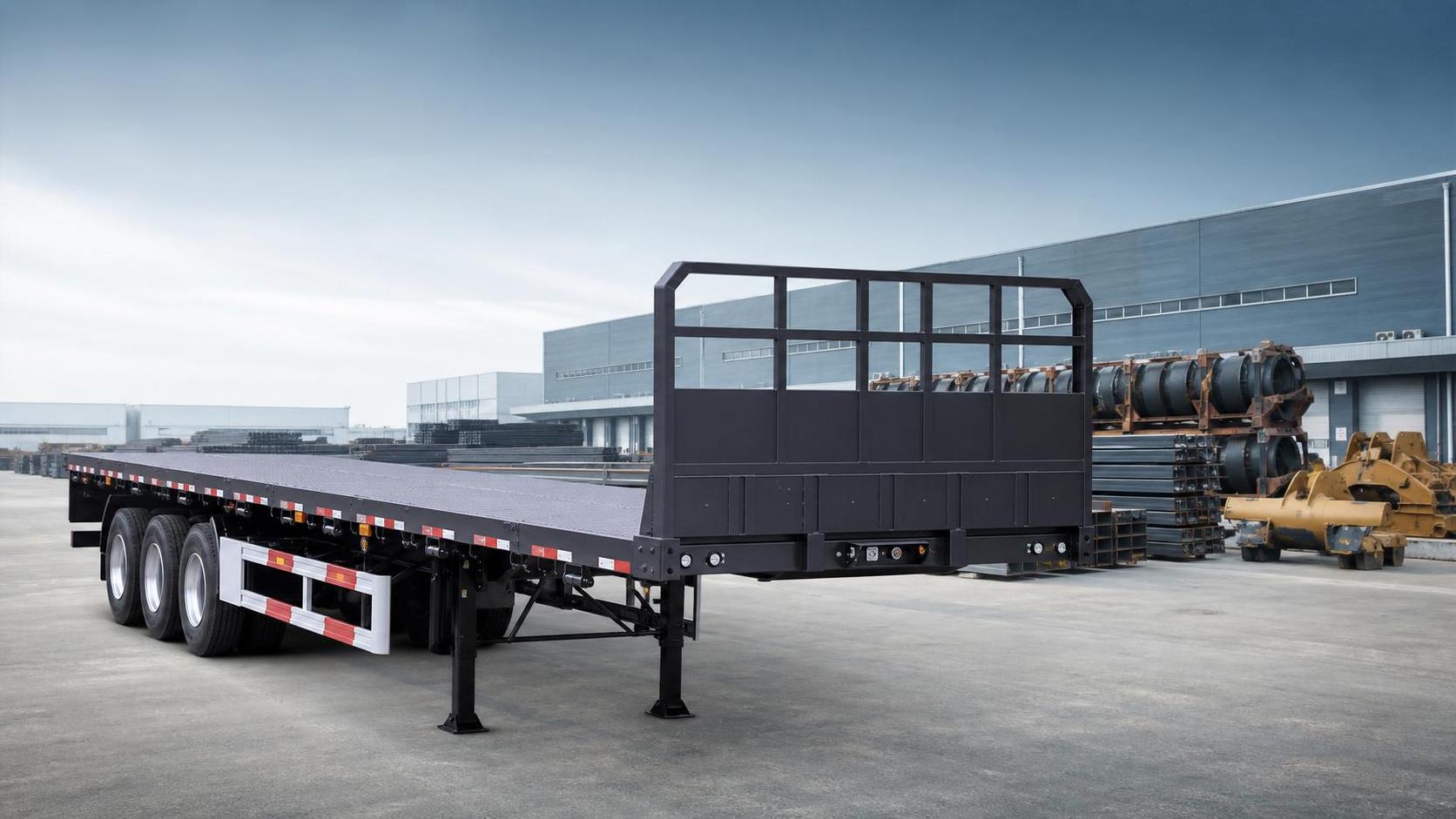
How to Compare Flatbed Semi-Trailer Costs Beyond the Purchase Price
When evaluating a Flatbed Semi-Trailer, smart buyers look far beyond the initial quote.
The real cost includes durability, payload efficiency, maintenance frequency, parts availability, and long-term operating value.
A lower sticker price can look attractive at first.
But in actual operations, it may create higher repair bills, more downtime, and reduced transport income.
That is why cost comparison should focus on total ownership value, not only the first invoice.
Start With Total Cost of Ownership
The purchase price is only one part of Flatbed Semi-Trailer cost.
A practical comparison should cover the full service life of the trailer.
This usually includes five major items:
- Initial purchase and delivery cost
- Maintenance and spare parts expense
- Downtime and lost transport revenue
- Fuel impact related to trailer weight
- Residual value at resale or replacement
A Flatbed Semi-Trailer with a higher purchase price may still deliver lower lifecycle cost.
That is often the case when structural quality reduces repairs and keeps the trailer running longer.
Check Structural Durability Before Comparing Price
Durability is one of the biggest cost drivers in a Flatbed Semi-Trailer decision.
Two trailers may look similar on paper, yet perform very differently under heavy use.
Pay close attention to the frame, cross members, welding quality, deck material, and anti-corrosion treatment.
Poor steel quality or weak weld consistency usually appears later as cracks, deformation, or deck fatigue.
Those failures are expensive because they affect both repair cost and fleet availability.
In coastal, humid, or mining environments, corrosion protection matters even more.
A better paint system or blasting process can extend usable life and preserve resale value.
Questions worth asking suppliers
- What steel grade is used for the main beam?
- What is the welding standard and inspection process?
- How is surface treatment handled before painting?
- What warranty terms apply to structural components?
Do Not Ignore Payload Efficiency
Purchase teams sometimes compare only equipment specifications and unit price.
A more useful comparison is payload efficiency.
If a Flatbed Semi-Trailer is unnecessarily heavy, it may reduce legal cargo capacity on every trip.
That affects revenue over months and years, especially in high-frequency transport operations.
Weight savings only make sense when they do not weaken structural strength.
The goal is a balanced Flatbed Semi-Trailer design with strong load-bearing capacity and controlled tare weight.
This is especially important for steel, timber, machinery, containers, and construction materials.
A simple way to calculate value
Estimate annual payload revenue difference between models.
Then compare that number with the higher purchase cost.
In many cases, a better Flatbed Semi-Trailer pays back the price gap faster than expected.
Measure Maintenance Cost and Downtime Together
Maintenance cost should never be reviewed alone.
Downtime is often the bigger hidden expense in Flatbed Semi-Trailer ownership.
A trailer that stays in the workshop too often reduces dispatch reliability.
It can also increase contract risk when delivery schedules are tight.
Focus on wear parts and service intervals for suspension, axles, landing gear, brake systems, and tires.
Ask whether components come from recognized brands with stable replacement supply.
Low-cost parts may save money upfront but increase replacement frequency later.
Look at Parts Availability and Service Support
This point is often underestimated during sourcing.
A Flatbed Semi-Trailer is only economical when replacement parts are easy to obtain.
Even a minor part shortage can leave a unit idle for days.
That directly increases operating cost per trip.
Suppliers with stable inventory, export experience, and organized after-sales response usually reduce that risk.
This matters even more for cross-border shipments, where documentation and logistics delays can extend repair cycles.
Shandong Livol Truck International Trade Co., Ltd. brings value here through practical supply capability.
Based in Shandong, China, the company is a professional and reliable commercial vehicle exporter.
It is the official authorized domestic and overseas dealer for FOTON, SHACMAN, and SINOTRUK.
With many authorized 4S stores across China and sufficient inventory, delivery remains more stable and faster.
Its export team also supports selection, customization, documentation, customs clearance, logistics, and after-sales coordination.
Compare Specifications Based on Real Operating Scenarios
A Flatbed Semi-Trailer should be evaluated against actual route and cargo conditions.
This sounds obvious, but many cost comparisons stay too generic.
Road quality, axle load limits, climate, loading method, and cargo type all affect the right specification.
For example, heavy machinery transport may require stronger beams and reinforced flooring.
Long-distance highway use may place more value on lighter weight and tire efficiency.
Rough regional roads may justify stronger suspension and more conservative design margins.
Useful comparison points
- Rated load versus typical cargo profile
- Deck length and width versus shipment mix
- Suspension type versus road condition
- Axle brand versus local service support
- Coating system versus weather exposure
Once the specification matches the workload, Flatbed Semi-Trailer cost analysis becomes much more accurate.
Include Residual Value in the Cost Comparison
Residual value is another part of Flatbed Semi-Trailer ownership that buyers often miss.
A trailer with better materials, known components, and cleaner service records usually sells more easily later.
That future resale value offsets the higher purchase cost today.
In contrast, unknown component brands and visible structural wear can reduce buyer confidence quickly.
This becomes important when fleet renewal cycles are short or financing models require asset planning.
A Practical Decision Framework for Flatbed Semi-Trailer Sourcing
To compare offers more effectively, use a simple weighted review instead of price-only ranking.
- 20% for purchase and logistics cost
- 25% for structural durability
- 20% for payload efficiency
- 20% for maintenance and parts support
- 15% for residual value outlook
The exact weighting can change by market and cargo type.
Still, this method gives a more realistic view of Flatbed Semi-Trailer cost performance.
It also makes supplier discussions more objective and easier to document internally.
Conclusion
Comparing Flatbed Semi-Trailer offers beyond the purchase price leads to better decisions and lower long-term risk.
The best option is rarely the cheapest one on day one.
A stronger Flatbed Semi-Trailer with reliable support, efficient payload design, and better durability often delivers better returns.
Before placing the order, compare lifecycle cost, service support, operating fit, and resale potential side by side.
That approach creates a clearer sourcing decision and supports more stable transport performance over time.
Search Starts Here