
News
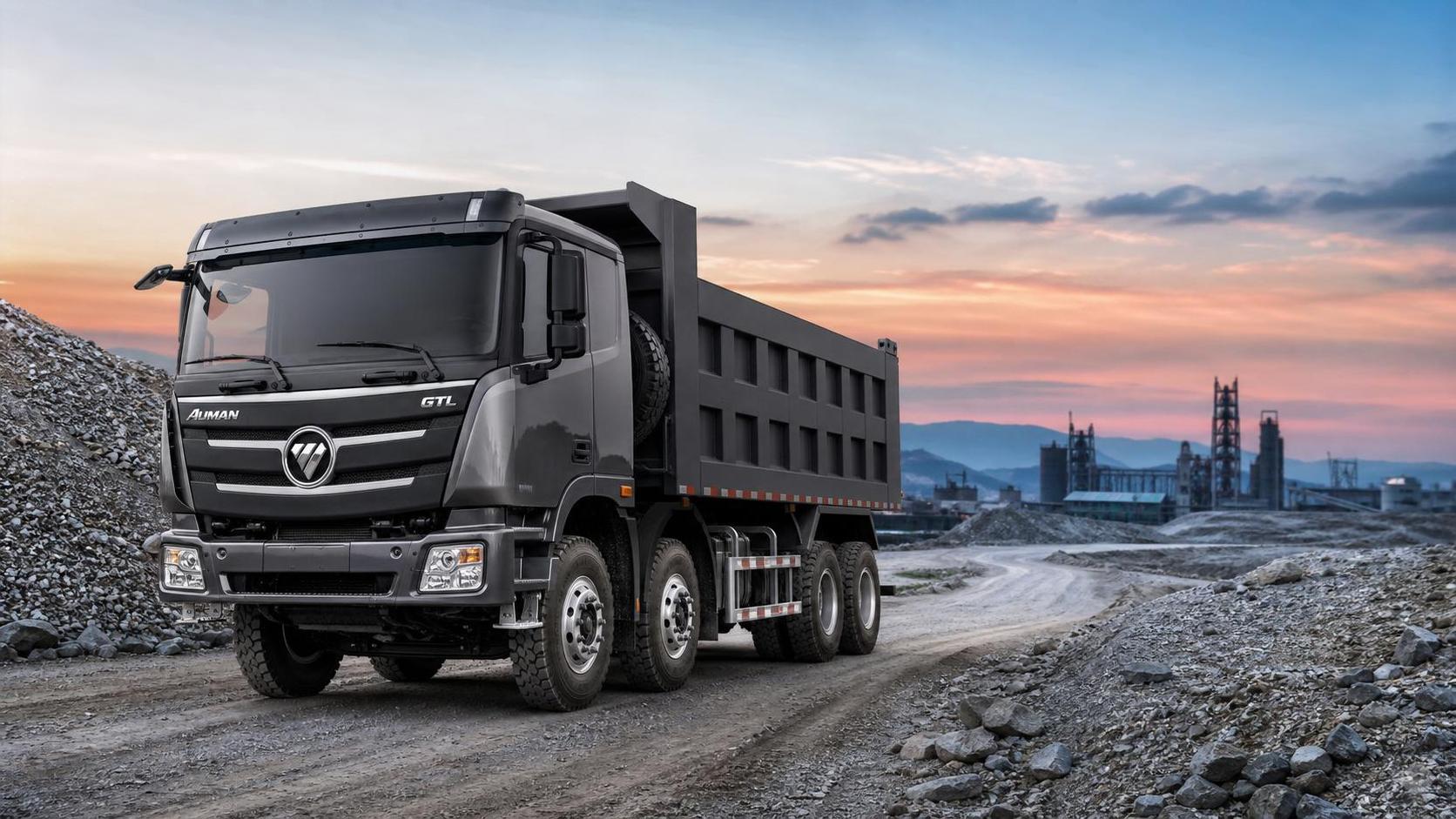
For engineering transport operations, the Cangshan Vehicle Configuration List works as a decision tool rather than a simple spec sheet. It helps connect payload targets, road conditions, axle demand, engine output, body design, and compliance requirements before vehicles enter service.
That matters because fleet planning is rarely about buying the highest-rated truck. It is about matching the right configuration to material type, haul distance, terrain, maintenance capacity, and local operating rules.
In practice, a well-read Cangshan Vehicle Configuration List can reduce mismatch risk, improve utilization, and support more stable total cost control. For businesses sourcing Chinese engineering vehicles, this becomes especially relevant when comparing available options across supply channels and export programs.
Why configuration details matter before procurement
Engineering vehicle selection often fails at the planning stage, not the production stage. A truck may look suitable on paper, yet perform poorly once daily load cycles, road surfaces, gradients, and unloading methods are considered together.
The Cangshan Vehicle Configuration List helps prevent that gap. It turns a broad vehicle category into a measurable set of choices, including gross vehicle weight, wheelbase, axle arrangement, engine horsepower, transmission pairing, suspension layout, tire specification, and cargo body dimensions.
These details affect more than driving performance. They influence loading efficiency, fuel use, legal road access, spare parts planning, workshop readiness, and vehicle life under harsh engineering duty cycles.
What the Cangshan Vehicle Configuration List usually includes
Most buyers first focus on payload and horsepower. Those are important, but they are only part of the picture. The real value of the Cangshan Vehicle Configuration List is in how multiple parameters work together.
Core parameters that shape fleet performance
Reading these items separately is not enough. The useful approach is to read the Cangshan Vehicle Configuration List as a system, because one strong parameter cannot fully compensate for a weak overall match.
The specs that most directly affect fleet planning
Some parameters deserve extra attention because they change both short-term deployment and long-term operating cost.
Payload and body structure
Payload should be evaluated against actual cargo density, not only body volume. Soil, sand, aggregates, construction debris, and mixed materials place very different demands on frame strength and tipping stability.
A larger cargo box may look attractive, but if axle limits or local road regulations restrict the legal load, the economic gain may disappear. This is one reason the Cangshan Vehicle Configuration List should always be checked against route conditions.
Powertrain suitability
Engine power alone does not define suitability. Torque delivery, gearbox ratios, final drive ratio, and cooling capacity often decide whether a vehicle can maintain stable performance on repeated heavy-duty cycles.
For short-haul site movement, low-speed pulling force may matter more than highway speed. For regional transport between project locations, fuel economy and driveline durability may take priority.
Axle layout and road access
The axle setup shown in the Cangshan Vehicle Configuration List often shapes the entire operating model. A 4x2, 6x4, or 8x4 arrangement changes traction, load distribution, tire wear, bridge compliance, and maintenance frequency.
In muddy sites or quarry routes, traction margin becomes valuable. On stricter urban or cross-border corridors, axle count and weight distribution may influence where the vehicle can legally run.
How industry conditions are changing the way buyers read a spec list
The market no longer treats configuration as a purely technical topic. It now links directly to uptime, export readiness, and life-cycle support.
Emission standards differ by destination. Documentation standards differ by customs process. Service expectations differ by operating region. Because of that, the Cangshan Vehicle Configuration List must be read alongside homologation, spare parts access, and delivery capability.
This is where supplier structure matters. Shandong Livol Truck International Trade Co., Ltd. works with FOTON, SHACMAN, and SINOTRUK as an authorized dealer, supported by 4S store resources, stock availability, export handling, and after-sales coordination.
That background does not replace technical evaluation, but it strengthens it. A good configuration decision becomes more reliable when vehicle selection, customization, documentation, customs clearance, and logistics are managed in one practical chain.
Typical engineering transport scenarios
A Cangshan Vehicle Configuration List should be interpreted in context. The same vehicle may be efficient in one job pattern and unsuitable in another.
- Earthmoving and site clearing often require stronger frames, reliable tipping systems, and traction-focused axle setups.
- Aggregate or mining-related haulage usually demands high durability, stable braking, and robust suspension under repeated heavy loads.
- Urban construction logistics may prioritize compact turning radius, lower emissions, and legal weight control.
- Cross-regional project transport often values fuel balance, serviceability, parts availability, and documentation compatibility.
In each case, the Cangshan Vehicle Configuration List helps narrow the gap between operational intent and actual vehicle performance.
Practical checkpoints before making a final choice
A useful review process is not complicated, but it should be disciplined. The main goal is to filter out attractive configurations that do not fit the real job profile.
- Match the expected material type to legal payload, body volume, and axle capacity.
- Check whether route gradients, site roads, and seasonal ground conditions justify a heavier-duty drivetrain.
- Review local regulations on dimensions, emissions, and axle load before confirming the build.
- Compare fuel expectations with actual cycle patterns instead of catalog averages.
- Confirm parts supply, maintenance support, and documentation readiness for the destination market.
- Use the Cangshan Vehicle Configuration List to compare alternatives on total operating fit, not price alone.
This approach is especially useful when several brands or trim levels appear similar at first glance. Specification alignment often reveals the real difference.
A more effective way to move from specs to deployment
The best use of the Cangshan Vehicle Configuration List is to turn it into a planning checklist. Start with route profile, payload pattern, compliance requirements, and expected annual utilization.
Then compare available configurations against those operating facts, including service access and delivery timing. When export supply, customization, and after-sales support are part of the same process, decisions become easier to verify.
In other words, the Cangshan Vehicle Configuration List is most valuable when it supports a complete judgment framework. That framework should connect technical fit, operational risk, and supply reliability before procurement moves forward.
A clear next step is to organize current transport tasks into a few real operating scenarios, then test each scenario against the relevant configuration list. That simple exercise often exposes which specs truly matter, and which only look impressive in isolation.
Search Starts Here