News
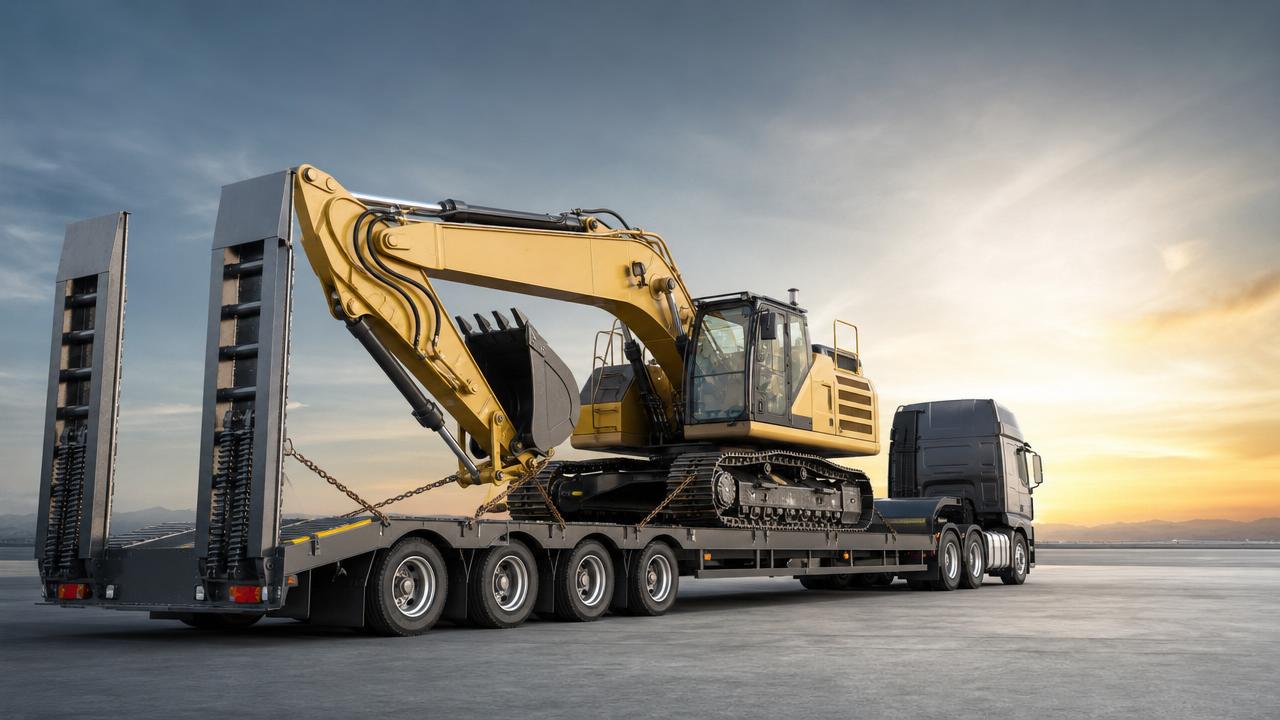
Moving heavy equipment with a Low Plate trailer can improve transport efficiency, especially for excavators, bulldozers, cranes, loaders, and other oversized machinery.
Yet the same operation can create serious risk when loading methods, axle loads, braking performance, and cargo securing are not carefully controlled.
For engineering vehicle transport, Low Plate trailer safety is not only a driving issue. It is also a quality, compliance, and delivery reliability issue.
Why Low Plate Trailer Operations Require Careful Control
A Low Plate trailer is designed with a lower deck height than many standard cargo trailers.
This structure helps carry tall, heavy, or tracked equipment while keeping the overall transport height within road limits.
The lower center of gravity is useful, but it does not remove transport risk.
Heavy machines concentrate weight in compact areas, often through tracks, tires, outriggers, or counterweights.
If that load is not matched with the Low Plate design, the trailer frame, suspension, tires, and kingpin may face abnormal stress.
In practical logistics, the risks are rarely caused by one mistake.
They usually come from several small omissions: weak ramp control, unclear equipment weight, poor tie-down angles, or incomplete road planning.
This is why Low Plate trailer risk management should begin before the equipment arrives at the loading point.
The Main Risk Areas in Heavy Equipment Transport
The most visible risk is cargo movement, but it is not the only concern.
A Low Plate trailer operation involves vehicle condition, equipment geometry, route limits, driver behavior, and documentation accuracy.
Each area affects the final safety outcome.
Incorrect Weight Distribution
Weight distribution is one of the most critical factors when using a Low Plate trailer.
An excavator may meet the trailer’s rated payload, yet still overload one axle group.
This can happen when the boom, counterweight, or track position shifts too much load toward one section.
Uneven weight distribution increases tire heat, suspension fatigue, braking imbalance, and steering instability.
It may also create legal problems at weigh stations or border checkpoints.
Loading and Unloading Hazards
Many Low Plate accidents occur during loading or unloading, not during highway driving.
Wet ramps, loose ground, poor alignment, and rushed signaling can quickly create dangerous conditions.
Tracked equipment may slip sideways if the ramp angle is too steep or the surface lacks grip.
Wheel loaders and graders can also roll unexpectedly when parking brakes are not tested before ramp movement.
A controlled loading plan should define approach direction, ramp setup, ground bearing capacity, and communication signals.
Securing Failure During Transit
Cargo securing is not simply about adding more chains.
The attachment points, chain grade, lashing angle, tension method, and machine condition all matter.
A Low Plate trailer carrying construction machinery may face vibration, braking force, side wind, and road surface impact.
If the securing system is weak, the machine can creep forward, shift sideways, or damage the trailer deck.
Hydraulic arms, buckets, blades, and attachments should also be lowered, locked, or restrained where required.
Typical Checks Before a Low Plate Trailer Trip
Pre-trip inspection should be practical, recorded, and linked to the specific equipment being moved.
A generic checklist is useful, but heavy machinery transport needs more detailed confirmation.
The following table outlines core areas that often decide whether a Low Plate trip remains controlled.
These checks are most effective when they are completed before dispatch approval.
Once the Low Plate trailer is on the road, options become more limited and costlier.
Braking, Tires, and Stability Under Heavy Loads
Heavy equipment transport places high demand on braking systems.
A Low Plate trailer may be technically suitable, but poor brake adjustment can still create stopping distance problems.
Air pressure, brake chambers, drums, linings, and ABS functions should be checked before loading.
Tire condition also deserves close attention.
Underinflated tires generate heat quickly, especially when carrying compact and concentrated machinery loads.
Overinflated tires may reduce contact area and increase vibration transmitted into the cargo and frame.
Stability is affected by driving behavior as much as technical condition.
Sharp steering, sudden braking, high-speed cornering, and poor lane positioning increase lateral force on the Low Plate trailer.
For oversized machinery, even a small shift can change the handling feel of the whole combination.
Quality Control Points That Reduce Equipment Damage
Not every transport incident results in a road accident.
Some risks appear later as scratched paint, bent steps, leaking hydraulic lines, or damaged electrical parts.
That makes Low Plate transport a quality control matter from loading to final handover.
Before loading, visible machine condition should be recorded with photos, serial numbers, and attachment details.
After loading, the contact points between equipment and deck should be inspected.
Sharp edges, exposed cylinders, unstable buckets, and unsupported attachments can create preventable damage.
During long-distance or cross-border trips, intermediate inspections should not be treated as optional.
Chains can settle, tire pressure can change, and road vibration can loosen supporting blocks.
A structured handover record helps distinguish transport damage from pre-existing equipment condition.
Compliance Risks in Cross-Border and Project Logistics
Low Plate trailer movement often involves oversized or overweight transport rules.
These rules vary by country, province, port, and project site.
Permits, escort requirements, warning signs, reflective markings, and allowed driving hours may all apply.
Documentation problems can delay delivery even when the vehicle and cargo are technically safe.
Common issues include inconsistent weight declarations, missing chassis information, unclear equipment descriptions, or incorrect customs documents.
For export projects, trailer selection and paperwork should be aligned early.
Shandong Livol Truck International Trade Co., Ltd. works with commercial vehicles from FOTON, SHACMAN, and SINOTRUK.
Its export process covers vehicle selection, customization, documentation, customs clearance, and logistics coordination.
This kind of process support helps reduce mismatch between Low Plate configuration, cargo requirements, and destination rules.
For engineering vehicle delivery, stable inventory and professional export handling can also shorten preparation time.
Common Scenarios Where Low Plate Risks Increase
Risk level changes with equipment type and operating environment.
A Low Plate trailer used on paved roads faces different hazards from one entering a mine, quarry, or remote project site.
The following situations usually require additional control measures:
- Transporting excavators with large counterweights or long booms.
- Moving bulldozers with wide blades and concentrated track loads.
- Carrying cranes, drilling rigs, or machines with high centers of gravity.
- Delivering equipment through ports, steep ramps, or narrow construction roads.
- Operating in rain, snow, mud, loose gravel, or poor visibility.
In these cases, the Low Plate trailer should be assessed beyond rated tonnage.
Deck strength, ramp length, axle configuration, suspension type, and turning performance may become decisive.
How to Build a Practical Risk Control Routine
A good Low Plate risk routine is simple enough to follow and detailed enough to be useful.
It should connect planning, inspection, operation, and final verification.
The routine does not need to be complicated, but it must be consistent.
Before Loading
Confirm machine weight, dimensions, attachment status, and any transport position recommended by the manufacturer.
Inspect the Low Plate trailer structure, ramps, tires, brakes, lighting, and securing equipment.
Make sure the ground is firm and the trailer is positioned straight before ramp movement begins.
During Transport
Drive at a speed suitable for the cargo, road, weather, and route permits.
Stop after the first short distance to recheck chains, binders, tires, and visible cargo movement.
For long trips, repeat checks after rough road sections, border procedures, or major temperature changes.
After Arrival
Choose a stable unloading area with enough space for ramp alignment and machine movement.
Inspect the cargo condition before releasing the securing system completely.
Record final equipment condition, delivery time, and any abnormal findings during the trip.
Choosing a Low Plate Trailer With Risk in Mind
Trailer selection should not begin and end with payload capacity.
A Low Plate trailer used for engineering machinery should match the real work pattern.
Important factors include axle number, suspension system, deck length, ramp type, tire specification, and braking compatibility.
Customization may be required for frequent transport of oversized excavators, mining equipment, or special construction vehicles.
In export business, local road conditions and after-sales support should also influence the decision.
Shandong Livol’s experience with commercial vehicle export helps connect vehicle configuration with destination use conditions.
Authorized brand resources, 4S store networks, and sufficient inventory can support more stable project planning.
For Low Plate trailer procurement, this reduces uncertainty in supply, documentation, and logistics scheduling.
Turning Risk Awareness Into Better Transport Decisions
Low Plate trailer risk management is most valuable when it becomes part of daily transport decision-making.
The goal is not to slow every shipment, but to prevent avoidable failures.
Heavy equipment movement involves cost, schedule, safety, compliance, and equipment condition at the same time.
A reliable Low Plate operation balances these factors instead of focusing only on loading capacity.
Before the next project, it is useful to review equipment types, route conditions, inspection records, and trailer configuration.
Comparing these details helps identify whether standard equipment is enough or a tailored transport solution is needed.
For international vehicle sourcing, checking trailer specifications, export documents, quality control processes, and service support early can reduce later risk.
A Low Plate trailer can be an efficient tool for heavy equipment transport when its risks are understood and controlled from the start.
Search Starts Here