
News
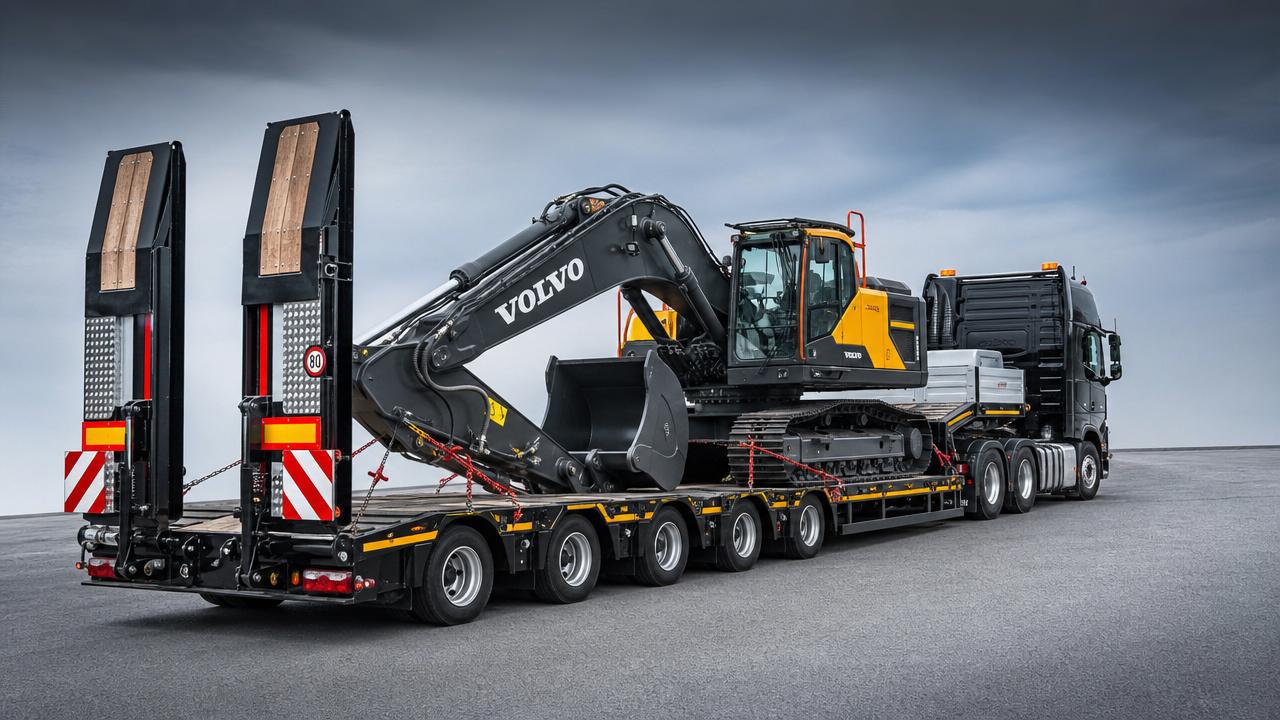
Low Plate trailer mistakes can quietly increase transport risk, damage cargo stability and drive up long-term maintenance costs. For quality control and safety management teams, identifying these issues early is essential to improving fleet reliability and reducing operational loss. From loading errors to poor inspection routines, understanding the most common Low Plate problems helps create safer, more efficient transport processes.
Why do Low Plate trailer mistakes deserve special attention from QC and safety teams?
A Low Plate trailer is widely used in engineering vehicle transport because it offers a lower loading deck, stronger carrying capability for heavy equipment, and better suitability for machines with high centers of gravity. However, the same structural advantages can become risk points when inspection standards are weak or operating habits are inconsistent. For quality control personnel, this means transport problems often start long before a breakdown or accident becomes visible. For safety managers, it means small errors in loading, routing, restraint, or maintenance can accumulate into major operational loss.
What makes the Low Plate category especially sensitive is that it often carries excavators, rollers, loaders, and other oversized engineering equipment. These loads create uneven axle forces, strong braking inertia, and concentrated stress on ramps, gooseneck structures, suspension points, and tires. If teams rely only on basic visual checks, they may miss early signs of structural fatigue, deck deformation, loose fasteners, or poor cargo securement practices. In many fleets, maintenance cost does not rise suddenly; it rises because repeated operating mistakes shorten component life one trip at a time.
That is why Low Plate risk control should not be treated as a simple driver issue. It should be managed as a cross-functional process involving procurement, dispatch, loading supervision, route planning, daily inspection, and post-trip feedback. When QC and safety teams standardize these checkpoints, they reduce cargo incidents, unscheduled repair, tire wear, suspension damage, and compliance exposure.
What are the most common Low Plate loading mistakes that increase transport risk?
The most frequent Low Plate problems begin during loading. Many incidents are not caused by trailer manufacturing defects but by preventable operating errors. One typical mistake is incorrect weight distribution. Heavy engineering equipment is sometimes placed too far forward or too far back in order to save time at the loading point. This creates axle overload, unstable steering behavior for the tractor, excessive drawbar stress, and abnormal tire heating. Even if the trailer completes the trip, this repeated imbalance can raise maintenance costs significantly.
Another common issue is loading without confirming deck condition and ramp alignment. If the ramps are worn, bent, or set on uneven ground, tracked machinery may climb at an angle, causing impact loads on the rear structure. Over time, these shock loads can deform the Low Plate frame, loosen weld areas, and damage hinge points. Teams sometimes underestimate these effects because they are not immediately visible after one loading event.
Improper securing methods are also a major source of risk. Using too few chains, choosing wrong tie-down angles, securing to weak machine points, or failing to recheck tension after the first kilometers can all reduce cargo stability. A Low Plate carrying heavy equipment is exposed to vibration, braking force, road crown effects, and turning inertia. If restraints are not designed for these forces, the load may shift slightly at first, then increasingly during the trip. Small shifts can damage the deck, stress the suspension, and compromise road safety.
A related mistake is ignoring machine attachment positioning. For example, buckets, booms, counterweights, or detachable tools may be left in transport-unsafe positions. This changes the center of gravity and introduces side-loading risks, especially during emergency maneuvers. In short, loading should never be judged only by whether the machine fits on the trailer. It must be judged by axle balance, restraint effectiveness, structural stress, and route conditions.
How can a safety manager quickly judge whether a Low Plate operation is becoming high risk?
A useful approach is to watch for operational warning signs instead of waiting for failures. If drivers frequently report poor straight-line stability, abnormal trailer sway, uneven braking feel, or visible leaning after loading, these are not isolated complaints. They often indicate recurring Low Plate setup problems such as bad load placement, weak suspension response, or tire pressure inconsistency. Safety managers should treat these reports as early risk data.
Another indicator is repeated maintenance concentration in the same components. If one Low Plate unit regularly needs tire replacement on one side, suspension repair at certain axles, or deck welding around the same stress areas, root cause analysis is needed. Frequent repairs often point to process defects rather than random wear. Typical causes include overloading, poor road selection, repeated curb impact, or loading equipment with mismatched dimensions and weight distribution.
Safety teams should also review route planning discipline. A Low Plate trailer that is technically suitable for the load may still become high risk if the route includes steep gradients, narrow turns, soft shoulders, temporary work zones, or low-clearance obstacles. Low deck height improves loading but can increase underbody strike risk on uneven surfaces. If dispatch teams do not verify route conditions in advance, the fleet may experience repeated damage to the underframe, ramp assembly, lighting harness, or air lines.
The table below helps QC and safety personnel classify common warning signs before they grow into serious losses.
Which inspection mistakes make Low Plate maintenance costs rise faster than expected?
One of the biggest mistakes is treating Low Plate inspection as a routine checklist with no load-specific focus. A trailer used for heavy engineering vehicles experiences stress very differently from a standard flatbed. Yet some fleets still use generic inspection forms that do not emphasize gooseneck welds, deck flatness, ramp hinges, suspension equalization, kingpin wear, and restraint anchor integrity. When critical points are not inspected with enough frequency, small defects survive multiple trips and become expensive repairs.
Another costly oversight is neglecting tire and axle alignment trends. On a Low Plate, abnormal tire wear is often an early diagnostic signal. Feathering, one-sided wear, localized overheating, or repeated puncture events may reflect overload patterns, suspension imbalance, or poor turning practices under heavy load. Replacing tires without investigating the pattern only delays the next failure. Quality teams should document wear by axle position and compare it against load records and route conditions.
Lubrication discipline is also frequently underestimated. Ramp hinges, rotating points, landing gear mechanisms, and coupling components may not fail immediately when lubrication is delayed, but friction increases gradually and accelerates wear. This can produce difficult loading operations, noisy movement, metal scoring, and eventually part replacement that would have been avoidable with preventive care. In export and cross-border transport conditions, where climate and road conditions vary significantly, lubrication intervals should reflect actual operating severity rather than fixed calendar assumptions.
Finally, many fleets do not connect maintenance records with incident or loading data. If a Low Plate receives frequent repairs after certain cargo types or at certain project sites, that pattern matters. Maintenance control improves when QC teams link component wear, route severity, operator behavior, and cargo category into one review process. This turns maintenance from reactive spending into preventive management.
How should companies choose the right Low Plate practices for different engineering vehicle scenarios?
The right Low Plate operating standard depends on what the trailer carries, where it travels, and how often loading cycles occur. For short-haul transport inside construction zones, attention should focus on ramp durability, deck traction, and resistance to repeated loading impacts. For long-distance highway transport, axle load balance, tire management, restraint reliability, and route compliance become more important. A company moving tracked machines every day will not have the same risk profile as one transporting wheeled loaders occasionally.
QC and safety managers should ask several practical questions. Is the Low Plate matched to the machine’s operating weight, not just nominal weight? Are attachments included in total transport mass and dimension review? Does the deck length support correct center-of-gravity placement? Are the anchor points certified and positioned for the actual machines being moved? Is the route likely to expose the trailer to uneven access roads, bridge restrictions, or soft ground during loading? These questions sound basic, but they are exactly where many transport errors begin.
It is also important to consider supplier support and parts availability. A Low Plate unit may look acceptable at purchase, but if replacement parts, technical guidance, or structural documentation are difficult to obtain, maintenance downtime can rise. This is why many fleet operators prefer working with exporters and commercial vehicle partners that can provide integrated product selection, customization, documentation, and after-sales coordination. For buyers in engineering transport, service capability is part of safety performance, not a separate issue.
As a professional exporter with authorized access to leading Chinese commercial vehicle brands and broad industry experience, Shandong Livol Truck International Trade Co., Ltd. supports customers with vehicle selection, customization, documentation, logistics coordination, and after-sales communication. For companies evaluating Low Plate transport solutions, this kind of full-process support can help reduce mismatched specifications and improve implementation quality from the start.
What Low Plate management habits help reduce both safety incidents and long-term ownership cost?
The most effective habit is standardization. A Low Plate should not depend on individual driver experience alone. Companies need a written loading and inspection standard that includes pre-loading ground check, ramp condition verification, machine positioning reference, tie-down method, first-stop securement recheck, and post-trip defect reporting. When every trip follows the same control logic, hidden risk becomes easier to detect.
The second habit is evidence-based review. Safety meetings should not discuss only accidents. They should review near misses, unusual wear patterns, route difficulties, and loading deviations. Even a small crack in a ramp hinge or repeated slack in one securement point can reveal a wider Low Plate process problem. Capturing these signals early protects both uptime and compliance.
The third habit is training that reflects real field conditions. Operators should understand why tie-down angles matter, why deck cleanliness affects track grip, why underbody clearance changes route choice, and why equipment attachments must be locked into transport-safe positions. Practical training reduces the gap between written procedure and real behavior.
The fourth habit is supplier communication. If a fleet notices repeated issues with a Low Plate configuration, feedback should go back to the supplier or exporter quickly. Structural reinforcement options, deck design adjustments, accessory upgrades, or maintenance recommendations may solve the issue before repair cost escalates. Strong communication is especially valuable in international trade, where operating environments differ significantly by market.
What questions should be clarified before buying, upgrading, or deploying a Low Plate trailer?
Before a purchase or fleet upgrade, QC and safety managers should clarify more than payload figures. They should confirm the exact machine types to be transported, operating weight ranges, attachment combinations, deck length requirements, ramp design needs, axle configuration, expected road conditions, local compliance limits, and service support expectations. A Low Plate that is suitable on paper may still perform poorly if these details are not aligned.
It is also wise to ask how the trailer will be inspected and maintained after delivery. Who will train operators? Which spare parts are critical to stock? What structural points require periodic attention? How should loading methods change for tracked versus wheeled equipment? Can the exporter support documentation and logistics smoothly for the destination market? These questions directly affect risk control and lifecycle cost.
In practice, the safest Low Plate operation comes from matching equipment, process, and support capability. If you need to confirm a suitable Low Plate solution, technical parameters, customization direction, delivery cycle, or export cooperation method, it is best to first discuss the cargo type, transport route, compliance requirements, maintenance expectations, and after-sales response needs. Those answers will shape a more reliable and cost-effective decision.
Search Starts Here