
News
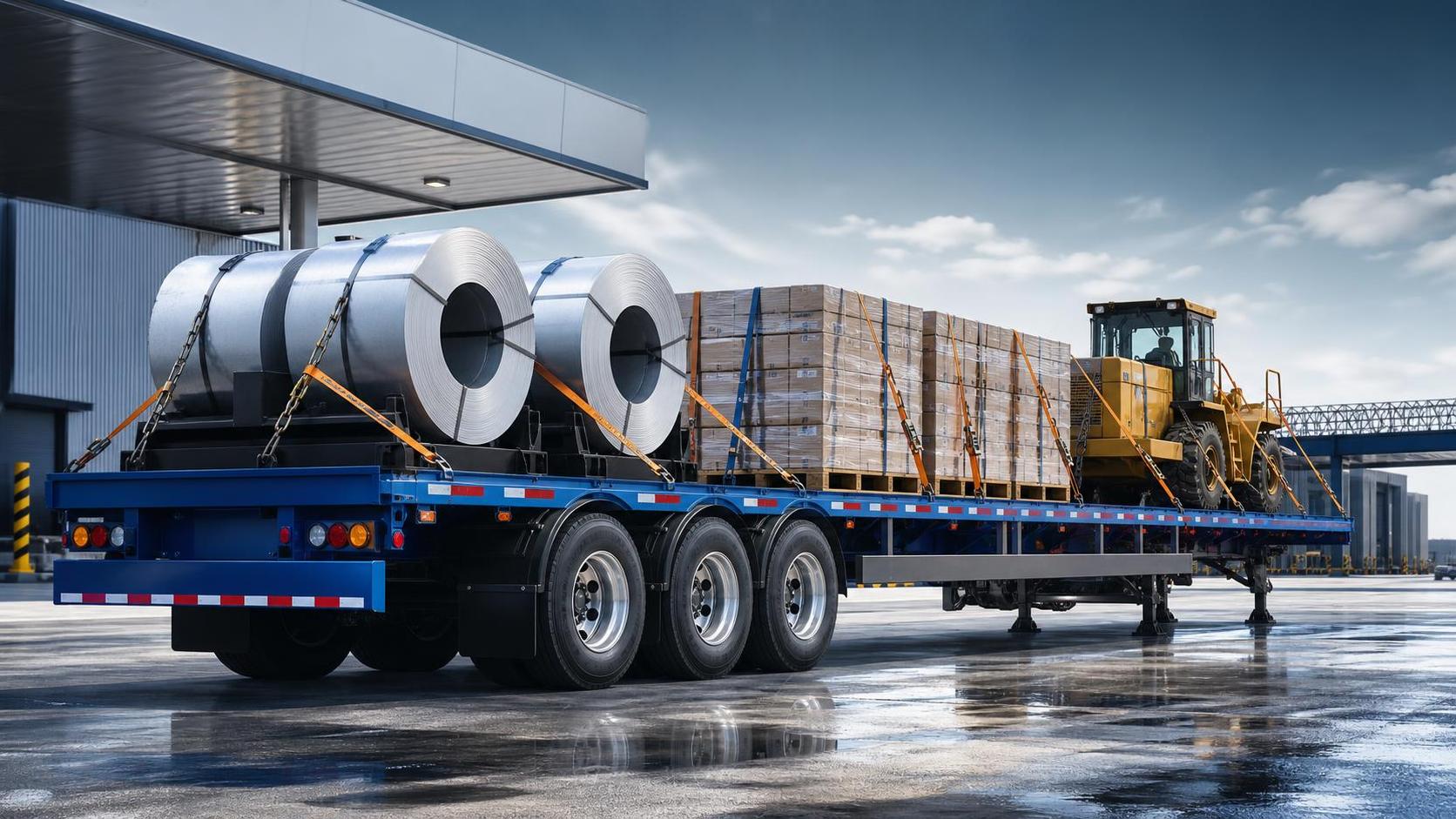
How to Compare Flatbed Semi-Trailer Operating Costs Across Different Cargo Types
For finance-led purchasing, the biggest mistake is to compare a Flatbed Semi-Trailer by purchase price alone. Two trailers with similar upfront cost can produce very different operating results once they start hauling steel coils, machinery, timber, pallets, precast concrete or agricultural equipment. Cargo type changes almost everything that matters to total cost: fuel burn, loading time, tie-down requirements, deck wear, axle stress, maintenance intervals and even the risk of cargo claims.
That is why cost comparison should begin with transport reality, not a brochure. A trailer moving light but bulky cargo may spend more time in loading bays and less time near legal weight limits. One handling dense industrial materials may look efficient on paper but create higher tire wear, brake consumption and suspension stress over time. If the finance team wants a useful model, it needs to connect cargo characteristics with operating behavior.
In engineering vehicle and commercial transport projects, this is often where good procurement decisions are made or lost. Exporters and fleet suppliers with practical delivery experience usually see the same pattern: the right trailer specification depends less on the word “flatbed” and more on what the trailer will actually carry, how often it will be loaded, and what road and compliance conditions apply in the destination market.
Start with cost per cargo mission, not cost per trailer
A clean comparison framework looks at cost per trip, cost per ton-kilometer, and cost per usable service year. That sounds simple, but many internal comparisons mix unlike conditions. A flatbed running machinery on short regional routes should not be judged by the same assumptions as one moving construction steel on long-haul corridors.
The better approach is to break operating cost into six working categories:
- Fuel impact from payload, aerodynamics and route profile
- Labor time for loading, securing and unloading
- Maintenance and wear on deck, tires, brakes, suspension and landing gear
- Downtime risk caused by cargo-specific handling or repairs
- Compliance cost tied to dimensions, weight distribution and road rules
- Residual value, which can vary with build quality and market acceptance
Once those categories are separated, cargo type becomes easier to price. Finance teams can then compare not only “how much the trailer costs” but “how much this cargo mix asks from the trailer every month.”
Why cargo type changes operating cost so much
Flatbed work looks flexible from the outside, but cargoes do not behave the same. Dense cargo such as steel plate, stone products or heavy equipment can push the trailer close to axle and gross weight limits even when deck space is only partly used. That typically raises fuel use per trip and accelerates wear on consumables. It also increases the importance of axle configuration, brake system condition and frame integrity.
Bulky cargo creates a different cost profile. Light industrial goods, pipes, formwork, containers of irregular equipment, or agricultural structures may leave legal payload capacity unused while adding loading complexity, lashing labor and sometimes route restrictions from overall dimensions. In these cases, the cost penalty may come less from weight and more from low equipment utilization and slow turnaround.
Fragile or high-value cargo shifts the economics again. More edge protection, anti-slip materials, deck condition control and careful securing add direct labor and accessory costs. A minor deck defect that would be acceptable for rough building materials may become unacceptable when moving finished machinery or painted components.
A simple comparison lens
Fuel is visible, but loading efficiency often decides profitability
Fuel is usually the first operating cost line item people ask about, and for good reason. Heavier cargo generally means higher fuel consumption. But on flatbed operations, loading and unloading efficiency can move overall economics just as much. If a cargo requires repeated repositioning, special lifting arrangements, extensive lashing or waiting time for site equipment, the trailer may complete fewer revenue trips per week.
This matters particularly for approval teams evaluating annual return. A trailer carrying high-density cargo at near-full legal load may have strong tonnage efficiency even with somewhat higher fuel cost. Another trailer assigned to irregular cargo may burn less fuel per kilometer but generate lower revenue because cycle time is longer and dispatch flexibility is worse.
So the right question is not only “which trailer uses less fuel?” but “which cargo-trailer combination completes more compliant, profitable trips with acceptable wear?”
Maintenance cost follows cargo behavior
Finance teams often allocate a flat maintenance percentage across trailer categories. That is convenient, but it can hide meaningful differences. Cargo that is loaded by crane, forklift or site machinery can damage flooring, side edges, cross members or tie-down hardware if handling is rough. Repeated point loading from equipment tracks or concentrated steel bundles may stress the structure differently from distributed palletized loads.
Tire wear also varies. A flatbed working mostly on paved highways with balanced loads behaves differently from one entering construction sites, quarries or uneven rural roads. If the trailer will support engineering, infrastructure or mixed on/off-road delivery, suspension choice and chassis robustness become part of the operating cost equation, not just the specification sheet.
This is one reason experienced exporters and dealers tend to ask detailed cargo and route questions before recommending configuration. Companies such as Shandong Livol Truck International Trade, which work with multiple commercial vehicle platforms including FOTON, SHACMAN and SINOTRUK and handle full export processes, are usually in a position to align trailer selection with real deployment conditions rather than just nominal capacity. For a finance reviewer, that alignment matters because a mismatched configuration often becomes a maintenance problem six months later.
Do not ignore compliance and documentation cost
Cargo type can trigger indirect costs that never appear in a basic quotation. Overweight exposure, axle load distribution issues, width or overhang restrictions, escort requirements in some markets, and cargo-securing compliance all affect operating cost. These items depend heavily on destination-country regulations and specific transport practice, so they usually need project-level confirmation.
For cross-border buyers, there is another layer: documentation, customs coordination and specification matching to local acceptance standards. If a trailer is technically suitable but mismatched to import requirements or end-use conditions, procurement savings can disappear in delays, modifications or underutilization. Suppliers with export execution experience can reduce this risk, not by making the trailer cheaper, but by making the overall delivery-to-operation path more predictable.
A practical model for comparing cargo-specific operating cost
A useful finance model does not need perfect data from day one. It needs the right structure. For each cargo type, estimate:
- Average loaded weight and typical cube use
- Average trip distance and road conditions
- Loading and unloading time per trip
- Securing materials and labor requirement
- Expected maintenance items affected by the cargo
- Compliance-related cost or operational limits
- Expected annual utilization and downtime days
Then compare scenarios, not just units. A heavier-duty trailer may cost more upfront but perform better for dense, repetitive industrial loads. A lighter or more general-purpose configuration may be economically acceptable for lower-stress cargo profiles. The correct answer depends on whether added specification reduces lifetime cost enough to justify capital spend.
One common mistake is averaging all cargoes into one fleet assumption. If 70% of the work is standard building materials and 30% is heavy machinery, it may be better to separate equipment classes rather than forcing one trailer type to do everything. Mixed-use flexibility sounds efficient, but in practice it can mean paying for over-specification on routine work or suffering high wear on demanding jobs.
Questions worth asking before approval
Before signing off on a Flatbed Semi-Trailer purchase, finance teams should push beyond the standard quote comparison. Ask what cargo will dominate utilization in the first 12 to 24 months. Ask whether loading equipment is standardized across sites. Ask how often the trailer will operate near legal maximum weight, and whether roads are primarily highway, mixed construction access, or rough regional routes.
It is also worth checking support assumptions. Inventory availability, parts access, after-sales coordination and delivery lead time can affect the cost of downtime more than a small difference in purchase price. Businesses sourcing through established export channels often look for partners who can combine vehicle availability, customization, shipping coordination and documentation support in one process, because fragmentation creates hidden administrative cost.
That does not mean every buyer needs the most robust or most customized trailer. It means the procurement file should explain why the chosen specification matches the cargo profile, compliance environment and maintenance capacity of the fleet.
The best comparison is operational, not theoretical
When comparing operating costs across cargo types, the most reliable method is to treat the trailer as part of a working system: cargo, route, loading method, service network and market rules. That gives finance decision-makers something stronger than a low purchase figure or a generic total cost claim.
If the planned application is still broad, the next step is usually to narrow it with a cargo matrix and route assumptions before finalizing configuration. That exercise often reveals whether the priority should be payload efficiency, deck durability, loading speed, serviceability or cross-border execution support. Once those priorities are clear, cost comparison becomes much less abstract—and much more useful.
Search Starts Here