
News
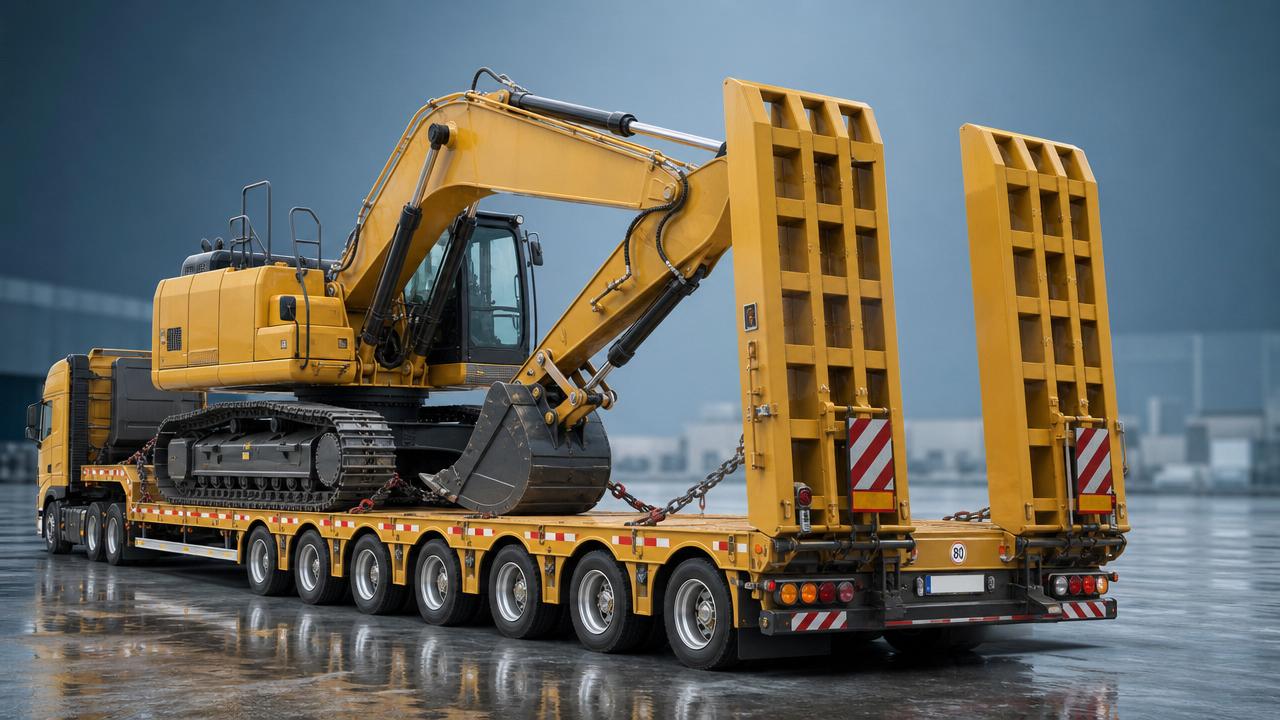
Choosing the right Low Plate trailer capacity is not just a transport detail—it directly affects safety, compliance, and project timelines. For quality control and safety managers, overlooking load limits, axle distribution, or equipment weight can trigger costly delays, damaged cargo, and operational risks. Understanding these common mistakes is essential to improving heavy equipment transport efficiency and avoiding preventable setbacks.
Why a checklist approach works better for Low Plate capacity decisions
For engineering vehicle transport, capacity errors rarely come from one obvious mistake. Delays usually happen because several small assumptions go unchecked: the machine’s operating weight is confused with shipping weight, the Low Plate deck is selected for total tonnage but not axle spacing, or the route is approved before height and bridge restrictions are reviewed. A checklist approach helps quality control personnel and safety managers verify the right points in the right order before loading begins.
This matters even more when moving excavators, rollers, loaders, bulldozers, or other heavy equipment. In these cases, the trailer may look suitable on paper, yet still become non-compliant in actual operation. Using a structured review process reduces guesswork, improves documentation quality, and protects both delivery schedules and equipment condition.
First checks: what must be confirmed before selecting a Low Plate trailer
Before discussing price, availability, or dispatch timing, the following points should be confirmed. These are the core decision items that determine whether a Low Plate trailer can carry the load safely and legally.
- Verify the actual transport weight, not only the manufacturer’s base specification. Attachments, fuel, counterweights, extra tools, tracks, and temporary modifications can significantly increase the real figure.
- Check axle load distribution of the equipment. A Low Plate trailer may support the gross weight but still fail because the load is concentrated over a limited contact area.
- Measure overall dimensions after loading configuration is finalized, including width, loaded height, boom position, bucket orientation, and removable accessories.
- Confirm deck length, deck height, gooseneck design, and ramp angle. Capacity is not only about tons; loading geometry affects stability and loading safety.
- Review destination route restrictions, including bridge limits, turning radius, road class, escort requirements, and local over-dimensional permit rules.
- Match the Low Plate trailer with the tractor head and legal combined gross vehicle weight requirements in the destination market.
Common Low Plate capacity mistakes that cause costly delays
1. Using nominal capacity as the only selection standard
One of the most common Low Plate mistakes is treating the trailer’s advertised tonnage as the final answer. A 60-ton or 80-ton rating does not automatically mean every 60-ton or 80-ton machine can be moved without issue. Real transport safety depends on how the weight is distributed across the trailer structure, suspension, tires, and axles. If the machine’s center of gravity sits too far forward or rearward, the transport plan may fail inspection or require reloading on site.
2. Ignoring attachment and operating-condition weight
Many delays begin with incomplete equipment data. Safety teams may receive a machine model number but not the exact transport configuration. For example, an excavator with a rock arm, ripper, heavy bucket, or reinforced undercarriage may exceed the expected Low Plate capacity range. If this is discovered only after the trailer arrives, the vehicle may need to be replaced, permits may need to be updated, and loading windows may be missed.
3. Failing to calculate axle-by-axle load impact
Quality control teams often focus on total loaded weight, while road authorities and transport engineers focus on axle loads. A Low Plate setup can be rejected even when the total weight is acceptable if one axle group is overloaded. This is especially risky with tracked equipment, compact but dense machinery, and machines with heavy rear counterweights.
4. Overlooking loaded height and route clearance
A Low Plate trailer is often chosen to reduce transport height, but low deck design alone does not guarantee compliance. Boom position, tire size, track shoes, and suspension height can still push the final loaded height above legal or route-specific limits. When height conflicts are found late, permits, escort plans, or alternative routes may be required, causing major delays.
5. Underestimating loading and unloading conditions
A trailer with correct Low Plate capacity may still be impractical if the loading angle is too steep, ground conditions are weak, or site access is too tight. This is a frequent issue in mining, infrastructure, and remote construction environments. The result can be equipment grounding, ramp damage, unsafe loading attempts, or the need to mobilize additional lifting support.
Low Plate evaluation checklist for quality and safety managers
The following checklist is useful before approving any heavy equipment transport plan involving a Low Plate trailer.
- Request full equipment data: model, serial number, transport weight, working weight, attachments, dimensions, and center-of-gravity notes.
- Confirm the trailer’s rated Low Plate capacity under actual operating conditions, not just in promotional material.
- Review axle layout, tire specifications, suspension type, and deck reinforcement details.
- Calculate load distribution on the deck and compare it with machine track or tire contact points.
- Check loaded height, overall width, and combined gross weight against route and permit requirements.
- Inspect ramp design, neck structure, lashing points, and anti-slip surfaces for loading safety.
- Verify tractor-trailer compatibility, including fifth wheel match, braking performance, and pulling capacity.
- Confirm whether escort vehicles, pilot cars, temporary disassembly, or escort permits are required.
- Review pre-shipment photos or conduct a live loading assessment when the cargo is complex or high value.
- Document the approved loading plan and communicate it clearly to dispatch, drivers, and site supervisors.
How requirements change by equipment type and transport scenario
Not every engineering vehicle creates the same Low Plate risk profile. Safety managers should adjust their review based on the type of cargo and the route environment.
Tracked machinery
Tracked excavators and bulldozers place concentrated force on the deck. This makes deck strength, contact surface reinforcement, and axle distribution more important than the nominal Low Plate capacity alone. Operators should also confirm whether track pads or protection are needed to prevent deck damage.
Wheel-based equipment
Wheel loaders, graders, and mobile cranes introduce different concerns, such as tire pressure, wheelbase fit, and securing points. Here, the Low Plate trailer must support both weight and stable positioning to avoid movement during braking or cornering.
Cross-border or export transport
For export projects, capacity planning should include destination regulations, port handling needs, and inland road restrictions. A Low Plate configuration that works in one country may not be legal or practical in another. Early coordination with an experienced exporter helps avoid rework in customs, inland delivery, or final site transfer.
Risk reminders that are often missed during approval
Practical execution advice to prevent delays
If your team regularly arranges engineering vehicle transport, build a standard approval workflow around Low Plate selection. First, require a single verified data sheet for every machine to be moved. Second, assign responsibility for weight confirmation, dimension review, and route compliance to named roles rather than leaving them as shared assumptions. Third, keep a record of previous transport deviations, such as overloaded axle findings, difficult loading angles, or permit delays, and use that information to improve the next review.
It is also wise to work with suppliers and exporters that understand commercial vehicle and heavy equipment logistics in real operating conditions. A capable partner can provide more than a trailer quote. They can help evaluate Low Plate capacity, recommend suitable axle configurations, confirm inventory and delivery timing, and support documentation for domestic and overseas movement.
FAQ: quick answers on Low Plate capacity control
Is total weight enough to choose a Low Plate trailer?
No. Total weight is only the starting point. You must also review axle load distribution, deck strength, dimensions, center of gravity, and route restrictions.
Why do delays happen even when the trailer capacity seems correct?
Because a correct nominal Low Plate capacity does not guarantee legal axle loads, safe loading geometry, or route compliance. Most delays come from incomplete pre-checks rather than from one obvious overload.
Who should approve the final transport plan?
For high-value or heavy engineering equipment, the final approval should involve operations, quality control, safety management, and the transport provider. Shared review reduces the chance of missing a critical detail.
Next step: what to prepare before asking for a Low Plate solution
If you need to confirm trailer suitability, transport timing, or export support, prepare these details first: exact equipment model, real shipping weight, dimensions after loading configuration, loading and unloading site conditions, route or destination country, required delivery timeline, and any compliance constraints already identified. With these inputs, a professional supplier can recommend a more accurate Low Plate solution and reduce the risk of costly changes later.
Shandong Livol Truck International Trade Co., Ltd. supports global customers with commercial vehicle supply, engineering transport matching, and full-process export coordination. For teams responsible for quality, safety, and schedule control, early technical communication is the most effective way to prevent Low Plate capacity mistakes before they become operational delays.
Search Starts Here