
News
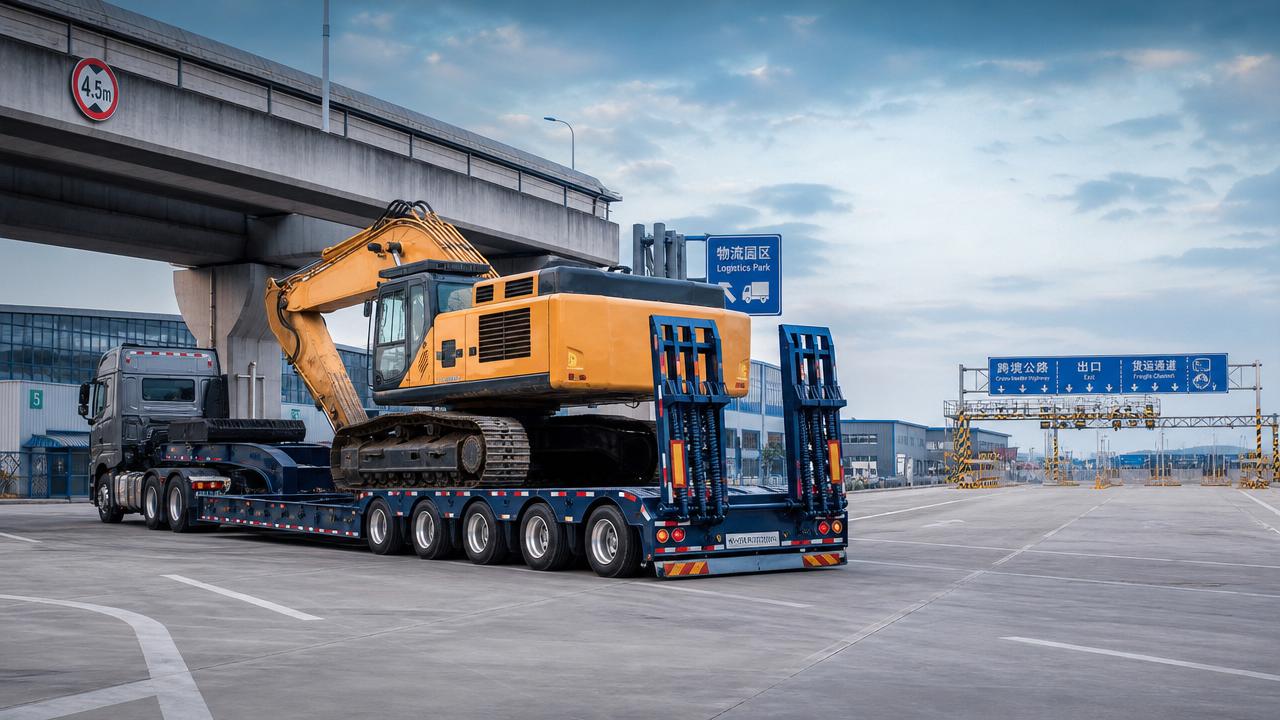
Choosing the right Low Plate trailer is not just about price. It affects transport safety, payload efficiency, route flexibility, and compliance cost across heavy equipment projects.
For engineering vehicle transport, deck height, rated capacity, axle layout, and permit exposure must be judged together. A lower quote can create higher operating risk later.
This guide explains how different transport scenarios change the best Low Plate choice. It also highlights practical buying checks that improve utilization and reduce unexpected restrictions.
When does a Low Plate trailer create more value?
A Low Plate trailer brings the most value when cargo height is close to road limits. Lower deck design protects route access and reduces escort or permit complications.
It is also useful when equipment is heavy but has uneven weight concentration. Excavators, rollers, pavers, and transformers often need better load distribution than standard flatbeds offer.
Another high-value scenario is mixed regional delivery. Different provinces or countries may apply different bridge, axle, or total height restrictions. A lower platform improves adaptability.
Typical signs that standard trailers are no longer enough
- Frequent route changes caused by overhead clearance limits
- Repeated permit applications for height rather than weight
- Poor loading angle for tracked or low-ground-clearance equipment
- Axle overload risk despite acceptable total gross weight
Scenario 1: Urban and regional transport with strict height control
Urban corridors often have flyovers, toll structures, signs, and utility lines. In this setting, Low Plate deck height becomes a route access tool, not just a structural feature.
A few centimeters can decide whether a machine moves directly or needs a longer bypass route. That difference changes fuel use, delivery timing, and permit review complexity.
Core judgment points
- Loaded overall height versus local road limit
- Neck design and ground clearance at ramps
- Suspension type and height stability under load
- Ramp angle for wheeled and tracked units
For this scenario, the best Low Plate is not always the lowest possible deck. It must still clear uneven roads, temporary construction surfaces, and depot entrances safely.
Scenario 2: Heavy construction equipment with concentrated axle loads
Large excavators, drilling rigs, and compact crushers create concentrated loading. Here, Low Plate capacity must be judged by axle distribution, not headline tonnage alone.
Some trailers advertise strong total capacity, yet their deck structure, gooseneck strength, or axle spacing may not suit concentrated machine footprints.
What to verify before buying
- Payload rating under real center-of-gravity conditions
- Main beam material, web thickness, and reinforcement areas
- Number of axles and equalization performance
- Kingpin load transfer to the tractor
- Tie-down points matched to machine dimensions
In this use case, a stronger Low Plate can reduce frame fatigue, tire wear, and braking instability. That improves lifecycle value far beyond initial purchase price.
Scenario 3: Cross-border or long-distance haulage with permit uncertainty
Permit risk rises when a shipment crosses several jurisdictions. Each area may treat axle count, width, height, and escort conditions differently.
In this scenario, a Low Plate must support legal flexibility. A practical configuration can avoid re-routing, transloading, or long inspection delays at checkpoints.
Permit-related buying checks
- Typical legal height in target markets
- Axle group rules and bridge formula requirements
- Steering axle needs for long wheelbase combinations
- Detachable neck benefits for loading and inspection
A permit-friendly Low Plate often creates lower total cost than a larger trailer that stays idle during document review or route approval delays.
How deck height, capacity, and permit risks change by scenario
How to match a Low Plate configuration to real transport needs
A useful buying process starts with cargo data, not trailer brochures. Measure equipment length, operating weight, transport weight, track width, and highest loaded point.
Then compare those dimensions with route restrictions and loading conditions. Depot entrances, site gradients, and road surfaces matter as much as legal limits.
Practical selection steps
- List the top five machines or loads to be transported most often.
- Record loaded height and axle pressure for each item.
- Check target routes for height, bridge, and turning limits.
- Choose axle count and deck length from real loading patterns.
- Confirm permit requirements before finalizing specification.
This method helps identify whether a standard Low Plate, a detachable gooseneck design, or a multi-axle heavy-duty version fits best.
Common buying mistakes that increase operating risk
One common mistake is judging capacity by maximum tonnage only. Real transport depends on weight position, axle spread, and dynamic stress during braking or cornering.
Another mistake is choosing the lowest possible deck without checking ground clearance. A Low Plate that scrapes on ramps or rough roads loses practical value quickly.
Permit risk is also underestimated. A trailer may be technically capable, yet commercially inefficient if common routes require repeated approvals, escort vehicles, or travel-time restrictions.
Frequently overlooked details
- Tire specification versus actual axle loading
- Brake performance on long downhill sections
- Availability of spare parts in destination markets
- Compatibility with tractor fifth-wheel height
- Export documentation for different countries
Why supplier capability matters as much as the Low Plate itself
A reliable exporter can improve the value of any Low Plate purchase. Technical advice, inventory support, and complete documents reduce avoidable delays and mismatch risk.
Shandong Livol Truck International Trade Co., Ltd. is based in Shandong, China, with strong commercial vehicle export experience and stable multi-brand supply capability.
As an authorized dealer for FOTON, SHACMAN, and SINOTRUK, the company operates authorized 4S stores across China and maintains sufficient inventory for fast delivery.
Its professional export team supports vehicle selection, customization, documentation, customs clearance, logistics coordination, and after-sales service for global projects.
Next step: evaluate Low Plate options with route and cargo data first
The best Low Plate decision comes from matching cargo dimensions, true operating weight, route rules, and loading conditions into one practical specification.
If transport plans involve engineering vehicles, heavy equipment, or cross-region deliveries, prepare machine data and intended routes before requesting quotes.
With accurate inputs, it becomes easier to compare deck height, capacity, and permit risks objectively, and select a Low Plate that delivers long-term operating value.
Search Starts Here