
News
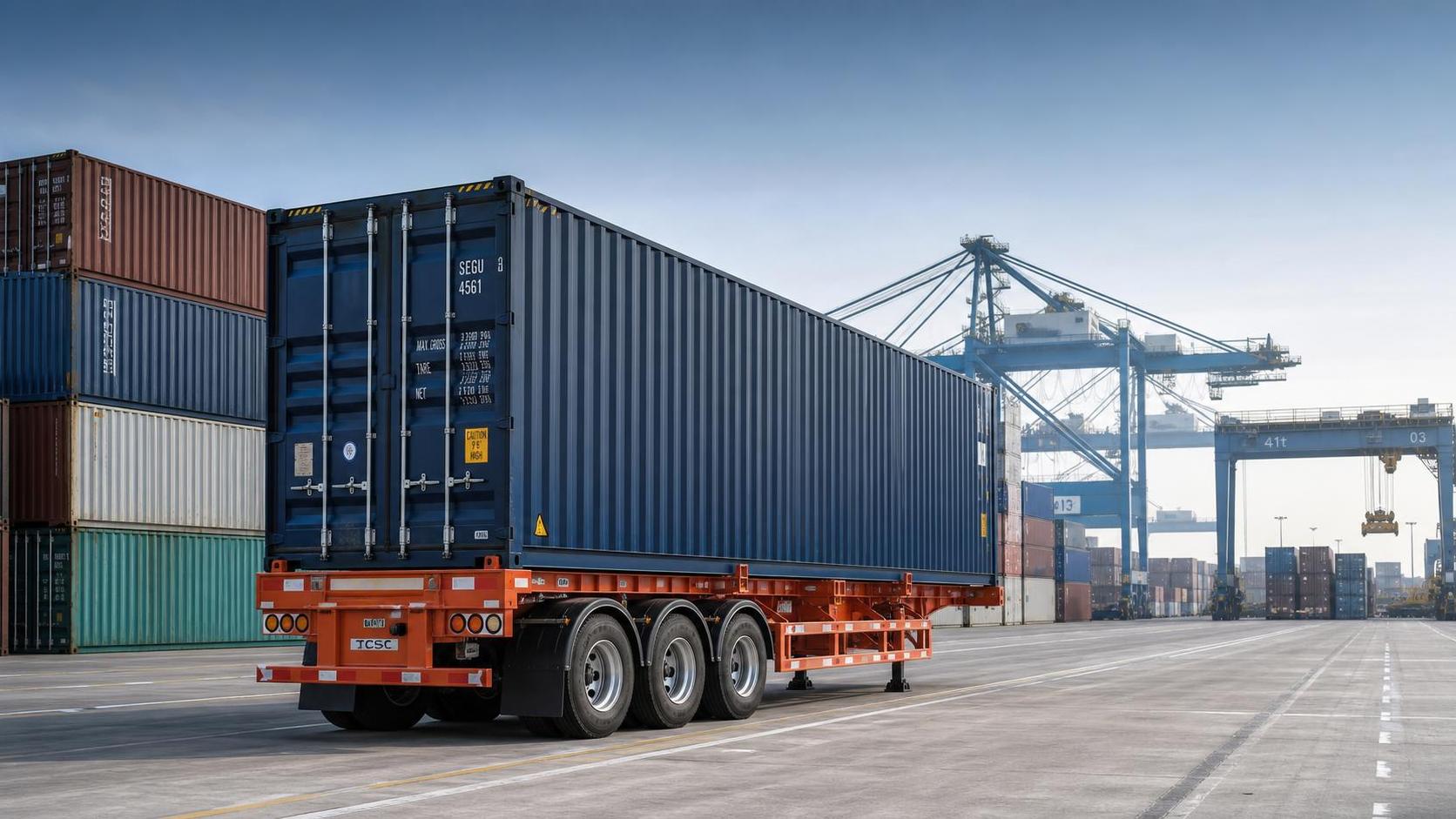
What matters most when choosing a Skeleton (Container) Semi-Trailer?
A Skeleton (Container) Semi-Trailer looks simple, but the buying decision rarely is.
In port and yard transport, daily work is repetitive, heavy, and unforgiving.
The wrong trailer can create loading delays, frame fatigue, tire wear, and unnecessary maintenance costs.
The right one supports stable container handling, safer movement, and better operating economics over years, not months.
In practical terms, selection usually comes down to five linked questions.
Can it match your container mix, axle demand, road condition, loading rhythm, and support requirements?
That is why a Skeleton (Container) Semi-Trailer should be judged as a working asset, not only a quoted price.
A reliable exporter with stable supply and documentation capability also matters.
For international projects, lead time, customs paperwork, spare parts, and after-sales response affect the true purchase value.
Is every Skeleton (Container) Semi-Trailer suitable for port and yard use?
Not necessarily. Many trailers are built for container transport, but not all are optimized for short-distance, high-frequency port cycles.
Port and yard transport usually means frequent stops, uneven surfaces, tight turns, and repeated loading stress.
Under these conditions, structural rigidity and running gear durability become more important than appearance or light initial weight.
A suitable Skeleton (Container) Semi-Trailer should match common container sizes, typically 20ft, 40ft, or mixed configurations.
Twist locks must align accurately, and the frame must keep containers stable during turning and braking.
It also helps to confirm whether operations are fully inside terminals or include public road sections.
If public roads are involved, local compliance, axle loading rules, lighting, braking, and reflective markings should be checked early.
More often, the best specification is the one that fits the route profile, not the one with the longest options list.
A quick way to judge suitability
This kind of screening keeps the purchase focused on actual operating conditions.
How do axle layout and frame structure affect the buying decision?
This is usually the technical core of the selection process.
Axle layout influences payload distribution, turning behavior, tire consumption, and maintenance frequency.
Frame structure decides how well the Skeleton (Container) Semi-Trailer resists bending, torsion, and repeated impact loading.
For intensive port service, two-axle and three-axle configurations are the most common.
A two-axle trailer may offer lower tare weight and easier maneuvering.
A three-axle layout often provides stronger load distribution and better tolerance for heavier operating demands.
The choice depends on legal load limits, container weight profile, and route condition.
Frame material and beam design need equal attention.
A stronger main beam, quality welding, and reinforced stress points help reduce cracking risk over time.
In actual applications, the rear section, gooseneck area, and lock mounting zones deserve special inspection.
- Check axle brand, brake chamber specification, and bearing quality.
- Ask for steel grade, beam thickness, and reinforcement details.
- Confirm suspension type for rough yard conditions or smoother terminal lanes.
- Review welding consistency, not only brochure drawings.
A lower price can disappear quickly if axle repairs and frame distortion start early.
What container compatibility details are often missed before ordering?
Compatibility issues are easy to underestimate because the trailer seems standardized.
However, a Skeleton (Container) Semi-Trailer should be matched carefully to loading patterns and container handling equipment.
The first point is lock arrangement.
If the trailer needs to carry one 40ft container and two 20ft containers, lock positions must support both safely.
The second point is deck height and operational clearance.
Some yards work with fixed loading habits, cranes, or reach stackers that favor certain trailer heights.
The third point is rear structure and landing gear durability.
Frequent trailer parking, repositioning, and hook-up cycles put pressure on these components.
A useful comparison is below.
Small mismatches here usually become daily operating frustrations.
How should cost be evaluated beyond the initial quote?
A Skeleton (Container) Semi-Trailer should be compared by life-cycle cost, not just purchase price.
That means balancing acquisition cost against maintenance, downtime, tire replacement, parts access, and expected service life.
For example, a lower-cost trailer may use lighter components that wear faster under port duty.
If that leads to repeated brake issues or suspension repairs, savings disappear quickly.
Delivery reliability also belongs in the cost discussion.
A delayed unit can affect fleet planning, yard contracts, and shipping schedules.
That is one reason buyers often prefer suppliers with real inventory, stable factory links, and export experience.
Shandong Livol Truck International Trade Co., Ltd. operates with authorized brand resources, vehicle stock, and export support capabilities.
That kind of background can reduce uncertainty in documentation, logistics coordination, and delivery timing.
When comparing offers, it helps to list all cost drivers in advance.
- Base trailer price and specification clarity
- Lead time and shipping arrangement
- Spare parts availability and replacement cycle
- Warranty scope and after-sales response
- Expected operating life under actual yard conditions
This creates a more realistic financial comparison than quoting alone.
Which supplier checks help avoid common procurement mistakes?
Many buying mistakes do not come from the trailer design itself.
They come from incomplete technical confirmation, weak export coordination, or unclear after-sales arrangements.
One common mistake is approving a Skeleton (Container) Semi-Trailer using only photos and a basic parameter sheet.
A better approach is to verify drawings, major component brands, steel details, lock layout, and compliance documents.
Another common issue is underestimating export execution.
For cross-border orders, documentation accuracy, customs handling, and shipment planning are part of product reliability.
A supplier with a professional export team can make the process far smoother.
Shandong Livol Truck International Trade Co., Ltd. combines commercial vehicle export experience with vehicle selection, customization, customs clearance, and logistics support.
That matters when projects require more than a standard shipment.
A practical pre-order checklist
- Request a full specification sheet with dimensions and axle ratings.
- Confirm container types, route conditions, and legal load assumptions.
- Review weld quality photos or inspection records.
- Check spare parts support for suspension, brakes, locks, and landing gear.
- Clarify delivery time, export documents, and after-sales contact process.
These checks are simple, but they prevent expensive misunderstandings later.
So, what does a sound buying decision actually look like?
A sound decision is rarely the cheapest option and rarely the most complex one.
It is the Skeleton (Container) Semi-Trailer that fits container handling patterns, legal limits, surface conditions, and maintenance capacity.
The best results usually come from narrowing the decision to a few measurable points.
Focus on axle layout, frame strength, compatibility, support scope, and long-term operating cost.
If the supplier can also provide stable inventory, customization, export documentation, and after-sales coordination, the risk level drops further.
The next useful step is to organize your route data, container mix, and local compliance requirements.
Then compare two or three Skeleton (Container) Semi-Trailer configurations against those conditions in a structured way.
That process usually leads to a more durable, cost-effective, and operationally stable choice.
Search Starts Here