
News
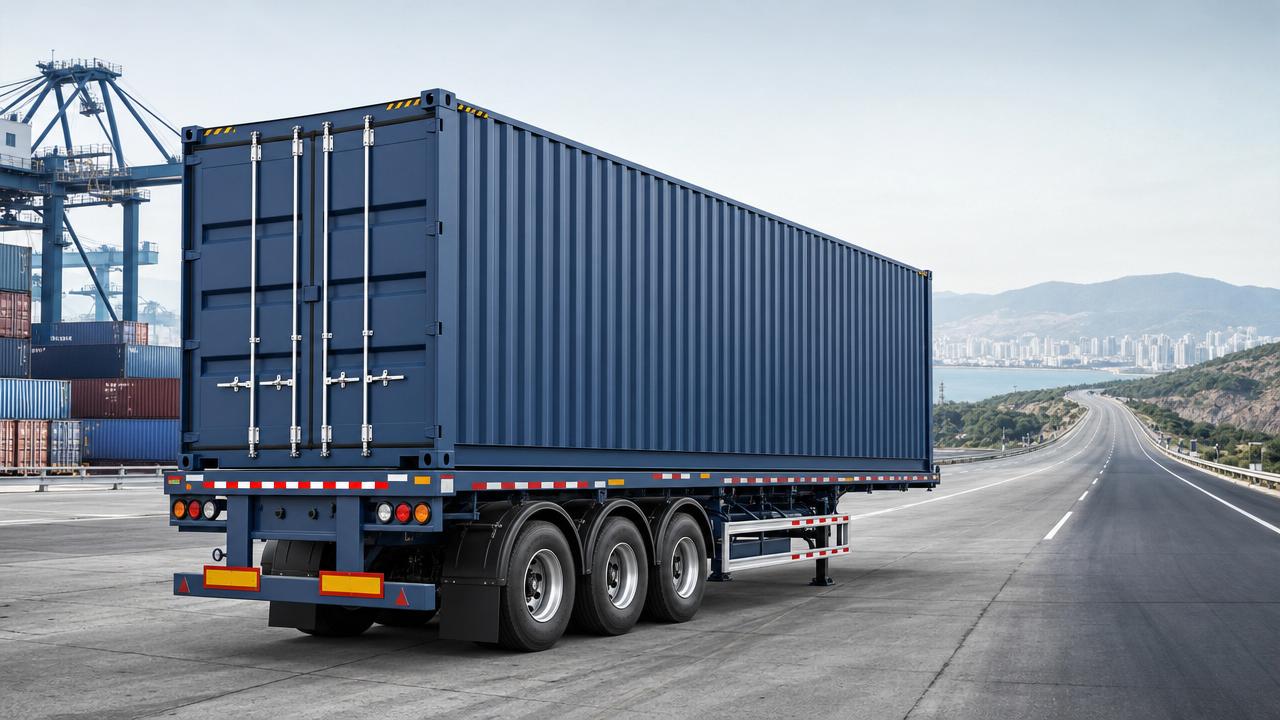
Choosing the right Skeleton (Container) Semi-Trailer for port and inland transport is mainly a procurement decision about fit, uptime and total cost. For most buyers, the best option is not simply the lowest-price trailer, but the model that matches your container mix, axle load, road conditions, terminal handling process and maintenance capability. A well-selected trailer improves turnaround efficiency, reduces tire and chassis wear, lowers compliance risk and supports more predictable long-term operating cost.
For procurement teams, the core search intent behind this topic is practical: how to evaluate and compare skeleton container semi-trailers before purchase, and how to avoid buying a trailer that looks acceptable on paper but performs poorly in real operating conditions. Buyers want clear selection criteria, not generic product descriptions.
In this guide, we focus on the issues that matter most in real purchasing decisions: container compatibility, structure strength, suspension and axle selection, twist lock layout, tare weight, road adaptability, maintenance convenience, compliance and supplier support. These are the factors that most directly affect fleet efficiency in port and inland transport.
What Procurement Teams Really Need to Decide First
Before comparing brands or quotations, buyers should define the actual transport task. A skeleton trailer used mainly inside or near a port often faces different requirements than one running long inland routes. Port-focused operations usually prioritize fast loading and unloading, frequent short-distance cycles and compatibility with multiple container sizes. Inland transport often places greater emphasis on frame durability, suspension reliability, braking stability and lower maintenance cost over long distances.
The most important first step is to clarify your operating profile in measurable terms. Ask: what percentage of loads are 20ft, 40ft or 45ft containers? Are they mostly empty or heavy? What are the typical road surfaces after leaving the terminal? How many trips are expected per day? Are legal axle load limits strict in your market? The answers determine whether you need a lighter trailer, a stronger heavy-duty structure or a more versatile multi-container configuration.
If this basic planning is skipped, procurement teams often end up choosing a trailer based only on price or broad specifications. That can lead to underperforming equipment, frequent repair stops, poor tire life, unstable loading performance or restrictions on the types of containers that can be carried efficiently.
Container Types and Locking Configuration Should Guide the Purchase
A Skeleton (Container) Semi-Trailer must first match the container types used in daily operations. This sounds obvious, but it is one of the most common sources of mismatch. Not every trailer is equally practical for 20ft, 40ft, 45ft or mixed container transport, and not every locking arrangement supports fast, safe switching between container sizes.
Procurement teams should carefully check the twist lock layout and whether the trailer supports the exact container combinations required. Some operators mainly carry one 40ft container per trip. Others need flexibility for one 20ft, one 40ft or two 20ft containers depending on dispatch needs. If the fleet serves multiple customers, flexible locking positions can bring real commercial value by improving load adaptability.
It is also important to verify the locking mechanism quality, not just the layout. Twist locks should be durable, easy to operate and resistant to repeated use in harsh port environments. Poor-quality locking devices can slow loading operations, increase labor frustration and create safety risk if containers are not secured properly.
For procurement planning, it helps to divide needs into three categories: standardized single-size transport, mixed-container flexibility and heavy-load specialization. The more flexible the operating requirement, the more important the trailer’s structural design and locking arrangement become.
Frame Strength Matters More Than Impressive Brochure Numbers
The chassis frame is the core of trailer durability. In port and inland transport, skeleton trailers repeatedly absorb concentrated container loads, terminal handling impact, uneven road stress and braking force. This means buyers should look beyond headline payload figures and evaluate how the frame is designed, reinforced and manufactured.
Key questions include the type and grade of steel used, main beam dimensions, cross-member arrangement, welding quality and reinforcement in high-stress zones such as gooseneck areas, lock positions and suspension mounting points. A trailer that is too lightly built may offer an attractive tare weight, but if it lacks sufficient structural strength, long-term cracking, deformation and alignment issues can become expensive.
At the same time, heavier is not automatically better. An unnecessarily heavy trailer can reduce payload efficiency and raise fuel consumption. The right decision is a balanced structure that offers enough strength for your container weight and road conditions without creating avoidable dead weight.
For buyers, a useful evaluation method is to request technical drawings, material specifications and details on stress-prone areas rather than relying only on a general product catalog. Practical durability comes from design quality and manufacturing consistency, not from marketing language.
Suspension, Axles and Tires Directly Affect Operating Cost
Many procurement teams focus first on purchase price, but for a skeleton container semi-trailer, the configuration of suspension, axles and tires often has a larger impact on life-cycle cost. These components influence ride stability, cargo safety, braking performance, tire wear, downtime and maintenance frequency.
For smoother paved routes with stable loading patterns, standard mechanical suspension may be a cost-effective choice. For more demanding inland roads or operations carrying heavier loads, stronger suspension systems may deliver better durability and reduce structural stress on the chassis. Procurement should align suspension choice with route quality, average payload and maintenance conditions.
Axle brand, rated capacity and service network are equally important. Reliable axles support better uptime and simpler parts replacement. If your operation runs across multiple regions, local parts availability should be treated as a purchasing priority. A lower initial trailer price can quickly lose its advantage if axle or brake parts are difficult to source.
Tire selection should also be viewed strategically. Container transport often involves heavy concentrated loads, turning stress within yards and frequent stop-start operation. Tire specification, brand quality and axle matching affect fuel economy and replacement cycles. Procurement teams should evaluate not only what tire size is offered, but whether the tire setup is suitable for the real duty cycle.
Port Operations Need Efficiency, While Inland Routes Need Endurance
The same trailer may perform differently depending on where most of the work happens. In port operations, fast turnaround often matters most. Drivers and terminal teams benefit from designs that allow efficient alignment, secure locking and smooth container handling. Simplicity and operational speed can improve utilization when trailers make multiple short trips per day.
For inland transport, especially over mixed road conditions, endurance becomes more important. Frame fatigue resistance, suspension resilience, brake performance and component standardization all influence uptime. Procurement teams should therefore avoid using a purely port-based specification for inland-heavy transport tasks.
One practical approach is to classify trailers by route category: terminal shuttle, regional distribution and long-haul inland movement. Each category can justify a different balance between tare weight, structural reinforcement and component specification. This approach helps buyers avoid overpaying for unnecessary features or underbuying for hard-use routes.
If your fleet must handle both port and inland scenarios, the best solution is usually a versatile medium-to-heavy-duty specification with proven container compatibility and maintainable running gear. This may not be the cheapest option, but it often delivers the best overall value across mixed operating conditions.
Do Not Ignore Tare Weight, But Evaluate It in Context
Tare weight is important because it affects payload efficiency and sometimes regulatory compliance. A lighter Skeleton (Container) Semi-Trailer can allow higher legal cargo weight or improved fuel economy. However, tare weight should never be considered in isolation.
Some buyers overemphasize low weight and later face frame fatigue, deformation or unstable performance on rough inland roads. Others choose very heavy trailers for peace of mind but sacrifice transport efficiency. The correct procurement logic is to compare tare weight together with steel grade, reinforcement design, payload requirement and route condition.
Ask suppliers how the trailer achieves its weight target. Is weight reduction the result of better material engineering and optimized design, or simply less reinforcement? The answer matters. A smart lightweight design can be beneficial. An underbuilt frame can become a long-term liability.
For procurement evaluation, the most useful question is not “Which trailer is lightest?” but “Which trailer gives us the best durability-to-weight ratio for our actual operations?”
Check Compliance, Dimensions and Local Transport Rules Early
One of the most expensive purchasing mistakes is selecting a trailer that creates compliance issues after arrival. Skeleton trailers used in international trade must fit the destination market’s legal requirements for overall dimensions, axle spacing, gross vehicle weight, braking standards, lighting configuration and reflective markings.
Procurement teams should confirm local regulations before final specification approval. This is especially important if the trailer will be used in regions with strict roadworthiness inspection or axle load enforcement. A technically strong trailer is still a poor purchase if it cannot operate legally or requires costly modification after delivery.
Documentation is also part of compliance. Buyers should confirm which certificates, inspection records and export documents the supplier can provide. For overseas procurement, smooth customs clearance and local registration often depend on complete and accurate paperwork.
This is where working with an experienced commercial vehicle exporter can reduce risk. A supplier with established export processes can help align technical configuration with destination-market requirements before production and shipment.
Maintenance Access and Spare Parts Support Are Procurement Priorities
For a purchasing team, the real value of a trailer is measured over years of use, not on delivery day. That is why maintenance access and spare parts support deserve much more attention during supplier evaluation. A well-designed trailer should allow routine inspection, brake servicing, lock maintenance and parts replacement without excessive labor time.
Standardized components are often advantageous, especially for fleets operating in multiple countries or remote inland areas. If a trailer uses uncommon parts that are difficult to replace, downtime can increase sharply. Procurement should ask in advance about the availability of brake components, suspension parts, wheel-end parts, electrical items and twist lock replacements.
After-sales support should also be reviewed in concrete terms. Does the supplier offer technical guidance, parts support and response processes for quality issues? Can they support repeat orders with specification consistency? A trailer purchase is rarely a one-time transaction for fleet operators, so long-term supplier reliability matters.
Shandong Livol Truck International Trade Co., Ltd. brings value here through professional export service, stable supply capability and full-process support including model selection, customization, documentation, customs clearance and logistics coordination. For procurement buyers, this kind of support can help reduce transaction friction and improve purchasing confidence.
How to Compare Suppliers Beyond Unit Price
When multiple quotations appear similar, buyers should move beyond the ex-factory price and compare total procurement value. This means reviewing product configuration, manufacturing quality, delivery lead time, export experience, packaging quality, documentation accuracy and after-sales responsiveness.
A useful procurement scorecard may include these factors: container compatibility, frame structure, suspension and axle specification, brake system, tare weight, local compliance, warranty terms, lead time, spare parts support and supplier communication efficiency. This approach makes comparison more objective and reduces the risk of choosing a low-priced but unsuitable trailer.
Factory capability is another important signal. Suppliers with stable production resources, quality control discipline and established commercial vehicle experience are generally better positioned to deliver consistent trailers for repeat fleet orders. Buyers should ask for production photos, quality inspection procedures and reference cases where possible.
For international buyers, communication quality is also part of product quality. Delays, vague specification confirmation or incomplete technical replies during the quotation stage often indicate future delivery or support risks.
A Practical Procurement Checklist for Final Selection
Before placing an order, procurement teams should confirm a final checklist. First, define the operating scenario clearly: port shuttle, mixed use or inland long-haul. Second, verify container size requirements and locking configuration. Third, confirm payload expectations and route conditions. Fourth, match these needs to frame strength, suspension type, axle capacity and tire specification.
Next, review tare weight together with structural design. Then confirm legal dimensions and local compliance requirements. After that, assess maintenance convenience, parts availability and after-sales support. Finally, compare supplier reliability, delivery capability and export service quality.
This checklist helps buyers avoid making a decision based only on headline specifications or price competition. In most cases, the best trailer is the one that fits your operating model with the lowest risk and most predictable long-term cost.
Conclusion: Choose for Real Operations, Not Just for the Quotation Sheet
The right Skeleton (Container) Semi-Trailer for port and inland transport is the one that aligns with your container mix, route conditions, compliance environment and maintenance resources. Procurement teams should prioritize practical compatibility, structural durability, efficient loading performance and supplier support over simple price comparison.
If your operation depends on stable fleet utilization and predictable transport cost, a careful evaluation process will produce better results than chasing the cheapest offer. By focusing on frame quality, locking flexibility, running gear reliability, regulatory fit and after-sales capability, buyers can select a trailer that supports both operational efficiency and long-term return on investment.
For companies sourcing from China, working with an experienced exporter such as Shandong Livol Truck International Trade Co., Ltd. can help simplify model selection, customization, documentation and delivery, while reducing the risks that often arise in cross-border commercial vehicle procurement. In trailer purchasing, the best decision is usually the one that performs reliably long after the quotation has been forgotten.
Search Starts Here