
News
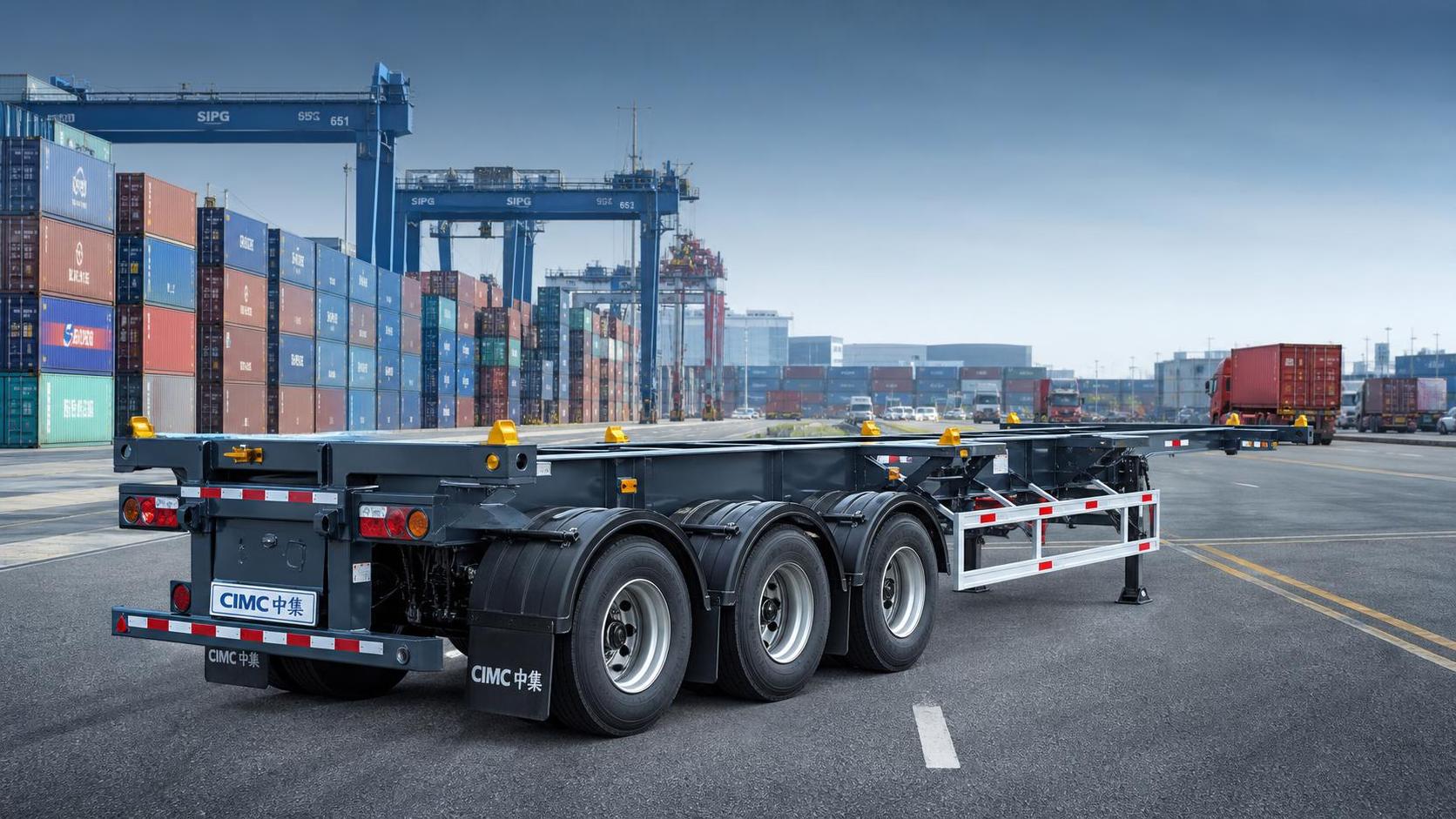
Start with the route, not the trailer brochure
A Skeleton (Container) Semi-Trailer can look simple on paper, but port and inland work put very different kinds of stress on the same frame. Procurement teams usually get into trouble when they compare trailers by price, axle count, or a few headline dimensions before they map the real operating pattern. The better approach is to begin with the job: what containers you move, where they are picked up, how often they change hands, what road surface they see after leaving the terminal, and how your tractors are already configured.
That first step sounds basic, but it decides almost everything that follows. A trailer working short loops inside or near a port may prioritize quick loading cycles, maneuverability, and resistance to repeated curb strikes. A unit running longer inland routes has a different profile: higher average speed, more time on uneven roads, more wear on suspension and tires, and a much bigger fuel and maintenance cost penalty if the wrong specification is chosen. If you want a smarter buying decision, build your checklist around use conditions and total operating cost, not just purchase price.
Check container types before you compare chassis layouts
The first hard question is simple: what container lengths will this trailer actually carry? In many fleets, the answer is not one size. You may need to move 20ft containers on one shift, then 40ft or 45ft work on another lane. A trailer that matches only your most common box can create dispatch friction every time cargo mix changes.
When you review a Skeleton (Container) Semi-Trailer, verify these points in order:
- Supported container lengths and whether the chassis is fixed-length, extendable, or optimized for one main size.
- Twist lock arrangement and whether the locking positions match your container mix without adapters or workarounds.
- How container positioning affects axle load distribution when carrying different box lengths.
- Whether the trailer will handle empty and loaded containers with equal stability.
A common buying mistake is assuming “multi-size compatible” always means operationally efficient. Sometimes it does. Sometimes it adds complexity, extra dead weight, or more maintenance points than a dedicated route really needs. If 90 percent of your work is one container length on a stable route, a simpler chassis may be the better asset.
Match payload demand to local road reality
This is where many purchasing discussions become too theoretical. The trailer may be structurally capable of carrying heavy containerized cargo, but your working limit is shaped by the road, the axle configuration, the tractor pairing, and the legal load framework in the destination market. Those four items need to be reviewed together.
For port haulage, repeated stop-start cycles and yard impacts punish the frame differently than steady highway work. For inland lanes, rough pavement, shoulders, and loading ramps may matter more than terminal turnaround speed. So instead of asking only, “What is the maximum payload?” ask these operational questions:
- What is the heaviest cargo profile you expect inside the container, not just the nominal container type?
- Are the roads mostly paved highway, mixed regional roads, port surfaces, or damaged secondary roads?
- Will the trailer frequently enter warehouses, depots, ramps, and construction-adjacent sites where ground clearance and chassis strength matter more?
- Does your target market control axle loading by regulation, weighbridge practice, or route restrictions?
If the answer to the last point is yes, the documents you need to check are the local vehicle registration requirements, axle load rules, and any route-specific transport restrictions used by the market where the trailer will operate. This is not a paperwork exercise at the end. It affects your specification from day one.
Axle count is only useful when it solves a real operating problem
Buyers often jump straight to two-axle versus three-axle comparisons because it feels like the main decision point. It is important, but only in context. More axles can help distribute load and suit certain legal or operational requirements. They also add tires, braking components, suspension parts, and maintenance exposure.
A practical rule for procurement is this: choose the axle setup that supports your expected load profile and compliance needs without adding unused complexity. If your operation is mostly lighter container flows near port areas, over-specifying the running gear can push up lifetime cost without giving much return. If your routes are longer, heavier, or more demanding, under-specifying becomes expensive later through tire wear, frame stress, downtime, and poor residual condition.
Pay close attention to the frame and high-stress points
On a Skeleton (Container) Semi-Trailer, the frame does most of the real work. This is not where you want vague answers. Ask for clear information on the main beam structure, cross-member design, reinforcement at the gooseneck and rear section, and the areas around twist locks and landing gear mounts. These are the zones that tend to show fatigue first when a trailer is mismatched to its workload.
What you are looking for is not marketing language. You want evidence that the structure fits the route profile. If the trailer will see rough terminals, repeated docking, or inland roads with frequent shocks, frame rigidity and weld quality move up the priority list fast. Lightweight design has value, but not if it creates a repair problem two years in.
One useful procurement habit is to ask the supplier to walk through the wear points that are expected in your use case and the usual service response for each. A serious exporter or dealer should be able to discuss this in operational terms, not just send a specification sheet.
Do not treat suspension as a secondary item
Suspension choice often gets pushed down the list, then becomes the source of complaints later. The right setup depends on road condition, average load, maintenance capability, and how much downtime your fleet can absorb. For smoother, predictable routes, one solution may be entirely adequate. For mixed road quality and harder working conditions, a more robust suspension choice may reduce long-term operating pain even if the initial cost is higher.
When comparing options, focus on serviceability as much as comfort or ride behavior. Ask how easy it is to source replacement parts in your market, how often the key components are typically inspected, and whether your workshop already supports that suspension type. A trailer that is technically suitable but hard to keep in service is not a good buying decision.
Brakes, tires, and electricals decide uptime more than buyers admit
These components are less glamorous than frame design, but they drive daily reliability. For port and inland haulage, frequent stopping, queueing, and mixed-speed travel mean your braking system must be easy to maintain and compatible with the tractor fleet. Electrical connectors and lighting also matter more than they seem, especially where trailers are coupled and uncoupled often.
This is also the point where standardization starts paying off. If your current fleet already uses certain tire sizes, brake parts, or connectors, matching them where practical can simplify inventory and reduce service delays.
Look at tractor compatibility before placing the order
A well-specified trailer can still become a poor asset if it does not match the tractors that will pull it. Fifth wheel height, kingpin configuration, air and electrical connections, turning clearance, and weight distribution all need to align. This is especially important in mixed fleets where tractors may come from different brands or model families.
Buyers sometimes leave this to operations after purchase. That is backwards. The procurement file should already include the intended tractor models, connection standards, and any dimensional limits that affect coupling or turning. If your fleet includes FOTON, SHACMAN, SINOTRUK, or other mainstream commercial vehicles, compatibility review should be done at the exact tractor model level rather than by brand alone.
Think through loading efficiency and yard handling
Port work is not only about carrying capacity. Time lost in queueing, positioning, locking, and repositioning containers adds up quickly. A trailer that is slightly cheaper but awkward in yard operations can cost more in labor and turnaround. Ask the operations team where delays usually happen: container alignment, lock access, reversing in tight spaces, or trailer stability during loading. Then review the trailer against those actual friction points.
This is also where extendable or multi-purpose designs need a hard look. Flexibility is useful when dispatch changes often. It is less attractive when the mechanism adds setup time or maintenance burden in a high-cycle environment.
Check after-sales support as part of the technical spec
For export procurement, service support is not separate from product selection. A trailer is only as good as your ability to keep it working. Before you approve a supplier, review what support is available for spare parts, technical documents, warranty handling, and shipment coordination. A supplier with organized export experience can reduce delays in documentation, customs handling, and replacement parts flow, which matters when equipment is tied to active contracts.
The useful questions here are concrete:
- Which spare parts are recommended for the first stocking package?
- What technical documents are supplied with the trailer for registration, service, and parts identification?
- Who handles export paperwork and logistics coordination?
- How are after-sales issues documented and processed across borders?
These points are especially relevant when buying from an exporter rather than a local fabricator. The stronger the process support, the lower the chance of post-delivery friction.
Use a short decision sequence before signing off
A practical purchasing decision usually comes down to a disciplined review sequence:
- Define the real container mix and route conditions.
- Confirm local load, registration, and operating requirements using the actual market documents that apply to the unit.
- Match chassis length, lock positions, axle setup, and suspension to that operating profile.
- Verify tractor compatibility in detail.
- Compare service parts, maintenance exposure, and support process before comparing final prices.
If two Skeleton (Container) Semi-Trailer options still look close after that, choose the one that creates fewer operational compromises for dispatch, maintenance, and compliance. In port and inland haulage, the right trailer is usually not the one with the longest feature list. It is the one that fits the route, fits the tractor, and stays productive without turning routine work into a repair schedule.
Search Starts Here