
News
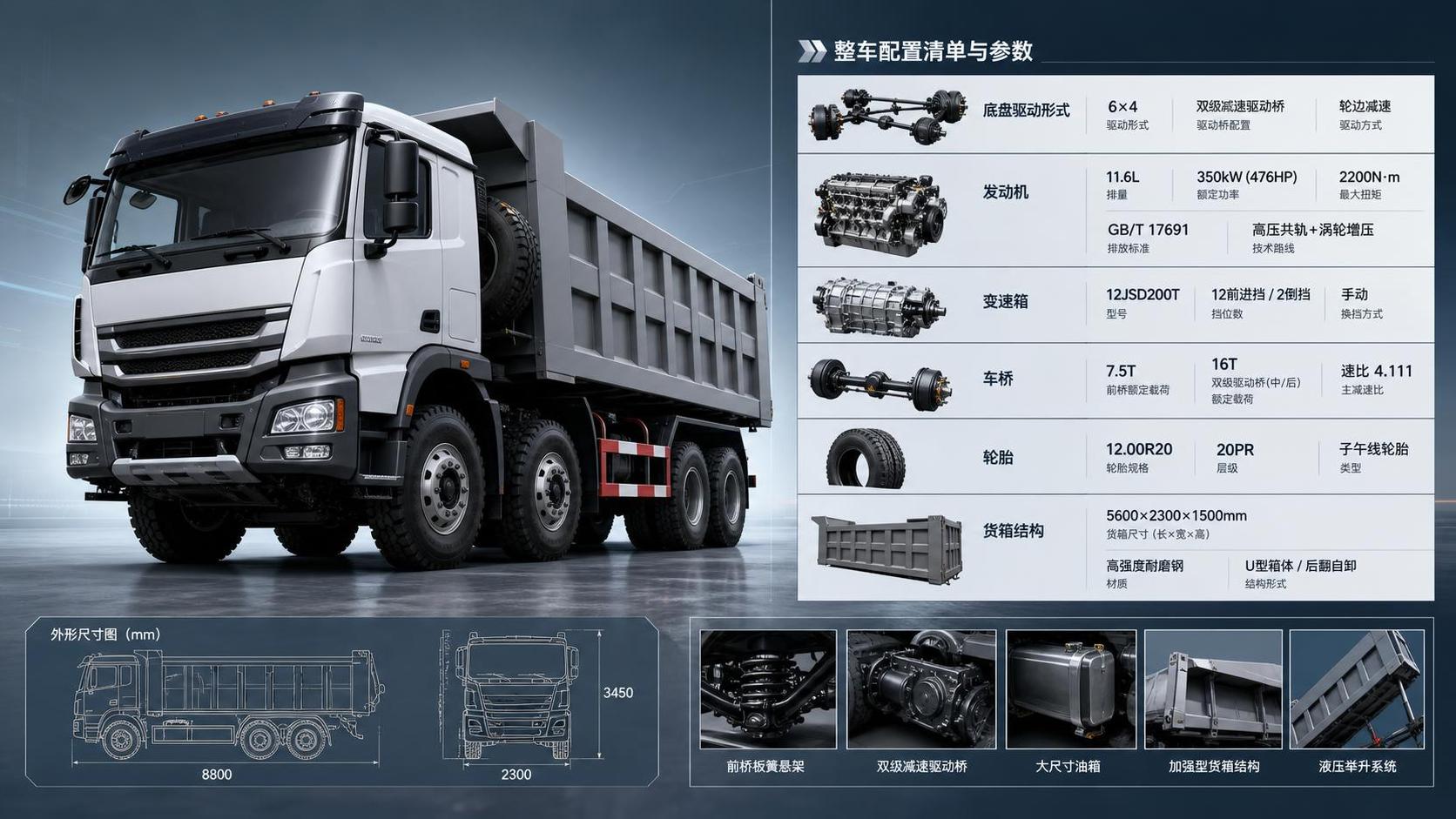
Why does the configuration list matter before you ask for a price?
If you request a quote with only a vehicle name and a rough payload idea, you are almost guaranteed to get numbers that are hard to compare. A Cangshan Vehicle Configuration List is the document that turns a general vehicle request into something commercially usable. It shows what is actually being offered: chassis layout, engine, transmission, axle rating, body dimensions, tires, cabin features, and sometimes market-specific items tied to export documentation or road use.
For procurement teams, that matters for one simple reason: price follows configuration. Two units that look similar in a photo can land in very different cost ranges because of axle capacity, emission-related setup, PTO arrangement, tire brand, hydraulic preparation, or even cabin options that were never discussed clearly. Reading the list first helps you avoid asking five suppliers for five different trucks and then trying to compare them as if they were the same machine.
What should you read first on a Cangshan Vehicle Configuration List?
Start with the fields that define the vehicle’s job, not the comfort options. Buyers often get distracted by long spec sheets and miss the few items that actually decide suitability and cost.
Read these items first:
- Vehicle model and chassis series
- Drive type, such as 4x2, 6x4, or 8x4
- Engine model and rated power
- Transmission model
- Front and rear axle ratings
- Wheelbase and overall dimensions
- Tire size and quantity
- Upper body or special-purpose structure, if included
- Declared loading or operating purpose
Once those are clear, move to the secondary items: cabin trim, seat layout, air conditioning, tank volume, electrical options, and accessory packages. Those still affect price, but they should not be reviewed before the operating configuration is locked.
Which fields usually change the quote the most?
Not every line on the sheet has the same commercial weight. In engineering vehicle purchasing, the biggest price drivers are usually the ones tied to load, durability, and application.
If you need a quick comparison between suppliers, compare these fields first. Small cabin features can wait. Wrong axle or body specification cannot.
How do you tell whether the vehicle is matched to the actual job?
Read the configuration list against the work scenario, not against the sales description. That sounds obvious, but many quote requests still say things like “dump truck for site use” without clarifying haul distance, road condition, payload expectation, gradeability, or whether the truck will run mostly on paved roads or in quarry conditions.
A practical check looks like this:
- Match drive type to terrain and traction demand.
- Match axle rating and suspension to the expected load pattern.
- Match wheelbase and body dimensions to turning space and site access.
- Check whether the body or attachment is included or only the chassis is being quoted.
- Review tire specification against operating surface, not just purchase price.
A vehicle can be technically available and still be commercially wrong. That usually shows up later as overload risk, tire wear, poor maneuverability, or a body build that does not fit the task.
What is the most common mistake buyers make when reading this document?
The most common mistake is assuming that the configuration list describes a complete deliverable in the same way every supplier would describe it. It often does not. One list may refer only to the chassis. Another may include the upper body, hydraulic system, spare tire, toolbox, or export packing details. If you compare them line by line without checking scope, you may choose the lower quote and only later realize key items were excluded.
The second big mistake is focusing only on headline power or payload language. Engine horsepower alone does not tell you whether the rear axle ratio, gearbox, and tire setup are aligned. Procurement problems rarely come from one dramatic error; they come from several small assumptions left unchallenged.
How can you compare two Cangshan Vehicle Configuration Lists without missing hidden differences?
Do not compare the documents as paragraphs. Rebuild them into a buyer-side comparison sheet. Put the critical fields in one table and force every supplier version into the same structure. That exposes where one quotation is lighter, incomplete, or based on a different assumption.
Once you normalize the data, price differences start making sense. If they still do not, that is a sign the supplier should clarify what is included before you move forward.
Should procurement teams pay attention to model codes and option codes?
Yes, especially when the purchasing process involves multiple revisions. Model codes and option codes may look internal, but they often carry the exact difference between two units that share a similar commercial name. One code may point to a different cab version, axle supplier, or gearbox series. Another may represent an export-specific package.
If a code appears on one configuration list and disappears on the next version, do not treat that as harmless formatting. Track it. In practice, version control matters because quote changes often happen through revised configuration sheets, not through fully rewritten descriptions.
How do compliance and destination-market requirements affect what you read?
The same engineering vehicle may need different equipment or documents depending on where it will be shipped and how it will be used. That does not mean a buyer needs to become a regulatory specialist, but it does mean the configuration list cannot be reviewed in isolation from the destination market.
Before asking for a final quote, check whether the supplier has aligned the offer with:
- Left-hand drive or right-hand drive requirement
- Road-use versus off-road operating purpose
- Dimension or weight limits relevant to the target market
- Document package needed for import, customs clearance, and registration where applicable
This is where a professional exporter can save time, because configuration, documentation, and delivery are tied together. But from the buyer side, the discipline is the same: identify which requirement belongs on the configuration list and which belongs in the commercial and shipping documents.
Can a cheaper configuration become more expensive after delivery?
Very easily. A lower initial quote may come from lighter-duty components, reduced included scope, or specifications that fit the budget sheet better than the jobsite. Procurement cost is not only purchase price. It also includes the cost of adaptation, downtime, premature wear, parts mismatch, and delayed deployment if the delivered vehicle does not meet the actual requirement.
That is why the Cangshan Vehicle Configuration List should be read as a cost-control document, not just a technical attachment. If the list leaves open questions about body scope, hydraulic readiness, or operating conditions, those questions tend to come back later as expense.
What should you send back to the supplier after reviewing the list?
Send a marked-up response, not a vague approval. The fastest purchasing cycles happen when the buyer turns review comments into a short confirmation sheet. You do not need a long memo. You need clear commercial checkpoints.
A useful reply usually confirms:
- The exact model or chassis under discussion
- Which listed items are accepted as quoted
- Which fields need revision or clarification
- Whether the quote should cover chassis only or complete vehicle
- Any destination-market requirements that must appear in the final offer
That response reduces back-and-forth and gives you a cleaner basis for price negotiation, lead-time discussion, and internal approval.
What is a good final check before requesting the formal quotation?
Ask yourself one practical question: if this exact configuration were delivered, could your operations team use it without rework, argument, or assumption? If the answer is not clearly yes, the list is still incomplete for quoting purposes.
The best procurement habit is simple. Freeze the job requirement first, read the configuration list against that requirement, and only then request the price. When the document is clear, the quote becomes meaningful. When the document is loose, the number on the offer is only a placeholder.
Search Starts Here