
News
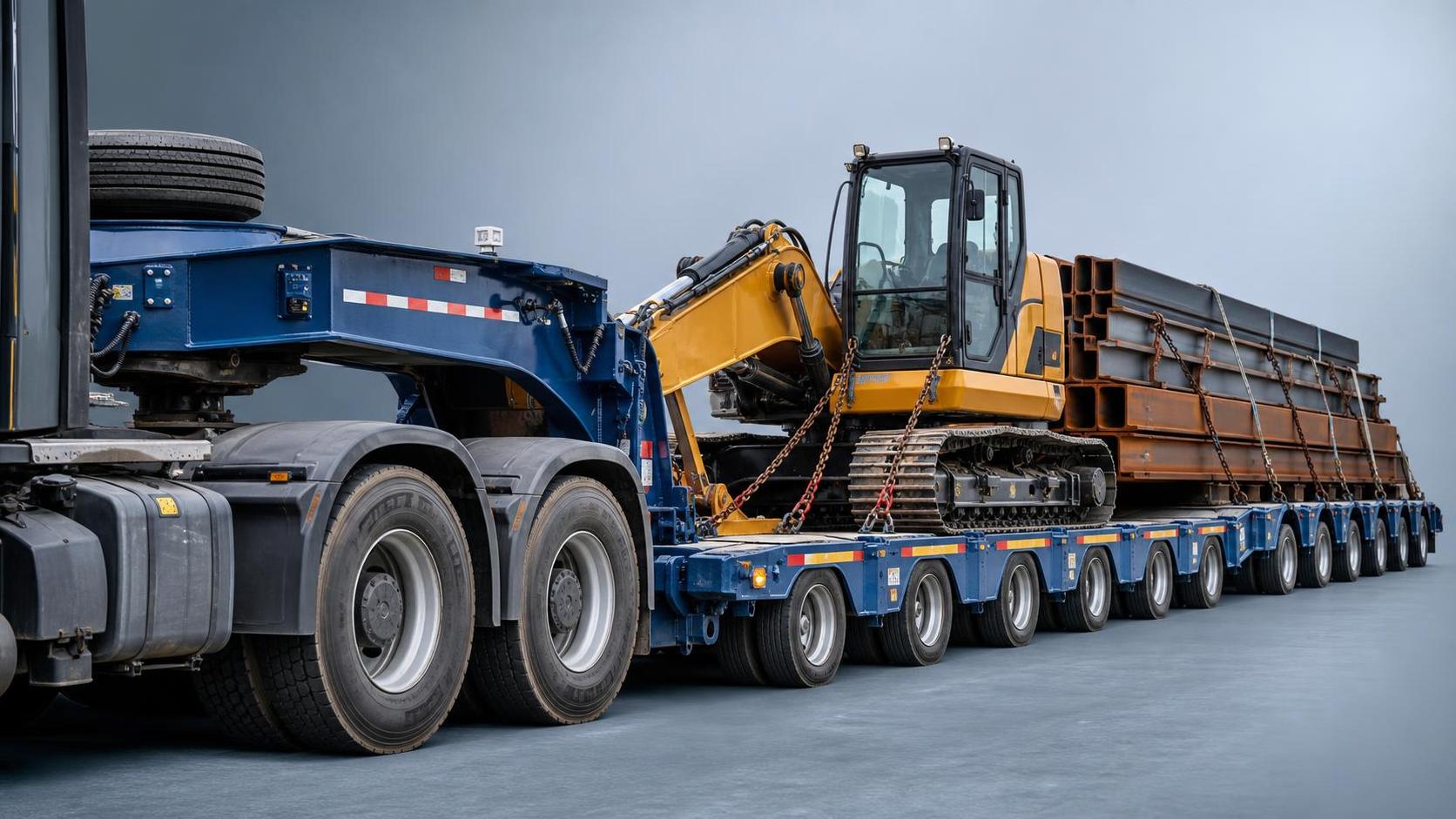
Start with the payload you actually need, not the trailer brochure number
A Flatbed Semi-Trailer can look adequate on paper and still be the wrong choice once the cargo, route, and legal axle limits are mapped together. That is where many evaluations go off track. The rated load capacity published in a catalog is only a starting point. For engineering equipment, steel structures, precast elements, or mixed jobsite loads, what matters is the payload that remains stable on the deck, stays within axle limits, and can legally move on the target road network without forcing repeated reloading or permit changes.
A technical review should answer three questions in order: how much weight the trailer structure can carry, how that weight is transferred to each axle and the tractor, and whether that same configuration is still compliant in the destination market. If one of those three fails, the nominal capacity means very little.
Check the governing weight document before looking at dimensions
The first document to request is the trailer specification sheet or homologation file that identifies gross vehicle weight rating, axle ratings, kingpin load assumptions, suspension layout, tire specification, and deck construction. Technical assessors sometimes jump straight to overall length, width, and deck height because those are easy to compare. The problem is that legal payload is usually constrained earlier by axle group limits, tire load capacity, or coupling load than by deck size.
If the file set does not clearly tie together trailer GVWR, axle capacity, tire load index, and fifth-wheel loading conditions, the capacity claim is incomplete. That gap matters most when the trailer will carry dense cargo rather than bulky cargo. A machine part with a short footprint can overload one axle group long before the full deck is occupied.
Axle distribution is usually the real limit
This is where practical assessments separate from brochure comparisons. A flatbed may have enough total structural capacity, but if the cargo center of gravity sits too far forward or too far back, you can overload the tractor drive axles, exceed kingpin load, or overburden the rear trailer axles while still being below the overall rated payload.
For technical evaluation, review these points together:
- Axle count and axle spacing on the trailer
- Expected kingpin load range when the cargo is positioned for transport
- Tractor configuration, especially drive axle arrangement and fifth-wheel location
- Typical cargo center of gravity and whether it shifts during transport
- Road rules for single axle, tandem axle, and axle group loading in the destination market
A common mistake is evaluating the trailer as an isolated unit. It is part of a combination vehicle. The legal payload depends on how the tractor and trailer work together, not on the trailer alone.
Do not treat deck strength as uniform across the platform
Flatbed decks do not carry concentrated loads equally at every point. Technical assessors should ask where the main beams run, how cross-members are spaced, what the deck material is, and whether the expected cargo applies line load, point load, or distributed load. A heavy transformer base, tracked machine contact patch, or steel coil support stand can create localized stress that is far more severe than the average payload figure suggests.
If the cargo has narrow support points, check whether load-spreading mats, steel plates, or timber blocking are part of the planned transport method. That is not a small operational detail. It changes whether the load is acceptable on the deck at all. Many damage cases begin with a trailer selected on total tonnage while nobody examined bearing area.
Deck height affects stability more than many buyers expect
A higher deck raises the combined center of gravity of the loaded vehicle. With tall equipment, pipe bundles, formwork systems, or stacked fabricated members, that translates directly into more body roll, more sensitivity in lane changes, and more risk on uneven access roads. The trailer may still be legal by weight, but less forgiving in real use.
This matters even more for engineering transport because routes are not always ideal paved highways. Site entrances, temporary roads, crowned surfaces, and side slopes change the stability picture. If the load is tall or has an offset center of gravity, a lower deck configuration may create more usable payload in practice because it gives the operator a larger stability margin.
Suspension type changes both load sharing and handling
Mechanical suspension, air suspension, and heavy-duty variants do not behave the same under uneven loading or mixed road conditions. Air suspension may improve ride behavior for some cargo types, but the assessment should focus on how the suspension shares load across axles and how it performs when the trailer enters rough jobsite conditions, ramps, or partially unpaved roads.
What you are trying to avoid is a trailer that looks compliant on static calculation but develops poor dynamic stability once braking, cornering, or road undulation comes into play. Ask how the suspension configuration matches the operating pattern: long-haul paved transport, repeated loading by crane, mixed urban and industrial roads, or construction access routes. The right answer depends on use, not on one suspension type being universally better.
Tires are part of the load rating, not an accessory decision
When trailer capacity discussions stay at chassis level, tire limits get missed. They should not. Tire size, ply rating or load index, inflation requirement, and speed rating all affect usable payload and heat management. A flatbed moving dense cargo at highway speed in hot conditions places very different stress on tires than a low-speed internal plant shuttle.
The check is straightforward: confirm that the installed tire specification supports the intended axle load in the actual operating condition, not just in an idealized catalog case. Then check whether the maintenance plan can hold the required pressure consistently. Underinflation is one of the fastest ways to turn a legal axle load into a tire failure event.
Securement planning can reduce usable payload even when weight is legal
Technical assessors often focus on weight and forget the space and structure needed for lashing, blocking, and edge protection. But a heavy load that cannot be properly secured on the deck is not a valid load plan. Tie-down point capacity, tie-down quantity, side access for chains or straps, and the position of stanchions or headboard structures all need to align with the cargo geometry.
This is especially relevant for irregular engineering cargo. Sometimes the trailer with the highest theoretical payload is not the best choice because the deck arrangement leaves poor securement angles or forces the load into a less stable position. The practical payload is the one that can be restrained correctly.
Legal payload depends on the destination market, not only on manufacturer rating
This point causes delays in export projects more often than it should. A trailer can be structurally suitable and still enter service with reduced legal payload because the target country applies different limits on gross combination mass, axle group loading, overall dimensions, or permitted overhang. For technical assessment, the right process is to match the proposed tractor-trailer-cargo combination against the destination market’s registration and road-use requirements.
Do not stop at one general regulation summary. Check the actual approval and operating documents used for that market: vehicle technical specification, axle and tire details, dimensional drawing, and any road classification or permit rule that affects engineering transport. A legal payload figure without market context is only half a number.
What to verify in the compliance file
Look at the load case, not just the cargo category
Saying a trailer will carry “construction machinery” or “steel products” is not enough for a serious technical review. Two loads in the same category can behave very differently. One excavator may have a stable weight distribution and wide track contact. Another machine with attachments removed may become front-heavy. Steel bundles can be low and compact, while fabricated assemblies may be long, flexible, and top-heavy.
Build the assessment around a representative load case. Use the real footprint, loading method, estimated center of gravity, and securement arrangement. If the trailer works only for an idealized cargo version, it is not a robust selection.
The fast screening sequence that saves time
For teams reviewing multiple trailer options, a simple sequence helps keep the discussion grounded:
- Confirm the intended cargo mass, footprint, height, and support points.
- Match trailer GVWR, axle ratings, kingpin load assumptions, and tire specification.
- Check whether the cargo position keeps axle loads and tractor loads within the target market limits.
- Review deck strength for concentrated loads, not just total weight.
- Assess loaded center of gravity, deck height, and route conditions for stability margin.
- Verify securement points and lashing geometry before calling the payload usable.
That order catches the usual failure points early. It also prevents the familiar situation where a trailer passes a purchasing review and fails later during loading plan approval or registration review.
Use the trailer as part of a transport system
A Flatbed Semi-Trailer should be assessed as one component in a full operating chain that includes the tractor, the cargo, the route, the local road rules, and the loading method. For technical assessors, the cleanest decision rule is simple: the right trailer is not the one with the biggest advertised payload, but the one that carries the intended load with balanced axle distribution, adequate deck support, stable road behavior, and documented legal compatibility in the actual market of use.
If you need to prioritize, start with axle distribution and legal road limits, then move to deck loading and stability. That sequence reflects what usually stops a transport job in the real world.
Search Starts Here