
News
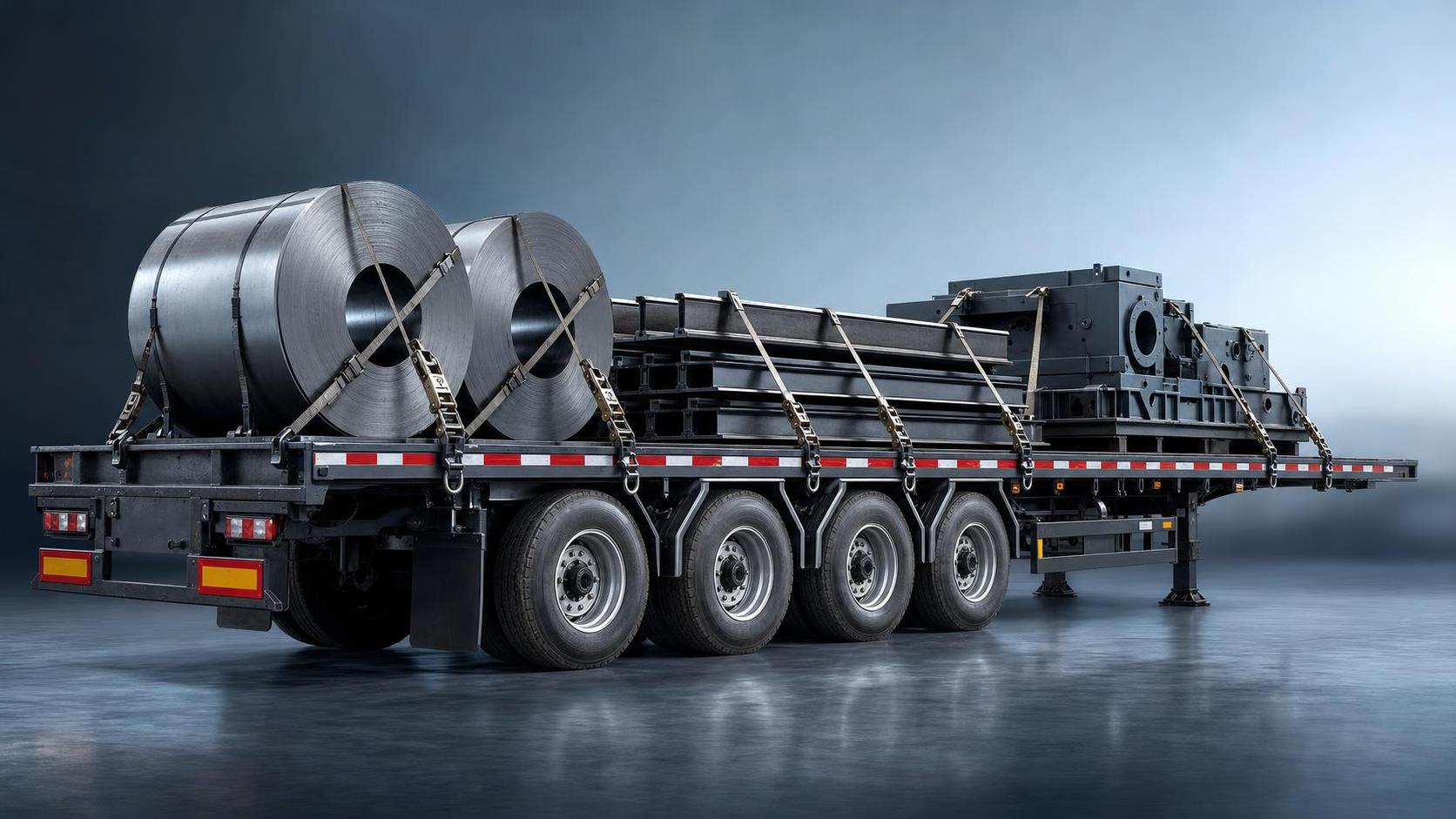
How to Choose a Flatbed Semi-Trailer for Steel and Machinery Loads
Choosing the right Flatbed Semi-Trailer is critical for project managers handling steel and machinery loads, where stability, payload capacity and loading efficiency directly affect delivery schedules and site safety. With multiple trailer configurations available, understanding key selection factors can help reduce transport risks, control costs and ensure reliable performance for demanding engineering projects.
If you are moving steel coils, fabricated sections, heavy equipment, or mixed machinery packages, the trailer decision should not start with price. It should start with the cargo, the route, and the loading method. That is usually where expensive mistakes show up later: the trailer looked acceptable on paper, but the deck was wrong for the cargo shape, the axle setup did not suit the road conditions, or the lashing points were too limited for real site work.
For engineering projects, a flatbed is often selected because it gives flexibility. That part is true. But flexibility only helps when the trailer has the right structure, dimensions, and support details for the loads you actually run every week, not the idealized load in a quotation sheet.
Start with the real cargo profile, not the general category
“Steel and machinery” is too broad to guide specification. A Flatbed Semi-Trailer carrying rebar bundles has a different working reality from one carrying a wheel loader attachment, a CNC machine base, or a long welded structure.
Before discussing trailer brand or configuration, pin down these details:
- Maximum single-piece weight, not just total shipment weight
- Load dimensions: length, width, height, and center of gravity if known
- Whether the cargo is concentrated, evenly distributed, or offset
- Whether loading is by crane, forklift, side loader, or ramp-assisted drive-on
- Whether the load has steel edges, support legs, track marks, or point-load contact
- Whether tarpaulin coverage is required in transit
- Whether the shipment mixes cargo types on one trailer
That last point matters more than many buyers expect. Mixed cargo creates securing problems. A trailer that works well for long steel profiles may become awkward when a project team also needs to move skid-mounted pumps or compact machinery in the same dispatch cycle.
Check deck length and usable deck space separately
Nominal trailer length is not the same as usable loading length. On some units, front structure, side accessories, spare wheel placement, or stake arrangements reduce practical loading space. For long steel members or machinery with awkward footprints, that difference can turn into repeated loading delays.
Ask for a clear dimensional drawing. If the supplier only provides overall length and width, that is not enough for project planning. You want to see the kingpin area, gooseneck structure if applicable, deck height, and any intrusion into the load zone. This is especially important when transporting fabricated steel with overhang restrictions that vary by market and route. Legal limits depend on the destination country and road authority, so they need route-specific confirmation rather than assumptions.
Look hard at load distribution and axle configuration
A flatbed that can carry the total tonnage on paper may still be the wrong tool if the cargo creates concentrated load zones. Steel plates stacked over a short section, machine bases sitting on narrow support feet, or equipment with rear-biased weight can overload part of the deck and part of the axle group.
The practical check is simple: ask where the weight will sit, and how that transfers across the main beams and axles. For project cargo, these questions are worth raising early:
- Will the load be centered or intentionally offset for loading reasons?
- Does the cargo sit on timber blocks, steel saddles, tracks, or direct contact points?
- Is a 2-axle, 3-axle, or multi-axle arrangement needed for legal compliance and road performance in the destination market?
- Will the roads include rough access roads, temporary site roads, or bridge restrictions?
For cross-border or export projects, axle selection should also account for local maintenance realities. A technically suitable trailer is less useful if the suspension or brake components are difficult to service in the target market.
Do not treat main beam design as a brochure detail
For steel and machinery transport, the main beam is not a sales talking point. It is the part that decides whether the trailer stays straight and stable under repeated real loads. If your project cycles involve heavy sections, uneven machine loads, or rough unloading zones, beam strength and structural reinforcement deserve direct discussion.
What to verify with the manufacturer or exporter:
- Beam material grade and thickness details
- Whether reinforcement is standard or optional in high-stress zones
- Cross-member spacing and deck support arrangement
- Whether the trailer is intended for uniform cargo or mixed industrial loads
If a supplier cannot explain where the structure has been strengthened for heavy-duty use, that is a warning sign. Serious suppliers can usually discuss load scenarios in practical terms, not just quote a payload number.
Match the deck surface to the cargo and loading method
This part gets overlooked until the first difficult load. A smooth steel deck may be workable for some fabricated items, but it is less forgiving when machinery needs traction during loading, or when timber blocks need to stay stable. A checker plate or anti-slip surface may help, but suitability depends on how the cargo is handled and secured.
For machinery with tracks or wheels, loading angle and deck grip matter. For steel loads, the issue is often point loading and movement under braking. Talk through the actual loading routine with the supplier. A trailer that spends half its life under crane loading has different deck priorities from one doing regular ramp loading at equipment yards.
Lashing points, stakes, and side support are not accessories
When project teams say a trailer is “hard to use,” they often mean it is hard to secure safely. The trailer may be structurally fine, but the tie-down layout forces drivers and loading crews into awkward, inconsistent securing methods.
For steel products, enough lashing points at practical intervals are essential. For machinery, you may also need reinforced securing points that line up with the equipment frame. If your loads include pipes, long beams, or round steel products, stake pockets and side restraints can make operations much more controlled.
One useful buying habit: request photos of the securing hardware on actual delivered units, not just a drawing. It tells you quickly whether the trailer was designed for real transport work or just configured to look complete.
Watch deck height if your routes include machinery and oversized components
Even when you are not buying a low-bed trailer, deck height still matters. Many machinery loads are height-sensitive once they leave the port or main highway and move through urban access roads, plant gates, overhead utilities, or site entries. A flatbed that sits too high can narrow your routing options fast.
This is one of those choices that should be checked against the actual destination market. Height limits, escort requirements, and abnormal load procedures are country-specific and in some places route-specific. If the project involves export delivery, confirm local transport rules with your consignee or local logistics partner rather than relying on general assumptions.
Suspension choice affects cargo protection and trailer life
A trailer moving steel over paved trunk roads has a different stress pattern from one repeatedly entering mines, industrial plots, or unfinished project roads. Suspension choice should reflect that. Mechanical suspension is common and robust in many markets. Air suspension may be preferred in some operations for cargo protection or road regulations, but service support and operating conditions need to justify it.
There is no universal best answer here. The better question is: what kind of abuse will the trailer see after delivery? That usually leads to a better specification than asking for the “highest configuration.”
Check compliance documents early, especially for export projects
Project managers often get pulled into trailer procurement late, after a commercial decision has already been made. That is when documentation problems become schedule problems. Depending on destination market, registration, import clearance, road use approval, and technical acceptance may require specific documents or configuration alignment. Exact requirements vary by country and should be confirmed case by case.
At minimum, ask the exporter to clarify:
- What technical documents are included
- Whether the trailer specification matches destination homologation or registration needs【待核实】
- Whether brake, lighting, reflective marking, and axle details align with the target market’s practical requirements
- What after-sales parts support is available locally or through export channels
This is where an experienced exporter adds value beyond unit supply. Shandong Livol Truck International Trade Co., Ltd., based in Shandong, China, works as an authorized dealer for FOTON, SHACMAN, and SINOTRUK and supports customers with vehicle selection, customization, documentation, customs clearance, and logistics. For buyers managing overseas engineering projects, that full-process coordination can reduce handover gaps between factory, shipper, and end user.
Ask how the trailer will actually be supported after delivery
A flatbed trailer is not a one-time purchase if it is entering continuous project use. It needs wear parts, technical response, and sometimes configuration adjustments after the first few months of service. This matters even more when the trailers are deployed far from the procurement office.
Ask practical questions: Are common components standardized? Can the supplier provide a spare parts list before shipment? Is there a recommended starter spare package for landing gear, brake parts, electrical consumables, and suspension items? Those questions are more useful than broad promises about service quality.
A quick selection table for project teams
What experienced buyers usually decide before placing the order
By the time a project team is ready to issue a purchase order, the useful questions are fairly concrete. Which load is the trailer being optimized for? What loading method is non-negotiable? What route constraints are known today? Which components need to match local service availability? If those answers are still vague, the purchase is early.
A good Flatbed Semi-Trailer choice is rarely the cheapest option and rarely the most heavily advertised specification. It is the trailer that fits the cargo pattern, the operating roads, the local compliance environment, and the maintenance reality after delivery. For steel and machinery loads, that fit matters more than any catalog claim.
If you are evaluating suppliers, ask them to respond to your actual cargo list and transport conditions in writing. The quality of that response tells you a lot. Serious suppliers will discuss structure, configuration, export process, and operational risks in detail. That is usually where a reliable project purchase begins.
Search Starts Here