
News
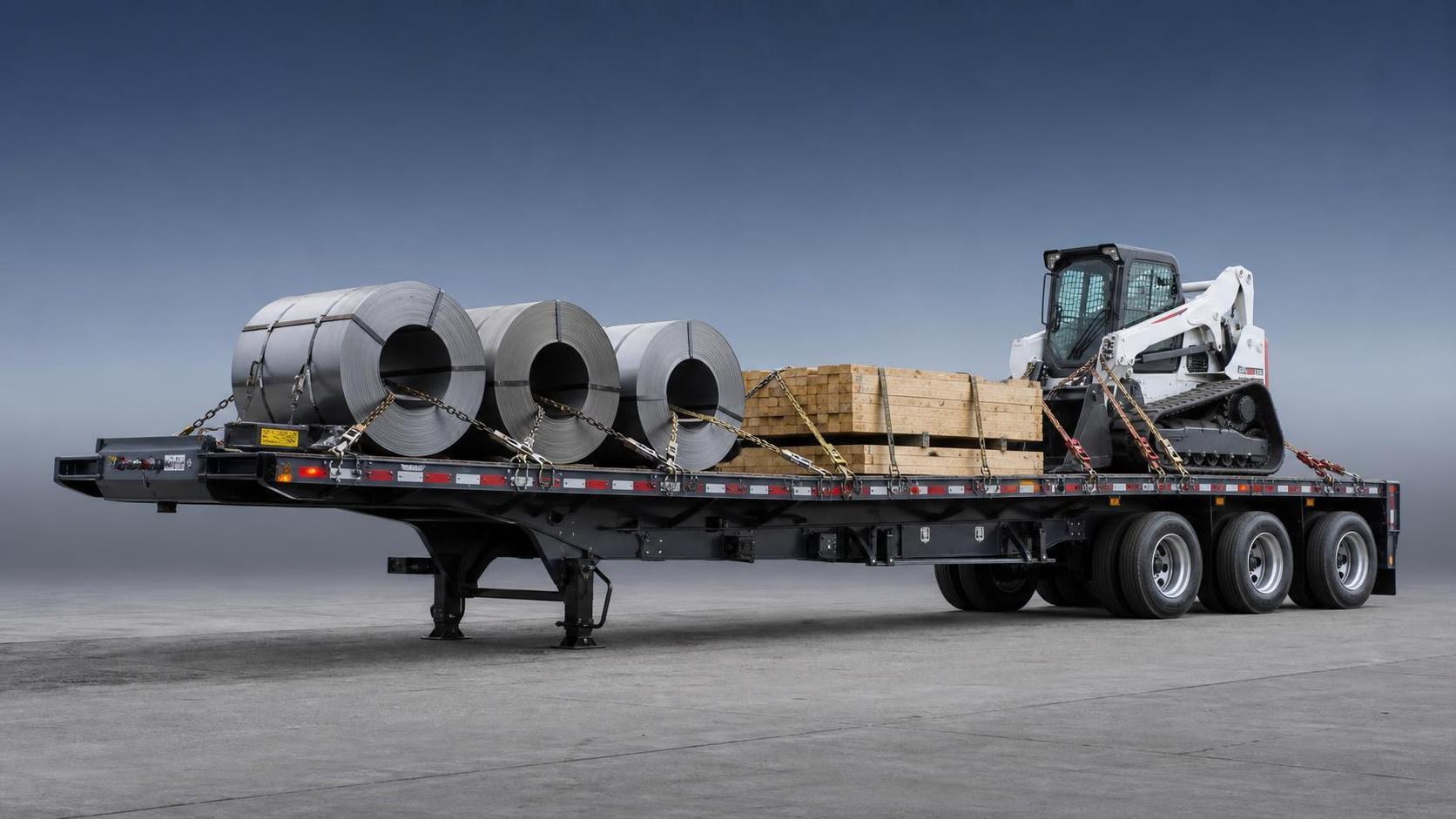
Start with the cargo, not the trailer brochure
If you are evaluating a Flatbed Semi-Trailer for steel, lumber, and machinery, the usual shortcut of comparing deck length and nominal payload is not enough. The right unit is the one that carries your actual load mix without forcing awkward loading, overstressing the frame, or creating tie-down problems that show up later on the road. Technical evaluation should begin with the load cases you expect to run most often, not with the trailer specification sheet.
That means listing what will really go on the deck: steel coils or bundles, sawn timber or packaged lumber, machinery with concentrated axle loads, odd overhangs, forklift loading, crane loading, and route restrictions. A trailer that works well for long, evenly distributed lumber packs may be a poor choice for short, dense steel cargo. A unit that handles machinery well may lose efficiency on high-volume timber work because the deck layout or tare weight is wrong for that job.
Before comparing suppliers, define these points clearly:
- Typical cargo type and packaging method
- Single-item weight and total gross load
- Whether loads are evenly spread or highly concentrated
- Loading method: side forklift, overhead crane, rear approach, or mixed handling
- Required securing method: chains, webbing, blocking, dunnage, or mixed restraint
- Road profile and legal limits in the destination market
Check load concentration before you check payload
One of the most common evaluation mistakes is treating rated payload as the main decision point. Steel and machinery make that dangerous. Two trailers with the same nominal carrying capacity can behave very differently when the cargo sits on a short footprint or loads one section of the deck much harder than the rest.
For steel bundles, plate, bars, or coil-related transport, ask where the weight will actually sit. For machinery, identify the contact points: tracks, outriggers, wheels, skids, or base frames. Then review whether the main beam design, crossmember arrangement, and deck support are suited to that loading pattern. A trailer may look adequate on paper but still suffer premature deck deformation, crossmember fatigue, or poor ride behavior if the cargo creates repeated point loads.
A practical evaluation question is simple: where does the heaviest force enter the trailer structure? If that answer is vague, the assessment is not finished.
Match deck configuration to the material handling reality
Deck type affects both loading speed and cargo stability. This is where application fit becomes obvious.
For lumber, a clean, usable deck surface matters because packs are often loaded quickly and in sequence. You need enough deck width, sensible stake pocket placement if applicable, and a surface that works with timber dunnage and strap protection. If side loading by forklift is routine, the edge structure and deck access matter more than many buyers expect.
For machinery, think about approach angle, localized deck reinforcement, and whether accessories such as ramps or heavy-duty tie points are needed. For steel, surface durability becomes important because repeated handling with chains, cribbing, and dense cargo can punish the deck quickly.
Do not evaluate the deck only by material name. Look at how the cargo contacts it, how often forklifts run across it, whether moisture exposure is common, and how easily damaged sections can be maintained in service.
Review axle layout together with your real operating routes
Axle count and arrangement are not just compliance issues. They affect load distribution, tire wear, maneuverability, and the trailer’s usefulness across different cargo profiles. Technical evaluators should map trailer axle configuration against the tractor unit, expected gross combination weight, and local road rules in the destination country.
This is especially relevant for machinery loads. Heavy equipment often creates load placement constraints, and that can shift axle loading in ways that are still legal in one market but problematic in another. A trailer that is technically capable of carrying a machine may still be a poor choice if it leaves too little room to balance kingpin load and axle group load properly.
During evaluation, request an axle load distribution review based on your likely cargo layouts. If the supplier only discusses total payload, push further. For cross-border or export projects, the documents that matter are the trailer technical drawing, axle and suspension specifications, tire specifications, and the dimensional and weight rules for the target market. That is the set you need to compare, not a generic sales claim.
Do not treat tie-down hardware as an accessory decision
On many flatbed purchases, the securing system gets discussed too late. That is a mistake for all three load categories here.
Steel often needs robust chain-based restraint and dependable lashing point access. Lumber usually depends on repeatable strap positioning, edge protection, and stable stack geometry. Machinery can require mixed securing methods, including direct tie-down to specific structural points and blocking against movement. If the trailer layout makes those restraint methods awkward, loading crews will improvise. Once that starts, the trailer is already the wrong fit.
Check the quantity, spacing, accessibility, and structural integration of tie-down points. Ask whether the lashing layout supports your standard cargo patterns without forcing straps over vulnerable edges or chains across poor angles. Also review whether accessories such as winches, toolboxes, stake positions, rope hooks, and side protection interfere with securing practice. Good restraint design is not only about strength. It is about making the correct securing method the easiest one to use.
Frame strength should be evaluated for durability, not just initial use
A trailer selected for steel, lumber, and machinery usually faces a hard life: variable loading, uneven yards, repeated side impact from handling equipment, and long mileage under mixed conditions. So frame evaluation should look beyond static capacity.
Focus on beam section design, crossmember spacing, reinforcement in high-stress zones, suspension mounting areas, and known wear points around landing gear and rear structure. For multi-purpose use, fatigue resistance matters more than cosmetic finish. A trailer that saves money upfront but cracks early around the loaded center section or rear overhang will cost much more in downtime, welding, and disrupted dispatch planning.
A useful question for the supplier is how the structure is configured for repeated heavy-duty loading cycles, especially when cargo is not uniformly distributed. You are not looking for marketing language. You are looking for a clear explanation tied to drawings, materials, and fabrication details.
Pay attention to tare weight, but only in context
A lighter trailer can increase available payload, but that is not automatically better for this application. For steel and machinery work, chasing minimum tare weight can leave too little structural margin where it actually matters. For lumber transport, lower trailer weight may help utilization, but only if the deck, securing arrangement, and suspension still support daily handling and stable transport.
The better approach is to compare tare weight against the expected cargo mix. If most of your work is bulky but not extremely dense, weight efficiency may deserve more attention. If short, dense, punishing loads are common, structural robustness should dominate the decision. This is not a theoretical trade-off. It affects how often the trailer stays in service instead of going to repair.
Look at suspension, tires, and brakes as a system
Technical buyers sometimes review these items separately, but they influence one another in service. Suspension choice affects ride quality, cargo stability, maintenance style, and behavior under uneven loading. Tires and brake configuration influence heat, wear, stopping consistency, and operating cost. On a flatbed used for machinery and steel, poor system matching tends to appear quickly.
What matters in practice:
- Whether the suspension is suited to frequent heavy-duty loading and road conditions on your routes
- Whether tire specification matches actual axle loads and service environment
- Whether the brake system is aligned with the tractor and destination market requirements
- Whether replacement parts and service support are realistic where the trailer will operate
That last point gets ignored too often. A technically sound configuration can still become a bad fleet choice if wear parts are difficult to source in the operating region.
Confirm compatibility with local compliance and document flow
For export or cross-market procurement, compliance cannot be handled as an afterthought. Trailer dimensions, axle grouping, lighting, braking interfaces, reflective marking, and registration documentation may all affect whether the unit can be accepted smoothly in the destination market.
The correct way to review this is practical: compare the trailer technical file against the registration, import, and road-use requirements for the exact target country or region. Check the drawing, VIN-related documentation, axle and tire details, braking information, and any market-specific configuration requirements that apply to the intended transport role. For technical evaluators working with overseas supply, this is where a capable export partner adds value, especially when vehicle selection, configuration, paperwork, customs handling, and logistics need to stay aligned from the beginning.
Use a short comparison grid before final approval
A workable decision sequence
If you need a clean decision path, run the evaluation in this order: define the heaviest and most awkward cargo first, review structural suitability for that case, test load distribution across the tractor-trailer combination, then confirm securing layout, operating components, and market compliance. Leave commercial comparison until the technical fit is already clear.
In other words, choose the trailer that handles your hardest regular job without creating avoidable compromise on the easier ones. For steel, lumber, and machinery work, that usually leads to a better long-term result than choosing the lightest unit or the cheapest one that appears to meet payload on paper.
Search Starts Here