
News
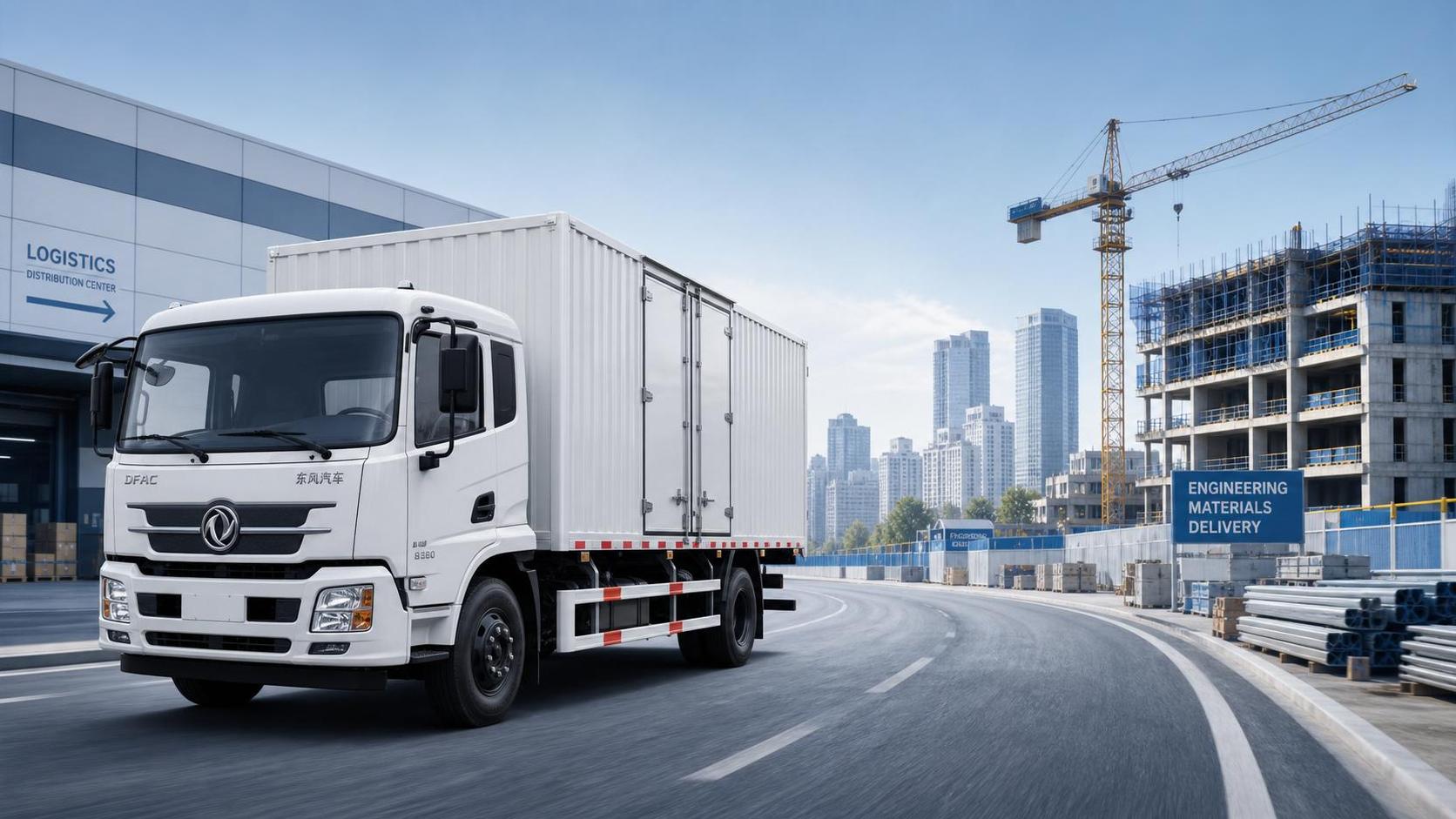
Choosing a 4_2 Cargo Truck for urban delivery routes is rarely a simple specification exercise. In city logistics, the truck affects route speed, fuel use, loading rhythm, access to narrow streets, and the consistency of daily operations. For construction supply movement, equipment support, and project-based distribution, the right vehicle must carry enough, turn easily, stay dependable in stop-and-go traffic, and remain cost-efficient over time.
That is why the 4_2 Cargo Truck remains a practical engineering vehicle choice for urban work. It sits between lighter vans and larger rigid trucks, offering useful payload with better maneuverability. When selected carefully, it can support material delivery, spare parts transport, site supply runs, and scheduled intra-city distribution without creating unnecessary operating pressure.
Why the 4x2 layout fits urban delivery work
A 4x2 Cargo Truck uses one driven rear axle and one steering front axle. In practical terms, that means a simpler drivetrain, lower weight than heavier multi-axle trucks, and easier control in dense urban environments.
For city routes, this balance matters. Deliveries often involve frequent braking, short trip cycles, loading delays, uneven road surfaces, and limited parking zones near commercial or project sites.
A well-matched 4_2 Cargo Truck can reduce wasted capacity and avoid the access limitations that come with oversized vehicles. It also helps keep utilization high when routes vary from central business districts to industrial parks and peripheral construction areas.
Start with the route, not the brochure
Many buying mistakes happen because selection starts from engine power or body length alone. Urban delivery performance depends first on route conditions, not on headline specifications.
A 4_2 Cargo Truck that works well on wide distributor roads may struggle in older city districts. Another truck with modest paper numbers may outperform it on real routes because it turns faster, loads quicker, and spends less time idling.
Before comparing models, define the operating profile clearly. That includes trip distance, stop frequency, average load ratio, road quality, and time-window restrictions.
- Daily route length and average trip duration
- Typical cargo weight and volume distribution
- Height, width, and turning restrictions on delivery points
- Frequency of partial unloading during one route
- Local emission, axle load, or access regulations
This approach creates a more realistic basis for choosing a 4_2 Cargo Truck than relying only on catalog figures.
Payload should match real cargo patterns
Payload is one of the most visible decision factors, yet it is often misunderstood. More capacity is not automatically better if most trips run far below rated load.
In urban engineering logistics, cargo patterns are mixed. One day may involve bagged materials, tool sets, cables, or packaged parts. Another may involve bulky but lighter items that fill the body before reaching axle limits.
The better question is whether the 4_2 Cargo Truck matches both weight and cube efficiency. Body dimensions, floor strength, loading height, and side opening design can matter as much as gross vehicle weight.
Maneuverability often saves more time than speed
Urban delivery delays are usually caused by access problems, not by a lack of top speed. A compact turning radius, suitable wheelbase, and good driver visibility can save meaningful time across a full working day.
This is especially true where delivery points include temporary project entrances, basement ramps, market streets, or mixed commercial zones. In these settings, a 4_2 Cargo Truck should be easy to reverse, align at loading bays, and navigate around parked vehicles.
Cab design also matters. Good mirror coverage, practical seating, and low fatigue steering behavior improve route consistency. That benefit is less visible during procurement, but very clear after months of daily operation.
Key dimensions to verify
- Wheelbase in relation to turning space
- Overall height for low-clearance entries
- Body length against unloading space limits
- Cab visibility for crowded route conditions
Fuel economy and uptime deserve equal attention
For a 4_2 Cargo Truck in city service, fuel economy cannot be separated from route pattern. Stop-start traffic, long idle periods, and partial loads produce very different consumption results from highway transport.
The more useful measure is operating efficiency across the route cycle. That includes engine response at low speed, gearbox suitability, service intervals, and the reliability of braking and suspension components.
Downtime is often more expensive than fuel. A truck that misses scheduled deliveries can delay site work, affect subcontractor timing, and increase rental or labor costs elsewhere in the chain.
For that reason, after-sales support and spare parts access should be part of the original selection process. This is where supplier strength matters beyond the vehicle itself.
Brand support and export capability influence long-term value
A 4_2 Cargo Truck is not only a product decision. It is also a supply, service, and documentation decision, especially for overseas buyers or multi-country projects.
Shandong Livol Truck International Trade Co., Ltd. operates in this part of the process with practical advantages. As an authorized domestic and overseas dealer for FOTON, SHACMAN, and SINOTRUK, the company combines model access with organized export handling.
Its 4S store network, vehicle inventory, and full-process service coverage help reduce common purchasing friction. That includes selection support, configuration adjustment, paperwork, customs coordination, and logistics planning.
This matters when the chosen 4_2 Cargo Truck must meet local operating needs, delivery schedules, and compliance requirements without creating avoidable delays before the truck even enters service.
Choose the body and configuration around the job
The same chassis can serve very different urban applications. Body format should reflect cargo handling methods and protection requirements.
For packaged construction materials or hardware, a standard cargo body may be enough. For weather-sensitive goods, enclosed van bodies become more useful. For mixed site support, side access and tail-lift options may improve unloading speed.
Suspension tuning, tire selection, and brake setup should also reflect road condition and stop frequency. A 4_2 Cargo Truck used on broken industrial roads needs a different operating emphasis from one serving paved commercial districts.
Common urban use cases
- Material replenishment between warehouse and project site
- Delivery of repair parts and service tools
- Distribution to retail, workshop, and contractor points
- Scheduled routes for municipal or utility support cargo
A practical evaluation method before ordering
A reliable choice usually comes from comparing several models against the same working assumptions. That keeps discussions focused on usable value rather than isolated features.
When shortlisting a 4_2 Cargo Truck, it helps to score each option using route fit, payload efficiency, service access, customization scope, and total operating cost.
- Check whether legal payload matches the real load profile
- Review turning performance for the tightest route point
- Confirm maintenance intervals and parts availability
- Assess whether body design supports fast unloading
- Verify export documents and local compliance requirements
If two models appear close, the better decision often comes from service readiness and delivery reliability rather than headline horsepower.
Moving from comparison to a confident decision
The best 4_2 Cargo Truck for urban delivery routes is the one that fits the actual route pattern, cargo structure, maintenance plan, and supply timeline. It should improve movement through the city without adding hidden cost through poor access, low utilization, or weak support.
A useful next step is to map current routes, identify the most restrictive delivery points, and compare those realities against shortlisted truck dimensions and payload data. From there, it becomes much easier to judge whether a standard model is enough or whether a customized solution is the better long-term fit.
With experienced supply partners, stable brand resources, and clear operating criteria, selecting a 4_2 Cargo Truck becomes less about guesswork and more about building a dependable urban delivery system.
Search Starts Here