
News
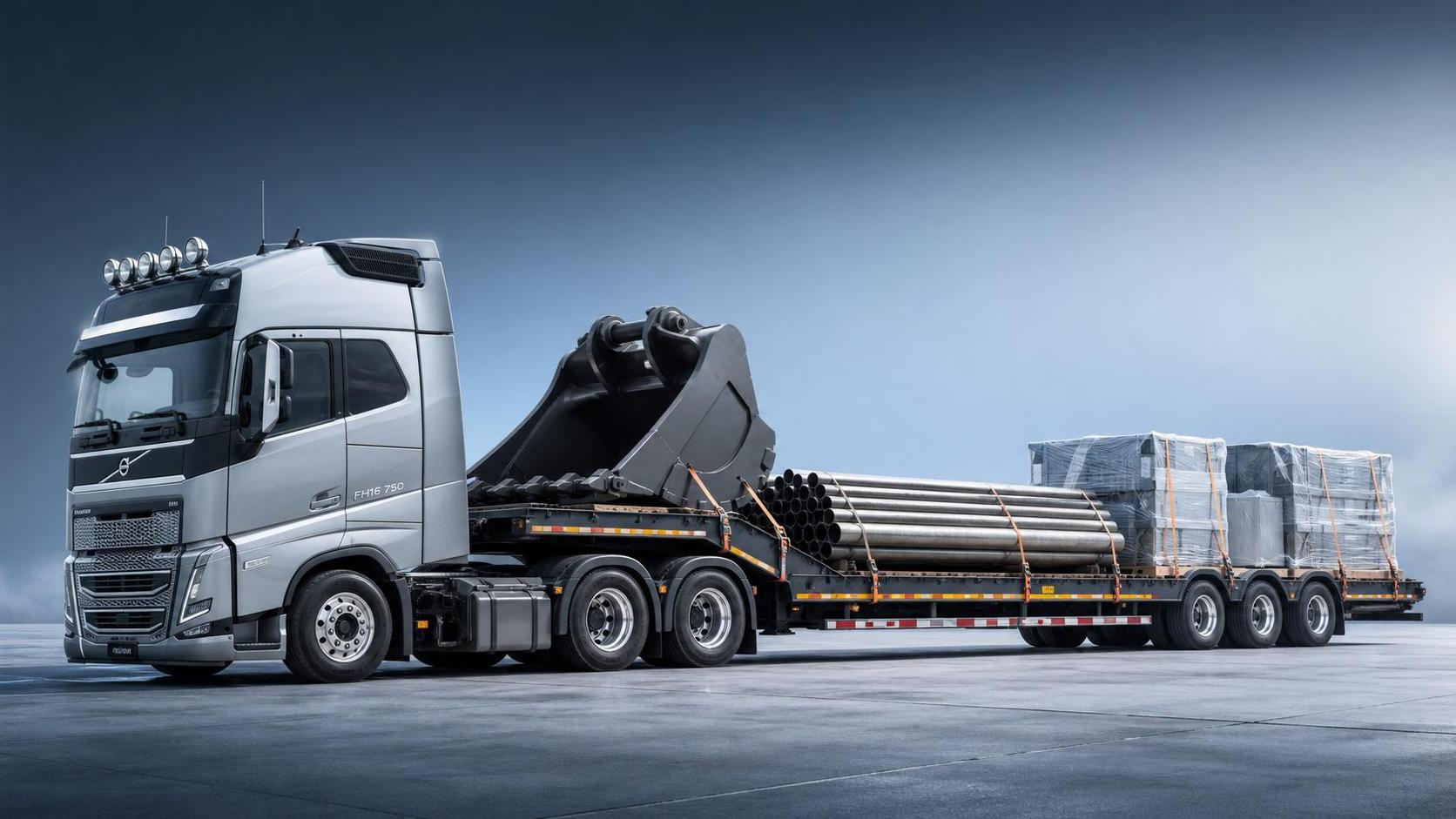
Flatbed Semi-Trailer load limits shape much more than a legal number on a specification sheet. They affect route planning, axle choice, cargo safety, loading method, and total operating cost. In engineering vehicle transport, where machinery, steel structures, and oversized components often move across long distances, understanding real carrying capacity is essential. A practical view of deck size, axle distribution, cargo weight, and compliance helps turn a Flatbed Semi-Trailer from a simple platform into a reliable transport tool.
Why load limits matter in engineering transport
A Flatbed Semi-Trailer is designed for open-deck hauling. That sounds straightforward, but its working limit depends on several linked factors.
The first is rated payload. The second is how the weight sits across the trailer deck and tractor connection. The third is local road regulation.
In engineering projects, cargo is rarely uniform. Excavator attachments, pipes, precast sections, generators, and tracked equipment create very different stress patterns.
That is why two loads with the same total tonnage may produce very different transport risks. One may travel smoothly, while the other overloads an axle or destabilizes braking.
From an industry perspective, this has become more important as transport jobs increasingly combine efficiency requirements with stricter cross-border and regional compliance checks.
What a Flatbed Semi-Trailer load limit really includes
When people refer to load limits, they often focus only on maximum payload. In practice, the usable limit is broader.
Structural capacity
This is the amount of weight the frame, cross members, deck, kingpin, and suspension are engineered to support under normal operating conditions.
Axle and tire ratings
A trailer may have a strong frame but still face limits from axle load rating, tire capacity, or suspension design. These parts often determine real working capacity.
Distributed versus concentrated loads
Steel coils, machine bases, and compact equipment concentrate weight in a small area. Long beams or pallets spread weight more evenly across the deck.
Legal road limits
Even if a Flatbed Semi-Trailer can physically carry a load, road laws may restrict gross vehicle weight, axle load, width, height, or overall length.
Simple capacity figures are useful, but they never replace a full operating assessment.
The main factors that change carrying performance
Several technical choices determine whether a Flatbed Semi-Trailer is suitable for a specific engineering haul.
In actual use, these factors interact. A longer deck may improve flexibility, yet poor weight placement can still overload the rear axles.
Typical cargo uses for a Flatbed Semi-Trailer
The open platform makes a Flatbed Semi-Trailer one of the most adaptable options in engineering and commercial hauling.
Construction and roadwork equipment
Compact loaders, rollers, skid steers, attachments, and light excavators are common loads. They benefit from easy side and rear loading access.
Steel, pipe, and fabricated components
Long or bundled materials fit well on a flat deck. Tie-down planning is especially important because these loads can shift under braking.
Palletized industrial goods
Generators, pumps, packaged spare parts, and workshop units often move on flatbeds when top loading by crane is preferred.
Export-oriented machinery movement
For port delivery and inland staging, a Flatbed Semi-Trailer supports equipment transfer before container loading, Ro-Ro shipment, or site delivery.
This is one reason flatbeds remain common in projects involving mixed cargo profiles and changing delivery schedules.
Common mistakes when evaluating capacity
Misjudging trailer suitability usually comes from incomplete data rather than extreme conditions.
- Using only gross payload figures without checking axle-by-axle distribution
- Ignoring the cargo footprint and assuming total weight tells the full story
- Overlooking deck height when moving tall equipment under bridge restrictions
- Selecting too few lashing points for irregular or high-center-of-gravity cargo
- Treating domestic and export route rules as identical when they often are not
A Flatbed Semi-Trailer can appear suitable on paper, yet still create handling problems if loading geometry and legal limits are not reviewed together.
How trailer choice connects with business decisions
Trailer selection is rarely only about transport. It also affects delivery reliability, maintenance planning, and export readiness.
For businesses sourcing engineering transport equipment from China, supply stability and specification clarity matter almost as much as the trailer itself.
Shandong Livol Truck International Trade Co., Ltd. operates in this context. With authorized access to FOTON, SHACMAN, and SINOTRUK resources, plus established 4S networks and inventory support, the company can help align tractor and trailer requirements more efficiently.
That matters when a Flatbed Semi-Trailer must work as part of a wider transport solution, not as a standalone purchase.
Documentation, customization, customs handling, and logistics coordination also affect whether the selected specification performs well in the destination market.
A practical way to assess the right Flatbed Semi-Trailer
A clear assessment process usually produces better results than focusing on one headline capacity figure.
Start with the real cargo profile
List actual weight, dimensions, contact points, loading method, and whether the cargo is static, wheeled, tracked, or bundled.
Match the route, not only the load
Road surface, gradients, turning space, port access, and regional regulation all influence the most suitable axle layout and deck design.
Review tractor compatibility
The trailer must work correctly with the prime mover’s fifth wheel height, power output, braking system, and intended duty cycle.
Check lifecycle considerations
Durability, service access, parts support, and after-sales response influence uptime, especially in cross-border or remote project environments.
These points are especially relevant in engineering vehicle fleets, where operational interruptions quickly become project delays.
What to keep in view before moving forward
Flatbed Semi-Trailer load limits are best understood as a combination of structure, regulation, cargo geometry, and transport conditions. The most useful specification is not always the highest number.
A better next step is to compare expected cargo types, route constraints, and tractor pairing before narrowing down trailer options. That approach makes it easier to judge whether a standard flatbed, reinforced deck, or higher-axle configuration is the right fit.
Where export delivery is involved, it is also worth reviewing supply continuity, customization support, and documentation capability early in the process. A Flatbed Semi-Trailer performs best when technical suitability and delivery execution are planned together.
Search Starts Here