
News
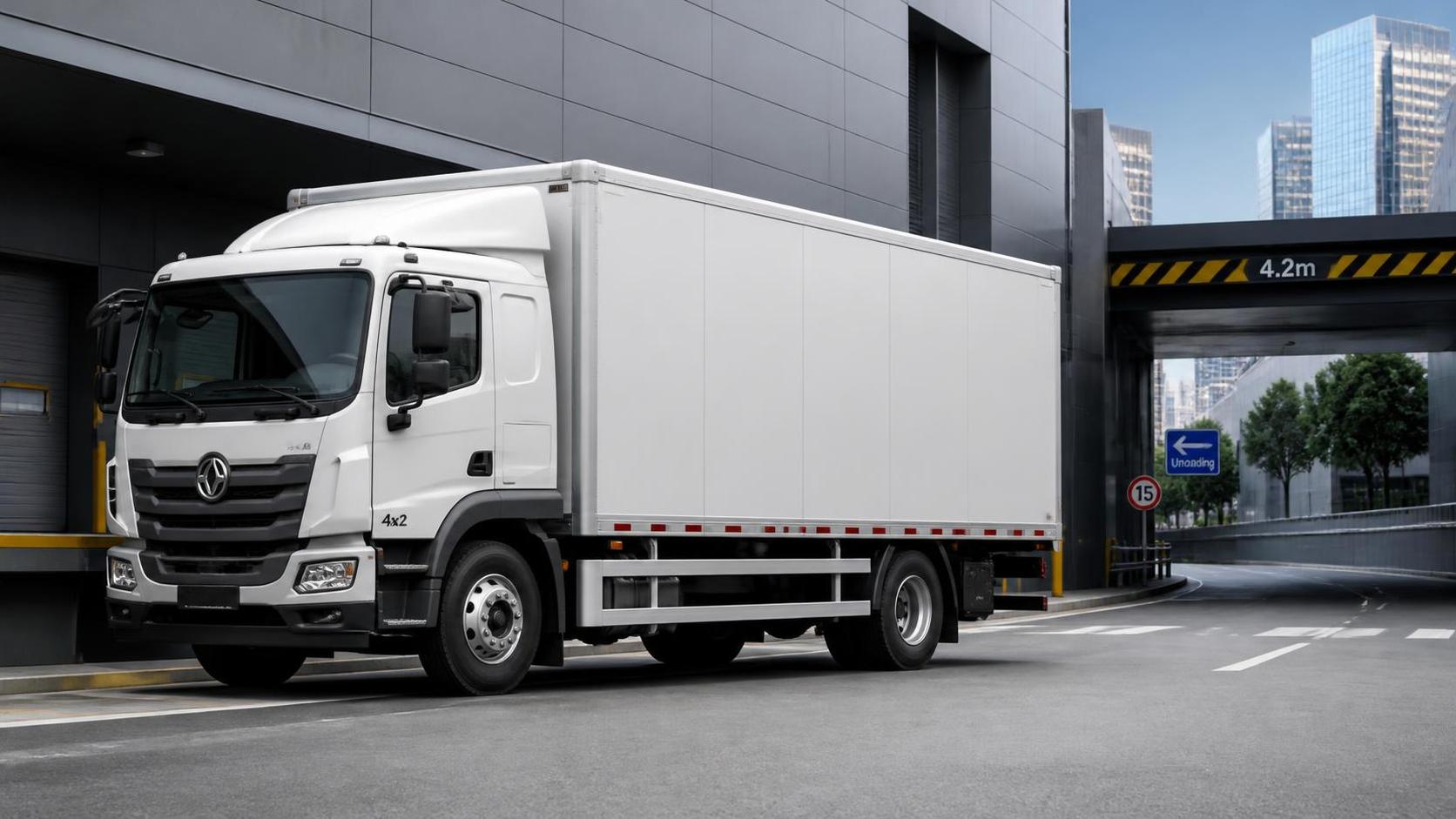
For city logistics, knowing how much payload a 4_2 cargo truck can handle is less about a single factory number and more about whether the truck can keep working legally, efficiently, and consistently on real urban routes. That is why buyers, fleet planners, and operators usually ask this question in the first place: not to learn a definition, but to understand how much freight they can move per trip without running into overload penalties, route restrictions, poor fuel economy, or premature wear. In urban delivery work, payload sits at the intersection of vehicle specification, cargo density, body design, and local road rules.
A 4_2 Cargo Truck is often chosen because it sits in a practical middle ground. It is typically more maneuverable than heavier multi-axle vehicles, yet offers more carrying capability than light vans or pickup-based logistics vehicles. On paper, that makes it attractive for food distribution, retail replenishment, building materials, parcel operations, municipal support, and mixed B2B deliveries inside and around cities. In practice, however, the usable payload can vary substantially from one unit to another, even when two trucks appear similar from the outside.
What people really mean when they ask about payload
In commercial use, “payload” means the weight the truck can legally and safely carry after the truck’s own curb weight is deducted from its gross vehicle weight rating. That sounds straightforward, but in urban operations the issue becomes more complicated very quickly. The truck may be technically able to move a certain load, but the route may include bridge limits, downtown axle restrictions, low-emission zones, loading dock constraints, or time-window delivery rules that make the practical payload lower than the nominal figure.
There is also a common misunderstanding in the market: many buyers focus first on the advertised maximum load figure, when they should often begin with the actual cargo profile. A truck carrying dense items such as beverages, hardware, or bagged construction materials will hit weight limits long before the cargo box is full. A truck carrying lower-density goods such as packaged consumer products, textiles, or e-commerce parcels may fill the cargo body before reaching its legal payload ceiling. The “right” payload is therefore not just a number; it is a match between truck and freight.
The payload range is usually configuration-dependent, not universal
For a typical urban 4x2 cargo truck, the payload people encounter in the market often falls into a mid-range band rather than one universal standard. Exact figures vary by chassis strength, wheelbase, cabin type, cargo body material, suspension specification, tire rating, and regulatory class. In many markets, a 4x2 medium-duty cargo truck may be configured for payloads ranging from roughly a few tons up to the high single-digit ton range, but any specific figure should be treated as configuration-specific and market-specific【to be verified】.
That is why one of the first practical checks is whether the quoted payload refers to:
- the bare chassis
- the completed truck with cargo body installed
- a standard body or a customized body
- a legal road limit in a specific country
- an engineering estimate under ideal conditions
A steel cargo box, tail lift, refrigeration unit, reinforced floor, crane attachment, or extra fuel tank all add weight to the vehicle itself. Every kilogram added to the truck reduces the remaining payload available for freight. This is especially relevant on urban routes, where trucks are often customized for multi-stop distribution and loading convenience.
Urban routes change the payload calculation
Intercity transport and urban transport are not the same operating environment. A truck that looks suitably rated for general freight may still be a poor fit for dense city work if the route includes constant stop-start driving, narrow streets, repeated curb loading, and uneven daily load factors. In these conditions, the practical question becomes: how much can the truck carry repeatedly without causing compliance risk or operational drag?
Several urban-route factors matter more than first-time buyers expect.
1. Road and access restrictions
Many cities restrict truck movement by gross weight, axle load, length, height, or delivery time. A truck that is legal on a highway may face partial restrictions in city centers. Some urban logistics operators therefore choose a slightly lower-capacity configuration because access reliability is more valuable than theoretical maximum tonnage.
2. Frequent stopping increases stress on the vehicle
Heavy payloads on stop-and-go routes place more demand on brakes, clutch, transmission, tires, and suspension. This does not mean the truck should be underloaded, but it does mean that operating continuously at the top end of rated payload can raise maintenance intensity. In urban delivery, reliability often matters more than chasing the largest possible load per trip.
3. Loading and unloading method affects usable capacity
If cargo is loaded manually, palletized, lifted by forklift, or distributed across many stops, body design becomes part of the payload decision. A side-opening body, rear tail lift, or enclosed van body may improve efficiency, but the added equipment can reduce net payload. Operations managers should compare “delivered freight per shift” rather than looking only at “rated payload per trip.”
4. Cargo density matters more than many assume
For urban freight, volume-limited and weight-limited operations behave very differently. A bakery distributor, parcel fleet, and beverage wholesaler may all use a 4x2 cargo truck, but their payload constraints are not comparable. The beverage truck may reach legal weight with significant box space still empty; the parcel truck may cube out long before weight becomes an issue.
What to check before deciding if a 4x2 truck is suitable
For information-stage buyers, the most useful approach is to test the truck against the route, not against marketing language. A practical evaluation usually starts with five checks.
Among these, axle load distribution is often overlooked. A truck can be within total gross weight and still be improperly loaded on one axle. This is a real operational issue when cargo is concentrated at the front or rear, or when loading is inconsistent across multiple stops. Urban roads, speed bumps, and uneven pavement make proper distribution even more important for stability and tire life.
Body type can change the answer more than the chassis badge
When operators ask how much a 4_2 Cargo Truck can handle, they sometimes compare brands first. Brand matters for quality, service support, and parts availability, but body type often has a more immediate effect on usable payload. An open cargo body, stake body, box van, curtain-side body, insulated body, or refrigerated unit all create different weight and use-case profiles.
A simple open body may preserve more net payload and suit construction supplies, agricultural produce, or short-haul pallet freight. A closed van body offers better cargo protection and urban retail suitability, but it adds structure and weight. A refrigerated body supports cold chain work, yet refrigeration equipment can significantly reduce payload and may also affect fuel consumption or power demand【to be verified depending on configuration】.
So the better question is not “How much can this truck carry?” but “How much of my cargo can this exact body-and-chassis combination carry on this route without creating a bottleneck?”
Common market claims that need a closer look
Some standard sales language in the truck market is directionally true but incomplete in real operations.
“Higher payload always lowers transport cost.”
Only if the route, loading process, and cargo profile actually allow the truck to use that payload consistently. In city logistics, more payload can be offset by slower loading, route access restrictions, or higher maintenance exposure.
“Two trucks with the same GVW have the same earning potential.”
Not necessarily. A lighter body, better space utilization, or more suitable wheelbase may deliver more usable freight over a working week than a heavier or poorly matched setup.
“If the engine is powerful enough, overload is manageable.”
This is a costly misconception. Engine output does not override legal compliance, braking limits, suspension fatigue, tire ratings, or insurance risk. Overloading may also shorten service life and complicate warranty claims【specific terms vary by supplier and market】.
“Urban delivery only needs compact size, not careful payload planning.”
Compact dimensions help access, but payload planning is still central. Under-specification can lead to extra trips and weak route economics; over-specification can create unnecessary purchase cost and route limitations.
For buyers, the decision is usually about balance
In most city-facing B2B logistics scenarios, the right 4x2 cargo truck is the one that balances four things well: legal payload, route access, cargo handling efficiency, and life-cycle operating cost. Pushing too hard on one of these can weaken the others.
A distributor serving supermarkets may prioritize enclosed body protection, loading speed, and legal city access. A building materials supplier may care more about floor strength, axle durability, and dense-load handling. An export buyer sourcing for multiple customer segments may need a platform that can be customized into different upper bodies while retaining predictable supply and serviceability.
This is where supplier capability matters in a practical sense. Not as branding rhetoric, but in terms of whether the exporter or dealer can clearly state final vehicle weight, body options, available configurations, homologation status, documentation support, and delivery consistency. For cross-border buyers especially, payload is not just a truck-spec question; it is also a configuration-control and compliance-documentation question.
Companies with access to established commercial vehicle platforms from major Chinese brands such as FOTON, SHACMAN, and SINOTRUK may offer wider configuration coverage for different market needs, but buyers still need unit-level clarity. A familiar brand name does not replace the need to verify actual completed-vehicle weight, axle ratings, and local admissibility before ordering.
Questions worth asking before procurement moves forward
For someone still in the research stage, these are usually the most useful next questions:
- What is the truck’s actual curb weight after the final cargo body and options are installed?
- What payload is legal in the destination market, not just technically possible?
- Will the route be weight-limited, volume-limited, or access-limited most of the time?
- How often will the truck run near maximum payload on stop-and-go urban cycles?
- Does the cargo require enclosure, refrigeration, side access, tail lift, or reinforced flooring?
- What are the axle ratings and how sensitive is the setup to uneven loading?
- Can the supplier provide consistent documentation for export, customs, and registration?
These questions usually reveal more than a headline payload figure. They also help filter out mismatches early, before a fleet ends up with trucks that look efficient in specification sheets but underperform on city routes.
So how much payload can it handle?
The honest industry answer is that a 4x2 cargo truck can handle as much payload as its certified gross rating, completed body weight, axle limits, and local urban operating rules allow together. For urban routes, that practical payload is often lower than the most attractive number in a brochure, but it is also more useful because it reflects how the truck will actually earn.
For research users, that is the main takeaway: treat payload as an operating result, not just a catalog spec. Once the route type, cargo density, body format, and compliance limits are clear, the right capacity band usually becomes much easier to identify.
Search Starts Here