
News
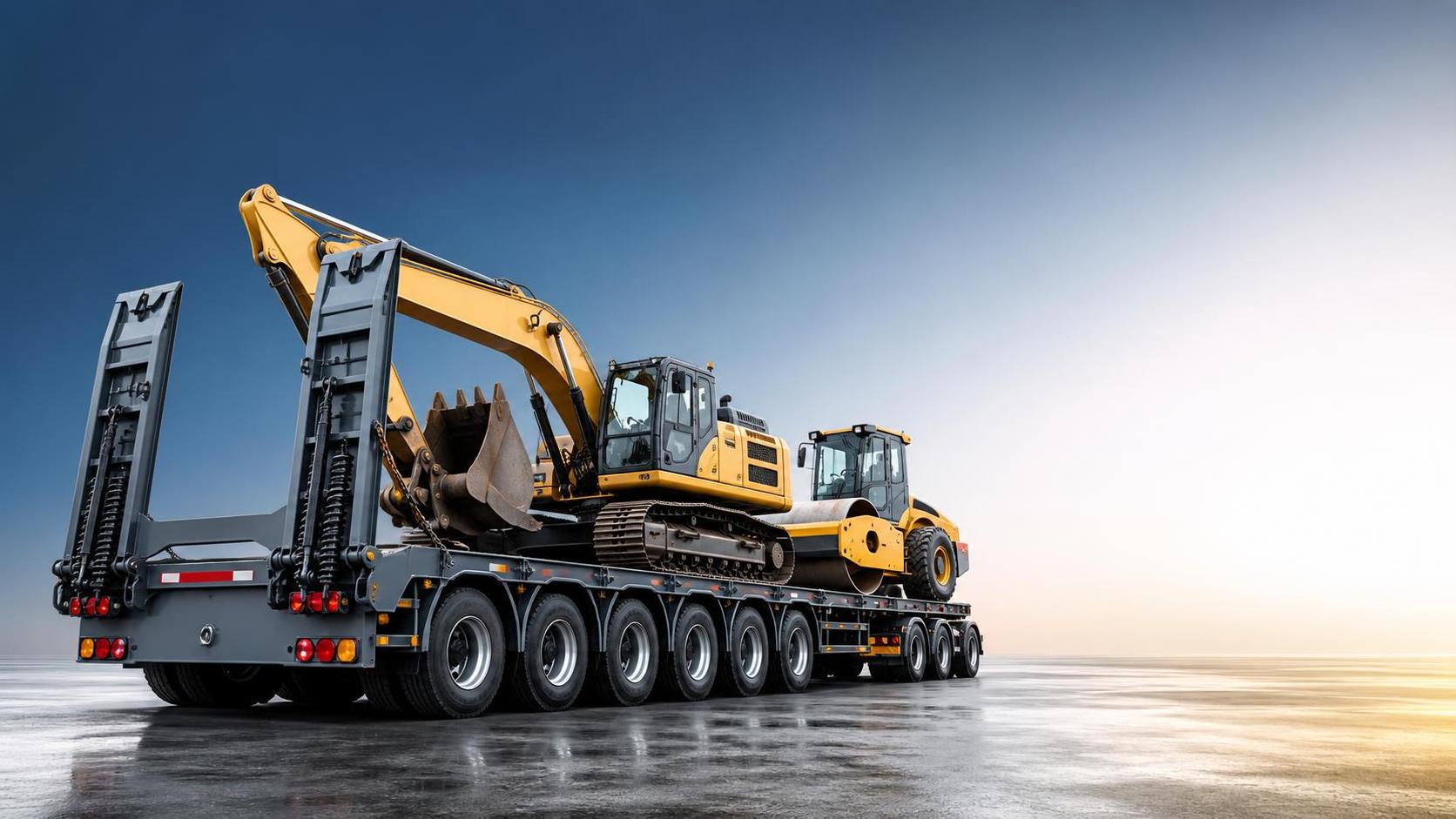
A Low Plate trailer may look like a straightforward purchase on paper: match the load rating, compare prices, confirm delivery time, and place the order. In practice, procurement teams know it is rarely that simple. One wrong assumption about deck height, axle layout, steel grade, or local road rules can turn a “good deal” into delays, overload penalties, tire failures, or costly modifications after arrival.
For companies moving excavators, rollers, loaders, dozers, or other heavy equipment, the trailer is not just a transport tool. It is part of the operating system of the project. It affects loading safety, route planning, driver confidence, maintenance cost, and ultimately how efficiently equipment gets from yard to jobsite. That is why buying a Low Plate trailer should begin with technical fit and lifecycle value, not with the cheapest quote.
If you are evaluating suppliers or preparing a procurement comparison, these are the checkpoints worth reviewing before making a decision.
Start with the cargo, not the trailer brochure
Many purchasing mistakes happen because the trailer is selected by a general category instead of a real transport profile. “Heavy equipment transport” covers a wide range of machinery, and not all of it behaves the same during loading and road travel.
Before requesting quotations, define the actual equipment mix you expect to carry over the next few years. Include operating weight, overall length, width, ground clearance, track or tire type, center of gravity, and whether attachments remain installed during transport. A crawler excavator with concentrated track loads places very different demands on a deck than a wheeled machine with a longer footprint. The difference matters for deck reinforcement, ramp design, and axle loading.
If your fleet changes by season or by project, avoid buying too narrowly. A Low Plate trailer that perfectly fits one machine but struggles with the next purchase may increase utilization problems later. Procurement teams should ask: what is our most frequent load, our heaviest load, and our most difficult load to position safely?
Rated capacity is only the beginning
Load capacity is often the first number buyers compare, but it should never be the only one. A trailer advertised for a certain tonnage may still be a poor fit if the weight distribution of your equipment does not align with the trailer structure and axle arrangement.
Look beyond gross carrying capacity and check:
- Concentrated load capacity on the deck surface
- Axle group rating and suspension suitability
- Kingpin load and compatibility with your tractor head
- Empty trailer weight, which affects payload efficiency
- Structural design around the gooseneck and main beam
Procurement professionals should also ask suppliers how the trailer performs under repeated loading cycles, not just under static specification. Heavy equipment transport is hard on steel, welds, ramps, flooring, and suspension components. A trailer that meets paper specifications but lacks durability will create hidden cost very quickly.
Deck height and loading angle influence more than convenience
The core appeal of a Low Plate trailer is in the name: lower deck height for safer and easier transport of tall or heavy machinery. But “low” should not be treated as a vague advantage. It needs to be evaluated against your routes, loading areas, and machine geometry.
A lower platform can help in three ways. It improves stability by lowering the center of gravity, helps with legal height compliance when transporting taller machines, and reduces ramp angle for easier loading. That sounds ideal, but there are trade-offs. If the deck sits too low for your operating environment, ground clearance issues may appear on uneven roads, ferry ramps, temporary site entries, or speed-control infrastructure.
Check the loaded and unloaded deck height, approach angle, departure angle, and underbody clearance. If your equipment often enters construction zones with rough access roads, a trailer that is extremely low but poorly protected underneath may suffer damage. Buyers should match deck geometry to real road conditions, not just to catalog images.
Axle configuration should follow route reality
A common procurement shortcut is to choose axle quantity by payload alone. In reality, axle configuration should be assessed together with legal road limits, turning requirements, maintenance access, and local parts support.
More axles can spread weight better and help with compliance on certain routes, but they also add complexity, tire cost, and service demand. Fewer axles may reduce maintenance but can limit legal loading flexibility. Suspension type matters as well. Mechanical suspension may suit some markets for simplicity and easier maintenance, while air suspension can offer advantages in ride protection and load distribution depending on operating conditions.
Ask practical questions before approving a configuration:
- Will the trailer regularly cross roads or borders with strict axle load rules?
- Do your drivers need strong maneuverability in confined yards or project sites?
- Can local workshops service the suspension and axle brand easily?
- Is spare tire and brake component availability reliable in your region?
The right answer is rarely universal. It is operational.
Material quality is where long-term cost hides
When two Low Plate trailers look similar, material grade and manufacturing discipline often explain the price gap. This is one of the most important areas to verify because the difference may not be obvious during a first inspection.
Focus on the main beam design, cross-member density, deck plate thickness, ramp reinforcement, and welding consistency. For buyers, the real question is not “Does it look strong?” but “Will it remain dimensionally stable and structurally reliable after repeated heavy use?” A trailer used for transporting tracked equipment, especially in mining, infrastructure, or quarry environments, sees concentrated impacts that expose weak structures quickly.
It is also worth discussing corrosion protection. If the trailer will operate in coastal regions, humid climates, or areas with aggressive road conditions, paint quality and surface treatment become more than appearance issues. They affect resale value, maintenance intervals, and fatigue resistance over time.
Loading and securing details deserve close attention
Buyers often spend time on tonnage and dimensions but overlook the loading process itself. Yet loading is where accidents, downtime, and equipment damage are most likely to happen.
Review the ramp design carefully. Consider ramp length, width, surface grip, lifting method, and whether the ramps are suitable for both tracked and wheeled equipment. A poor ramp design can slow loading, create slipping risk, or limit the trailer to only part of your fleet.
Then inspect lashing points and cargo securing arrangements. Heavy equipment rarely sits on the trailer in a uniform, balanced way. Operators need tie-down locations that are strong, accessible, and positioned for real-world machine dimensions. If securing points are too few, badly placed, or difficult to reach, loading crews may improvise. Improvisation is expensive and dangerous.
Also consider whether the trailer needs optional supports such as hydraulic ramps, toolboxes, outriggers, reinforced flooring, or side extensions for wider machinery. Not every option is necessary, but missing the right one can reduce operating efficiency every single day.
Compliance should be confirmed before shipment, not after arrival
This is where international procurement can become costly if details are missed. A Low Plate trailer that is acceptable in one market may require changes in another due to regulations on dimensions, lighting, braking systems, reflective markings, axle loads, or documentation.
Buyers should clarify local compliance requirements at the quotation stage, especially for overseas sourcing. It is much easier to confirm technical specifications before production than to modify units after delivery. Ask suppliers to provide clear specification sheets, dimensional drawings, and standard configuration details. If your market has specific requirements for brake systems, landing gear, electrical connections, or conspicuity features, mention them early.
For procurement teams importing from China, supplier experience in export documentation and vehicle preparation can save significant time. Companies with established export processes are generally better positioned to coordinate configuration confirmation, customs paperwork, and shipping logistics without avoidable friction.
Supplier capability matters as much as trailer specification
On paper, many suppliers can provide a trailer. In practice, procurement risk often sits with execution: whether the supplier can deliver the agreed configuration, maintain communication, support inspection, and handle export procedures properly.
This is especially relevant for buyers sourcing commercial vehicles or transport equipment internationally. A reliable supplier should be able to explain not only the product but also lead time logic, customization boundaries, spare parts planning, and after-sales response methods.
For example, Shandong Livol Truck International Trade Co., Ltd. operates as a professional commercial vehicle exporter with authorized resources across major Chinese truck brands, established inventory support, and experience in full-process export service. For buyers, that kind of structure matters because it signals coordination ability beyond simple trading. When heavy transport equipment is involved, procurement teams usually need more than a factory quote; they need confidence that selection, configuration, documentation, customs handling, and logistics can move in step.
That does not mean buyers should accept general claims at face value. It means supplier assessment should include practical questions: Who confirms specifications? How are changes documented? What inspection process is available? What spare parts support is possible after delivery? Who handles export packaging and shipping coordination?
Do not compare quotations without normalizing the details
One of the most common procurement errors is comparing offers that are not truly equivalent. Two quotations may both say “Low Plate trailer,” but one may include stronger beams, better tires, reinforced ramps, a different axle brand, thicker deck plate, or a braking setup more suitable for your market.
Before judging price, create a comparison sheet that standardizes the following:
- Overall dimensions and usable deck length
- Rated payload and tare weight
- Axle brand, quantity, and rating
- Suspension type
- Tire specification and quantity
- Main beam and deck structure details
- Ramp type and loading method
- Brake and electrical system configuration
- Surface treatment and paint process
- Included accessories and spare parts
- Documentation, inspection, and shipping terms
Only after the technical baseline is aligned does the price comparison become meaningful. A low initial purchase price can easily be erased by repairs, compliance delays, poor loading efficiency, or short component life.
Think in total cost of ownership, not purchase price alone
Procurement decisions for heavy transport equipment should support long-term cost control. The trailer that saves money is not always the cheapest to buy. It is the one that delivers stable uptime, predictable maintenance, legal compliance, and flexible use across multiple equipment types.
Consider the full cost picture: service intervals, tire wear, brake wear, fuel impact from tare weight, loading time, operator safety, replacement part availability, and residual value. If a slightly higher-specification Low Plate trailer reduces breakdowns and loading restrictions, it may protect project schedules and lower operational cost far better than a stripped-down alternative.
This is especially true for companies running mixed fleets or serving multiple job sites. Every time a trailer cannot handle a machine, needs reinforcement, or creates route restrictions, the cost shows up somewhere else—in labor, idle assets, subcontracting, or delays.
A practical buying mindset for procurement teams
The best trailer purchases usually come from disciplined questioning rather than fast negotiation. Buyers who perform well in this category tend to separate their checklist into three layers: equipment fit, legal fit, and supplier fit.
Equipment fit asks whether the Low Plate trailer can safely and efficiently carry the machines that actually generate revenue. Legal fit confirms that dimensions, axle loads, and technical systems match the operating market. Supplier fit determines whether the exporter or manufacturer can deliver the promised specification and support the unit after the transaction is complete.
When these three layers align, procurement becomes much less risky. The goal is not simply to buy a trailer. It is to secure a transport asset that will work hard, remain compliant, and continue to make sense financially after the invoice is paid.
In heavy equipment logistics, the details are never small. A careful review before purchase is what turns a Low Plate trailer from a line item into a dependable part of your fleet strategy.
Search Starts Here