
News
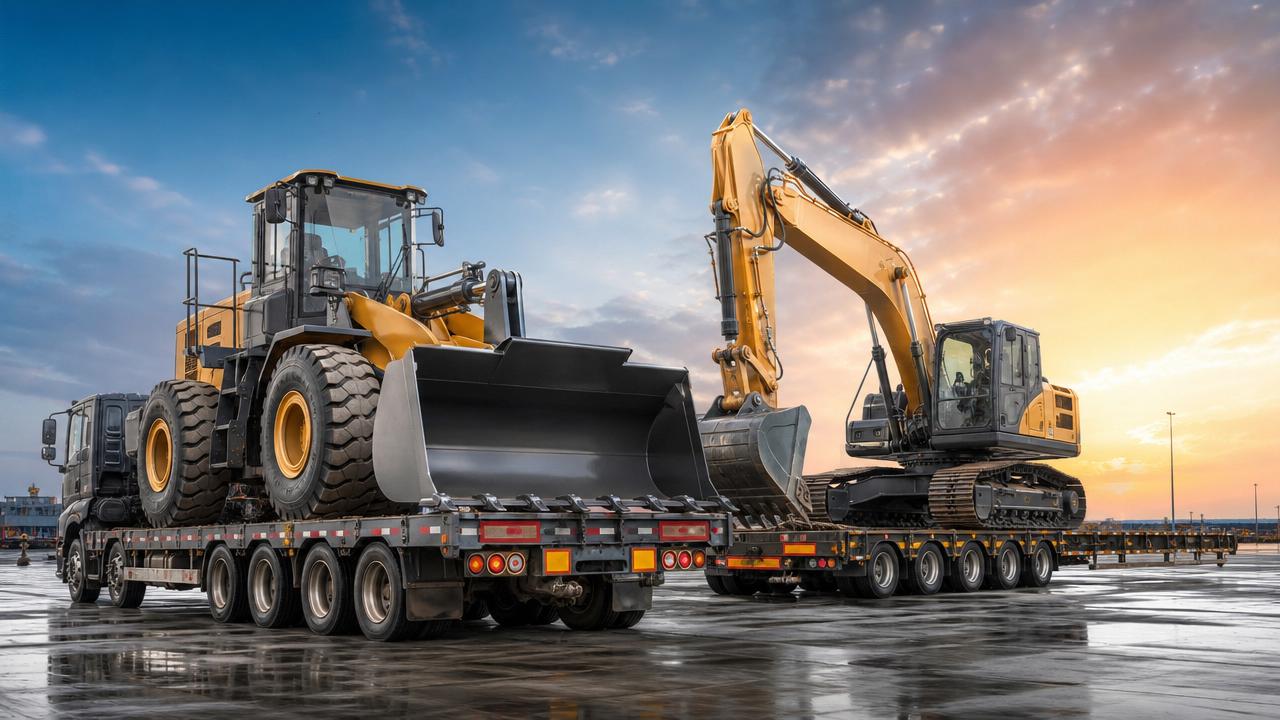
Choosing the right trailer for heavy equipment transport affects safety, loading efficiency, route compliance, and total project cost. When comparing a Flatbed Semi-Trailer with a low plate trailer, technical evaluators need more than basic specifications—they need a clear view of payload suitability, deck height, stability, and operating scenarios. This guide outlines the key differences to help identify which option delivers better performance for demanding engineering vehicle moves.
Why This Comparison Matters More Now
Heavy equipment logistics is changing. Across construction, mining, road building, energy, and municipal projects, machines are getting larger, transport schedules are tighter, and route restrictions are more strictly enforced. In that environment, the old habit of choosing a trailer only by rated tonnage is no longer enough. Technical evaluation teams are now expected to assess loading geometry, axle distribution, transport permits, road surface adaptability, and unloading conditions before a unit is approved.
This shift has made the comparison between a Flatbed Semi-Trailer and a low plate trailer far more practical than theoretical. A Flatbed Semi-Trailer remains one of the most versatile transport tools in engineering vehicle operations, especially where equipment dimensions are moderate and mixed cargo tasks are common. However, low plate trailers have gained stronger attention in projects involving taller, heavier, or track-based machinery where lower deck height and better center-of-gravity control can reduce both operational risk and compliance pressure.
As a result, the better option is increasingly determined by transport context rather than by product category alone. That is the main industry signal: trailer selection is becoming application-led, regulation-sensitive, and lifecycle-cost driven.
The Main Trend Signals Technical Evaluators Should Watch
Several changes are shaping how a Flatbed Semi-Trailer is evaluated against a low plate solution. These are not temporary preferences. They reflect broader movement in engineering transport planning.
The key takeaway is that evaluation criteria are broadening. A trailer is no longer judged only on whether it can carry a machine, but on how efficiently, legally, and repeatedly it can do so across changing jobsite conditions.
What Is Driving the Shift in Trailer Preference
The growing debate between a Flatbed Semi-Trailer and a low plate trailer comes from a combination of technical and commercial pressures.
First, machine design has changed. Engineering equipment now often integrates larger cabins, longer booms, wider tracks, and additional hydraulic systems. Even when total weight stays within transport capacity, overall height and axle point loading may create transport complications. This makes deck height a strategic factor, not just a design detail.
Second, logistics operations are under stronger time pressure. Contractors want transport units that reduce waiting time during transfer between sites. Low plate trailers support easier climbing angles and can be more practical for tracked or low-clearance machines. At the same time, when the same fleet must transport steel structures, pallets, components, or lighter wheeled machines, the Flatbed Semi-Trailer retains an efficiency advantage because of its simpler deck format and broader cargo compatibility.
Third, cost calculation is becoming more sophisticated. Buyers increasingly review not only acquisition price, but maintenance intensity, tire wear, load adaptability, deadhead risk, and annual utilization rate. In many fleets, the Flatbed Semi-Trailer still delivers stronger return on use because it is easier to redeploy across jobs. Low plate trailers may justify themselves when route constraints and oversized equipment movements occur frequently enough to offset narrower application flexibility.
Where a Flatbed Semi-Trailer Still Performs Better
Despite the growing focus on low deck transport, the Flatbed Semi-Trailer remains highly relevant in engineering vehicle logistics. Its strength is not only familiarity, but operational range. For technical evaluators, this matters because many procurement decisions fail when they optimize too narrowly around a single machine type.
A Flatbed Semi-Trailer typically works better in the following scenarios:
- Transport of medium-height wheel loaders, compact excavators, rollers, forklifts, and support equipment that do not trigger critical height issues.
- Mixed project logistics where one trailer must alternate between machinery, building materials, containers, and fabricated structures.
- Operations that prioritize easier cargo securing from multiple sides and faster general loading by crane or forklift.
- Fleets serving long regional routes with relatively predictable road conditions and no frequent oversize permit complications.
In these contexts, the Flatbed Semi-Trailer often delivers better asset utilization, easier maintenance access, and lower complexity in daily scheduling. That is why it continues to be preferred by many engineering transport companies that need a versatile platform rather than a special-purpose unit.
Where Low Plate Trailers Are Gaining Ground
The low plate trailer is gaining momentum because certain operating demands have become more common. Taller equipment, uneven loading zones, and stricter transport controls all increase the value of a lower deck.
For technical evaluators, the strongest case for a low plate trailer appears when the transported machine is heavy, high, or difficult to stabilize during road movement. A lower cargo platform generally improves center-of-gravity performance, which supports better stability in turning, braking, and uneven road transitions. It can also reduce the chance of exceeding route height limitations.
This is especially important for tracked excavators, bulldozers, graders, and some specialized engineering machines that are harder to reposition or disassemble for transit. In these cases, a low plate trailer may not simply be more convenient; it may be the more responsible choice from a risk-control perspective.
How the Choice Affects Different Stakeholders
The decision between a Flatbed Semi-Trailer and a low plate trailer influences multiple roles across the project chain. That is another reason this comparison is receiving more attention.
A practical evaluation process should therefore be cross-functional. If selection is made only by procurement price, the risk of mismatch rises quickly. The most successful buyers now involve technical, operations, and compliance teams early in the decision cycle.
What Technical Evaluators Should Measure Before Recommending Either Option
The better trailer is the one that matches the machine profile and transport pattern with the least friction. For that reason, technical evaluators should focus on measurable realities rather than product labels.
- Loaded total height under actual operating configuration, not brochure dimensions alone.
- Machine weight concentration and the effect on axle load distribution.
- Loading method, including whether the unit drives on, is winched, or is lifted into place.
- Frequency of mixed cargo use during non-peak project periods.
- Typical route profile, including ramps, bridge crossings, urban access, and rough site entry.
- Securing requirements for tracks, attachments, and irregular machine geometry.
If most projects involve standard-height equipment and changing cargo types, a Flatbed Semi-Trailer often gives the strongest long-term operational value. If repeated moves involve high-profile machinery and route limitations, the low plate trailer becomes the more strategic tool.
A Practical Direction for Future Procurement
One clear market direction is emerging: fleets are moving away from one-size-fits-all logic. Instead, they are building more structured trailer portfolios. In that model, the Flatbed Semi-Trailer remains the backbone unit for broad engineering transport demand, while low plate trailers are added where oversize, heavy, or stability-sensitive tasks justify specialization.
For exporters and suppliers, this means product discussions must become more consultative. Buyers increasingly expect support on configuration matching, axle options, suspension choices, deck design, and regulatory fit for destination markets. Companies with strong inventory, reliable customization ability, and export service coordination are better positioned to meet this expectation.
As a professional commercial vehicle exporter based in Shandong, China, Shandong Livol Truck International Trade Co., Ltd. supports this type of practical evaluation by combining brand resources, stable supply, customization capability, documentation support, logistics coordination, and after-sales service. For technical teams comparing a Flatbed Semi-Trailer with a low plate trailer, that broader support can shorten decision time and reduce configuration errors.
Final Judgment: Which Works Better?
There is no universal winner. A Flatbed Semi-Trailer works better when flexibility, fleet utilization, and general engineering transport coverage matter most. A low plate trailer works better when heavy equipment height, loading stability, and route compliance create tighter operating limits. The real industry change is that buyers are no longer choosing only by payload class; they are choosing by mission profile.
If your business wants to judge which direction is right, focus on five questions: What machines are moved most often? How often do height restrictions affect routes? How important is mixed cargo utilization? Where do loading delays usually occur? And what compliance risks create the highest hidden cost? When those answers are clear, the comparison between a Flatbed Semi-Trailer and a low plate trailer becomes far more precise—and far more valuable to long-term engineering transport performance.
Search Starts Here