News
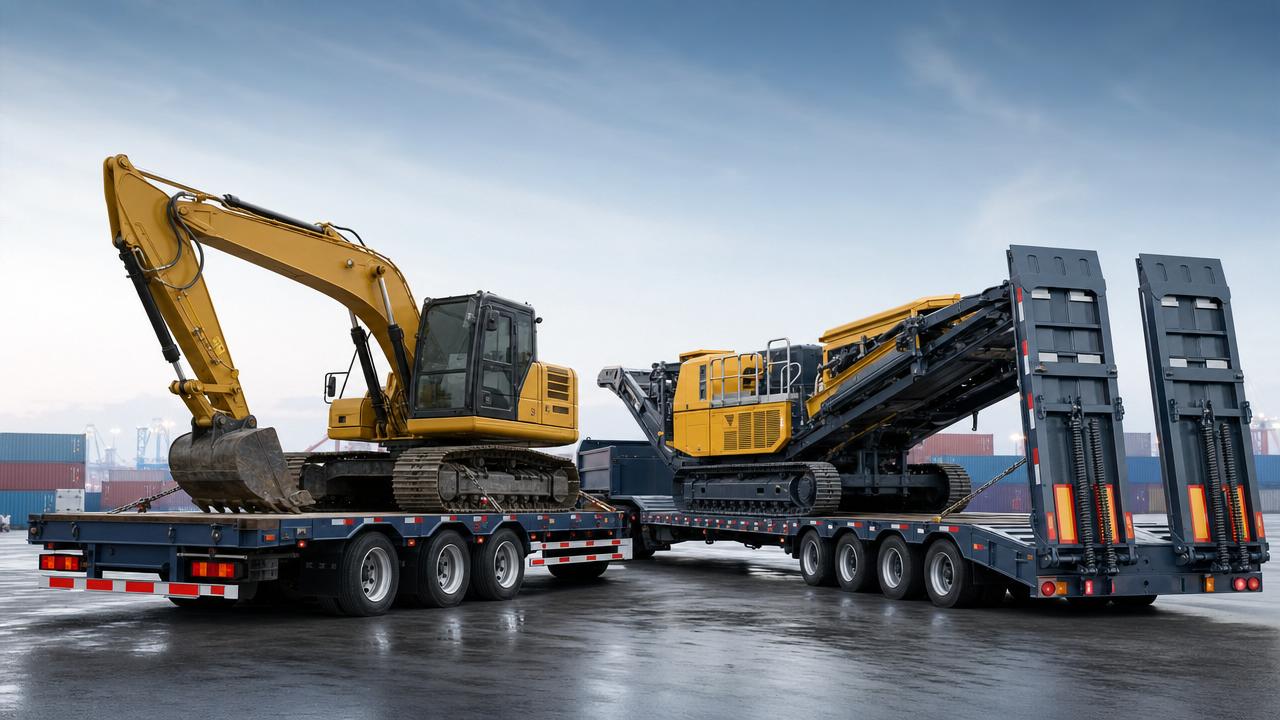
When comparing a Flatbed Semi-Trailer with a low plate trailer for heavy equipment transport, technical evaluators need more than basic specifications. Load height, axle distribution, road compliance, and equipment compatibility all affect transport safety and efficiency. This guide examines the key structural and operational differences to help you determine which trailer configuration delivers better performance, lower risk, and stronger value for demanding engineering vehicle applications.
In engineering vehicle logistics, the right trailer decision affects more than loading convenience. It influences route approval, tire wear, center of gravity, operator safety, unloading time, and even whether a machine can legally pass under bridges or through port corridors. For buyers, fleet engineers, and technical assessment teams, the comparison between a Flatbed Semi-Trailer and a low plate trailer should be based on actual equipment dimensions, transport frequency, and road conditions rather than price alone.
For exporters and project suppliers handling bulldozers, excavators, wheel loaders, compactors, or crawler equipment, a trailer must also match cross-border delivery requirements. Shandong Livol Truck International Trade Co., Ltd., based in Shandong, China, supports this process with commercial vehicle export experience, stable inventory, and integrated services covering selection, customization, documentation, customs clearance, and logistics coordination. That practical supply capability matters when trailer configuration has to align with project timing, port schedules, and local compliance standards.
Understanding the Basic Structural Difference
A Flatbed Semi-Trailer typically uses a straight deck platform with a relatively higher loading surface. In many engineering transport applications, deck height commonly falls within about 1,350 mm to 1,550 mm, depending on suspension type, tire size, and frame design. This structure favors versatility, especially when the transported cargo includes palletized materials, wheeled equipment, steel structures, or mixed project loads.
A low plate trailer, often called a lowbed or low loader in some markets, places the cargo deck much closer to the ground. Typical deck height is often around 850 mm to 1,150 mm. That 300 mm to 600 mm reduction may appear small on paper, but in heavy equipment transport it can determine whether a 3.4 m-tall excavator moves legally without disassembly or requires route permits, escort planning, or partial dismantling.
Why Deck Height Changes Transport Feasibility
For technical evaluators, total transport height is one of the first thresholds to calculate. If a machine has an operating or transport height of 3,200 mm and the trailer deck is 1,450 mm high, the combined height becomes about 4,650 mm before considering tire compression and suspension movement. In many regions, that can push the load into special-permit territory. The same machine on a low plate trailer with a 950 mm deck may reduce total height to about 4,150 mm, which is significantly easier to route.
Frame Shape and Load Entry Method
Flatbed Semi-Trailer designs usually support rear ramp loading for wheeled machinery and forklift-compatible handling for general cargo. Low plate trailers are engineered more specifically for machinery transport. Their gooseneck structure, lower deck, and reinforced rear ramp zone are better suited for tracked excavators, pavers, rollers, and drilling rigs that need gradual loading angles and stronger point-load capacity.
The table below highlights the most relevant structural distinctions for heavy engineering transport evaluation.
The key takeaway is simple: a Flatbed Semi-Trailer is more flexible across cargo categories, while a low plate trailer is usually better when machine height, machine weight concentration, or loading angle creates operational risk. If heavy equipment is your primary cargo in more than 60% of trips, the low plate design often delivers better transport control.
Load Distribution, Stability, and Safety Under Real Working Conditions
Technical assessment should move beyond static payload ratings. A trailer may be rated to carry 40 tons, 60 tons, or more, but the actual performance depends on where that weight sits, how the load transfers during braking, and whether the axle group shares force evenly over rough roads. Engineering vehicles rarely act like uniform cargo. An excavator may place substantial weight over one track zone, while a loader may create concentrated axle pressure from front bucket mass and rear counterweight.
Axle Distribution and Point Load Performance
A Flatbed Semi-Trailer can handle many machinery types, but if the equipment has highly concentrated point loads, the straight-deck frame may require reinforcement in selected loading zones. Low plate trailers are generally engineered with more specialized beam structures for heavy equipment, improving load transfer from the deck to the main frame. In practice, this matters when transporting 20-ton to 35-ton excavators, road rollers with steel drums, or crawler dozers with high contact pressure.
Center of Gravity in Cornering and Braking
Lower deck height reduces roll tendency. Even a 400 mm reduction in cargo platform height can improve lateral stability during cornering, lane correction, and braking on uneven surfaces. For long-distance construction logistics, especially on mixed highway and regional road segments, that lower center of gravity can reduce driver stress and improve transport predictability.
- For wheeled machines under about 15 tons, a Flatbed Semi-Trailer may be sufficient if overall height remains compliant.
- For tracked machines above 20 tons, low plate trailers typically provide safer loading geometry and more stable road behavior.
- For repeated movement over poor road surfaces, suspension matching and beam strength should be checked together, not separately.
- For multi-machine loads, axle spacing and tie-down position count as much as nominal payload.
Another practical safety factor is ramp angle. A standard Flatbed Semi-Trailer may create a steeper climb, which increases the risk of belly contact for pavers, rollers, and low-clearance road machinery. Low plate trailers usually reduce that approach angle and support smoother self-loading, often saving 10 to 20 minutes per loading cycle in repetitive site operations.
Road Compliance, Route Access, and International Transport Considerations
Heavy equipment transport is not only a mechanical issue. It is also a route compliance issue. Height limits, axle load limits, bridge restrictions, turning radius, and permit procedures differ by market. For technical evaluators working on export or cross-border deployment, the trailer should be selected according to the most restrictive stage of the route, not the easiest one.
Why Lower Overall Height Often Saves Time
If the total loaded height exceeds local thresholds, the shipment may require special routing, escort vehicles, restricted travel hours, or pre-approved movement windows. Even when exact legal limits differ by country, every extra 100 mm of transport height can reduce route flexibility. A low plate trailer helps technical teams keep more machine categories within manageable transport envelopes.
The following matrix can help evaluators align trailer choice with common route and equipment conditions.
This comparison shows that a Flatbed Semi-Trailer remains a strong option where transport tasks are diverse and machine dimensions are moderate. However, once route restrictions become tight or machine height becomes critical, a low plate trailer often reduces administrative friction as well as operational risk.
Export Logistics and Configuration Planning
For international buyers, trailer selection should be coordinated with shipping mode, destination regulations, and after-sales support. Shandong Livol Truck International Trade Co., Ltd. works across commercial vehicle export processes that typically include 5 main stages: demand confirmation, configuration review, production or stock allocation, documentation and customs coordination, and final logistics delivery. This full-process approach is valuable when a trailer must be adapted for local kingpin standards, axle needs, suspension preferences, or loading practices.
Because Livol is an authorized dealer for FOTON, SHACMAN, and SINOTRUK and operates multiple 4S stores in China, buyers can also coordinate tractor head and trailer matching more efficiently. For technical teams, that reduces the risk of selecting a trailer whose payload logic does not match the available prime mover, axle ratio, or site operating profile.
How to Choose the Right Trailer for Specific Engineering Equipment
The correct answer is not always one trailer over the other. It depends on machine category, load frequency, dimensional limits, and the percentage of dedicated heavy equipment jobs in the fleet. A technical evaluator should review at least 6 points before approving a trailer configuration.
Six-Point Evaluation Checklist
- Measure transport height, not only working height, including folded attachments and cabin top.
- Check operating weight and concentrated contact zones such as tracks, drums, or outriggers.
- Review loading angle requirements for self-propelled entry.
- Confirm axle load distribution with the intended tractor unit.
- Verify route restrictions, especially bridge clearance and permit thresholds.
- Estimate loading frequency per week to evaluate time savings and wear patterns.
Typical Matching Guidance
If your operation moves wheel loaders, skid steers, compact forklifts, steel parts, and project materials in alternating loads, a Flatbed Semi-Trailer often produces better asset utilization. If your main business is transporting 20-ton to 50-ton excavators, bulldozers, milling machines, or other tall and heavy engineering vehicles, a low plate trailer is generally the more specialized and lower-risk tool.
For mixed fleets, some buyers choose one Flatbed Semi-Trailer for general project logistics and one low plate trailer for dedicated equipment transfer. That two-unit strategy may improve dispatch flexibility and reduce misuse. It also avoids forcing one trailer type to handle tasks outside its ideal operating envelope.
Common Mistakes in Technical Evaluation and Procurement
The most common error is using payload rating as the main selection criterion. A trailer may have enough nominal capacity but still perform poorly if deck height, frame reinforcement, tie-down arrangement, or ramp design do not match the actual equipment. Another frequent mistake is evaluating the trailer without the tractor head, even though braking performance, fifth-wheel compatibility, and combined axle distribution depend on the full transport combination.
Four Procurement Risks to Avoid
- Choosing a Flatbed Semi-Trailer for tall crawler machinery without checking total loaded height.
- Ordering a low plate trailer without confirming turning requirements on narrow project roads.
- Ignoring maintenance access for suspension, ramps, and wear components over 12 to 24 months of service.
- Failing to align spare parts, after-sales response, and customs documentation with destination market needs.
Why Supplier Capability Matters
In B2B engineering transport, procurement value includes technical communication, supply stability, and execution reliability. A supplier with inventory support, export documentation experience, and coordination ability across vehicle selection and delivery can shorten the decision-to-deployment cycle. For projects with tight mobilization windows of 2 to 6 weeks, that matters as much as the trailer itself.
Shandong Livol Truck International Trade Co., Ltd. provides this kind of integrated support through stock availability, export process coordination, and professional after-sales communication. For technical evaluators, that means fewer gaps between specification approval and actual field deployment.
Final Recommendation for Technical Evaluators
If the transport mission centers on general cargo flexibility, moderate-height machinery, and multi-purpose dispatch, a Flatbed Semi-Trailer remains a practical and efficient choice. If the mission focuses on tall, heavy, or track-type engineering equipment where height control, loading angle, and stability are decisive, the low plate trailer usually fits better.
The better option is the one that reduces total transport risk across 4 dimensions: dimensional compliance, load stability, loading efficiency, and lifecycle suitability. Evaluators who compare these factors early can avoid costly rework, permit delays, and equipment handling problems later.
If you are planning trailer procurement for engineering vehicle transport, Shandong Livol Truck International Trade Co., Ltd. can support your team with configuration review, export coordination, and matching solutions for tractors and trailers. Contact us today to discuss your equipment profile, request a tailored transport solution, or learn more about reliable commercial vehicle export support for your market.
Search Starts Here